Sworn Affidavit
A Sworn Affidavit is a formal written statement of fact, voluntarily made by an affiant under oath or affirmation, typically attested to before a person legally authorized to administer oaths.
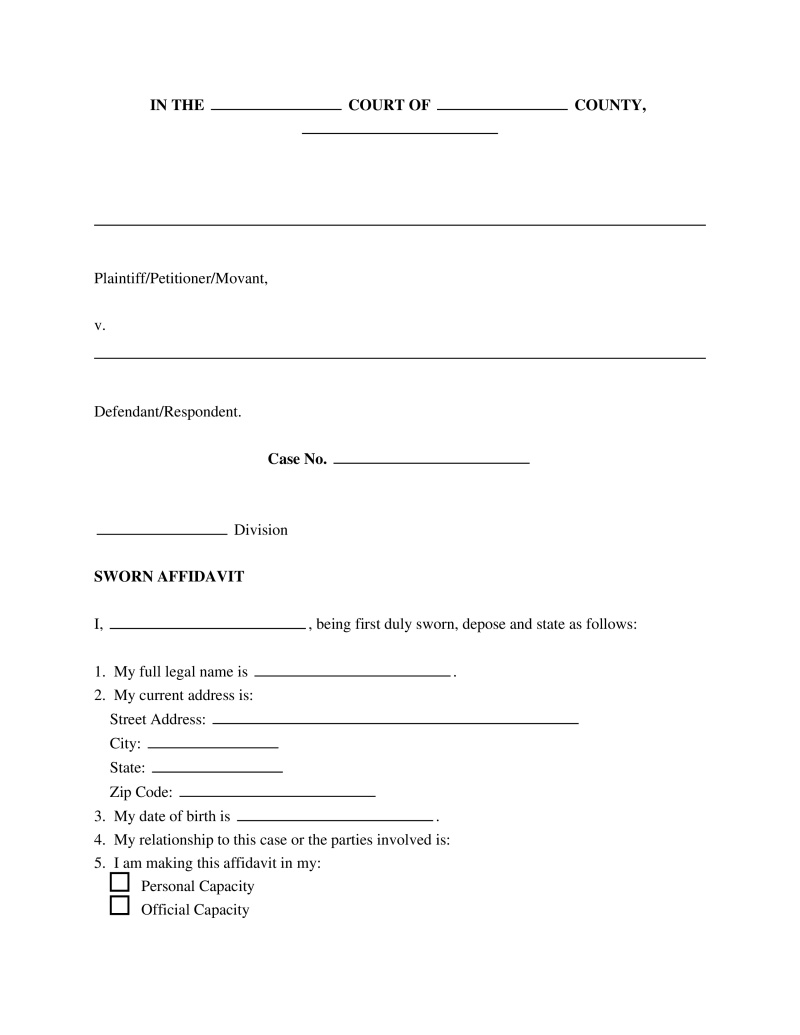
Affidavit Context
Select the context in which this affidavit will be used. This helps tailor the affidavit for court, administrative, or other legal proceedings.
Provide details if the affidavit is for a context not listed above.
Table of Contents
What is a Sworn Affidavit?
A sworn affidavit is a formal, written statement of facts voluntarily made by an individual, known as the affiant, under an oath or affirmation administered by a person legally authorized to do so, such as a notary public or certain court officers. This document serves as a factual declaration that the affiant attests to be true to the best of their knowledge and belief. Its primary purpose is to provide credible evidence in various legal proceedings, administrative matters, or business transactions where a formal, verifiable statement of facts is required without the immediate presence of the declarant.
Elements of a Sworn Affidavit
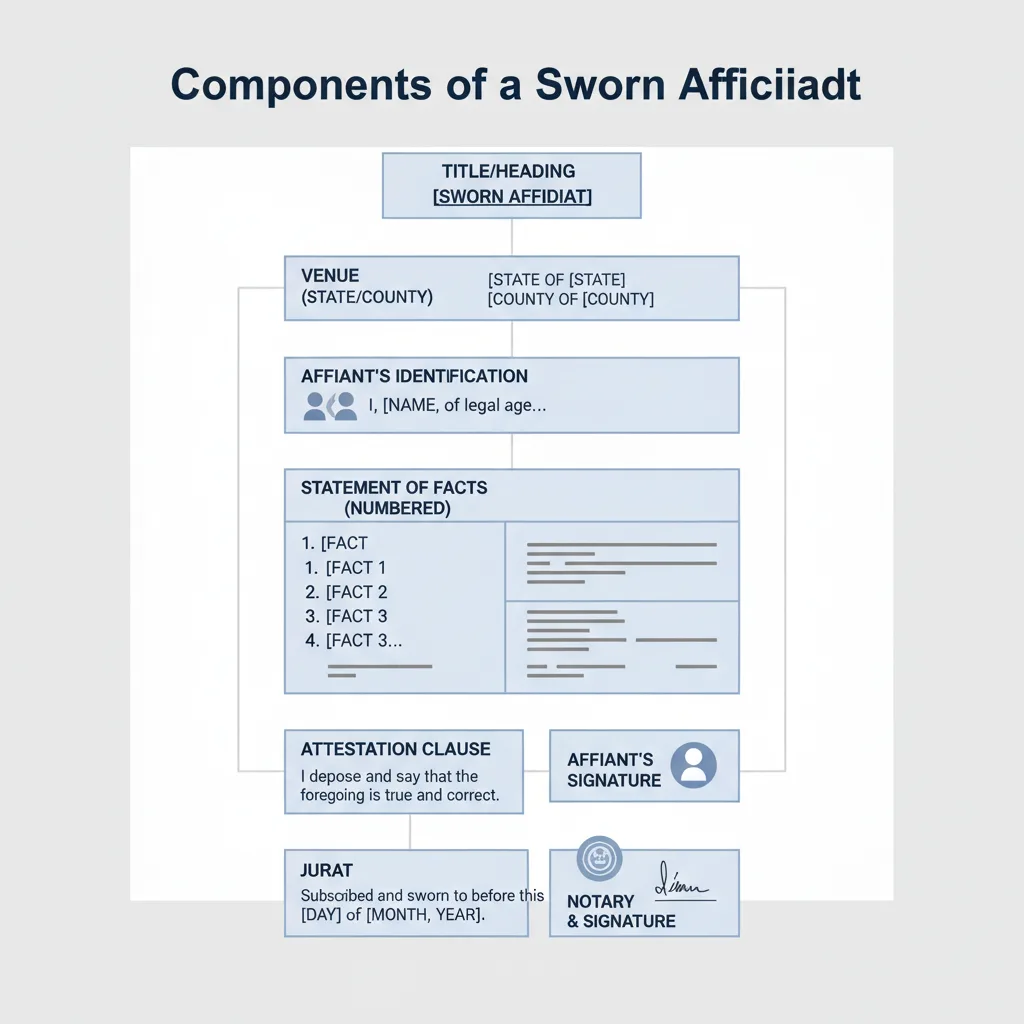
For a document to be considered a valid sworn affidavit, it typically includes several key components that ensure its authenticity and legal enforceability:
- Title or Heading - Clearly identifies the document as an "Affidavit" and often includes the names of the parties or the subject matter it concerns.
- Venue - Specifies the geographical location (state and county) where the affidavit was executed, indicating the jurisdiction in which the oath was administered.
- Affiant's Identification - Provides the full legal name, address, and sometimes other identifying information of the person making the statement.
- Statement of Facts - The core of the affidavit, presented in clear, concise, and typically numbered paragraphs. These statements detail the facts as personally known by the affiant and are often presented chronologically or thematically.
- Attestation Clause - A declaration by the affiant, usually placed before the signature, stating that the contents of the affidavit are true and correct to the best of their knowledge and belief.
- Signature of Affiant - The handwritten signature of the individual making the sworn statement, typically placed at the end of the factual declarations.
- Jurat - A certification by the official who administered the oath or affirmation, stating that the affiant appeared before them, was identified, and swore or affirmed to the truthfulness of the affidavit's contents. It includes the date and place of notarization.
- Notary Seal and Signature - The official seal and signature of the notary public or other authorized officer, which authenticates the administration of the oath and their legal authority.
The Role of the Notary Public
The notary public plays a critical role in the creation of a sworn affidavit, acting as an impartial witness to the signing and verifying the identity of the affiant. Their involvement transforms a simple written statement into a legally recognized sworn document.
- Administering the Oath or Affirmation - The notary ensures the affiant understands the solemnity and legal implications of their statement by requiring them to swear under oath (invoking a deity) or affirm (a solemn declaration without religious reference) that the contents are true.
- Verifying Identity - The notary must confirm the identity of the affiant through acceptable forms of identification to prevent fraud and ensure the person signing is indeed who they claim to be.
- Witnessing the Signature - The notary observes the affiant signing the document, confirming that the signature is authentic and made voluntarily.
- Completing the Jurat - After the oath is administered and the document is signed, the notary completes the jurat, which includes their own signature, seal, commission expiration date, and the date and place of notarization. This formal certification confirms the proper execution of the affidavit.
When is a Sworn Affidavit Used?
Sworn affidavits are versatile legal instruments used in a wide array of situations where a formal, written declaration of facts is necessary. Their utility spans judicial, administrative, and personal contexts:
- Court Proceedings - Often submitted as evidence in support of motions, applications, or petitions, particularly in civil cases, family law matters (e.g., child custody, divorce), or small claims court. They can present witness statements or factual assertions without requiring the affiant's physical presence for initial filings.
- Estate Planning and Probate - Used to establish heirship, confirm domicile, or provide details about assets and liabilities in probate court. An affidavit of heirship, for instance, can identify legal heirs to an estate.
- Real Estate Transactions - May be required to affirm facts related to property ownership, boundary disputes, adverse possession claims, or to clear title defects.
- Business and Commercial Matters - Employed to confirm compliance with regulations, verify financial information, prove delivery of goods or services, or attest to the authenticity of documents.
- Immigration Processes - Often used to provide supporting evidence for visa applications, demonstrate relationships (e.g., affidavit of support), or confirm personal details.
- Insurance Claims - Can be used to detail events leading to a claim, confirm losses, or provide sworn statements regarding damages.
- Personal Matters - May be used for name changes, confirming identity, or establishing facts for governmental agencies or private institutions.
Affidavits vs. Other Legal Documents
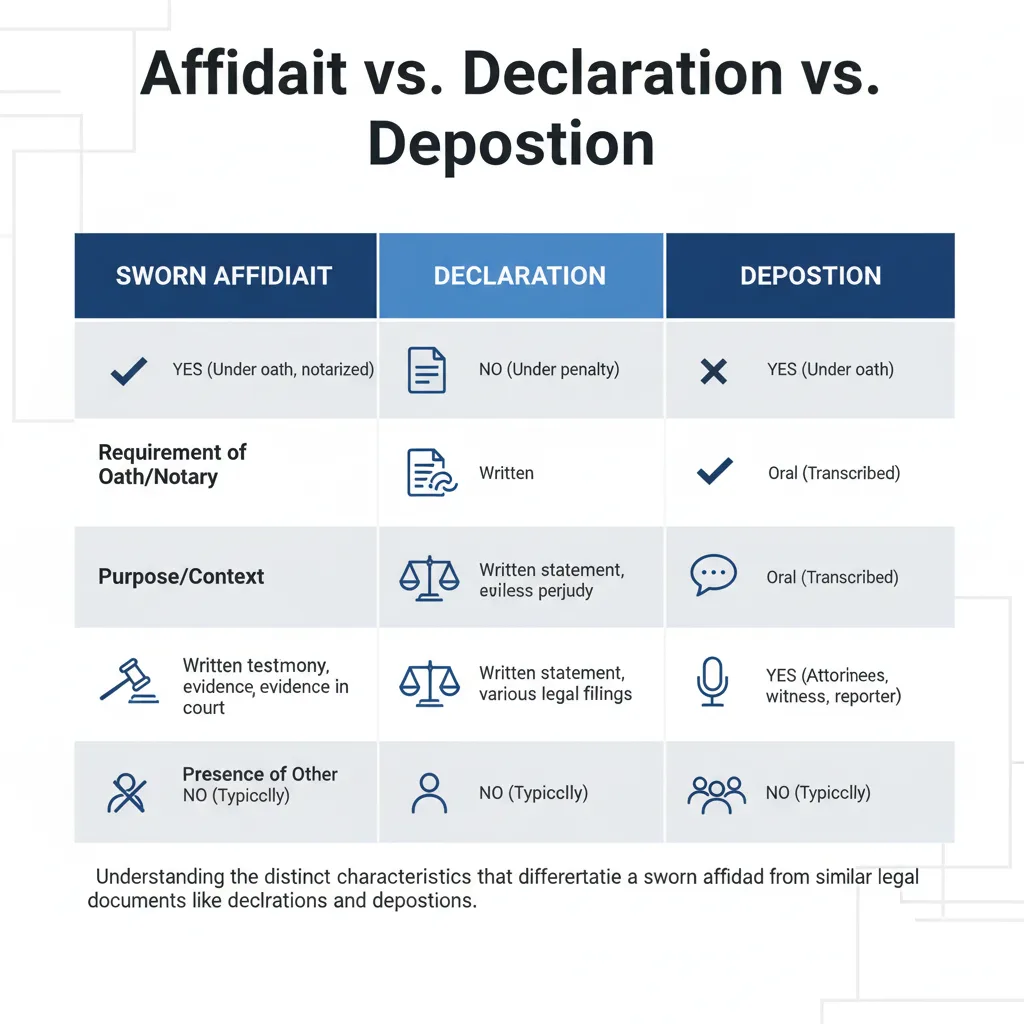
While affidavits serve a specific purpose, it is important to distinguish them from other legal documents that may appear similar but carry different legal implications or usage contexts:
- Affidavit vs. Deposition - An affidavit is a written, sworn statement prepared outside of court, often used as preliminary evidence or in uncontested matters. A deposition, conversely, is oral testimony given under oath during the discovery phase of litigation, typically in the presence of legal counsel from all parties, transcribed by a court reporter, and subject to cross-examination.
- Affidavit vs. Declaration - Both are written statements of fact. The key distinction lies in the formal requirement of an oath or affirmation. An affidavit always requires an oath administered by an authorized official (like a notary). A declaration, particularly in some jurisdictions (e.g., federal courts in the U.S.), can be a statement made under penalty of perjury but without the formal administration of an oath or the presence of a notary public.
- Affidavit vs. Pleading - A pleading (e.g., complaint, answer) is a formal document filed in court that sets forth a party's claims or defenses, outlining the legal and factual basis of their case. An affidavit, while it contains factual statements, is a form of evidence that supports the claims made in a pleading, rather than being the claim itself.
- Affidavit vs. Witness Testimony - Witness testimony is typically given orally in court, under oath, and subject to direct and cross-examination. An affidavit is a written substitute for live testimony, often used when live testimony is impractical or unnecessary, though its weight as evidence can be challenged if the affiant is not available for cross-examination.
Consequences of False Statements
The act of swearing or affirming to the truthfulness of an affidavit carries significant legal weight, and making false statements within such a document can lead to severe penalties. The integrity of the judicial system relies on the veracity of sworn statements.
- Perjury Charges - Intentionally making a false statement under oath or affirmation, whether orally or in writing, constitutes perjury. Perjury is a serious criminal offense, typically classified as a felony, which can result in substantial fines and imprisonment.
- Contempt of Court - Submitting a false affidavit to a court can be deemed an act of contempt, punishable by fines or incarceration, as it undermines the court's authority and obstructs justice.
- Civil Liabilities - A party harmed by a false statement in an affidavit may have grounds to sue the affiant for damages, such as malicious prosecution or defamation, depending on the nature of the false statement and the resulting harm.
- Impact on Legal Proceedings - A false affidavit can lead to the dismissal of a case, adverse rulings, or a loss of credibility for the party who submitted it. Courts may also impose sanctions or other penalties to deter such conduct.
Frequently Asked Questions
Not the form you're looking for?
Try our legal document generator to create a custom document
Disclaimer: The templates available on this website are provided for general informational purposes only and do not constitute legal advice. They are not intended to be, and should not be interpreted as, compliant with any specific legal, regulatory, or privacy requirements. These templates are not a replacement for professional legal guidance and should not be relied upon for any particular matter or circumstance. Users are strongly encouraged to seek advice from a qualified attorney licensed in their jurisdiction before using, modifying, or relying on any template.
All templates are provided on an "as is," "with all faults," and "as available" basis. The provider disclaims any and all warranties of any kind, whether express, implied, statutory, or otherwise, including without limitation warranties of merchantability, fitness for a particular purpose, title, or non-infringement.
LegalTemplates.com makes no guarantees or representations regarding the accuracy, completeness, expected outcomes, or reliability of the materials contained in these templates or any materials referenced or linked from them.