Affidavit of Non Prosecution
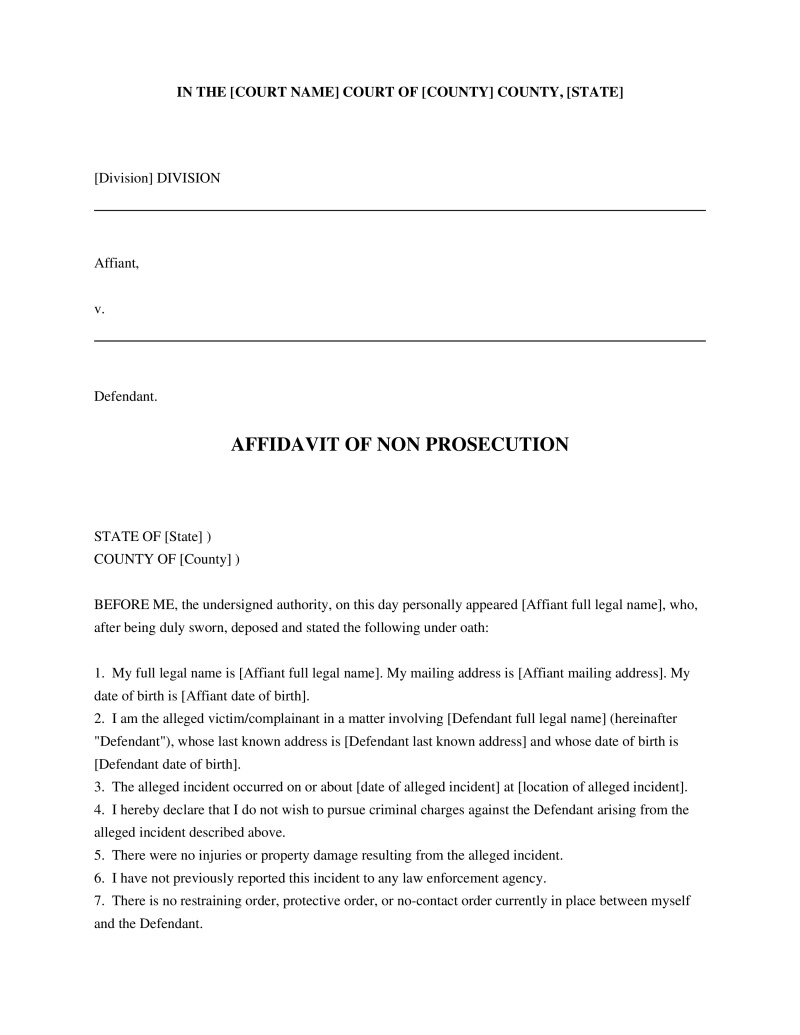
An Affidavit of Non Prosecution is a sworn statement presented in a criminal proceeding, typically by a complainant, expressing a desire to discontinue prosecution against an accused party.
Incident Type
Select the primary type of alleged offense for which you are submitting this affidavit.
Provide a brief description of the alleged offense if you selected 'Other'.
Table of Contents
What is an Affidavit of Non Prosecution?
An affidavit of non-prosecution is a legal document in which a victim or witness formally declares their decision not to pursue charges or cooperate with the prosecution in a criminal case. This document typically expresses a desire for the charges to be dropped or for the legal proceedings to cease. While it reflects the wishes of the individual, it is generally not binding on the prosecutor, who retains discretion over whether to continue with a case.
Purpose and Common Scenarios
The primary purpose of an affidavit of non-prosecution is to communicate the affiant's (the person making the statement) lack of desire to proceed with criminal charges. Such affidavits are most commonly encountered in cases where there is a personal relationship between the alleged victim and the defendant, such as domestic disputes, assault, or harassment. The affiant might have reconciled with the defendant, fear retaliation, or simply wish to avoid the emotional and logistical burden of participating in court proceedings.
Victims may sign an affidavit of non-prosecution for various reasons, including:
- Reconciliation - The parties involved may have resolved their issues outside of the legal system.
- Fear or Intimidation - The victim may be afraid of the defendant or their associates.
- Misunderstanding or False Accusation - The victim may realize they made a mistake in their initial report or that the incident was misconstrued.
- Desire for Privacy - The victim may wish to avoid the public scrutiny and emotional toll of a trial.
- Lack of Cooperation - A victim's unwillingness to testify or provide further information can significantly weaken the prosecution's case.
Key Elements of an Affidavit of Non Prosecution
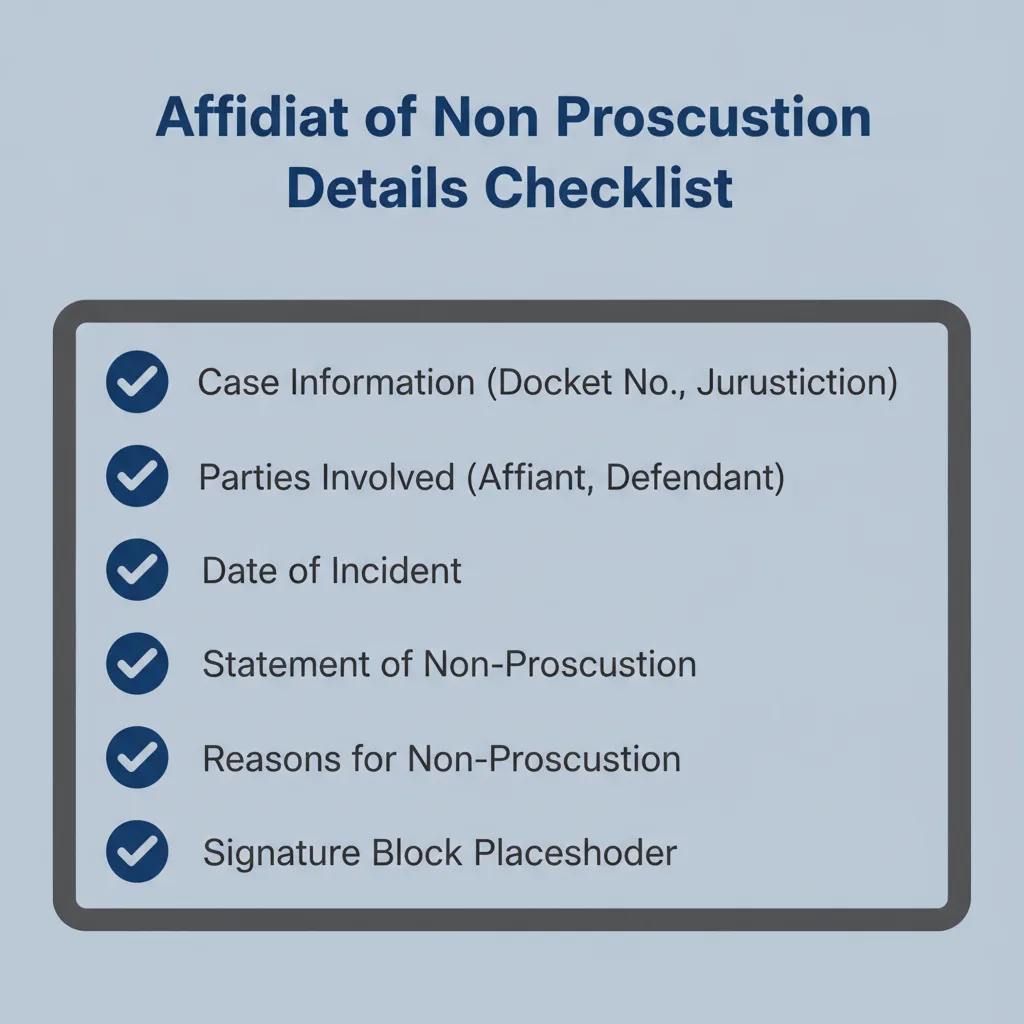
While specific statutory requirements for a victim's affidavit of non-prosecution are not uniformly defined across jurisdictions, affidavits generally adhere to certain formal standards to be considered valid. An affidavit must be a sworn statement of facts, executed under oath or affirmation.
Typical components often found in such a document include:
- Formal Caption - The affidavit should be captioned as a formal pleading, including the name of the court and the style of the case, similar to other legal documents (U.S. Attorneys' Manual | 605).
- Identification of Parties - Clear identification of the affiant (victim/witness), the defendant, and the specific case details (e.g., case number, charges).
- Statement of Facts - A narrative explaining the affiant's reasons for requesting non-prosecution, often detailing the initial incident and subsequent change of heart.
- Declaration of Non-Cooperation - Explicit statement that the affiant does not wish to pursue charges, will not testify, or will not cooperate with the prosecution.
- Voluntary Nature - A statement affirming that the affidavit is being made voluntarily, without coercion, duress, or undue influence.
- Signature and Notarization - The affiant's signature, typically executed before a notary public or a judge, to attest to the truthfulness of the statement.
Legal Standing and Prosecutorial Discretion
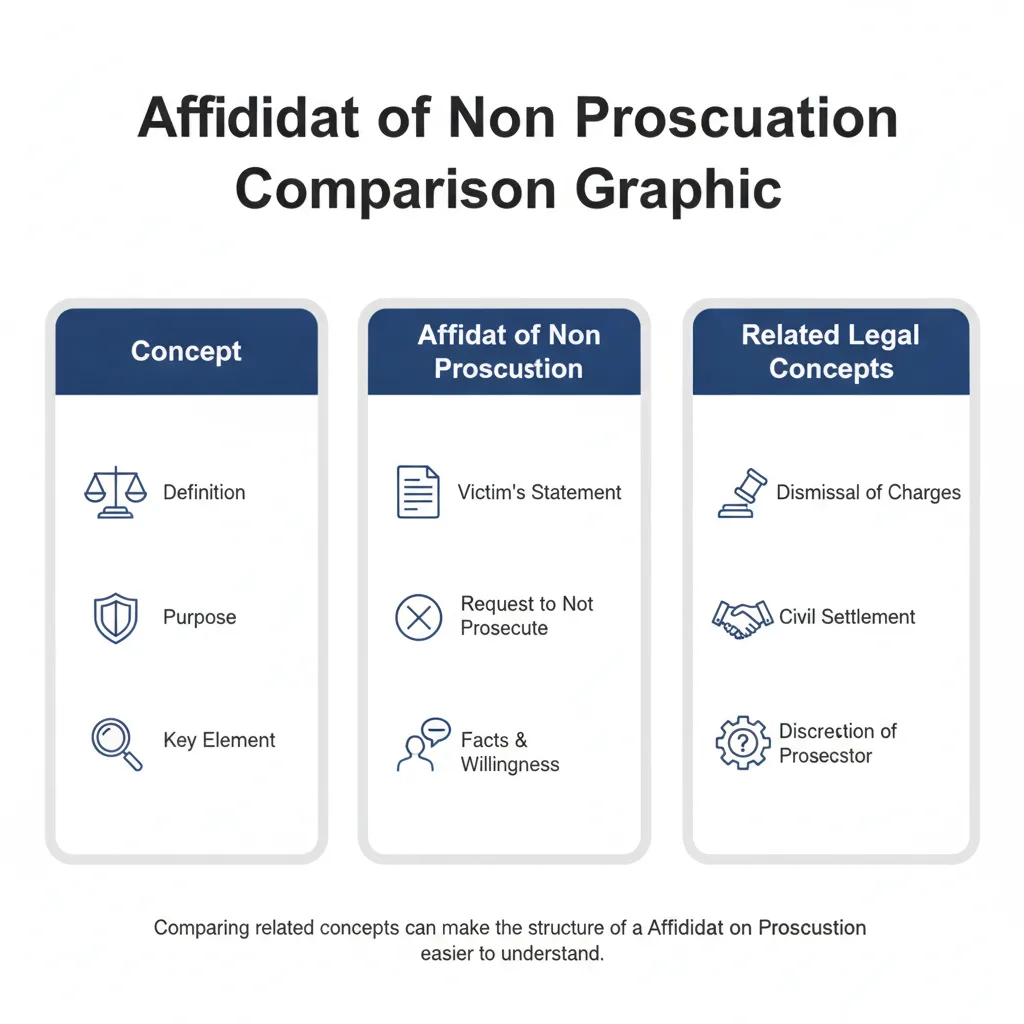
An affidavit of non-prosecution does not automatically lead to the dismissal of criminal charges. The decision to prosecute or drop charges rests solely with the prosecuting attorney, who represents the state or government, not the individual victim. Prosecutors consider various factors when making such decisions, including the nature of the crime, the availability of other evidence, public safety concerns, and the overall interests of justice.
Even if a victim expresses a desire to drop charges, the prosecutor may proceed with the case if there is sufficient independent evidence (e.g., police reports, witness statements, physical evidence) to secure a conviction. In some instances, particularly in cases involving serious crimes or domestic violence, prosecutors may be hesitant to dismiss charges, even with an affidavit, due to concerns about victim safety or potential manipulation.
Distinction from Other Affidavits in Criminal Proceedings
Frequently Asked Questions
Sources
- U.S. Attorneys' Manual | 605. Prosecutor's Affidavit - Guidance on drafting prosecutor's affidavits, including format and content requirements.
- RCW 10.05.010: Petition—Eligibility - Statute outlining eligibility and requirements for deferred prosecution programs in Washington State, including petition and affidavit requirements.
- Chapter 910 Section 11 - 2019 Florida Statutes - Statute stating that an acquittal bars subsequent prosecution for the same offense, regardless of defects in the indictment, information, or affidavit.
- Statute | Kansas State Legislature - Statute detailing the commencement of prosecution and issuance of warrants or summonses in Kansas, including requirements for affidavits.
Not the form you're looking for?
Try our legal document generator to create a custom document
Disclaimer: The templates available on this website are provided for general informational purposes only and do not constitute legal advice. They are not intended to be, and should not be interpreted as, compliant with any specific legal, regulatory, or privacy requirements. These templates are not a replacement for professional legal guidance and should not be relied upon for any particular matter or circumstance. Users are strongly encouraged to seek advice from a qualified attorney licensed in their jurisdiction before using, modifying, or relying on any template.
All templates are provided on an "as is," "with all faults," and "as available" basis. The provider disclaims any and all warranties of any kind, whether express, implied, statutory, or otherwise, including without limitation warranties of merchantability, fitness for a particular purpose, title, or non-infringement.
LegalTemplates.com makes no guarantees or representations regarding the accuracy, completeness, expected outcomes, or reliability of the materials contained in these templates or any materials referenced or linked from them.