Affidavit of Identity
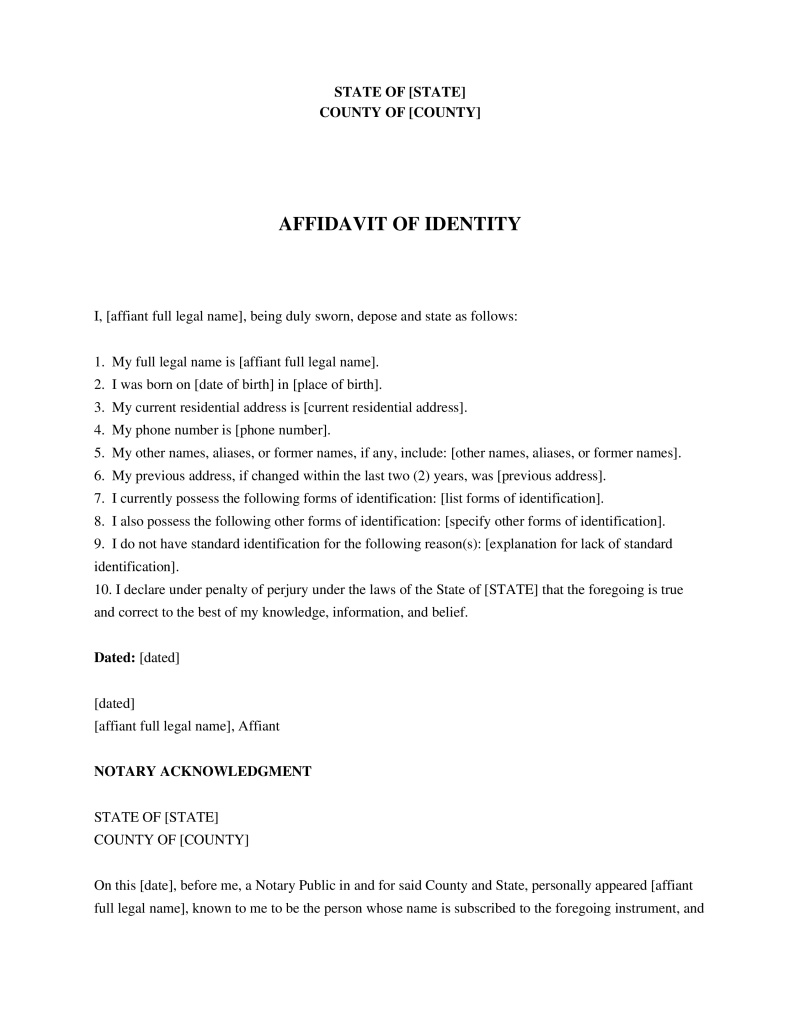
An Affidavit of Identity is a sworn legal document used to formally attest to and verify the identity of an individual, often presented in various legal or administrative contexts requiring proof of personal particulars.
Identity Purpose
Select the main reason for which this affidavit is required.
Provide details if your reason is not listed above.
Table of Contents
What is an Affidavit of Identity?
An Affidavit of Identity is a sworn legal document used to formally verify an individual's identity. It typically contains a statement made under oath or affirmation, attesting to the truthfulness of the information provided by the affiant (the person making the statement). This document serves various legal and administrative purposes, often required when standard forms of identification are unavailable, insufficient, or need additional corroboration.
Its primary function is to establish who a person is, confirming details such as their full legal name, date of birth, and sometimes their address or other identifying characteristics. The affidavit is generally signed in the presence of a notary public or another authorized official, who then attests to the affiant's signature and identity. This notarization adds a layer of legal validity and authenticity to the sworn statement.
Purpose and Applications
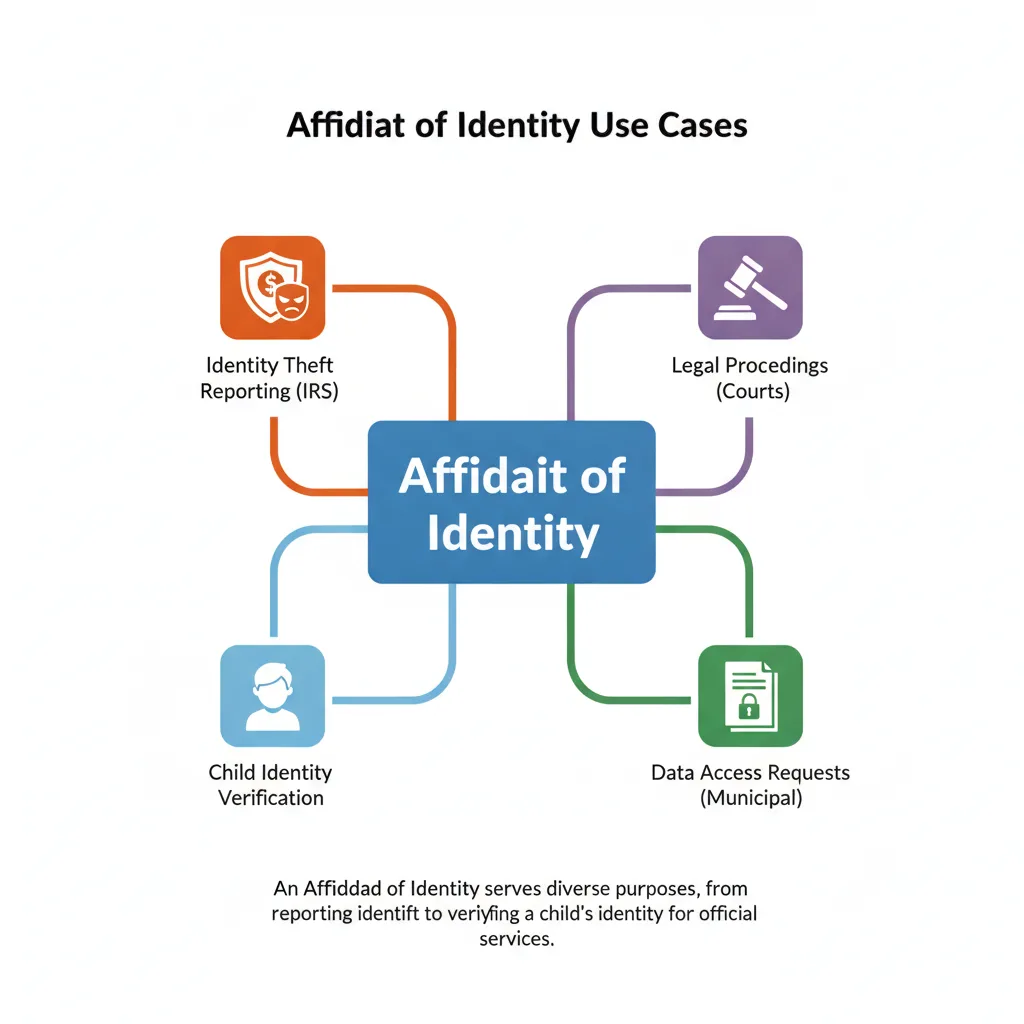
The Affidavit of Identity is employed in a wide range of situations where proof of identity is crucial but direct, primary documentation may be lacking or a formal sworn statement is specifically mandated. Its versatility allows it to bridge gaps in identification processes, providing a legally recognized method of self-attestation.
Specific applications often include:
- Identity Theft Reporting - Individuals who have experienced identity theft can use a specialized affidavit, such as Form 14039, to report the incident to the Internal Revenue Service (IRS). This form helps victims inform the IRS that they are an identity theft victim (Form 14039: Identity Theft Affidavit).
- Legal Proceedings - In certain legal matters, an individual may need to formally establish their identity for court purposes. For example, in California, an Affidavit of Identity and Order can be used in family law proceedings to confirm an individual's identity (Affidavit of Identity and Order - FL-105-INFO).
- Verification for Minors - When children under 18 need to prove their identity for services or official documents, a parent or legal guardian may complete an affidavit. This is seen in California for verifying identity for health services (Affidavit of Identity for U.S. Citizen or National Children Under 18) and in Illinois for minors applying for state identification cards (Affidavit of Identity - Illinois SOS).
- Data Access Requests - To ensure the security and privacy of personal information, entities like municipal governments may require an Affidavit of Identity when an individual requests access to their own data. The City of Minneapolis, for instance, uses such an affidavit for data requests (Affidavit of Identity - Minneapolis).
Key Elements of an Affidavit of Identity
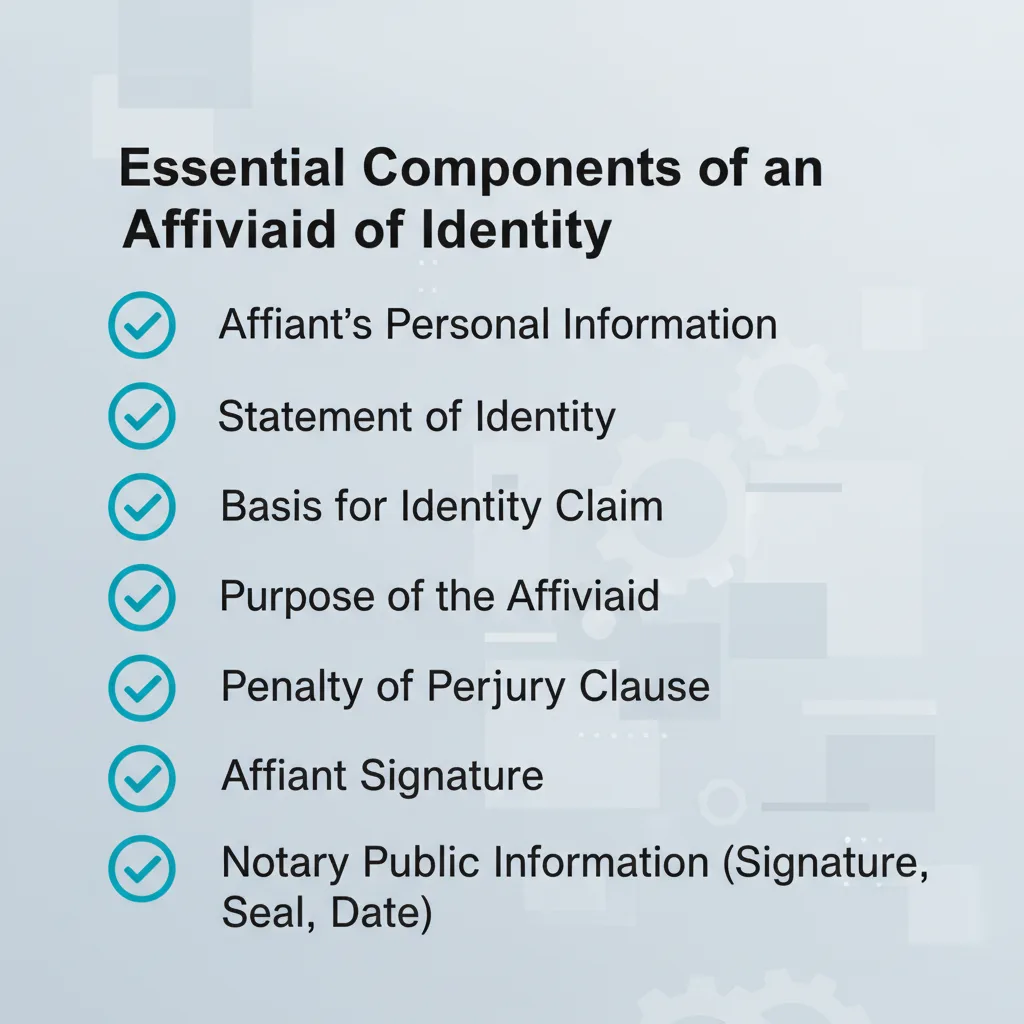
While the specific content of an Affidavit of Identity can vary depending on its intended use and jurisdiction, several core elements are almost universally present. These elements ensure the document serves its purpose of clearly identifying the affiant and establishing the veracity of their statements.
Typically, an Affidavit of Identity includes:
- Affiant's Personal Information - Full legal name, current address, date of birth, and sometimes other contact details.
- Statement of Identity - A clear declaration by the affiant that they are the person named and that all provided information is true and correct to the best of their knowledge.
- Basis for Identity Claim - Reference to any supporting documents used to establish identity, even if they are not directly attached or are insufficient on their own (e.g., driver's license number, passport number, social security number).
- Purpose of the Affidavit - A brief explanation of why the affidavit is being made and for what specific legal or administrative process it is intended.
- Penalty of Perjury Clause - A statement indicating that the affiant understands they are signing under penalty of perjury, meaning that intentionally providing false information can lead to legal consequences.
- Signature of Affiant - The handwritten signature of the individual making the sworn statement.
- Notary Public Information - The signature, seal, and commission expiration date of the notary public who witnessed the signing and verified the affiant's identity.
Execution and Notarization
The proper execution and notarization are critical steps that lend legal authority and credibility to an Affidavit of Identity. Without these elements, the document may not be accepted by the requesting party or legal authority.
The process generally involves:
- Preparation - The affiant or their legal representative completes the affidavit form with all necessary personal details and statements.
- Review - The affiant carefully reviews the entire document to ensure all information is accurate and complete before signing.
- Witnessing and Notarization - The affiant must sign the document in the physical presence of a notary public or another authorized official. The notary's role is to verify the identity of the affiant (usually by checking government-issued photo identification) and to administer the oath or affirmation. The notary then affixes their signature, official seal, and commission expiration date to the document, confirming that the affidavit was properly sworn and signed.
- Filing or Submission - Once executed and notarized, the affidavit is submitted to the relevant authority, court, or organization that requested it.
The act of notarization is particularly important as it provides an impartial third-party verification that the person signing the affidavit is indeed who they claim to be and that they signed it willingly. This helps prevent fraud and ensures the integrity of the sworn statement.
Context-Specific Requirements
The specific requirements for an Affidavit of Identity can vary significantly based on the context in which it is used. Different agencies and jurisdictions tailor the form to their particular needs, often requiring specific details or attachments.
Examples of context-specific requirements include:
- IRS Identity Theft Affidavit (Form 14039) - This form requires specific details about the identity theft incident, including the type of theft, when it occurred, and what actions the victim has already taken. It also asks for information about the tax year(s) affected and any suspicious activities related to tax accounts (Form 14039: Identity Theft Affidavit).
- California Court Proceedings (FL-105-INFO) - In family law cases in California, the Affidavit of Identity and Order form is used to establish identity and may be presented to the court. It typically requires the affiant's name, address, and date of birth, and is filed as part of court documents (Affidavit of Identity and Order - FL-105-INFO).
- Child Identity Verification (California DHCS) - For verifying the identity of children under 18 for health services in California, the affidavit is completed by a parent or guardian. This form explicitly requires the child's name, date of birth, and a statement from the parent/guardian affirming their relationship and the child's identity (Affidavit of Identity for U.S. Citizen or National Children Under 18).
- Minor ID Card Applications (Illinois SOS) - In Illinois, when a minor applies for a state identification card, a parent or guardian must complete an Affidavit of Identity. This document confirms the minor's identity and residency, often requiring the parent/guardian's identification details as well (Affidavit of Identity - Illinois SOS).
- City of Minneapolis Data Requests - When requesting personal data from the City of Minneapolis, the Affidavit of Identity requires the individual to attest to their identity for data privacy reasons, typically including their name, address, and signature (Affidavit of Identity - Minneapolis).
Frequently Asked Questions
Sources
- Form 14039: Identity Theft Affidavit - Provides a standardized form for victims of identity theft to report the issue to the IRS.
- Affidavit of Identity and Order - Offers a form for individuals to establish their identity in legal proceedings within California.
- Affidavit of Identity for U.S. Citizen or National Children Under 18 - Provides a form for parents or guardians to verify the identity of children under 18 in California.
- Affidavit of Identity - Offers a form for parents or guardians to verify the identity of minors applying for state ID cards in Illinois.
- Affidavit of Identity - Provides a form for individuals to verify their identity when making data requests from the City of Minneapolis.
Not the form you're looking for?
Try our legal document generator to create a custom document
Disclaimer: The templates available on this website are provided for general informational purposes only and do not constitute legal advice. They are not intended to be, and should not be interpreted as, compliant with any specific legal, regulatory, or privacy requirements. These templates are not a replacement for professional legal guidance and should not be relied upon for any particular matter or circumstance. Users are strongly encouraged to seek advice from a qualified attorney licensed in their jurisdiction before using, modifying, or relying on any template.
All templates are provided on an "as is," "with all faults," and "as available" basis. The provider disclaims any and all warranties of any kind, whether express, implied, statutory, or otherwise, including without limitation warranties of merchantability, fitness for a particular purpose, title, or non-infringement.
LegalTemplates.com makes no guarantees or representations regarding the accuracy, completeness, expected outcomes, or reliability of the materials contained in these templates or any materials referenced or linked from them.