Affidavit of Death
An Affidavit of Death is a sworn legal statement used to formally attest to the passing of an individual, often required for estate administration or property transfer.
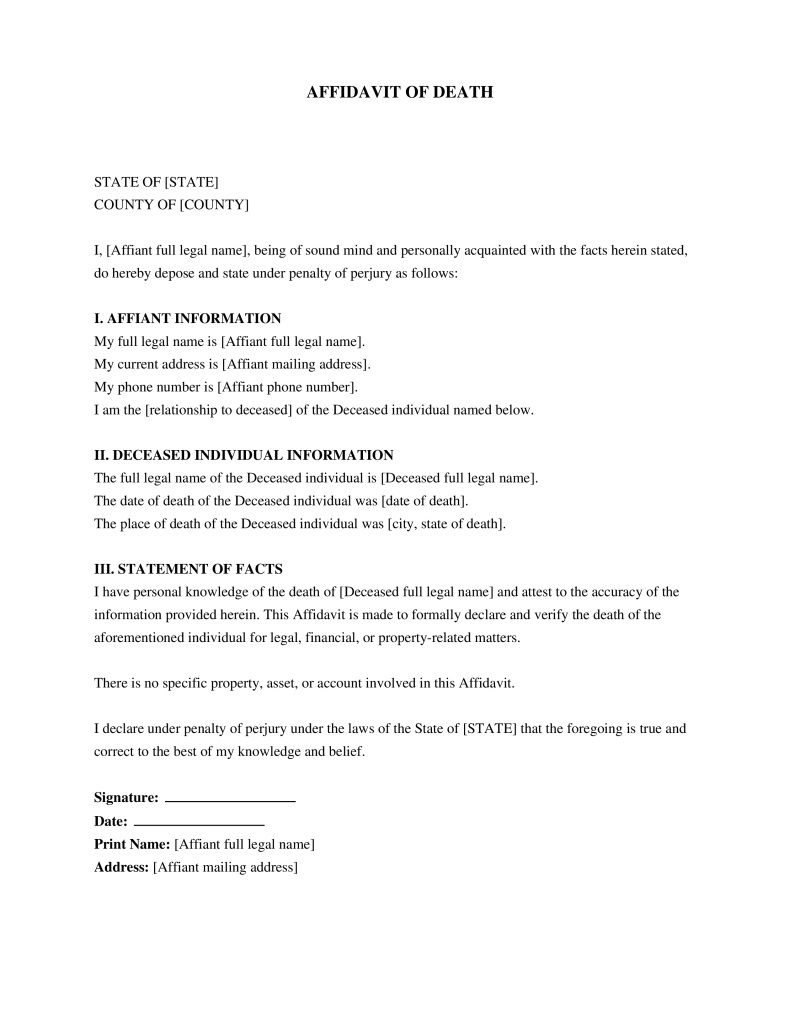
Affiant Relationship
Select the option that best describes your relationship to the deceased individual.
Provide details if your relationship is not listed above.
Table of Contents
What is an Affidavit of Death?
An Affidavit of Death is a sworn legal document that formally declares the death of an individual. Its primary purpose is to notify various entities, such as government agencies, financial institutions, or property record offices, of a person's passing. This document is typically used to facilitate the transfer of property, clear titles, or enable the collection of assets and settlement of debts without the need for a full probate court proceeding in certain circumstances.
Purpose and Common Use Cases
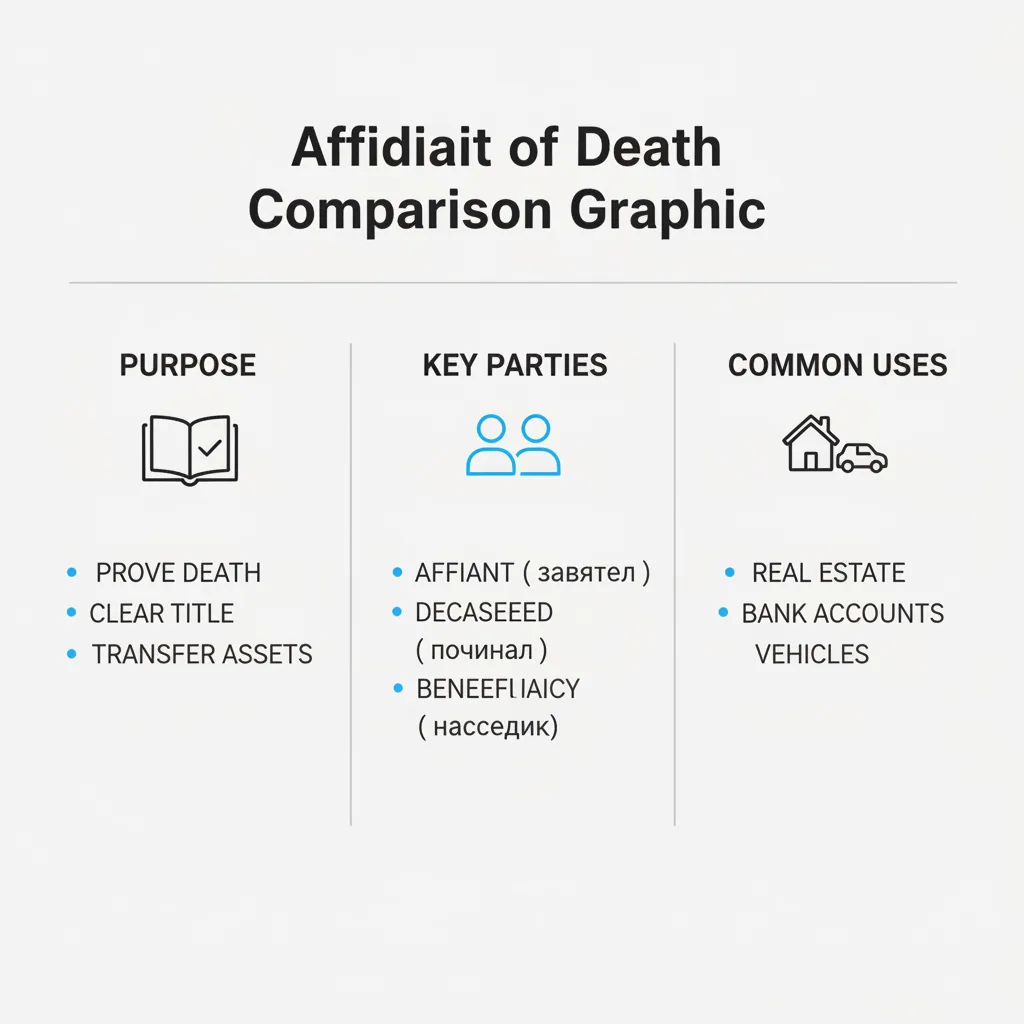
The Affidavit of Death serves as crucial evidence of a person's demise, allowing for the legal transition of their affairs. It is frequently utilized in situations where a formal court order might be unnecessary due to the nature or value of the assets involved, or the specific ownership structure of the property. The document helps streamline administrative processes that arise after a death.
- Transfer of Real Property - Often used to remove a deceased person's name from a property title, especially in cases of joint tenancy, allowing the surviving owner to gain full ownership.
- Collection of Personal Property and Debts - In some jurisdictions, an Affidavit of Death can be used by successors to collect small estates, debts owed to the decedent, or personal property without formal probate.
- Estate Administration - While not always a substitute for probate, it can be a component of estate administration, particularly for specific asset transfers or for providing formal notice of death in various legal contexts.
Key Information and Required Elements
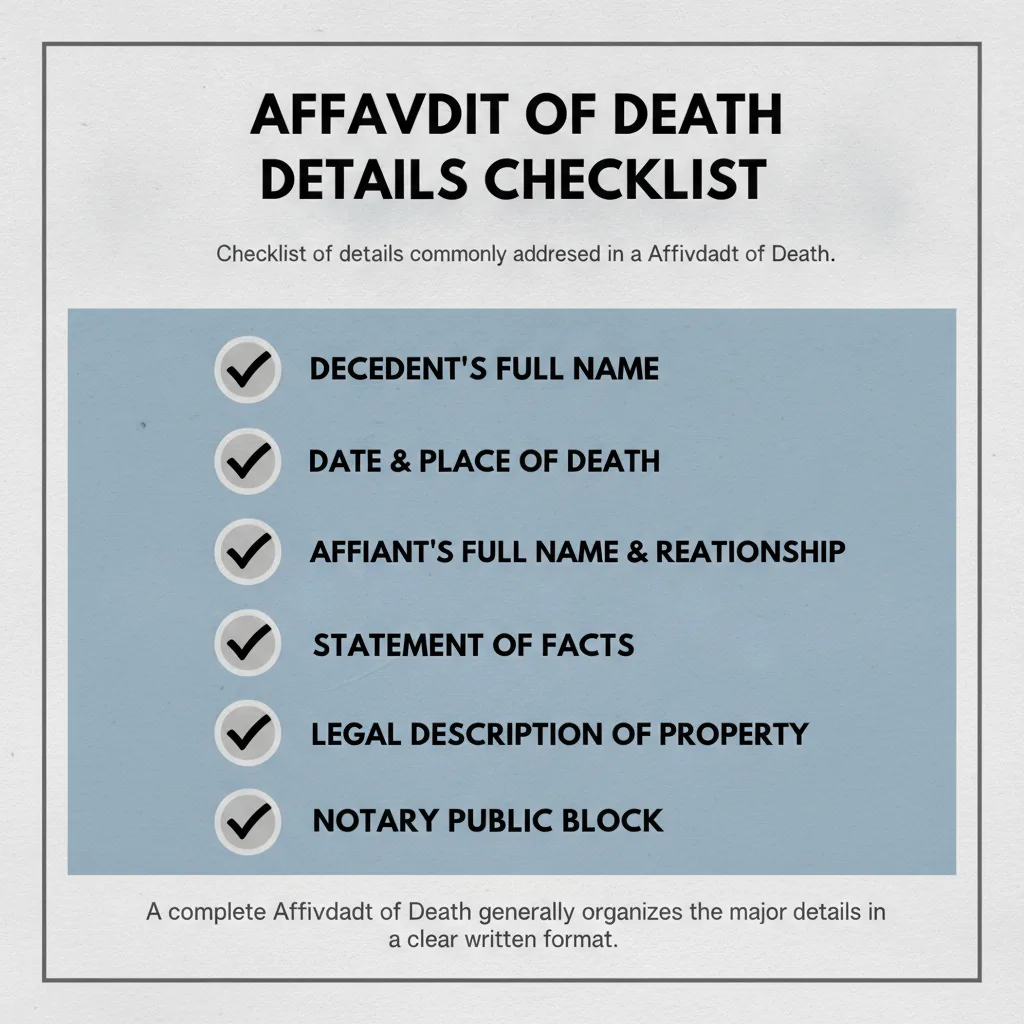
The specific information required in an Affidavit of Death can vary significantly by jurisdiction and the document's intended use. However, several common elements are generally necessary for the affidavit to be legally effective and accepted by the relevant authorities. These elements ensure the document is clear, factual, and properly identifies all involved parties and assets.
- Affiant's Information - The full legal name, address, and signature of the person making the affidavit (the affiant). This individual typically has personal knowledge of the decedent's death and a legal interest in the matter.
- Decedent's Information - The full legal name of the deceased individual, along with their date of death and, in some cases, their last known address.
- Certified Death Certificate - A certified copy of the decedent's death certificate is almost universally required to be attached to or submitted alongside the Affidavit of Death as proof of death.
- Property Description - If the affidavit pertains to real property, a legal description of the property, including its address and assessor's parcel number, is necessary.
Frequently Asked Questions
Sources
- Affidavit of Death of Joint Tenant/Trustee - Provides forms and instructions for recording an Affidavit of Death of Joint Tenant/Trustee in Los Angeles County, California.
- Affidavit - Death Forms - Offers information and forms for recording an Affidavit of Death in Sacramento County, California.
- Probate and Family Court Cause of Death Affidavit (MPC 475) - Provides the Cause of Death Affidavit form (MPC 475) for use in Massachusetts Probate and Family Court proceedings.
- RCW 11.62.010: Disposition of personal property, debts by affidavit, proof of death—Contents of affidavit—Procedure—Securities. - Details the procedure for collecting personal property and debts by affidavit in Washington State, including the contents required in the affidavit.
- Nebraska Revised Statute 30-24,125: Collection of personal property by affidavit. - Outlines the procedure for collecting personal property by affidavit in Nebraska, including the contents required in the affidavit.
Not the form you're looking for?
Try our legal document generator to create a custom document
Disclaimer: The templates available on this website are provided for general informational purposes only and do not constitute legal advice. They are not intended to be, and should not be interpreted as, compliant with any specific legal, regulatory, or privacy requirements. These templates are not a replacement for professional legal guidance and should not be relied upon for any particular matter or circumstance. Users are strongly encouraged to seek advice from a qualified attorney licensed in their jurisdiction before using, modifying, or relying on any template.
All templates are provided on an "as is," "with all faults," and "as available" basis. The provider disclaims any and all warranties of any kind, whether express, implied, statutory, or otherwise, including without limitation warranties of merchantability, fitness for a particular purpose, title, or non-infringement.
LegalTemplates.com makes no guarantees or representations regarding the accuracy, completeness, expected outcomes, or reliability of the materials contained in these templates or any materials referenced or linked from them.