Writ Of Habeas Corpus
A Writ of Habeas Corpus is a legal order issued by a court, requiring that a person under arrest or detained be brought before the court to determine if their detention is lawful.
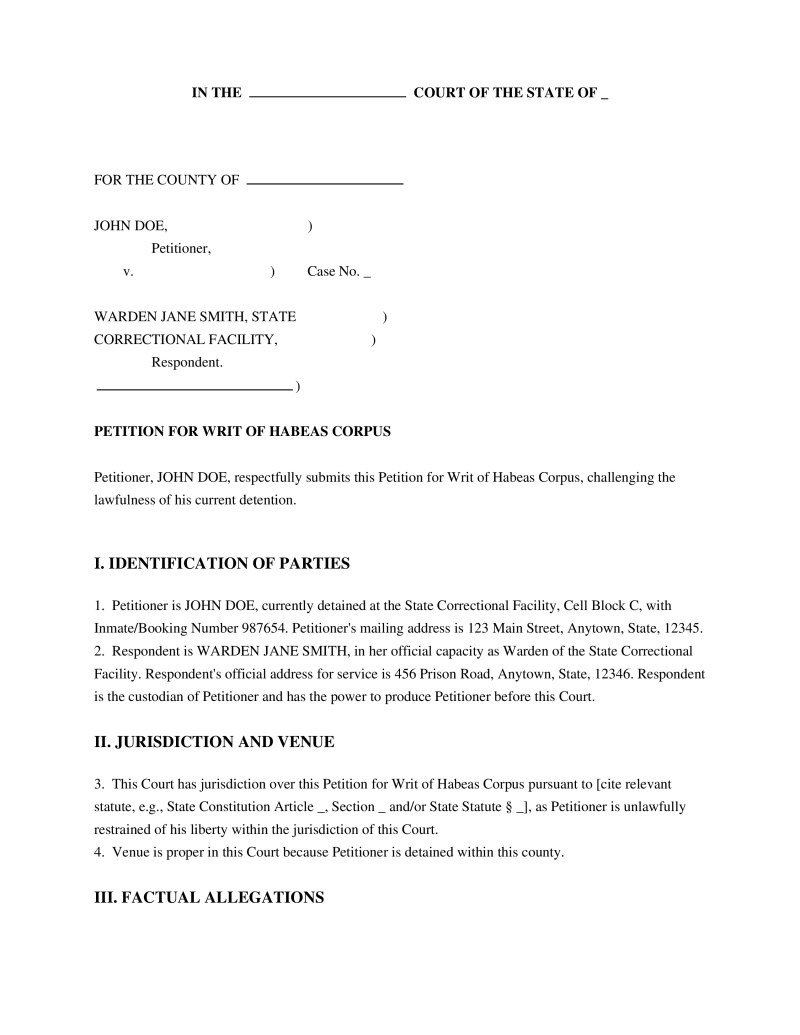
Petitioner Role
Select the capacity in which you are filing this petition.
Enter the name of the person filing the petition.
Enter the Petitioner's current mailing address.
Select 'Yes' to add another person as a Petitioner.
Enter the name of the second Petitioner, if any.
Enter the mailing address of the second Petitioner.
Select 'Yes' to add a third Petitioner.
Enter the name of the third Petitioner, if any.
Enter the mailing address of the third Petitioner.
Table of Contents
What is a Writ Of Habeas Corpus?
A Writ Of Habeas Corpus is a legal action through which a person can seek relief from unlawful detention. The Latin term "habeas corpus" translates to "you have the body," signifying the court's order to bring a detained individual before it. Its primary purpose is to protect individual liberty by allowing courts to examine the legality of a person's imprisonment or detention, rather than determining guilt or innocence. This fundamental legal remedy is utilized by individuals who believe they are being held in violation of their constitutional or statutory rights.
Historical Context and Constitutional Basis
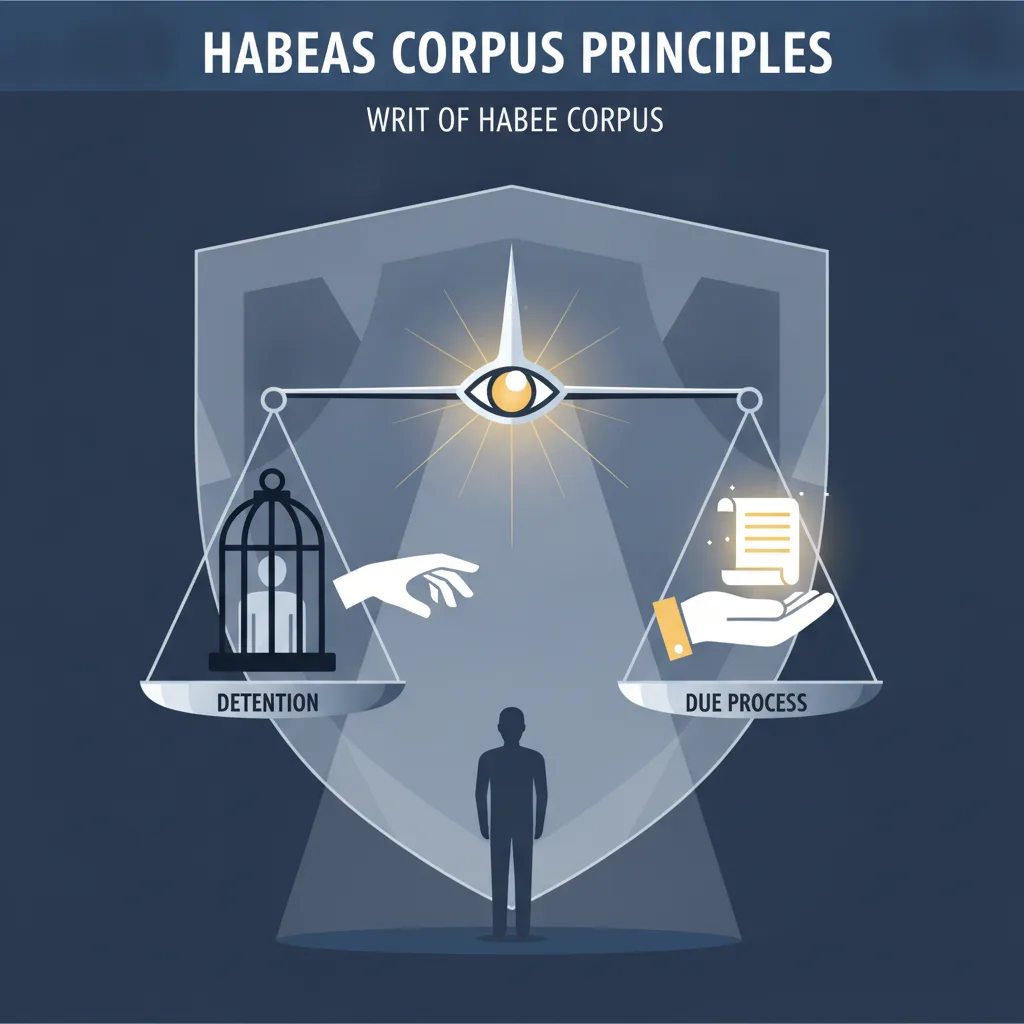
The origins of the Writ Of Habeas Corpus can be traced back to English common law, serving as a crucial safeguard against arbitrary arrest and imprisonment by the crown. Its principles were foundational in the development of individual rights and due process. Notable historical documents, such as the Magna Carta of 1215, laid early groundwork for protections against unlawful detention, though the writ itself evolved significantly over centuries.
In the United States, the importance of habeas corpus is enshrined in the Constitution. The Suspension Clause, found in Article I, Section 9, Clause 2, explicitly states: "The Privilege of the Writ of Habeas Corpus shall not be suspended, unless when in Cases of Rebellion or Invasion the public Safety may require it." This clause ensures that the writ remains available except under extreme circumstances. Beyond the Constitution, Congress has codified the procedures for habeas corpus petitions in federal law.
- Suspension Clause - Preserves the right to the writ of habeas corpus, allowing its suspension only in cases of rebellion or invasion when public safety demands it (U.S. Constitution, Article I, Section 9, Clause 2).
- Federal Habeas Statutes - Outline the jurisdiction of federal courts to issue writs of habeas corpus for persons in custody in violation of the Constitution or laws of the United States (28 U.S.C. §§ 2241-2255).
Grounds for Relief
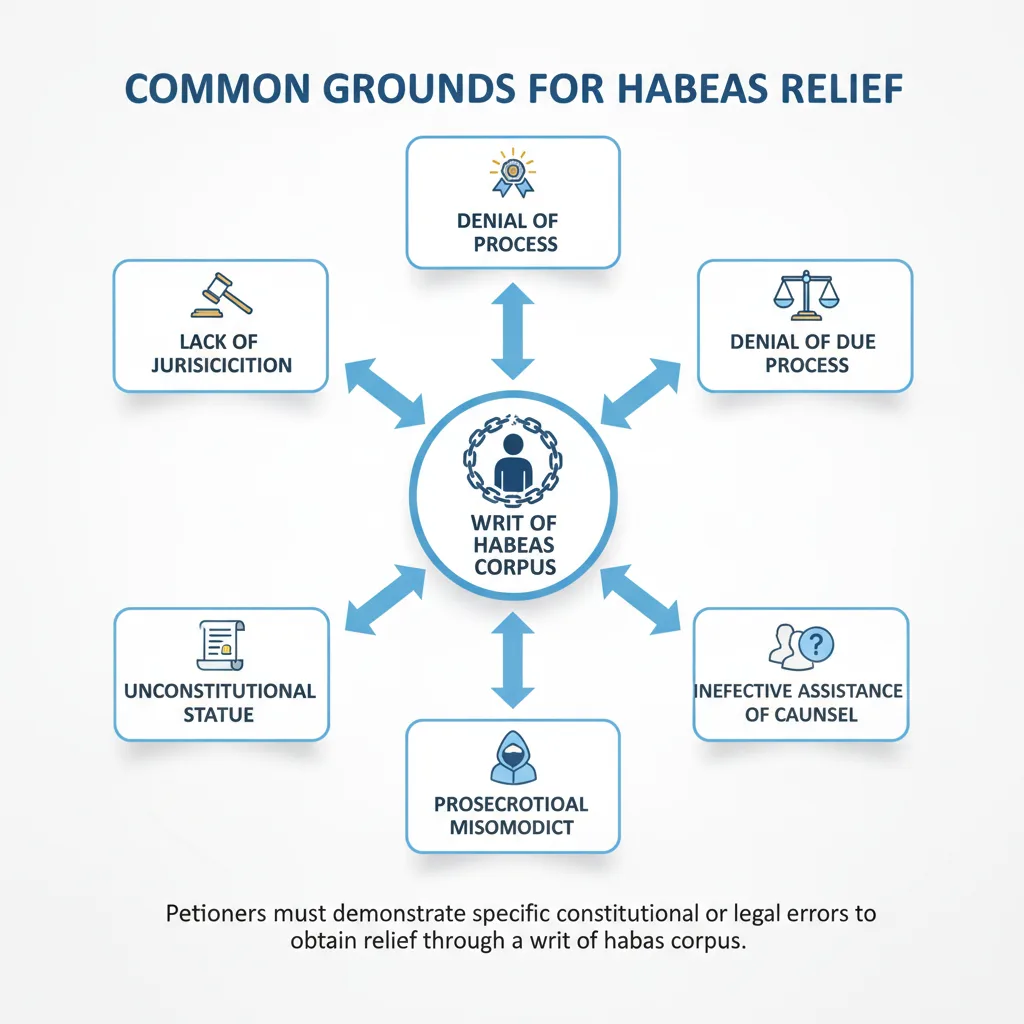
A Writ Of Habeas Corpus is not a tool to re-litigate guilt or innocence, but rather to challenge the legality of the detention itself based on constitutional or fundamental legal errors. Petitioners must demonstrate that their custody violates federal law or the U.S. Constitution. Common grounds for seeking habeas relief often include:
- Lack of Jurisdiction - The court that imposed the detention lacked the legal authority to do so.
- Unconstitutional Statute - The law under which the petitioner was convicted or detained is unconstitutional.
- Denial of Due Process - The petitioner was deprived of fundamental fairness during legal proceedings, such as the right to a fair trial, notice of charges, or an impartial judge.
- Ineffective Assistance of Counsel - The petitioner's legal representation fell below an objective standard of reasonableness and prejudiced the outcome of the case, as established by Strickland v. Washington.
- Prosecutorial Misconduct - Actions by the prosecution, such as withholding exculpatory evidence, violated the petitioner's rights.
- Newly Discovered Evidence - In rare cases, new evidence may demonstrate actual innocence, though this is a very high bar for habeas relief.
- Violation of Miranda Rights - Statements obtained in violation of the petitioner's right to remain silent or right to counsel were used against them.
The Petition Process
The process for filing a Writ Of Habeas Corpus typically begins after a petitioner has exhausted all available direct appeals in the state or federal court system. This exhaustion requirement ensures that state courts have the first opportunity to correct any constitutional errors. Once direct appeals are exhausted, a petitioner may then file a habeas petition in the appropriate court.
The petition itself is a formal legal document outlining the grounds for the unlawful detention. It must identify the custodian (the person holding the detainee, often a warden or superintendent) and detail the constitutional or legal violations alleged. The court reviews the petition to determine if it states a plausible claim for relief. If it does, the court will typically order the custodian to file a response, explaining the legal basis for the detention. The court may then hold an evidentiary hearing if facts outside the existing record need to be established, or it may rule on the petition based solely on the written submissions.
Federal and State Habeas Corpus
The application of habeas corpus can occur at both state and federal levels, each with distinct characteristics and requirements. State habeas corpus petitions challenge detention under state law or the state constitution and are typically filed in state courts. Federal habeas corpus petitions, on the other hand, challenge detention on the grounds that it violates the U.S. Constitution or federal law, and can be filed in federal courts.
A critical distinction arises when a state prisoner seeks federal habeas relief. Federal courts generally cannot grant a writ to a state prisoner unless the state court's adjudication of the claim resulted in a decision that was contrary to, or involved an unreasonable application of, clearly established federal law as determined by the Supreme Court of the United States, or resulted in a decision that was based on an unreasonable determination of the facts in light of the evidence presented in the state court proceeding. This standard was largely established by the Antiterrorism and Effective Death Penalty Act (AEDPA) of 1996, which significantly limited the scope of federal habeas review for state prisoners.
- Exhaustion of State Remedies - Before a state prisoner can file a federal habeas petition, they must first present their claims to the highest state court available, allowing state courts the opportunity to correct constitutional errors.
- AEDPA Standard of Review - Federal courts apply a highly deferential standard when reviewing state court decisions, requiring petitioners to show the state court's ruling was an unreasonable application of federal law or an unreasonable determination of facts (28 U.S.C. § 2254(d)).
- One-Year Statute of Limitations - The AEDPA also imposes a one-year deadline for state prisoners to file their federal habeas petitions, generally beginning after the conclusion of direct review in state courts.
Effects and Limitations
If a court grants a Writ Of Habeas Corpus, the typical outcome is that the petitioner is released from custody or, more commonly, is granted a new trial or sentencing hearing. The court does not usually declare the petitioner innocent but rather finds that the detention is unlawful due to a legal error in the process. The specific remedy depends on the nature of the constitutional violation found.
Despite its power, the Writ Of Habeas Corpus has significant limitations. Procedural bars, such as procedural default (failing to raise a claim in state court at the appropriate time) and the rule against successive petitions (filing multiple habeas petitions on the same grounds), can prevent a federal court from considering the merits of a claim. The AEDPA's strict standards and deadlines also serve as substantial barriers to relief, reflecting a legislative intent to promote finality in criminal judgments and reduce successive litigation.
Frequently Asked Questions
Not the form you're looking for?
Try our legal document generator to create a custom document
Disclaimer: The templates available on this website are provided for general informational purposes only and do not constitute legal advice. They are not intended to be, and should not be interpreted as, compliant with any specific legal, regulatory, or privacy requirements. These templates are not a replacement for professional legal guidance and should not be relied upon for any particular matter or circumstance. Users are strongly encouraged to seek advice from a qualified attorney licensed in their jurisdiction before using, modifying, or relying on any template.
All templates are provided on an "as is," "with all faults," and "as available" basis. The provider disclaims any and all warranties of any kind, whether express, implied, statutory, or otherwise, including without limitation warranties of merchantability, fitness for a particular purpose, title, or non-infringement.
LegalTemplates.com makes no guarantees or representations regarding the accuracy, completeness, expected outcomes, or reliability of the materials contained in these templates or any materials referenced or linked from them.