Termination of Parental Rights
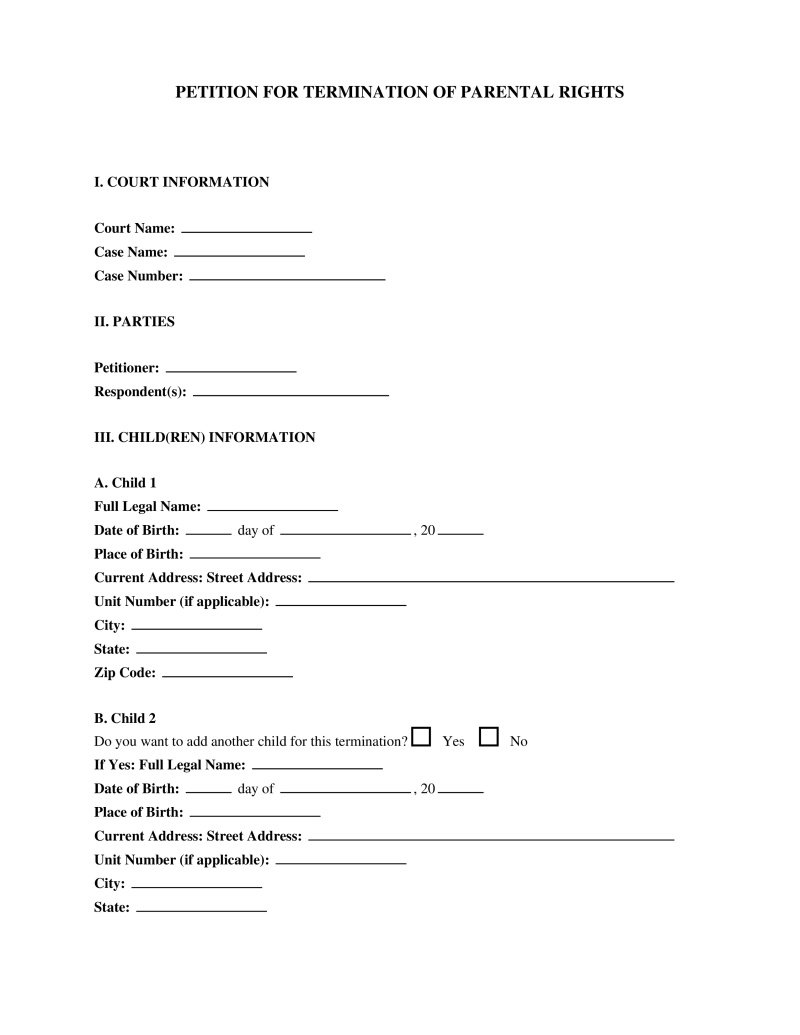
A Termination of Parental Rights is a legal order or judgment issued by a court that permanently severs the legal parent-child relationship, extinguishing all parental rights and responsibilities.
Termination Type
Select the primary legal ground for this termination. This affects court requirements and documentation.
Include relevant facts, incidents, or legal findings supporting the termination.
Table of Contents
What is a Termination of Parental Rights?
Termination of Parental Rights (TPR) is a legal process that permanently ends the legal parent-child relationship. This action severs all rights and obligations between a parent and their child, including custody, visitation, and the responsibility for financial support. It is a severe legal measure, typically pursued when a child's safety and well-being are at risk, or to facilitate adoption.
Purpose and Impact of Termination
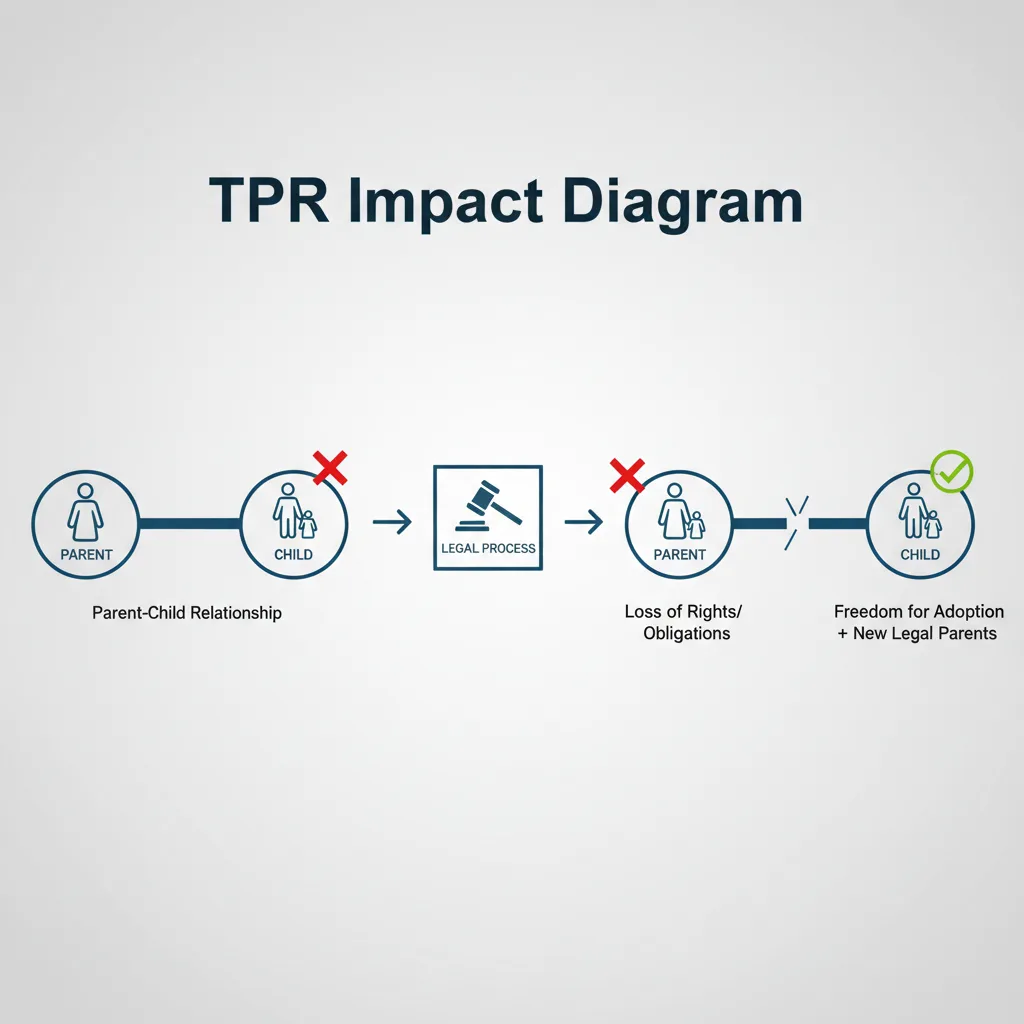
The primary purpose of terminating parental rights is to protect a child from harm and to establish permanency in their life, often through adoption. Once parental rights are terminated, the former parent no longer has any legal claim to the child, nor are they legally obligated to provide care or support. The child is then free to be adopted by new parents, who will assume all legal rights and responsibilities.
The impact of a termination order is profound and permanent. For the child, it means a clear path to a stable, permanent family structure. For the parent, it represents a complete loss of their legal connection to the child, including:
- Custody and Visitation - All rights to physical custody and visitation with the child are permanently revoked.
- Decision-Making Authority - The ability to make legal, medical, educational, or religious decisions for the child is removed.
- Financial Responsibility - The obligation to provide child support or any other financial contribution to the child's upbringing is ended.
- Inheritance Rights - The child typically loses the right to inherit from the terminated parent, and vice versa.
Common Grounds for Termination
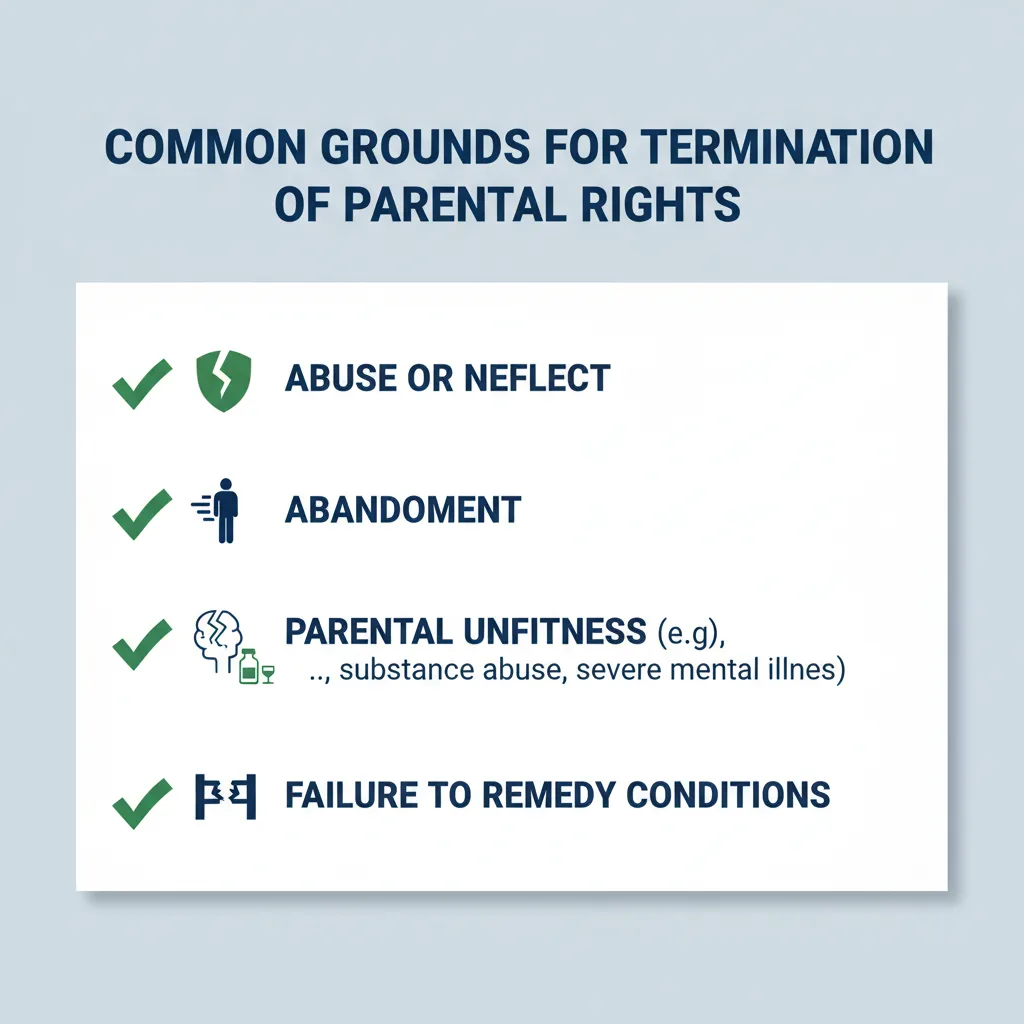
Courts do not terminate parental rights lightly; there must be compelling legal grounds, which vary by state. These grounds generally focus on a parent's inability or unwillingness to provide a safe and nurturing environment for the child. Common reasons include:
- Abuse or Neglect - Documented instances of physical, sexual, or severe emotional abuse, or chronic neglect that endangers the child's life, health, or welfare.
- Abandonment - A parent's failure to maintain contact with the child or provide support over a specified period, often demonstrating an intent to relinquish parental responsibilities.
- Failure to Thrive - Persistent failure to provide proper care, resulting in the child suffering from severe malnutrition, developmental delays, or other serious health issues not attributable to a medical condition.
- Parental Unfitness - A parent's chronic substance abuse, severe mental illness, or incarceration that renders them unable to care for the child for the foreseeable future.
- Failure to Remedy Conditions - A parent's inability or unwillingness to comply with court-ordered reunification plans or to address the underlying issues that led to the child's removal from their care.
- Prior Termination of Rights - Having parental rights previously terminated for another child can be a ground in some jurisdictions, indicating a pattern of parental unfitness.
The Termination Process Overview
The process for terminating parental rights is intricate and varies by state, but typically involves several key stages. It is a judicial proceeding that requires strict adherence to legal procedures to protect the rights of all parties involved.
Generally, the process includes:
- Filing a Petition - A formal legal document, known as a petition, is filed with the court, initiating the TPR proceedings.
- Notice - All legal parents and sometimes other interested parties must be formally notified of the petition and the impending court action.
- Hearing - A judge presides over a hearing where evidence is presented by all parties regarding the grounds for termination and the child's best interests.
- Court Order - If the court finds clear and convincing evidence that grounds for termination exist and that termination is in the child's best interest, a final order terminating parental rights is issued.
Voluntary vs. Involuntary Termination
Parental rights can be terminated through two primary pathways: voluntary or involuntary. The distinction lies in whether the parent consents to the termination or if it is pursued by the state or another party against their will.
Voluntary termination occurs when a parent willingly relinquishes their legal rights to a child. This often happens in conjunction with an adoption plan, where a parent decides they are unable to care for the child and consents to another party adopting them. While voluntary, courts still review these cases to ensure the decision is made freely and knowingly, and is in the child's best interest.
Involuntary termination, conversely, is initiated by a state agency (such as child protective services) or another party, without the parent's consent. This type of termination is typically pursued when a court has determined that a parent is unfit or has severely neglected or abused their child, making it unsafe for the child to remain in their care. The legal burden of proof for involuntary termination is very high due to its permanent and fundamental nature.
Initiating a Termination of Parental Rights Petition
The formal legal process for terminating parental rights begins with the filing of a specific petition with the appropriate court. The exact forms and instructions vary significantly by state and even by county within a state, reflecting the localized nature of family law proceedings.
Examples of official forms used in various jurisdictions include:
- Delaware - The Petition for Termination of Parental Rights (Form 112) is used to initiate these proceedings (Delaware Courts).
- Kansas - Petitions are filed using the Petition for Termination of Parental Rights (Form 180) as provided by the Kansas Judicial Council (Kansas Judicial Council).
- Arizona - The Arizona Judicial Branch offers official forms and instructions for filing a Petition for Termination of Parent-Child Relationship (Arizona Judicial Branch).
- Wisconsin (Waukesha County) - Waukesha County utilizes the Petition for Termination of Parental Rights (Form JC-1630) among other related documents to begin a TPR case (Waukesha County, Wisconsin).
- Wisconsin (Ozaukee County) - Ozaukee County also provides specific forms and instructions for filing a Petition for Termination of Parental Rights (Ozaukee County, Wisconsin).
These petitions require detailed information about the child, the parents, the specific grounds for termination, and often a proposed plan for the child's future. Adhering to the specific forms and instructions provided by the respective judicial branches is crucial for the proper initiation of a TPR case.
Frequently Asked Questions
Sources
- Termination of Parental Rights Forms - Delaware Courts - Provides official forms and instructions for filing a Termination of Parental Rights petition in Delaware.
- Termination of Parental Rights Forms - Kansas Judicial Council - Offers official forms for Termination of Parental Rights proceedings in Kansas, including the Petition for Termination of Parental Rights (Form 180).
- Termination of Parental Rights Forms - Arizona Judicial Branch - Provides official forms and instructions for filing a Termination of Parental Rights petition in Arizona.
- Termination of Parental Rights Forms - Waukesha County, Wisconsin - Offers official forms for initiating a Termination of Parental Rights proceeding in Waukesha County, Wisconsin.
- Termination of Parental Rights Forms - Ozaukee County, Wisconsin - Provides official forms and instructions for filing a Termination of Parental Rights petition in Ozaukee County, Wisconsin.
Not the form you're looking for?
Try our legal document generator to create a custom document
Disclaimer: The templates available on this website are provided for general informational purposes only and do not constitute legal advice. They are not intended to be, and should not be interpreted as, compliant with any specific legal, regulatory, or privacy requirements. These templates are not a replacement for professional legal guidance and should not be relied upon for any particular matter or circumstance. Users are strongly encouraged to seek advice from a qualified attorney licensed in their jurisdiction before using, modifying, or relying on any template.
All templates are provided on an "as is," "with all faults," and "as available" basis. The provider disclaims any and all warranties of any kind, whether express, implied, statutory, or otherwise, including without limitation warranties of merchantability, fitness for a particular purpose, title, or non-infringement.
LegalTemplates.com makes no guarantees or representations regarding the accuracy, completeness, expected outcomes, or reliability of the materials contained in these templates or any materials referenced or linked from them.