Summons Answer
A Summons Answer is a formal legal pleading filed by a defendant in response to a summons and complaint, presenting admissions, denials, and often affirmative defenses to the allegations made by the plaintiff.
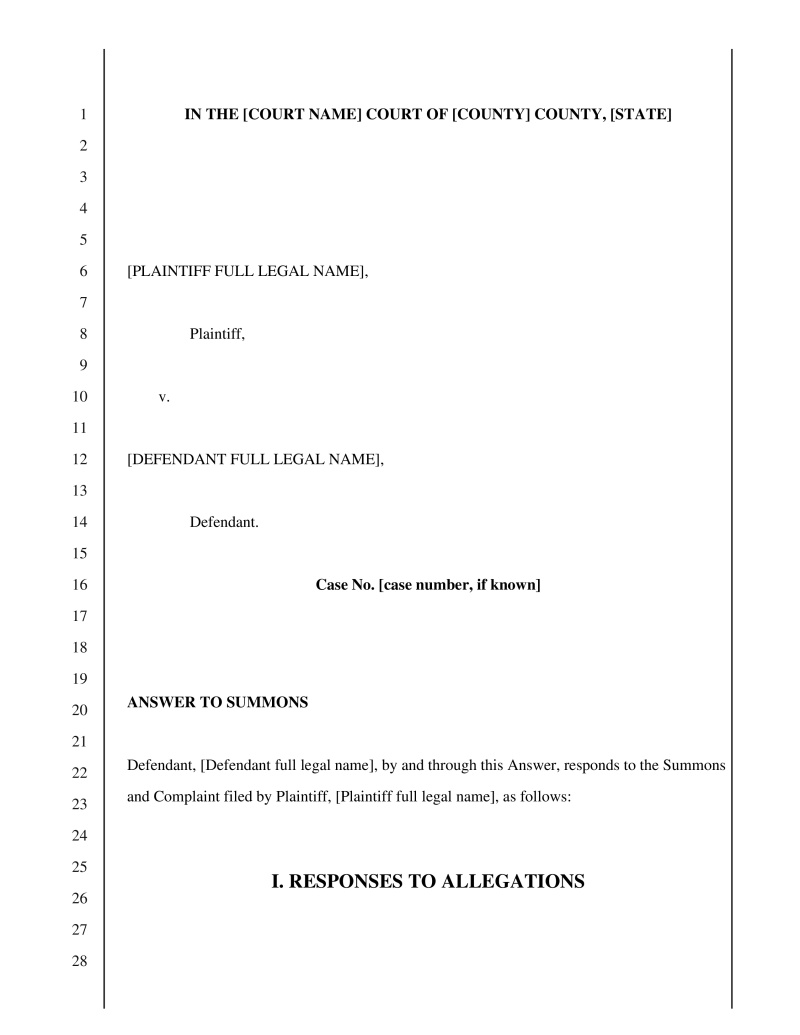
Case Posture
Most summons answers are filed in an existing case after the plaintiff or petitioner has served a summons and complaint. If a case number appears on the summons or complaint, choose Yes.
Enter the number exactly as it appears on the summons, complaint, or court notice.
Table of Contents
What is a Summons Answer?
A summons answer is a formal legal document filed by a defendant in response to a summons and complaint, which initiates a civil lawsuit. Its primary purpose is to inform the court and the plaintiff of the defendant's position regarding the allegations made against them. By filing an answer, the defendant formally enters an appearance in the case, preventing the entry of a default judgment.
Purpose and Significance
The filing of a summons answer is a critical step in the litigation process, representing the defendant's first formal opportunity to address the claims brought by the plaintiff. It serves as a foundational document that shapes the scope of the legal dispute and sets the stage for further proceedings.
- Formal Response - It provides the defendant's official reply to each allegation in the complaint, either admitting, denying, or stating a lack of sufficient information to respond.
- Avoid Default Judgment - Failure to file an answer within the specified timeframe can result in a default judgment, where the court rules in favor of the plaintiff without hearing the defendant's side.
- Raise Defenses - The answer allows the defendant to assert affirmative defenses, which, if proven, can defeat the plaintiff's claims even if the allegations in the complaint are true.
- Counterclaims - Defendants may also use the answer to assert counterclaims against the plaintiff, introducing new legal issues for the court to resolve.
Key Elements of an Answer
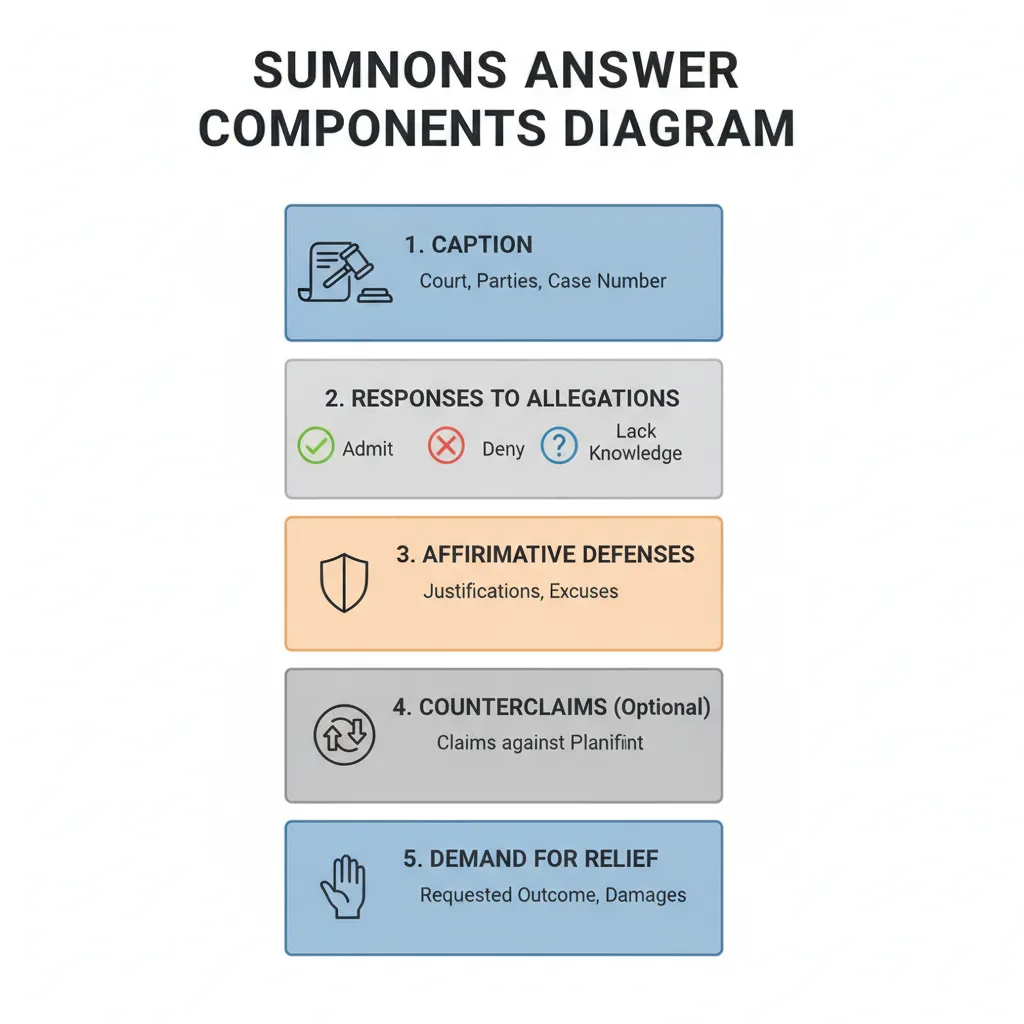
While the specific format and content of an answer can vary by jurisdiction, several common elements are typically included. These elements ensure that the defendant's response is clear, comprehensive, and legally sound.
- Caption - Identifies the court, the names of the parties (plaintiff and defendant), and the case number.
- Responses to Allegations - The defendant must respond to each numbered paragraph of the complaint. This response typically involves:
- Admissions - Acknowledging the truth of a particular allegation.
- Denials - Contesting the truth of an allegation.
- Lack of Knowledge - Stating that the defendant lacks sufficient information to admit or deny an allegation, which typically functions as a denial.
- General Denial - In some jurisdictions or specific circumstances, a defendant may be able to issue a general denial, stating that they deny all allegations in the complaint if they genuinely believe none are true.
- Affirmative Defenses - Legal arguments or facts that, if proven, would negate the plaintiff's claim, even if the plaintiff's allegations are true. Examples include statute of limitations, estoppel, or waiver.
- Counterclaims or Cross-Claims - Any claims the defendant has against the plaintiff or other parties to the lawsuit.
- Demand for Relief - A statement outlining what the defendant requests from the court, such as dismissal of the complaint, monetary damages on a counterclaim, or other appropriate relief.
- Signature and Verification - The defendant or their attorney must sign the answer. In certain courts, such as the New York City Civil Court, defendants may be required to verify their answer under oath, often by appearing in person.
Methods and Deadlines for Filing
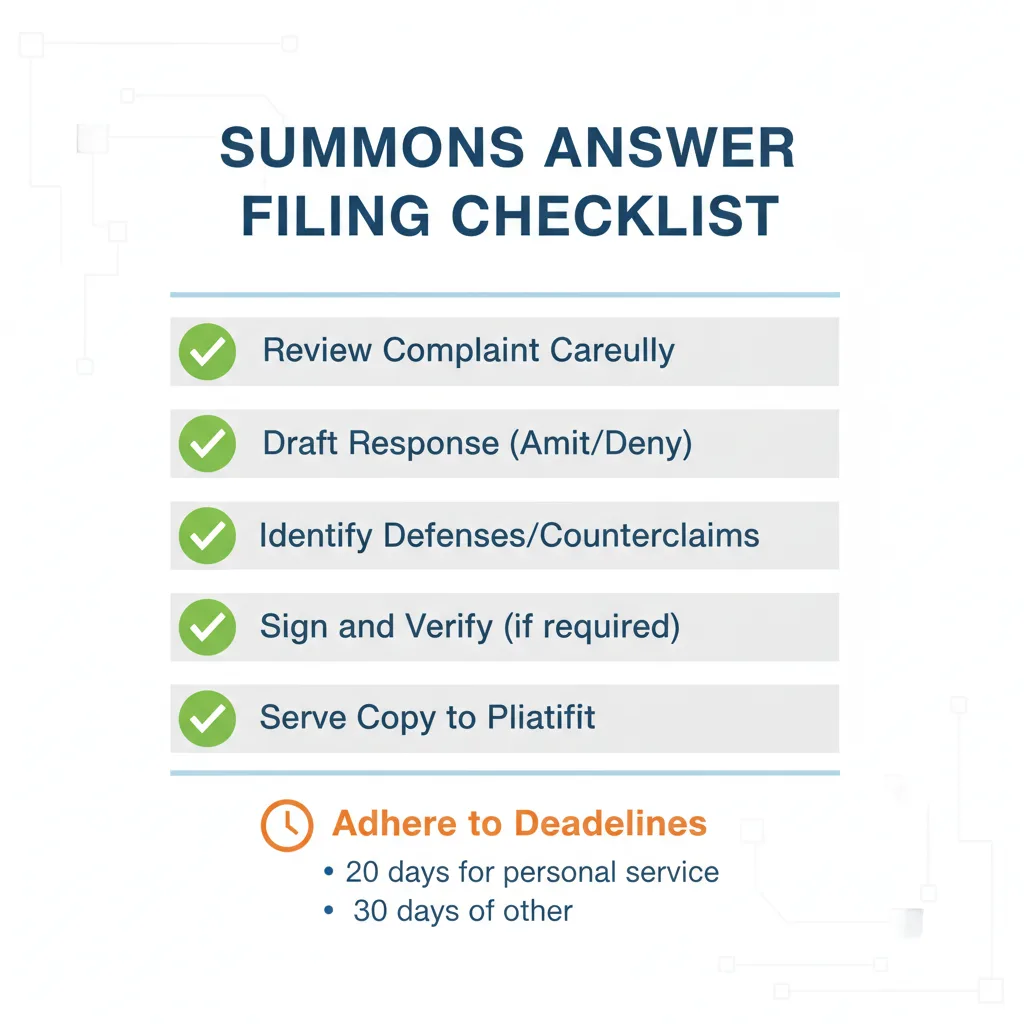
The process for filing a summons answer involves adherence to strict deadlines and specific procedural requirements, which can vary based on the court and jurisdiction. Proper and timely filing is essential to avoid adverse outcomes.
- Filing Deadline - The time frame for filing an answer depends on how the summons was delivered:
- 20 days - If the summons was personally delivered to the defendant.
- 30 days - If the summons was delivered by other means (e.g., mail, substituted service) or as specified by the court (e.g., in the District of New Mexico Bankruptcy Court, the answer is due 30 days after issuance of the summons unless a different date is set by the Court).
- Filing Location - The original answer must be filed with the Clerk of Court in the relevant jurisdiction. For example, in the District of New Mexico Bankruptcy Court, only the original is required, with no copies.
- Delivery to Plaintiff - Defendants should deliver a written answer form to both the plaintiff (or their attorney) and the Court.
- Filing Methods - Depending on the jurisdiction, defendants can file an answer through various means:
- In Person - Manual filing involves printing and filling out forms by hand and submitting them directly to the courthouse. In New York City Civil Court, forms like the 'Answer In Person and Verification' are used for defendants to respond by appearing in person and verifying their answer under oath.
- By Mail - Sending the completed and signed answer via postal service.
- Electronic Filing Systems - Many courts offer electronic filing portals, allowing defendants or their attorneys to submit documents online.
- Assistance Programs - Resources like the Foreclosure Answer DIY program from New York Courts can assist defendants in completing the necessary paperwork for specific case types.
Types of Responses and Defenses
Defendants have several strategic options when formulating a response to a complaint, ranging from direct denials to asserting various legal defenses. The chosen approach depends on the specifics of the case and the legal strategy.
- Direct Denials - Directly refuting the factual allegations made by the plaintiff. This requires careful review of each paragraph in the complaint.
- Affirmative Defenses - These defenses do not dispute the plaintiff's factual claims but introduce new facts or legal arguments that, if true, defeat the plaintiff's right to recover. Examples include:
- Statute of Limitations - The lawsuit was filed after the legally prescribed time limit.
- Lack of Jurisdiction - The court does not have the authority to hear the case.
- Failure to State a Claim - Even if all facts in the complaint are true, they do not constitute a legally recognized cause of action.
- Counterclaims - When a defendant believes they have a valid claim against the plaintiff arising from the same transaction or occurrence, they can file a counterclaim within their answer.
Consequences of Failing to Respond
Failing to file a timely and proper summons answer can lead to severe legal repercussions for the defendant, often resulting in an unfavorable outcome without the opportunity to present their case.
- Default Judgment - The most significant consequence, where the court enters a judgment in favor of the plaintiff because the defendant failed to respond to the complaint. This means the plaintiff wins the case by default.
- Waiver of Defenses - By not filing an answer, the defendant may waive their right to raise certain defenses or challenge the plaintiff's claims later in the proceedings.
- Enforcement of Judgment - A default judgment can be enforced, potentially leading to wage garnishment, bank account levies, or liens on property, depending on the nature of the lawsuit and the judgment amount.
Frequently Asked Questions
Sources
- Answering the Complaint | New York Courts - Guidance on delivering a written Answer form to the plaintiff and the Court, including using the Foreclosure Answer DIY program and manual filing instructions.
- Answer In Person and Verification | New York Courts - Details on the 'Answer In Person and Verification' form used in New York City Civil Court to formally respond to a summons and complaint by appearing in person and verifying the answer under oath.
- File an Answer | District of New Mexico | United States Bankruptcy Court - Information on filing an Answer in response to a complaint in the District of New Mexico Bankruptcy Court, including the requirement to file the original answer with the Clerk of Court and the due date of thirty (30) day
Not the form you're looking for?
Try our legal document generator to create a custom document
Disclaimer: The templates available on this website are provided for general informational purposes only and do not constitute legal advice. They are not intended to be, and should not be interpreted as, compliant with any specific legal, regulatory, or privacy requirements. These templates are not a replacement for professional legal guidance and should not be relied upon for any particular matter or circumstance. Users are strongly encouraged to seek advice from a qualified attorney licensed in their jurisdiction before using, modifying, or relying on any template.
All templates are provided on an "as is," "with all faults," and "as available" basis. The provider disclaims any and all warranties of any kind, whether express, implied, statutory, or otherwise, including without limitation warranties of merchantability, fitness for a particular purpose, title, or non-infringement.
LegalTemplates.com makes no guarantees or representations regarding the accuracy, completeness, expected outcomes, or reliability of the materials contained in these templates or any materials referenced or linked from them.