Petition
Create Petition
Petition
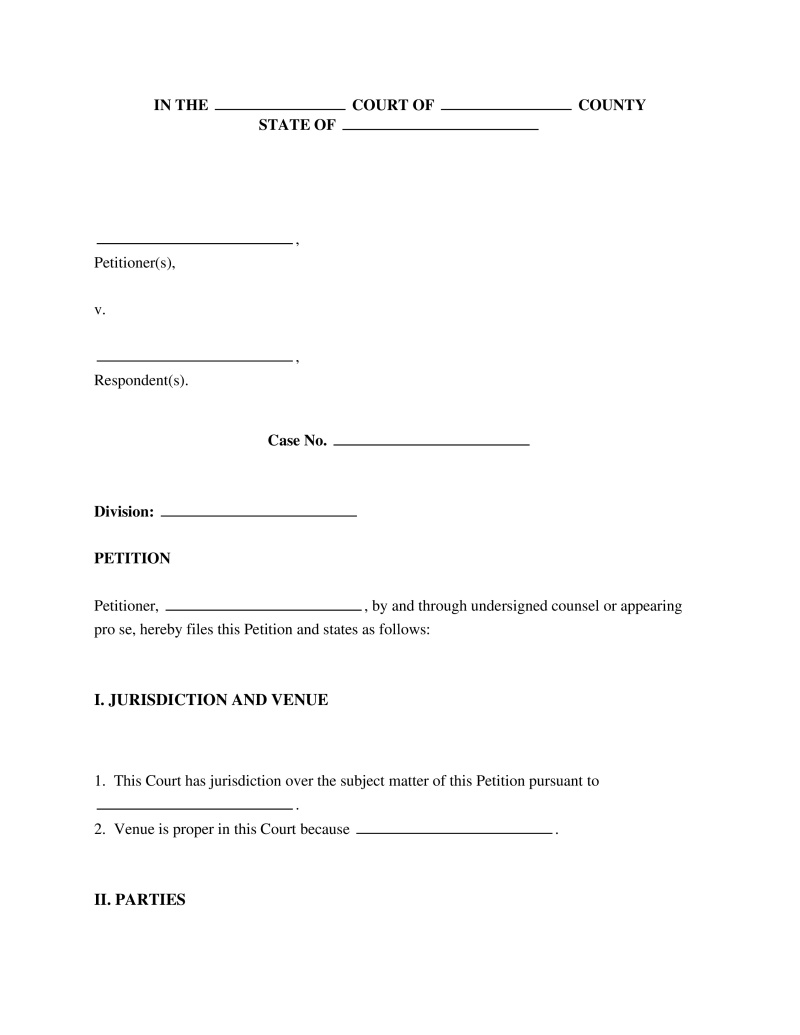
A Petition is a formal written application submitted to a court or other authoritative tribunal, seeking a specific legal remedy, order, or action within a judicial or administrative process.
Answer the question(s) below to create your Petition
Petition Action Type
Select the primary action you are asking the court to take.
Provide a brief description of the action if you selected 'Other'.
Table of Contents
What is a Petition?
A petition is a formal written request submitted to a court, government body, or other authority, asking for a specific action, decision, or relief. In a legal context, it often serves to initiate a lawsuit, seek a particular order, or challenge a legal action. Petitions are fundamental instruments in various legal proceedings, allowing individuals or entities to formally present their case and request judicial intervention.
Types of Petitions
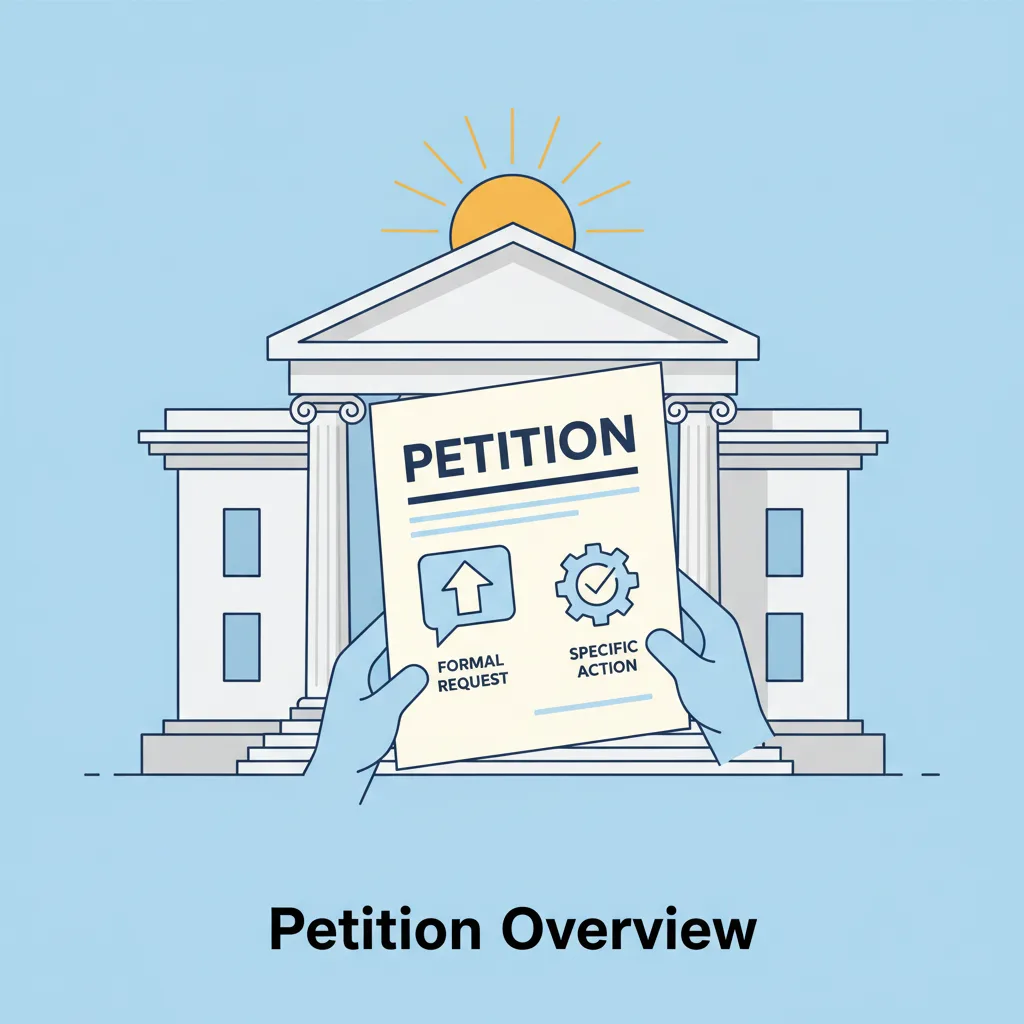
Petitions are utilized across numerous legal domains, each tailored to specific circumstances and legal objectives. While the general purpose remains consistent—to request formal action—the nature and content of a petition vary significantly depending on its specific application.
- Voluntary Petition for Non-Individuals Filing for Bankruptcy - This official form is used when a corporation, partnership, or other non-individual entity chooses to initiate its own bankruptcy proceedings under Chapter 11 of the U.S. Bankruptcy Code. It signifies the debtor's request for bankruptcy relief and is approved by the Judicial Conference, mandatory under Bankruptcy Rule 9009 (Official Form 201).
- Involuntary Petition Against an Individual - This form is filed by creditors to initiate a bankruptcy case against an individual debtor without their consent. It asserts that the debtor meets the legal criteria for involuntary bankruptcy and seeks to compel them into proceedings. This official form is also approved by the Judicial Conference and required by Bankruptcy Rule 9009 (Official Form 205).
- Petition for Writ of Habeas Corpus Under 28 U.S.C. § 2254 - This specific petition is filed by individuals who are in state custody and allege that their detention violates federal law or the U.S. Constitution. It is a fundamental legal tool used to challenge the legality of a person's imprisonment. This official form is approved by the Judicial Conference and mandated for use under Bankruptcy Rule 9009, although it applies to federal habeas corpus proceedings (Official Form AO 241).
Key Elements of a Petition
While the specific content varies greatly by jurisdiction and type, most legal petitions share common foundational elements. These components ensure the petition is clear, legally sound, and provides the court with sufficient information to act.
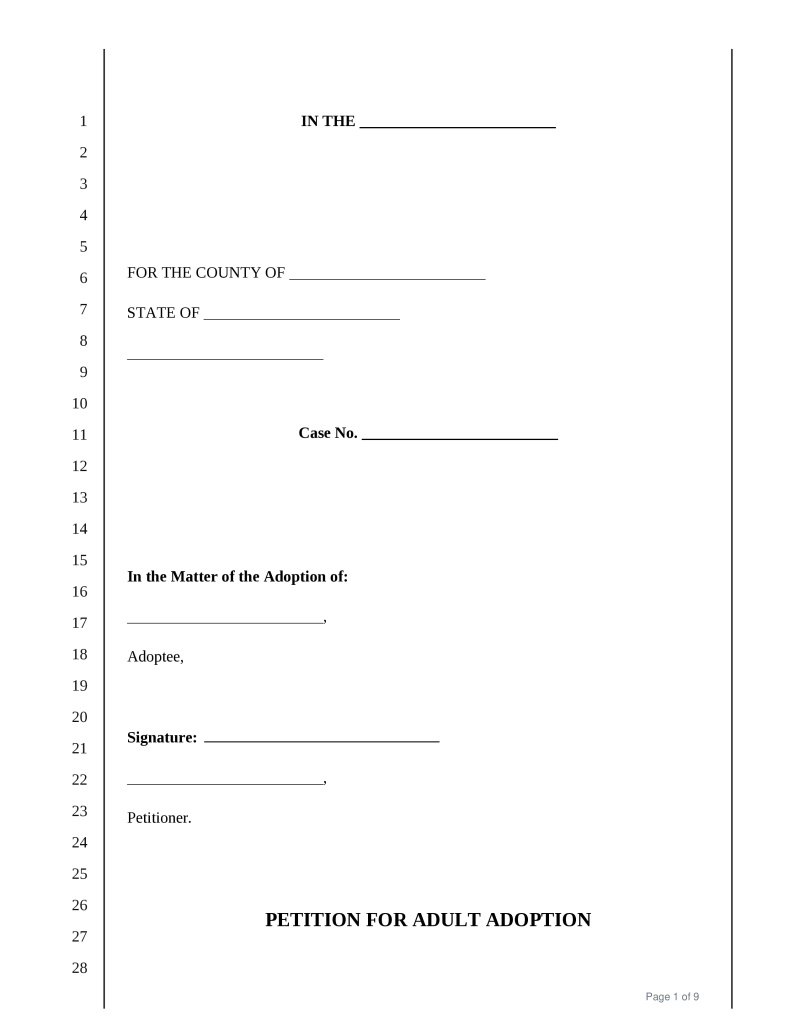
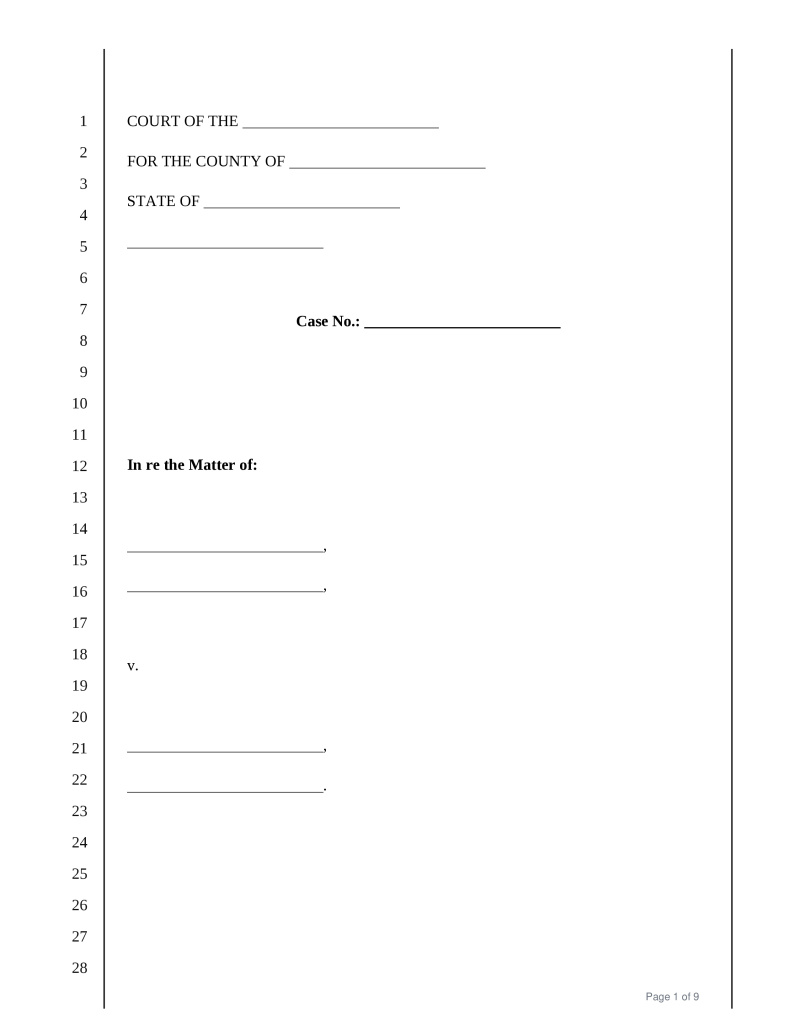
- Caption - Identifies the court, the parties involved (petitioner and respondent), and the case number if one has been assigned.
- Introduction of Parties - Clearly states the full legal names and relevant identifying information of all parties involved in the petition.
- Statement of Jurisdiction - Explains why the specific court has the authority to hear and decide the matters presented in the petition.
- Statement of Facts - Presents a clear, concise, and chronological account of the events or circumstances that give rise to the petition.
- Grounds for Relief - Outlines the specific legal basis or arguments supporting the requested action or decision.
- Prayer for Relief - Explicitly states what the petitioner is asking the court to do, such as granting a specific order, award, or judgment.
- Signature and Verification - Requires the petitioner or their attorney to sign the document, often under penalty of perjury, affirming the truthfulness of the statements.
Filing a Petition
The process of filing a petition involves several critical steps to ensure it is properly submitted and considered by the relevant authority. Adherence to procedural rules is essential, as errors can lead to delays or dismissal.
Key considerations for filing a petition include:
- Official Forms - Many types of petitions, especially in federal courts, require the use of specific official forms. For example, the Voluntary Petition for Non-Individuals Filing for Bankruptcy, the Involuntary Petition Against an Individual, and the Petition for Writ of Habeas Corpus are all official forms approved by the Judicial Conference and must be used under Bankruptcy Rule 9009.
- Jurisdiction and Venue - Determining the correct court (jurisdiction) and the appropriate geographical location within that court system (venue) is paramount. Filing in the wrong court can result in the petition being rejected.
- Filing Fees - Most courts require a filing fee to initiate a case. Petitioners who cannot afford the fee may be able to request a fee waiver or deferral.
- Service of Process - After filing, the petitioner is typically responsible for formally notifying the other parties involved (respondents) that a petition has been filed against them. This is known as service of process and must adhere to strict legal rules.
- Supporting Documents - Depending on the nature of the petition, various supporting documents, exhibits, or affidavits may need to be filed concurrently or subsequently.
Specific Applications of Petitions
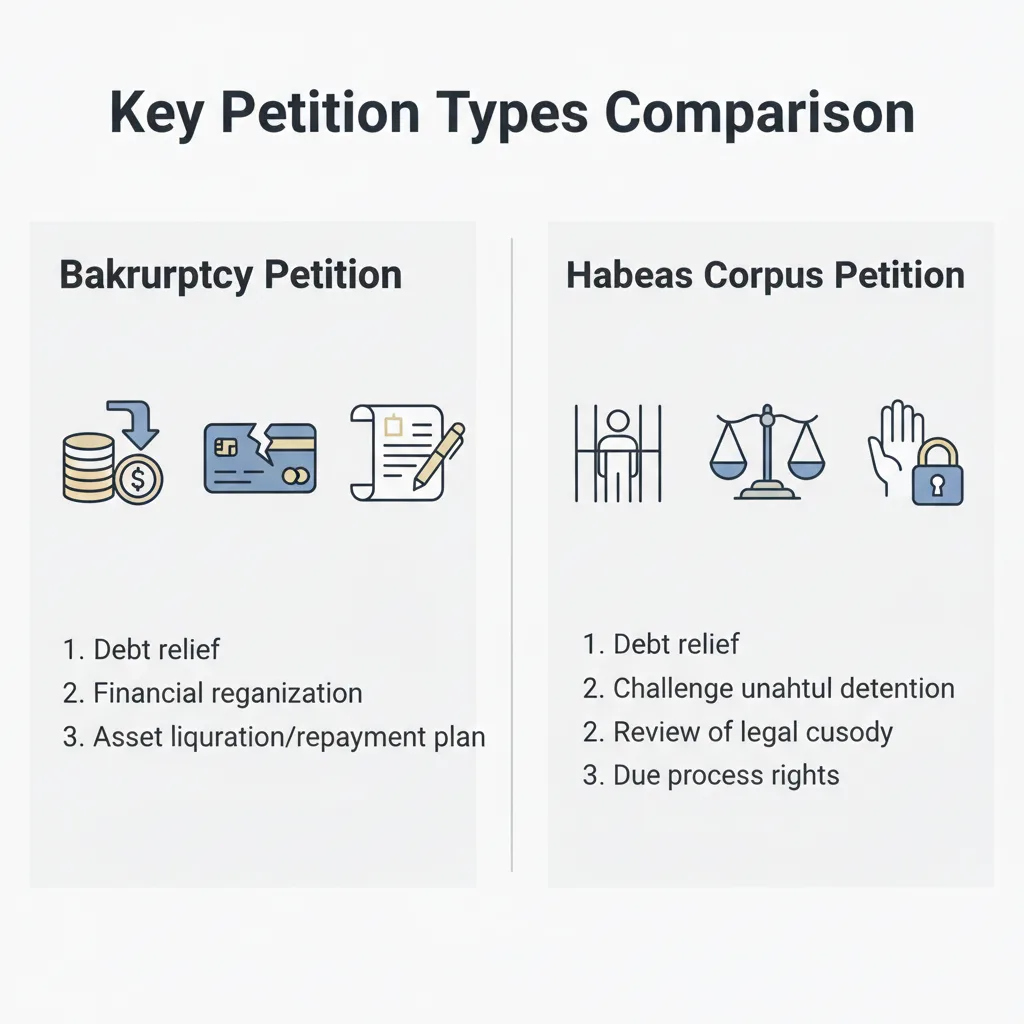
The concept of a petition is broad, but its practical application becomes clear when examining specific legal contexts. The official forms highlight how petitions serve distinct, crucial roles in different areas of law.
Bankruptcy Petitions
In bankruptcy law, petitions are the gateway to seeking financial relief or initiating proceedings against a debtor. The U.S. Courts provide specific forms to standardize these requests.
- Voluntary Petitions - These are filed by the debtor themselves, signaling their intent to reorganize their finances or liquidate assets under bankruptcy protection. The form for non-individuals (corporations, partnerships) is distinct from those for individuals, reflecting different legal structures and complexities.
- Involuntary Petitions - Filed by creditors, these petitions aim to force a debtor into bankruptcy. This is a more adversarial process and requires specific legal grounds, such as the debtor generally not paying their debts as they become due.
Habeas Corpus Petitions
A petition for a writ of habeas corpus is a critical safeguard against unlawful imprisonment. It directly challenges the legal basis for a person's detention.
- Challenging Detention - This type of petition asserts that a person is being held in violation of their constitutional rights or federal law. It is often used by individuals convicted in state courts who have exhausted their state appeals and now seek review in federal court under 28 U.S.C. § 2254.
- Purpose of the Writ - The writ demands that the detaining authority present the detained person before the court and provide a valid reason for their confinement. If no lawful reason exists, the court can order the person's release.
Frequently Asked Questions
The primary purpose of a petition is to formally request a court or other authority to take a specific action, make a decision, or grant relief. It serves as the initial document that sets a legal process in motion.
Any individual or legal entity with standing (a sufficient connection to the matter) can typically file a petition. This includes debtors, creditors, or individuals challenging their detention.
No, petitions vary significantly in their content and purpose depending on the legal context. For example, a bankruptcy petition differs greatly from a petition for a writ of habeas corpus.
While it is not always legally required, particularly for some pro se filings, consulting an attorney is highly recommended. Legal petitions often involve complex rules and procedures that are difficult for non-lawyers to navigate effectively.
After a petition is filed, it is typically reviewed by the court, and the opposing parties are notified through a process called service of process. The court may then schedule hearings or issue initial orders based on the petition's contents.
Official petition forms, especially for federal courts and specific legal actions like bankruptcy or habeas corpus, are often available on the website of the United States Courts or specific court websites. These forms are typically approved by the Judicial Conference.
Sources
- Voluntary Petition for Non-Individuals Filing for Bankruptcy - Provides the official form for non-individuals filing for bankruptcy under Chapter 11, including instructions and committee notes.
- Involuntary Petition Against an Individual - Provides the official form for filing an involuntary bankruptcy petition against an individual, including committee notes.
- Petition for Writ of Habeas Corpus Under 28 U.S.C. § 2254 - Provides the official form for filing a petition for a writ of habeas corpus under 28 U.S.C. § 2254, including instructions.
Related Documents
Forms commonly used with Petition.
Not the form you're looking for?
Try our legal document generator to create a custom document
Disclaimer: The templates available on this website are provided for general informational purposes only and do not constitute legal advice. They are not intended to be, and should not be interpreted as, compliant with any specific legal, regulatory, or privacy requirements. These templates are not a replacement for professional legal guidance and should not be relied upon for any particular matter or circumstance. Users are strongly encouraged to seek advice from a qualified attorney licensed in their jurisdiction before using, modifying, or relying on any template.
All templates are provided on an "as is," "with all faults," and "as available" basis. The provider disclaims any and all warranties of any kind, whether express, implied, statutory, or otherwise, including without limitation warranties of merchantability, fitness for a particular purpose, title, or non-infringement.
LegalTemplates.com makes no guarantees or representations regarding the accuracy, completeness, expected outcomes, or reliability of the materials contained in these templates or any materials referenced or linked from them.