Noise Complaint Letter
A Noise Complaint Letter is a formal written communication used to document and address instances of disruptive noise, typically sent to a responsible party to request cessation or mitigation of the disturbance.
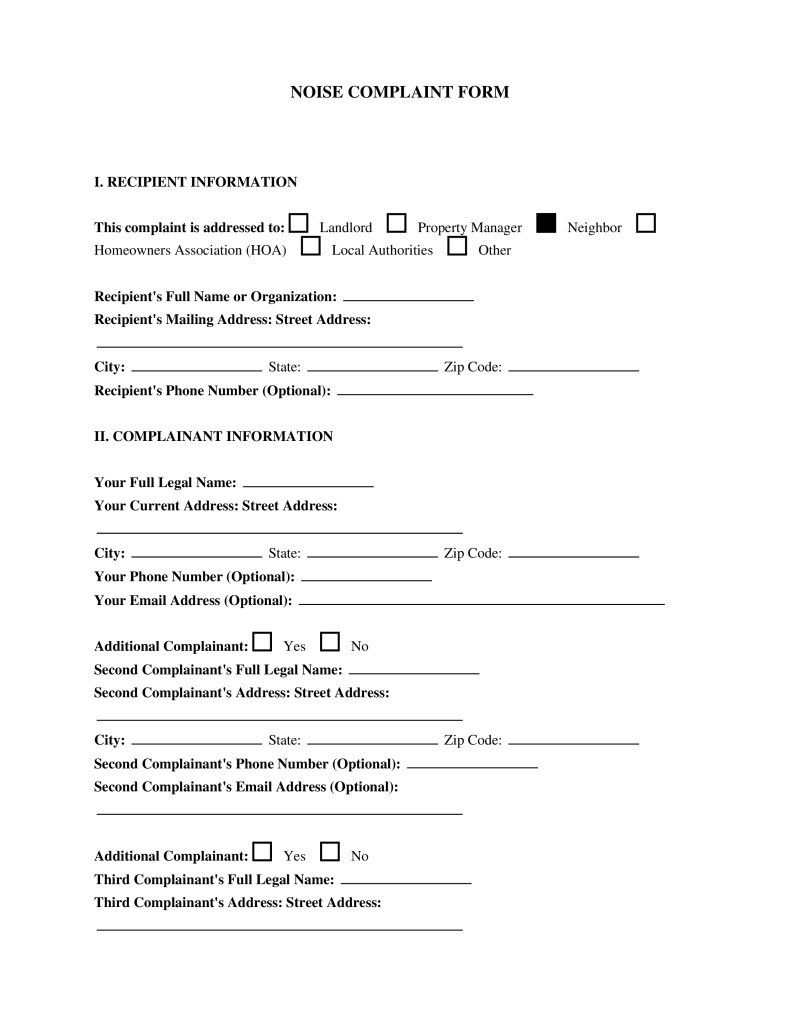
Recipient Type
Select the primary recipient of your noise complaint.
Describe the recipient if you selected 'Other'.
Table of Contents
What is a Noise Complaint Letter?
A Noise Complaint Letter is a formal written communication used to report disturbances caused by excessive or inappropriate noise. Its primary purpose is to document an ongoing or recurring noise issue and formally request intervention or resolution from a responsible party. This document is typically addressed to landlords, property management, local government agencies, or law enforcement, depending on the source and nature of the noise.
Purpose and Scope of a Noise Complaint
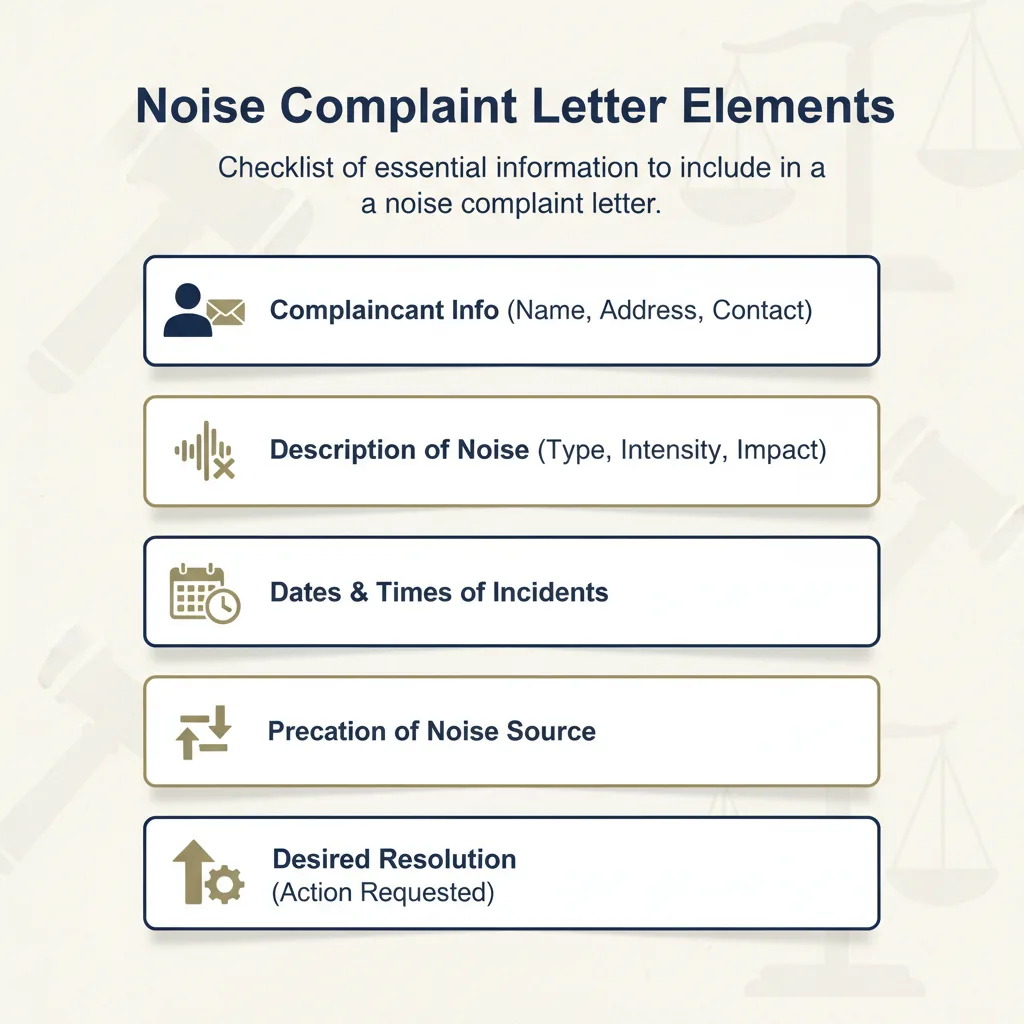
The core objective of a noise complaint, whether submitted as a formal letter or through a designated form, is to address disturbances that negatively impact quality of life. These complaints aim to prompt action from authorities or responsible parties to mitigate or cease the offending noise. The scope of what constitutes a reportable noise varies by jurisdiction and often considers factors such as duration, volume, time of day, and the source of the noise.
- Formal Documentation - A written complaint creates a record of the issue, which can be crucial for tracking repeated disturbances and demonstrating a pattern of unresolved problems.
- Initiating Resolution - It serves as a formal request for intervention, whether from a landlord for tenant-related noise or from a municipal department for public disturbances.
- Jurisdictional Specificity - Many local governments provide specific channels for reporting, such as online forms or dedicated hotlines, tailored to their noise ordinances.
When to File a Noise Complaint
Filing a noise complaint is generally appropriate when informal attempts to resolve a noise issue have been unsuccessful or when the noise is severe enough to warrant immediate official intervention. The timing and method of reporting can depend on whether the noise is an isolated incident or a recurring problem, and the nature of the noise itself.
- Recurring Issues - For noise problems that happen repeatedly, such as ongoing loud music from a neighbor or persistent barking, submitting a formal complaint or using a dedicated form is recommended. The Village of Wheeling, for instance, provides a form specifically for repeated noise complaints.
- Single, One-Time Incidents - For immediate, one-time disturbances that require urgent attention, contacting a non-emergency police department line is often the advised first step. The Village of Wheeling directs residents to their non-emergency police number for such situations (847-459-2632).
- Unreasonable or Late-Night Noise - Many jurisdictions define specific hours during which certain noise levels are prohibited or considered unreasonable. San Francisco, for example, considers human and animal-created noises unreasonable if they occur between 10 pm and 7 am.
- Aircraft Noise - Complaints related to aircraft noise are often handled by specific agencies or departments, such as the Port Authority of New York and New Jersey, which offers dedicated online forms and hotlines for these types of reports.
Key Information to Include in a Noise Complaint
To ensure a noise complaint is effectively processed and investigated, it must contain specific, detailed information. The clarity and completeness of the complaint can significantly impact the speed and success of its resolution. Many official forms provided by municipalities require similar essential details from the complainant and about the incident.
- Complainant Information - This typically includes your full name, address, and contact details, enabling the responding authority to follow up or request additional information. The City of Frederick Police Department's form requires the complainant's name and address.
- Description of the Issue - A clear and concise explanation of the noise problem is essential. This should detail the type of noise (e.g., loud music, construction, barking dogs), its intensity, and its impact.
- Date(s) and Time(s) of Incidents - Providing a timeline of when the noise occurred, including specific dates and times, helps establish a pattern and provides concrete evidence for investigation. A sample complaint letter template suggests including a clear outline and timeline of issues.
- Location of Noise Source - Identifying the precise location from which the noise originates, such as an apartment number or specific address, is critical for authorities to pinpoint the source.
- Previous Attempts at Resolution - If you have previously tried to resolve the issue informally (e.g., speaking to a neighbor), it is helpful to include this information, along with the dates of such attempts.
- Desired Resolution - Clearly state what action you hope to see taken, such as the noise stopping or a specific enforcement measure. A sample complaint letter often requests a written response within a set timeframe, such as 10 business days.
Methods of Submitting a Noise Complaint
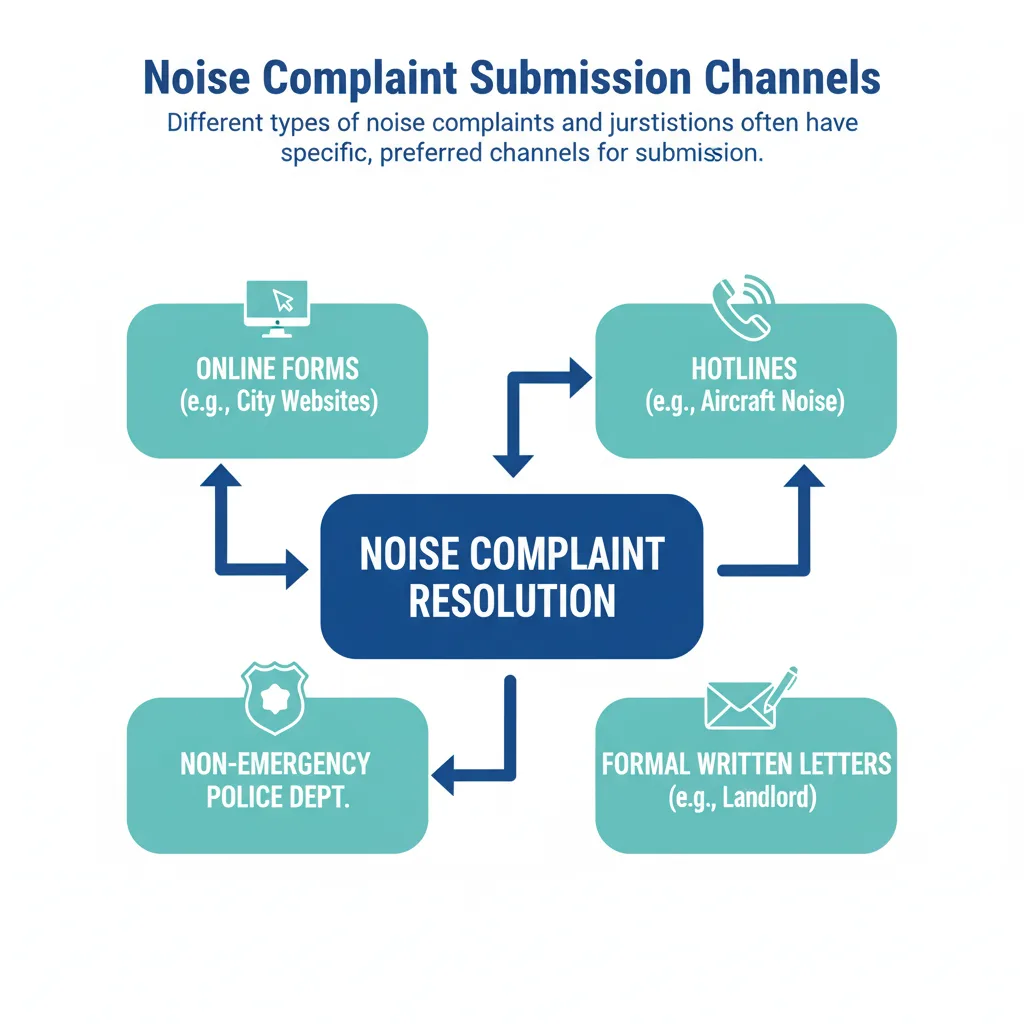
The process for submitting a noise complaint varies depending on the jurisdiction and the nature of the noise. Many local government agencies offer multiple avenues to ensure accessibility and appropriate routing of complaints. These methods are designed to cater to different types of noise issues and urgency levels.
- Online Forms - Many cities and villages provide dedicated online forms on their official websites for reporting noise problems. Examples include San Francisco, the Village of Wheeling, and the City of Frederick, all of which offer online portals for submitting complaints.
- Hotlines - For certain types of noise, especially those related to specific industries like aircraft noise, dedicated hotlines are available for reporting. The Port Authority of New York and New Jersey offers a hotline for aircraft noise complaints.
- Non-Emergency Police Department - For immediate, non-life-threatening noise disturbances, contacting the local non-emergency police line is often the recommended course of action, particularly for single, one-time incidents.
- Written Letters - While many municipalities prefer their official forms, a formal written letter can be used, especially when addressing a landlord, property management, or adapting a general complaint letter template. Such letters should include all relevant details and a clear request for action and response.
- WebTrak Website - For specific issues like aircraft noise, specialized platforms like WebTrak may be available, allowing users to track flights and submit complaints directly through the system.
Frequently Asked Questions
Sources
- Report a Noise Problem - Provides a form to report noise complaints and outlines noise regulations in San Francisco.
- Noise Complaint Form - Offers a form for reporting repeated noise complaints and provides contact information for the Village of Wheeling.
- Noise Complaint Form - Provides a form for reporting noise complaints to the Frederick Police Department.
- Submit a Noise Complaint - Aircraft Noise - Details methods for submitting noise complaints related to aircraft noise, including an online form and hotline.
- Sample Complaint Letter - Provides a template for drafting complaint letters to businesses, which can be adapted for noise complaints.
Not the form you're looking for?
Try our legal document generator to create a custom document
Disclaimer: The templates available on this website are provided for general informational purposes only and do not constitute legal advice. They are not intended to be, and should not be interpreted as, compliant with any specific legal, regulatory, or privacy requirements. These templates are not a replacement for professional legal guidance and should not be relied upon for any particular matter or circumstance. Users are strongly encouraged to seek advice from a qualified attorney licensed in their jurisdiction before using, modifying, or relying on any template.
All templates are provided on an "as is," "with all faults," and "as available" basis. The provider disclaims any and all warranties of any kind, whether express, implied, statutory, or otherwise, including without limitation warranties of merchantability, fitness for a particular purpose, title, or non-infringement.
LegalTemplates.com makes no guarantees or representations regarding the accuracy, completeness, expected outcomes, or reliability of the materials contained in these templates or any materials referenced or linked from them.