Memorandum of Understanding Template
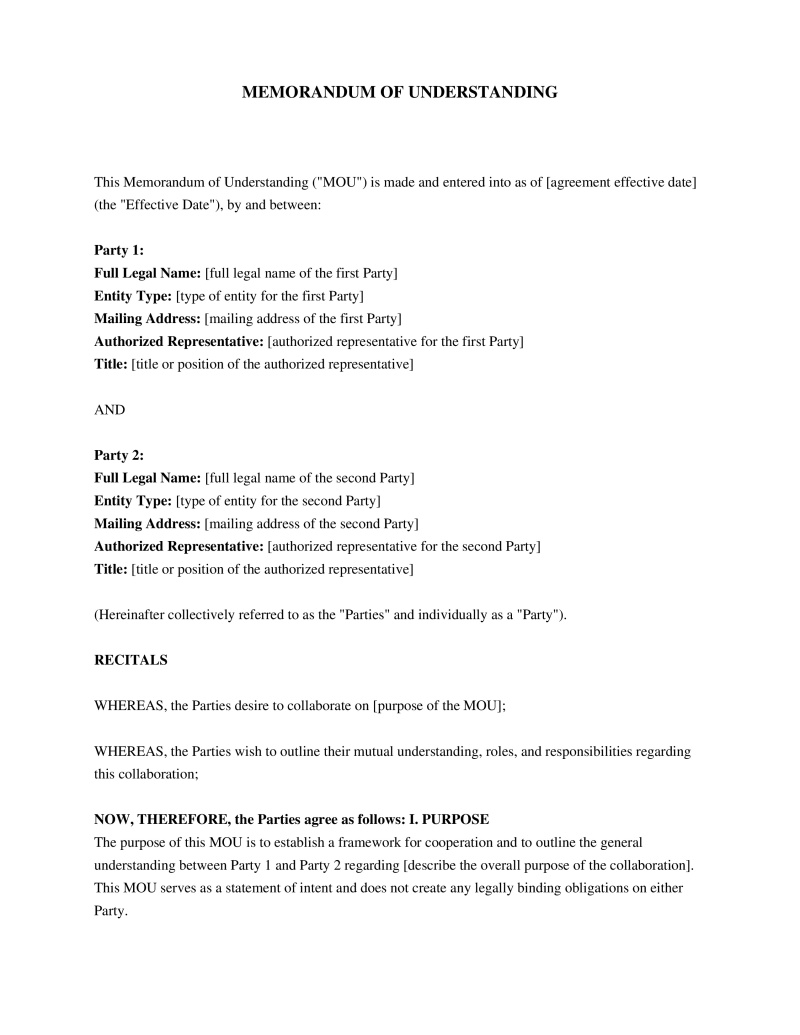
A Memorandum of Understanding is a non-binding legal instrument outlining the intentions and shared understanding between two or more parties, often preceding a formal agreement.
Mou Scope Type
Select the main focus of this MOU to tailor the agreement to your collaboration.
Provide a brief description if you selected 'Other'.
Table of Contents
What is a Memorandum of Understanding Template?
A Memorandum of Understanding (MOU) template provides a standardized framework for two or more parties to outline their mutual understanding, intentions, and planned course of action concerning a specific project, goal, or relationship. It serves as a preliminary agreement, documenting the consensus reached between parties before a more formal contract might be developed, or in situations where a legally binding contract is not immediately required or desired. Government agencies, non-profit organizations, and businesses frequently utilize these templates to facilitate collaboration and define responsibilities.
Purpose and Applications of MOU Templates
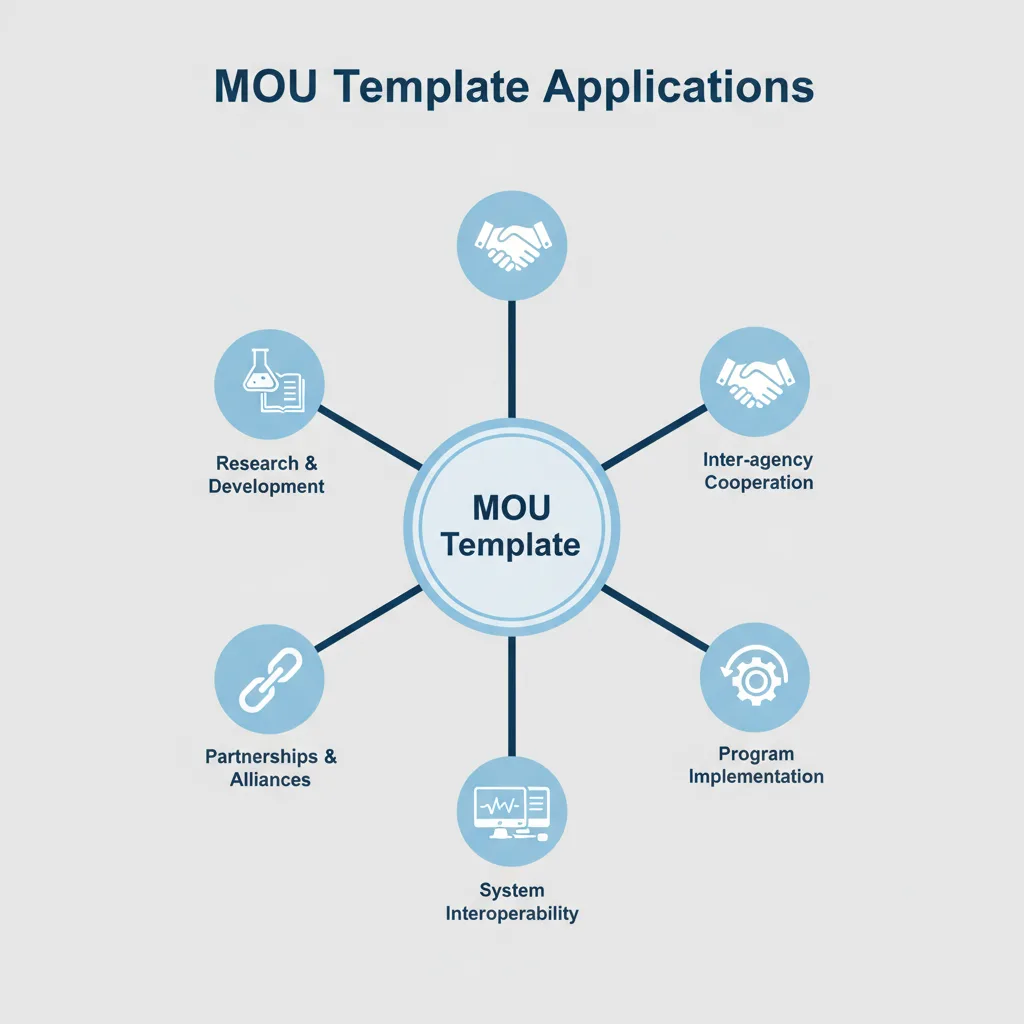
Memorandum of Understanding templates are widely used across various sectors to formalize cooperative relationships and define operational parameters. Their primary purpose is to clearly articulate the intent of the parties involved, establishing a common understanding without necessarily creating immediate legal obligations that would typically arise from a contract. This flexibility makes them valuable tools for initial stages of collaboration or for situations requiring a less formal commitment.
Common applications for MOU templates include:
- Inter-agency Cooperation - Government entities often use MOUs to establish working relationships, such as agreements between the U.S. Government Printing Office and the National Archives and Records Administration for the deposit of electronic government records.
- Program Implementation - MOUs can outline the framework for specific programs, like the Aviation Safety Action Program (ASAP) under Title 14 of the Code of Federal Regulations (14 CFR) Part 121, where participating parties agree on safety measures and data sharing.
- System Interoperability - Guidelines exist for developing MOUs that facilitate interoperable Automated Fingerprint Identification Systems (AFIS) between different agencies, ensuring seamless data exchange and operational coordination.
- Partnerships and Alliances - Non-profit organizations and businesses may use MOUs to define the scope of a joint venture, resource sharing, or collaborative initiatives before committing to a more detailed agreement.
- Research and Development - Academic institutions and industry partners often use MOUs to set the terms for collaborative research projects, including intellectual property considerations and resource allocation.
Key Elements of an Effective MOU Template
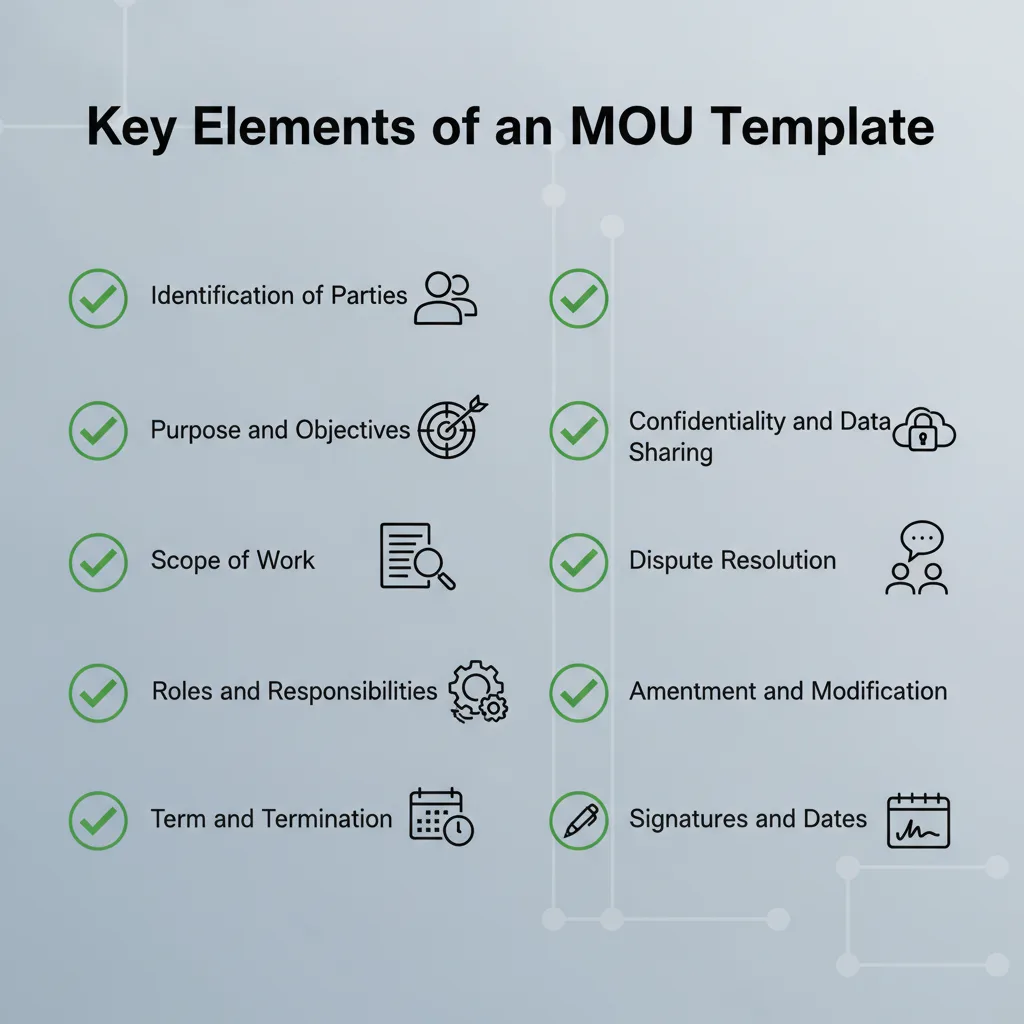
An effective Memorandum of Understanding template includes several core components that ensure clarity, define scope, and outline the responsibilities of each party. While specific content may vary based on the purpose, certain fundamental elements are generally present to guide the cooperative effort.
These key elements typically cover:
- Identification of Parties - Clearly names all organizations or individuals entering into the MOU, including their official designations and contact information.
- Purpose and Objectives - States the overarching goal and specific objectives that the parties aim to achieve through their collaboration.
- Scope of Work or Collaboration - Defines the boundaries and specific activities covered by the MOU, detailing what the collaboration entails.
- Roles and Responsibilities - Outlines the specific duties, contributions, and expectations for each participating party, ensuring mutual accountability.
- Term and Termination - Specifies the effective date of the MOU, its duration, and the conditions or procedures under which the agreement can be terminated by any party.
- Financial Considerations - Addresses any financial contributions, resource allocation, or cost-sharing mechanisms, if applicable.
- Confidentiality and Data Sharing - Establishes guidelines for handling sensitive information, including data privacy, security protocols, and disclosure limitations, particularly relevant in contexts like fingerprint identification systems or aviation safety programs.
- Dispute Resolution - Describes the process parties will follow to resolve any disagreements or conflicts that may arise during the term of the MOU.
- Amendment and Modification - Provides a clear procedure for how the MOU can be altered or updated, typically requiring mutual written consent.
- Signatures and Dates - Includes spaces for authorized representatives of each party to sign and date the document, formally acknowledging their understanding and intent.
Developing and Customizing an MOU Template
Developing an MOU template involves careful consideration of the specific needs and context of the intended collaboration. Official government sources frequently provide sample MOUs and guidelines that can inform the creation of custom templates. These resources emphasize the importance of precision and comprehensiveness to avoid future misunderstandings.
Key considerations when developing or customizing an MOU template include:
- Clarity and Specificity - All terms, definitions, and responsibilities should be clearly articulated to prevent ambiguity, especially when dealing with technical systems like interoperable Automated Fingerprint Identification Systems.
- Legal Authority - Ensure that the parties involved have the legal authority to enter into the MOU and fulfill the outlined commitments.
- Alignment with Regulations - For specific programs, such as aviation safety, the MOU must align with relevant federal regulations, like those found in 14 CFR Part 121.
- Stakeholder Input - Involve all key stakeholders in the drafting process to ensure their perspectives are considered and that the MOU reflects a true consensus.
- Review and Approval Process - Establish a clear internal and external review process for the draft MOU, involving legal counsel if necessary, before finalization.
- Adaptability - While a template provides structure, it should be flexible enough to be adapted to different situations without requiring a complete rewrite for each new agreement.
MOU Template vs. Other Legal Documents
Understanding the distinctions between a Memorandum of Understanding template and other related legal documents is crucial for selecting the appropriate instrument for a given situation. While MOUs signify a serious commitment, they often precede or differ in legal enforceability from more formal agreements.
- Memorandum of Understanding (MOU) - Generally outlines mutual intentions and understanding, serving as a statement of purpose. It may or may not be legally binding, depending on its specific language and the intent of the parties. Often used for preliminary agreements or collaborations where a full contract is not yet necessary.
- Memorandum of Agreement (MOA) - Often considered a more formal version of an MOU, an MOA typically details specific actions, responsibilities, and sometimes financial commitments. While still less formal than a contract, an MOA is more likely to be legally binding, especially if it includes consideration and clear terms.
- Contract - A legally binding agreement between two or more parties that creates enforceable obligations. Contracts require elements such as offer, acceptance, consideration, and mutual intent to create legal relations. They typically include detailed terms and conditions, remedies for breach, and dispute resolution mechanisms.
Frequently Asked Questions
Sources
- Sample Memorandum of Understanding for Aviation Safety Action Program (ASAP) - Provides a sample MOU template for the Aviation Safety Action Program (ASAP).
- Memorandum of Understanding Between the Government Printing Office and the National Archives and Records Administration - Details an MOU between the Government Printing Office and the National Archives and Records Administration.
- Writing Guidelines to Develop an MOU for Interoperable Automated Fingerprint Identification Systems - Provides guidelines for developing an MOU for interoperable automated fingerprint identification systems.
Not the form you're looking for?
Try our legal document generator to create a custom document
Disclaimer: The templates available on this website are provided for general informational purposes only and do not constitute legal advice. They are not intended to be, and should not be interpreted as, compliant with any specific legal, regulatory, or privacy requirements. These templates are not a replacement for professional legal guidance and should not be relied upon for any particular matter or circumstance. Users are strongly encouraged to seek advice from a qualified attorney licensed in their jurisdiction before using, modifying, or relying on any template.
All templates are provided on an "as is," "with all faults," and "as available" basis. The provider disclaims any and all warranties of any kind, whether express, implied, statutory, or otherwise, including without limitation warranties of merchantability, fitness for a particular purpose, title, or non-infringement.
LegalTemplates.com makes no guarantees or representations regarding the accuracy, completeness, expected outcomes, or reliability of the materials contained in these templates or any materials referenced or linked from them.