Meeting Notes Template
A Meeting Notes Template is a document structure designed to facilitate the systematic recording of proceedings, decisions, and assigned actions from formal meetings, thereby creating a verifiable administrative record.
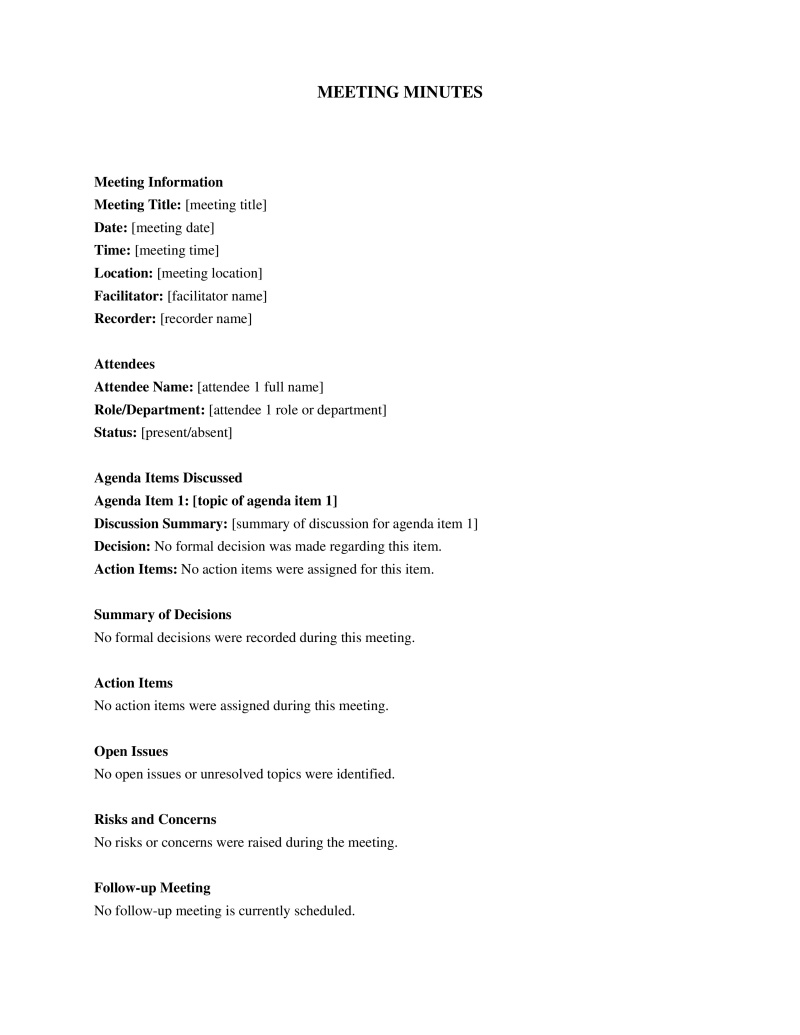
Meeting Type
Select the category that best describes the meeting.
Provide a custom meeting type if 'Other' was selected.
Table of Contents
What is a Meeting Notes Template?
A Meeting Notes Template is a structured document designed to streamline the recording of information during and after a meeting. Its primary purpose is to ensure that all critical details, discussions, decisions, and action items are captured consistently and comprehensively. Organizations and individuals widely use these templates to maintain clear records, track progress, and facilitate effective communication among participants and stakeholders.
Purpose and Importance
The consistent use of a Meeting Notes Template serves several vital functions in professional and organizational settings. It transforms unstructured discussions into organized, actionable information, providing a reliable reference point for future activities and accountability. Effective meeting notes are crucial for reinforcing decisions and ensuring that agreed-upon tasks are understood and executed.
The importance of well-maintained meeting notes extends to several areas:
- Accountability - Clearly documents who is responsible for specific tasks and by when, fostering a culture of accountability among team members.
- Historical Record - Creates an official record of discussions, decisions, and commitments, which can be referenced for project continuity, compliance, or dispute resolution (Town of Fairfax, CA).
- Communication and Clarity - Distributes key information to absent participants or those who need to be informed, ensuring everyone has access to the same understanding of outcomes.
- Decision-Making Support - Provides context for past decisions, aiding in future strategic planning and problem-solving by recalling the rationale behind previous choices.
- Efficiency - Reduces the need for follow-up meetings to clarify details, saving time and resources by providing a comprehensive summary.
Key Elements of a Meeting Notes Template
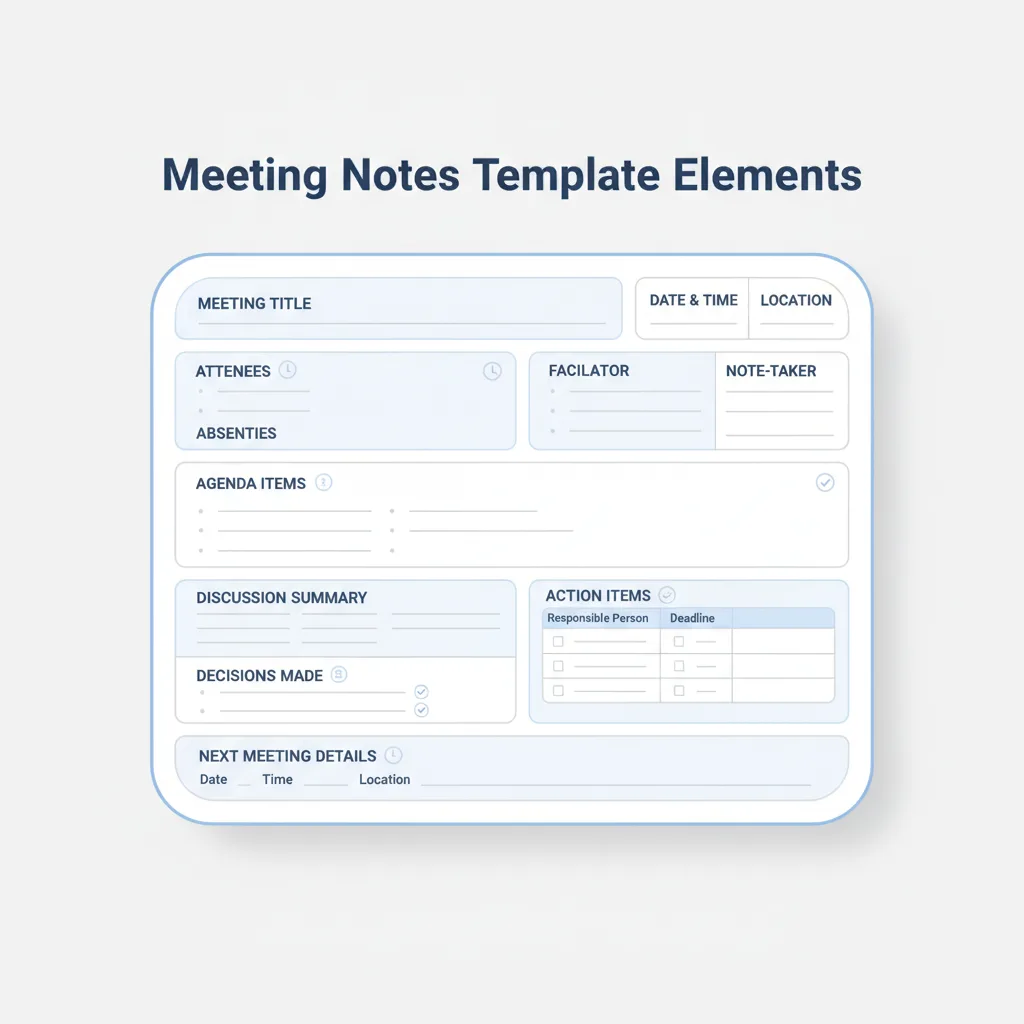
An effective Meeting Notes Template typically includes several standard sections to ensure all pertinent information is captured. While specific layouts may vary, the core elements aim for clarity, completeness, and ease of reference (City of Orlando, FL).
Common elements found in a robust Meeting Notes Template include:
- Meeting Title - A clear, concise title that identifies the subject or purpose of the meeting.
- Date and Time - The exact date and start/end times of the meeting.
- Location/Platform - Whether the meeting was held in person, virtually, and the specific venue or platform used.
- Attendees - A list of all individuals present, often including their affiliations or roles.
- Absentees - A list of invited individuals who were not present, if relevant.
- Facilitator/Chairperson - The person leading the meeting.
- Note-Taker/Minute-Taker - The individual responsible for recording the notes.
- Agenda Items - A reference to the pre-circulated agenda, often with space to record discussions pertaining to each item.
- Discussion Summary - A concise overview of the key points discussed for each agenda item. This should capture the essence without transcribing every word (Town of Fairfax, CA).
- Decisions Made - Clear statements of any resolutions, conclusions, or agreements reached during the meeting.
- Action Items - Specific tasks identified, including the person responsible for each task and the deadline for completion.
- Next Meeting Date/Time - If applicable, details for the subsequent meeting.
- Documents Referenced/Attached - A list of any documents reviewed or distributed during the meeting, or those relevant for context.
Principles of Effective Note-Taking
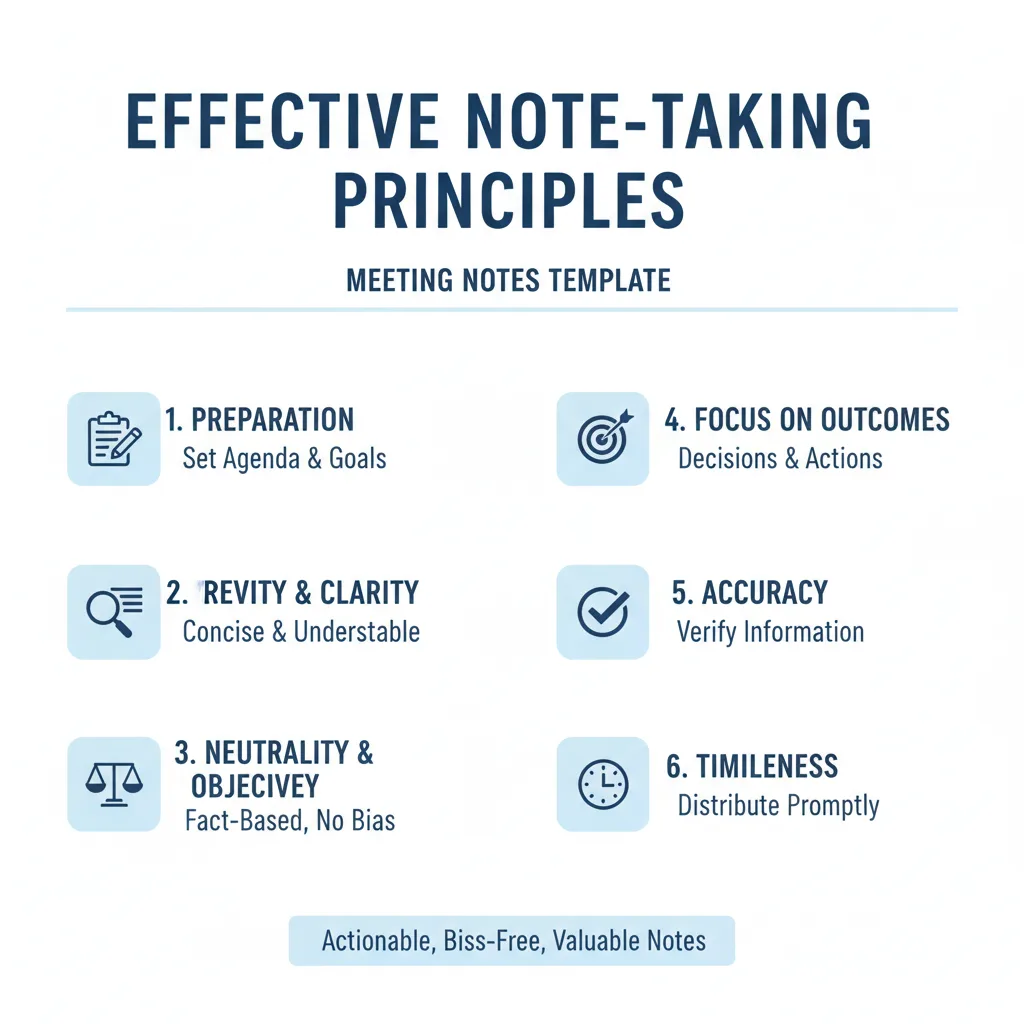
Creating useful meeting notes requires more than just transcribing dialogue; it involves active listening, synthesis, and organization. Adhering to certain principles ensures the notes are valuable and actionable for all stakeholders (MnCCC).
Key principles for effective note-taking include:
- Preparation - Review the meeting agenda beforehand, understand the objectives, and familiarize yourself with any pre-reading materials. This helps in anticipating key discussion points and framing the notes effectively (MnCCC).
- Brevity and Clarity - Focus on capturing the essence of discussions, decisions, and action items rather than verbatim transcripts. Use clear, concise language that is easy to understand (Town of Fairfax, CA).
- Neutrality and Objectivity - Record facts, decisions, and actions without personal bias, interpretation, or opinion. The notes should reflect what transpired, not the note-taker's perspective (Town of Fairfax, CA).
- Focus on Outcomes - Prioritize recording decisions, agreements, action items, and who is responsible for them. These are the most critical elements for follow-up and progress.
- Accuracy - Ensure names, dates, figures, and details of decisions are precisely recorded. Errors can lead to misunderstandings and incorrect actions.
- Timeliness - Distribute the meeting notes as soon as possible after the meeting. This ensures that information is fresh in attendees' minds and allows for prompt action on assignments (MnCCC).
Accessibility Considerations
When preparing meeting notes, particularly for public bodies or diverse organizations, accessibility is a crucial consideration. Ensuring notes are accessible means they can be understood and used by individuals with various disabilities, promoting inclusivity and compliance with accessibility standards (CA Dept. of Rehabilitation).
To enhance the accessibility of meeting notes, consider the following practices:
- Clear Headings and Structure - Use proper heading styles (e.g., H1, H2, H3) to create a logical hierarchy, making it easier for screen readers to navigate and for all readers to grasp the document's structure (CA Dept. of Rehabilitation).
- Descriptive Language - Use plain language and avoid jargon or overly complex sentences. Clearly describe any visuals or complex concepts if they are integral to understanding the notes.
- Alternative Text for Images - If any images, charts, or diagrams are included, provide concise and informative alternative text (alt text) for screen reader users.
- High Contrast Colors - When presenting notes digitally, ensure sufficient color contrast between text and background to aid readability for individuals with low vision.
- Font Choice and Size - Use legible fonts (e.g., sans-serif fonts) and an appropriate font size that is easy to read for a wide audience.
- Logical Reading Order - Ensure the content flows in a logical order, especially if the document contains multiple columns or complex layouts, to assist screen reader users.
- Provide in Multiple Formats - Offer the notes in various accessible formats (e.g., accessible PDF, Word document, HTML) to cater to different user preferences and assistive technologies.
Process of Using a Meeting Notes Template
Utilizing a Meeting Notes Template effectively involves a structured approach before, during, and after the meeting. This systematic process ensures comprehensive capture and timely dissemination of information (MnCCC).
- Before the Meeting - Prepare the template by filling in known details such as the meeting title, date, time, and attendees. Review the agenda and any pre-read materials to anticipate discussion points. Consider creating a rough outline for each agenda item to guide note-taking during the meeting.
- During the Meeting - Actively listen and record key information, focusing on decisions, action items, and significant discussion points. Use abbreviations or shorthand if necessary, but expand them immediately after the meeting. Clearly note who is responsible for each action and its deadline. Seek clarification if unsure about a decision or action item.
- After the Meeting - Review and refine the raw notes as soon as possible to ensure accuracy, clarity, and completeness. Expand any shorthand, correct grammatical errors, and organize the information logically within the template. Distribute the final notes to all relevant parties, including attendees and any absent stakeholders who need to be informed, usually within 24-48 hours.
Frequently Asked Questions
Not the form you're looking for?
Try our legal document generator to create a custom document
Disclaimer: The templates available on this website are provided for general informational purposes only and do not constitute legal advice. They are not intended to be, and should not be interpreted as, compliant with any specific legal, regulatory, or privacy requirements. These templates are not a replacement for professional legal guidance and should not be relied upon for any particular matter or circumstance. Users are strongly encouraged to seek advice from a qualified attorney licensed in their jurisdiction before using, modifying, or relying on any template.
All templates are provided on an "as is," "with all faults," and "as available" basis. The provider disclaims any and all warranties of any kind, whether express, implied, statutory, or otherwise, including without limitation warranties of merchantability, fitness for a particular purpose, title, or non-infringement.
LegalTemplates.com makes no guarantees or representations regarding the accuracy, completeness, expected outcomes, or reliability of the materials contained in these templates or any materials referenced or linked from them.