Marriage Separation Agreement
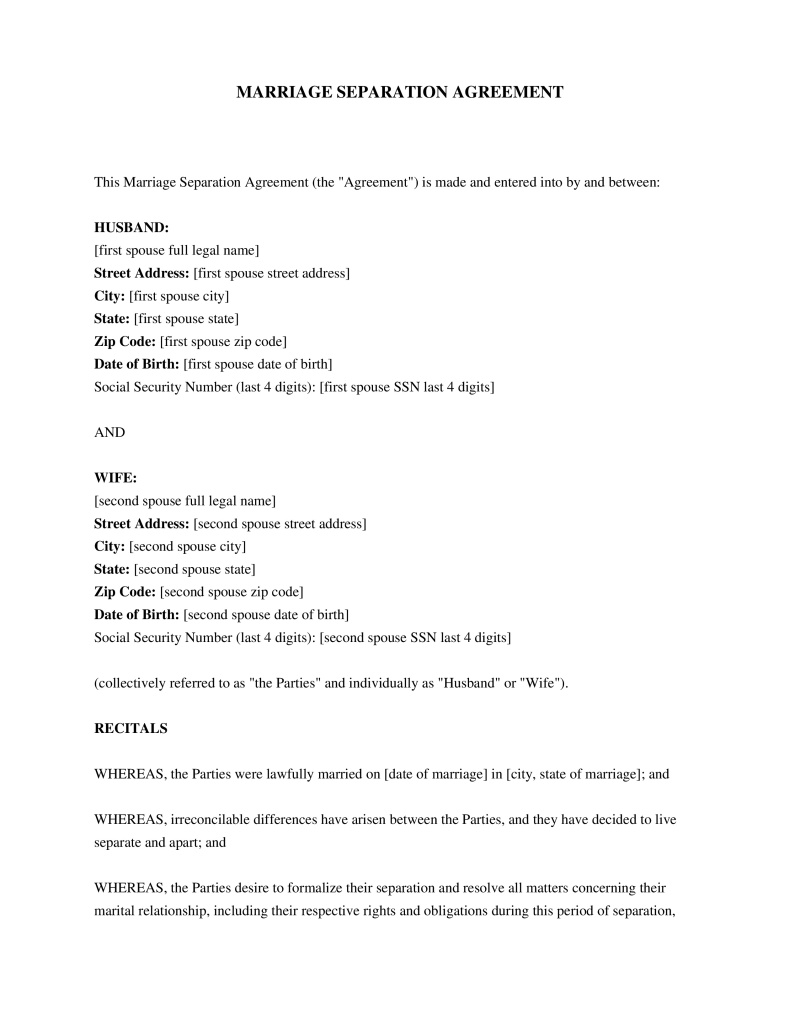
A Marriage Separation Agreement is a legal document outlining the terms for spouses living separately while remaining married, addressing issues such as asset division, child custody, and support.
Separation Type
Select 'Yes' if both spouses agree to the separation terms. Select 'No' if only one spouse is initiating the separation.
Table of Contents
What is a Marriage Separation Agreement?
A Marriage Separation Agreement is a legally binding contract entered into by spouses who wish to live apart but are not yet ready or able to divorce. This private agreement outlines the rights and responsibilities of each party during their period of separation. Its primary purpose is to resolve key issues that typically arise during the dissolution of a marriage, providing a structured framework for the interim period.
Purpose and Scope
The main objective of a Marriage Separation Agreement is to establish clear terms for a couple's separation without immediately terminating their marital status. It allows spouses to formally address critical aspects of their lives while living separately, often serving as a precursor to divorce or as an alternative for those who prefer legal separation. This agreement can provide stability and predictability during an emotionally challenging time, allowing parties to manage their affairs outside of court intervention for many issues.
By defining the terms of separation, the agreement helps prevent future disputes and clarifies expectations regarding financial and parental duties. It is a private contract between the spouses, meaning its terms are determined by mutual consent rather than judicial imposition. While some jurisdictions may require court approval for certain aspects, the foundation remains a consensual arrangement.
Key Provisions
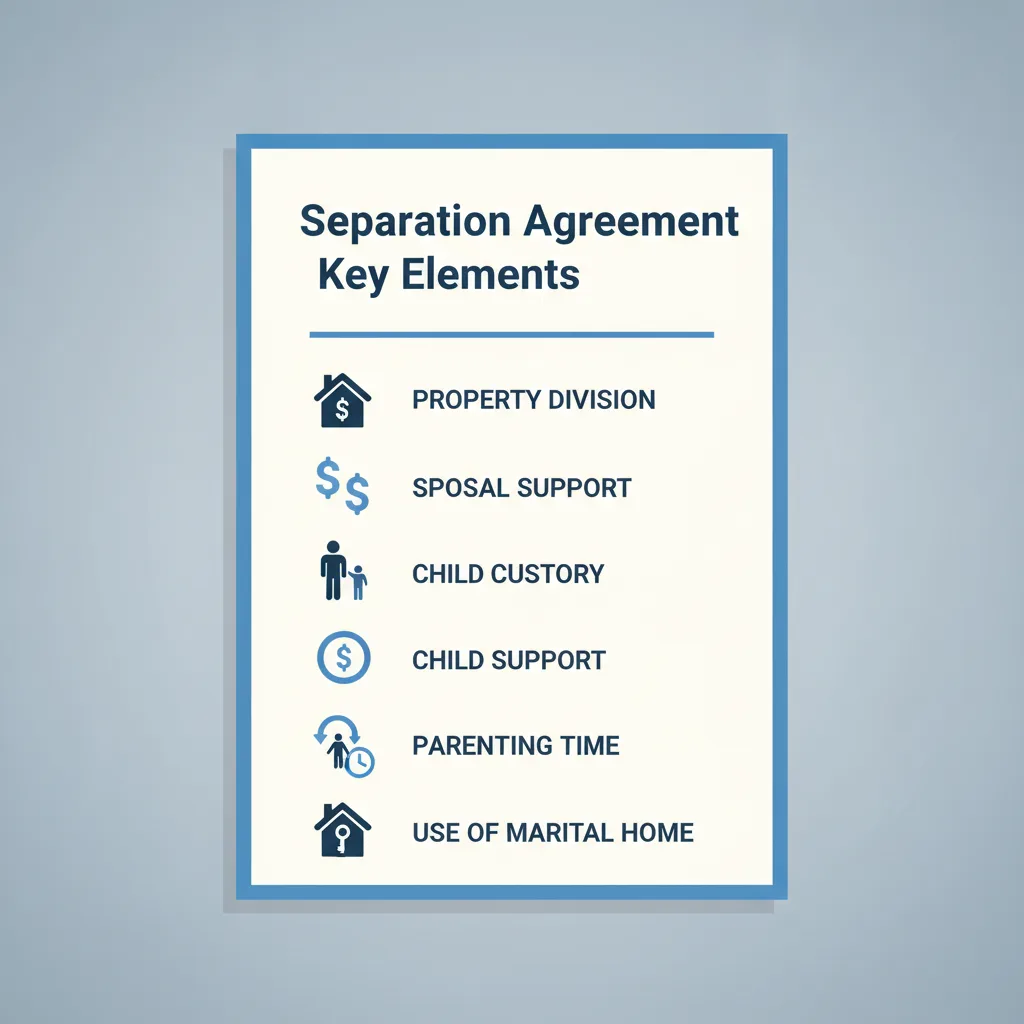
A comprehensive Marriage Separation Agreement typically addresses a range of issues, ensuring that the practical aspects of living separately are covered. The specific provisions included can vary based on the couple's circumstances and state laws. However, common elements are designed to provide clarity and prevent future conflict:
- Property Division - Outlines how marital assets and debts will be divided between the spouses. This includes real estate, bank accounts, investments, vehicles, and personal property, as well as joint loans, credit card debts, and mortgages.
- Spousal Support (Alimony) - Specifies whether one spouse will provide financial support to the other, including the amount, duration, and payment schedule. This provision aims to ensure financial stability for both parties during and after the separation.
- Child Custody and Parental Rights - Establishes the legal and physical custody arrangements for any minor children. This includes decision-making authority regarding the children's education, healthcare, and religious upbringing.
- Child Support - Determines the financial contributions each parent will make for the children's care, including basic support, health insurance, and extraordinary expenses.
- Parenting Time (Visitation) - Details the schedule for when each parent will spend time with the children, including holidays, vacations, and special occasions.
- Use of Marital Home - Designates which spouse will reside in the marital home during the separation and who will be responsible for its maintenance and mortgage payments.
- Health Insurance - Specifies how health insurance coverage for both spouses and children will be maintained during the separation period.
- Other Financial Matters - May include provisions for tax filings, retirement accounts, life insurance, and responsibility for ongoing household expenses.
Legal Status and Enforceability
A Marriage Separation Agreement derives its legal force from contract law. For the agreement to be valid and enforceable, it must generally meet the requirements for a legally binding contract, including mutual assent, consideration, and lawful purpose. Spouses typically sign the agreement voluntarily, without coercion, and often with the advice of independent legal counsel for each party. This helps ensure fairness and understanding of the terms.
Once executed, the agreement can be presented to a court during a subsequent divorce or legal separation proceeding. In many jurisdictions, courts will review and often incorporate the terms of a valid separation agreement into a final divorce decree, provided the terms are deemed fair and equitable, especially concerning child-related matters. The enforceability of these agreements can vary by state, with some requiring judicial approval to become fully binding in a divorce context.
Distinction from Divorce and Legal Separation
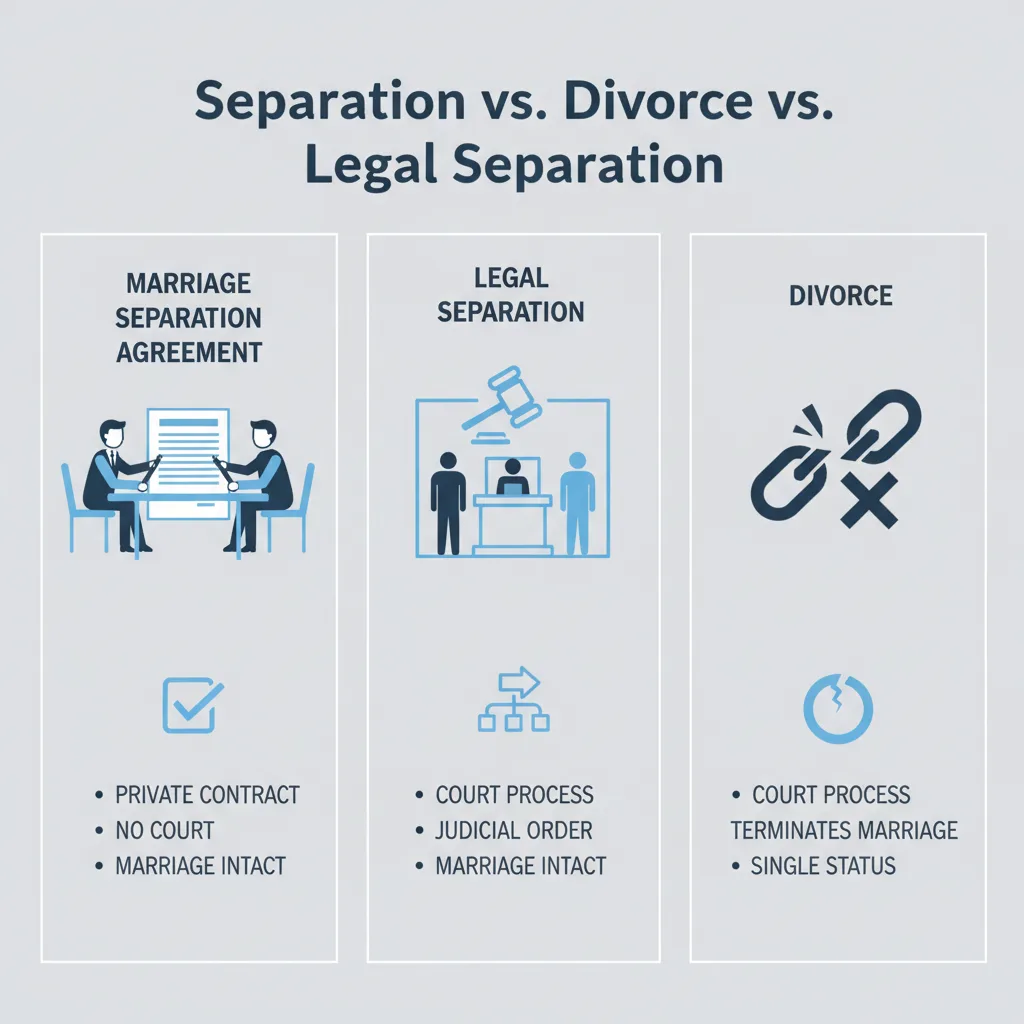
It is important to differentiate a Marriage Separation Agreement from both a final divorce and a legal separation, as these terms represent distinct legal statuses:
- Divorce (Dissolution of Marriage) - A divorce completely terminates the marital status of both parties, allowing them to remarry. A Marriage Separation Agreement can be a precursor to divorce, often becoming the basis for the final divorce decree, but it does not, by itself, end the marriage.
- Legal Separation - In some states, a legal separation is a court process that changes the status of the marriage without terminating it. For example, in Minnesota, a legal separation is a judicial action that formally separates the spouses and addresses issues like property, support, and child custody, but leaves the marriage intact (Minnesota Judicial Branch). A Marriage Separation Agreement is a private contract that can exist independently or be part of a legal separation process, but it is not the court order itself.
The primary difference is that a Marriage Separation Agreement is a private contractual arrangement, whereas a divorce or legal separation involves a formal court order that alters the marital status itself. The agreement provides a framework for living apart, while a divorce or legal separation legally formalizes the end or modification of the marital relationship.
State-Specific Considerations
While the general principles of Marriage Separation Agreements are similar across jurisdictions, specific requirements and provisions can vary significantly by state law. States provide frameworks for how these agreements are recognized and what they must contain to be considered valid and enforceable:
- Ohio Requirements - In Ohio, a separation agreement must address property division, spousal support, and, if applicable, child-related matters such as parental rights, child support, and parenting time (Ohio Revised Code Section 3105.63).
- North Carolina Contractual Nature - North Carolina views a separation agreement as a private contract between spouses. It can address various issues related to separation, including property division, spousal support, and child custody and support (North Carolina Judicial Branch).
- Washington State Contracts - In Washington, parties to a marriage or domestic partnership can enter into a written separation contract addressing maintenance, property disposition, parenting plans, and support. These contracts may also be recorded and notice published (RCW 26.09.070).
These examples illustrate that while the core purpose of a Marriage Separation Agreement remains consistent, the specific legal nuances and formal requirements for its creation and enforceability are defined by individual state statutes and judicial precedents.
Frequently Asked Questions
Sources
- Section 3105.63 - Ohio Revised Code | Ohio Laws - Defines the requirements for a separation agreement in Ohio, including provisions for property division, spousal support, and child-related matters.
- Separation and Divorce | North Carolina Judicial Branch - Provides guidance on separation agreements in North Carolina, including their purpose, validity requirements, and the option to include child custody and support provisions.
- Separation v. Divorce - Annulment and Legal Separation | Minnesota Judicial Branch - Clarifies the difference between separation and legal separation in Minnesota, emphasizing that legal separation is a court process that changes the status of the marriage without terminating it.
- RCW 26.09.070: Separation contracts | Washington State Legislature - Allows parties to a marriage or domestic partnership in Washington to enter into a written separation contract addressing maintenance, property disposition, parenting plans, and support, and provides for recording and pu
Not the form you're looking for?
Try our legal document generator to create a custom document
Disclaimer: The templates available on this website are provided for general informational purposes only and do not constitute legal advice. They are not intended to be, and should not be interpreted as, compliant with any specific legal, regulatory, or privacy requirements. These templates are not a replacement for professional legal guidance and should not be relied upon for any particular matter or circumstance. Users are strongly encouraged to seek advice from a qualified attorney licensed in their jurisdiction before using, modifying, or relying on any template.
All templates are provided on an "as is," "with all faults," and "as available" basis. The provider disclaims any and all warranties of any kind, whether express, implied, statutory, or otherwise, including without limitation warranties of merchantability, fitness for a particular purpose, title, or non-infringement.
LegalTemplates.com makes no guarantees or representations regarding the accuracy, completeness, expected outcomes, or reliability of the materials contained in these templates or any materials referenced or linked from them.