Letter of Recommendation for School
A Letter of Recommendation for School is a formal document, typically authored by an educator or mentor, that assesses an applicant's qualifications and character for academic admission.
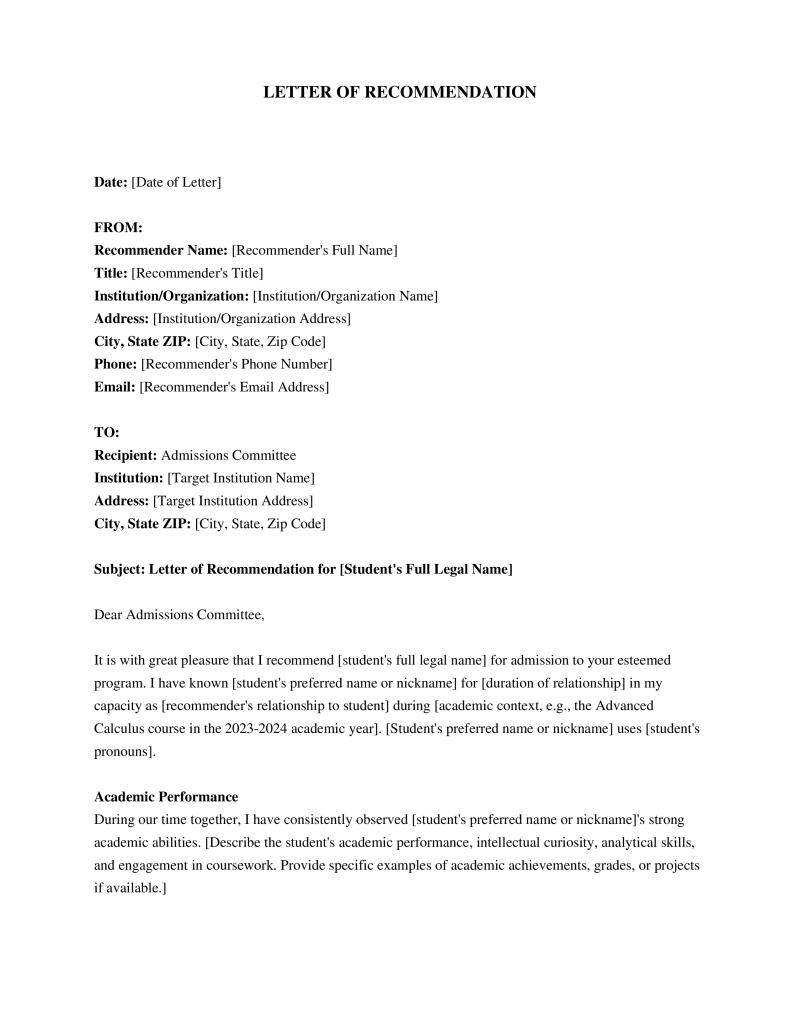
Relationship To Student
Select the role that best describes your connection to the student.
Describe your role if you selected 'Other'.
Table of Contents
What is a Letter of Recommendation for School?
A Letter of Recommendation for School is a formal document written by an individual who can attest to an applicant's qualifications, character, and abilities, typically in support of their application to an academic institution or scholarship program. These letters provide admissions committees with external perspectives on a candidate's potential for success, offering insights beyond academic transcripts and personal statements. They are an integral part of many application processes, helping evaluators understand an applicant's strengths, work ethic, and suitability for a particular program or award.
Purpose and Significance
Letters of Recommendation serve as critical components in the holistic review process for school admissions and scholarship applications. They offer qualitative assessments that complement quantitative data, such as grades and test scores. The primary purpose is to provide an objective, third-party endorsement of an applicant's capabilities, character traits, and experiences.
- Validation of Qualifications - Recommenders can corroborate academic achievements and extracurricular involvement, adding credibility to the applicant's self-reported information.
- Insight into Character - Letters often highlight personal attributes such as leadership, perseverance, teamwork, and intellectual curiosity, which are difficult to convey through other application materials.
- Demonstration of Potential - An effective letter can articulate an applicant's growth, potential contributions to the school community, and capacity for future success.
- Specific Examples - Strong letters provide concrete examples of the applicant's skills and accomplishments, offering a more vivid picture than general statements.
Key Components of an Effective Letter
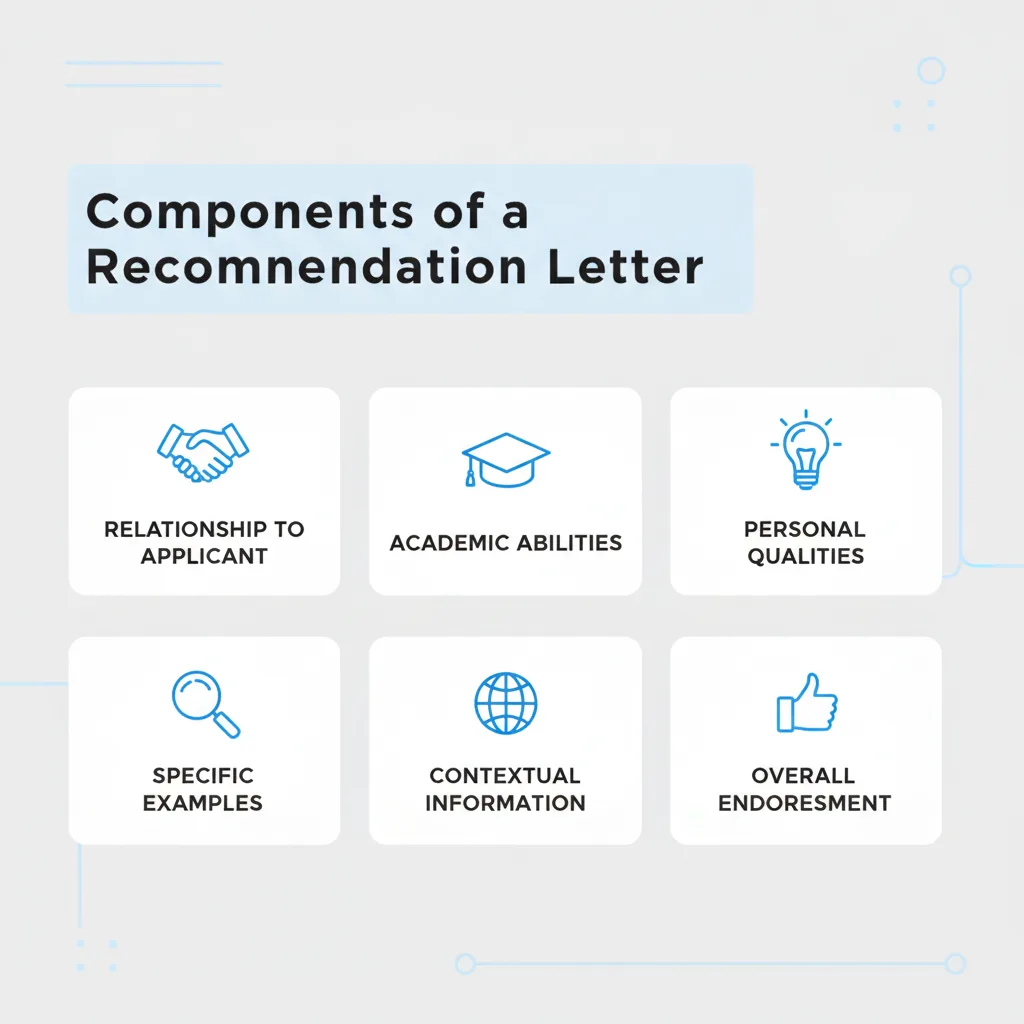
An effective Letter of Recommendation for School typically adheres to a structured format and contains specific elements designed to provide comprehensive insight into the applicant. Recommenders should focus on providing detailed, specific examples rather than generic praise.
- Recommender's Relationship to Applicant - Clearly states how the recommender knows the applicant, including the duration and context of their relationship (e.g., professor, mentor, supervisor).
- Assessment of Academic Abilities - Evaluates the applicant's intellectual capacity, critical thinking skills, performance in coursework, and engagement in class discussions.
- Evaluation of Personal Qualities - Discusses character traits such as maturity, integrity, motivation, leadership potential, teamwork skills, and ability to overcome challenges.
- Specific Examples and Anecdotes - Provides concrete instances where the applicant demonstrated particular skills or qualities, illustrating their strengths rather than merely stating them. For instance, the Harry S. Truman Scholarship Foundation emphasizes that recommenders should address specific selection criteria with detailed examples.
- Contextual Information - Offers perspective on the applicant's performance relative to peers or within a specific environment, providing a frame of reference for the admissions committee.
- Overall Endorsement - Concludes with a clear statement of support for the applicant's admission to the program or receipt of the scholarship, often with a summary of why they are a strong candidate.
Who Writes Letters of Recommendation?
The individuals chosen to write letters of recommendation are crucial, as their credibility and insights directly impact the letter's weight. Recommenders should be individuals who have had recent and significant contact with the applicant and can speak knowledgeably about their academic record, work experience, or personal qualities.
- Academic Recommenders - Often professors, teachers, or academic advisors who can comment on classroom performance, intellectual curiosity, analytical skills, and academic potential. For programs like the Dr. Nancy Foster Scholarship, one letter must come from someone in the applicant's current academic career.
- Professional Recommenders - Supervisors, mentors, or employers who can speak to work ethic, leadership abilities, teamwork, problem-solving skills, and professional conduct in a work environment. The Dr. Nancy Foster Scholarship also requires letters from individuals knowledgeable about the applicant's work experience.
- Extracurricular/Community Recommenders - Coaches, club advisors, volunteer coordinators, or community leaders who can highlight an applicant's commitment, leadership, teamwork, and impact outside of traditional academic or professional settings.
- Public Officials - In some unique cases, a public official may provide a ceremonial document to honor an individual for notable achievement, though this is less common for standard school applications and more for civic recognition, as seen with requests to the Mayor of Canton, Ohio.
Requesting a Letter of Recommendation
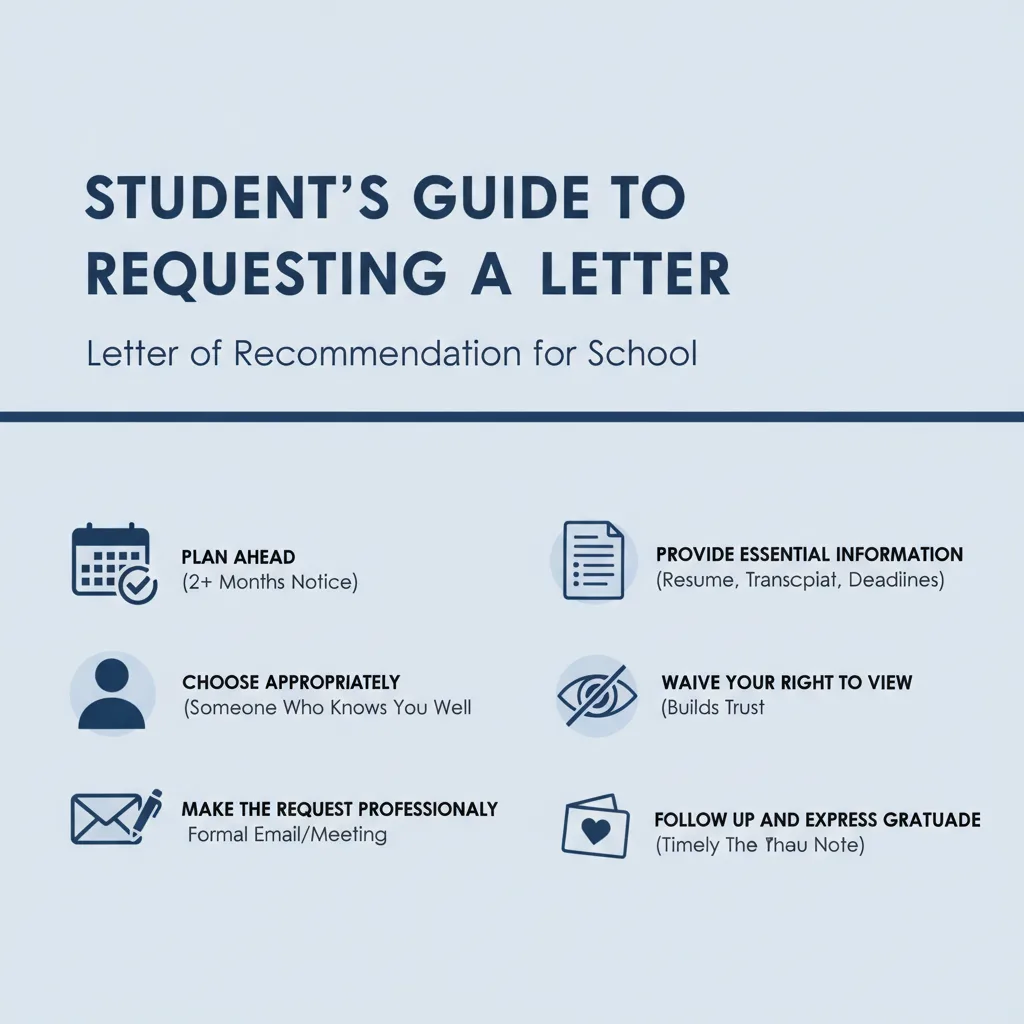
Students should approach the process of requesting a Letter of Recommendation for School with professionalism and foresight. Planning ahead and providing recommenders with ample time and necessary information are key to obtaining strong, thoughtful letters.
- Plan Ahead - Students should ask teachers and other potential recommenders well in advance of application deadlines, ideally several weeks or even months prior. This allows recommenders sufficient time to write a detailed and personalized letter.
- Choose Appropriately - Select recommenders who know you well and can speak positively and specifically about your abilities and character. Avoid asking someone who only knows you superficially.
- Make the Request Professionally - Approach the recommender in person or via a formal email, clearly stating your request and the purpose of the letter. Be respectful of their time and effort.
- Provide Essential Information - Furnish the recommender with all necessary materials, such as your resume or CV, personal statement, a list of schools/programs you are applying to, specific deadlines, and any particular qualities or experiences you would like them to highlight.
- Waive Your Right to View - Most application systems allow applicants to waive their right to view the letter. Doing so often assures admissions committees that the letter is a candid and honest assessment, potentially lending it more weight.
- Follow Up and Express Gratitude - Send a polite reminder a week or two before the deadline if you haven't confirmed submission. Always send a thank-you note or email to express appreciation for their time and effort.
Recommender Guidelines
Individuals writing Letters of Recommendation for School play a crucial role and should adhere to certain guidelines to ensure their letters are impactful and helpful to the applicant. The goal is to provide an honest, detailed, and supportive assessment.
- Focus on Specific Criteria - Understand what qualities or achievements the school or scholarship program values and tailor the letter to address these directly. For example, the Truman Scholarship requires recommenders to address specific selection criteria.
- Provide Concrete Evidence - Support all claims about the applicant's abilities or character with specific examples, anecdotes, or observations. General praise without evidence is less persuasive.
- Maintain Recent Contact - Recommenders should have had recent and meaningful interaction with the applicant to provide the most relevant and current insights.
- Be Candid and Honest - While supportive, the letter should also be truthful. Admissions committees value genuine assessments over exaggerated praise.
- Adhere to Instructions - Follow any specific formatting, length, or submission instructions provided by the applicant or the institution.
- Highlight Unique Contributions - Emphasize what makes the applicant stand out from others, focusing on their unique strengths and contributions.
Frequently Asked Questions
Sources
- Letters of Recommendation | The Harry S. Truman Scholarship Foundation - Guidelines for letters of recommendation for the Truman Scholarship, including selection criteria and advice for recommenders.
- Frequently Asked Questions | Dr. Nancy Foster Scholarship Program - Information on the Dr. Nancy Foster Scholarship Program, including requirements for letters of recommendation.
- Request a Letter or Proclamation from the Mayor | Canton, OH - Procedures for requesting letters of recommendation from the Mayor of Canton, Ohio.
- 9 Rules For Requesting Letters of Recommendation from Teachers - Guidelines for students on how to request letters of recommendation from teachers.
Not the form you're looking for?
Try our legal document generator to create a custom document
Disclaimer: The templates available on this website are provided for general informational purposes only and do not constitute legal advice. They are not intended to be, and should not be interpreted as, compliant with any specific legal, regulatory, or privacy requirements. These templates are not a replacement for professional legal guidance and should not be relied upon for any particular matter or circumstance. Users are strongly encouraged to seek advice from a qualified attorney licensed in their jurisdiction before using, modifying, or relying on any template.
All templates are provided on an "as is," "with all faults," and "as available" basis. The provider disclaims any and all warranties of any kind, whether express, implied, statutory, or otherwise, including without limitation warranties of merchantability, fitness for a particular purpose, title, or non-infringement.
LegalTemplates.com makes no guarantees or representations regarding the accuracy, completeness, expected outcomes, or reliability of the materials contained in these templates or any materials referenced or linked from them.