Unauthorized Tenants Notice
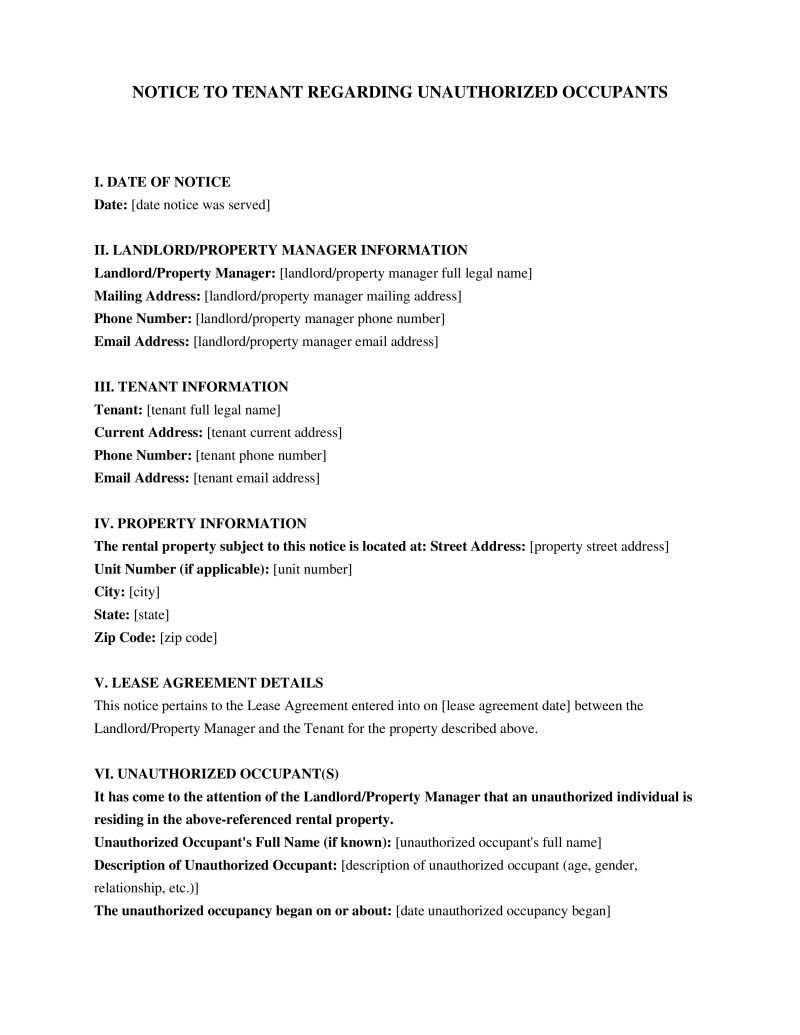
An Unauthorized Tenants Notice is a formal legal instrument issued by a landlord to a tenant, asserting a breach of lease agreement due to the presence of unapproved occupants within a rental property.
Property Type
Select the type of property where the unauthorized occupancy has occurred.
Provide details if the property type is not listed above.
Table of Contents
What is a Unauthorized Tenants Notice?
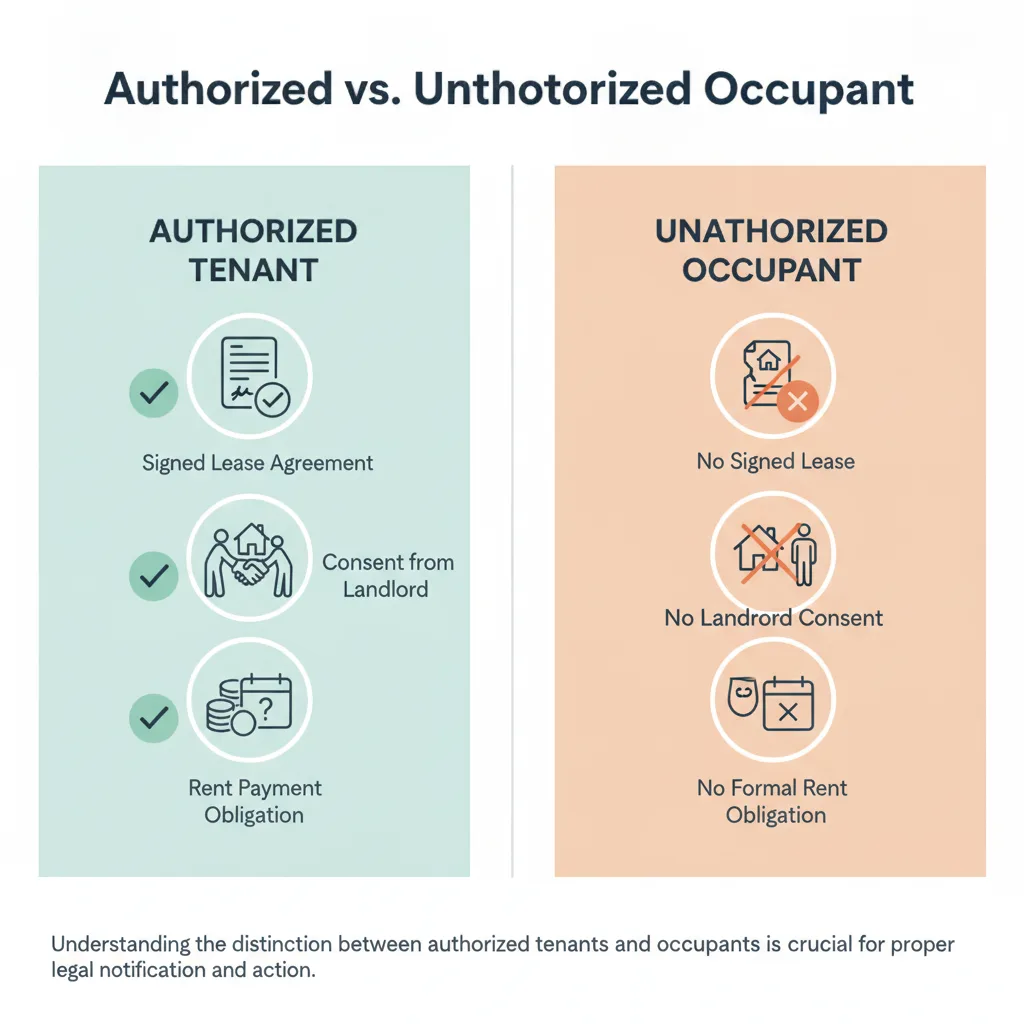
An Unauthorized Tenants Notice is a formal legal document issued by a landlord to an individual or individuals occupying a rental property without explicit permission or without being named on the lease agreement. Its primary purpose is to inform the unauthorized occupant of their unlawful tenancy and to demand that they vacate the premises by a specified deadline. This notice serves as a crucial preliminary step in the legal process of removing individuals who do not possess a valid right to reside in the property, often preceding formal eviction proceedings if the unauthorized occupants fail to comply.
Purpose and Legal Basis
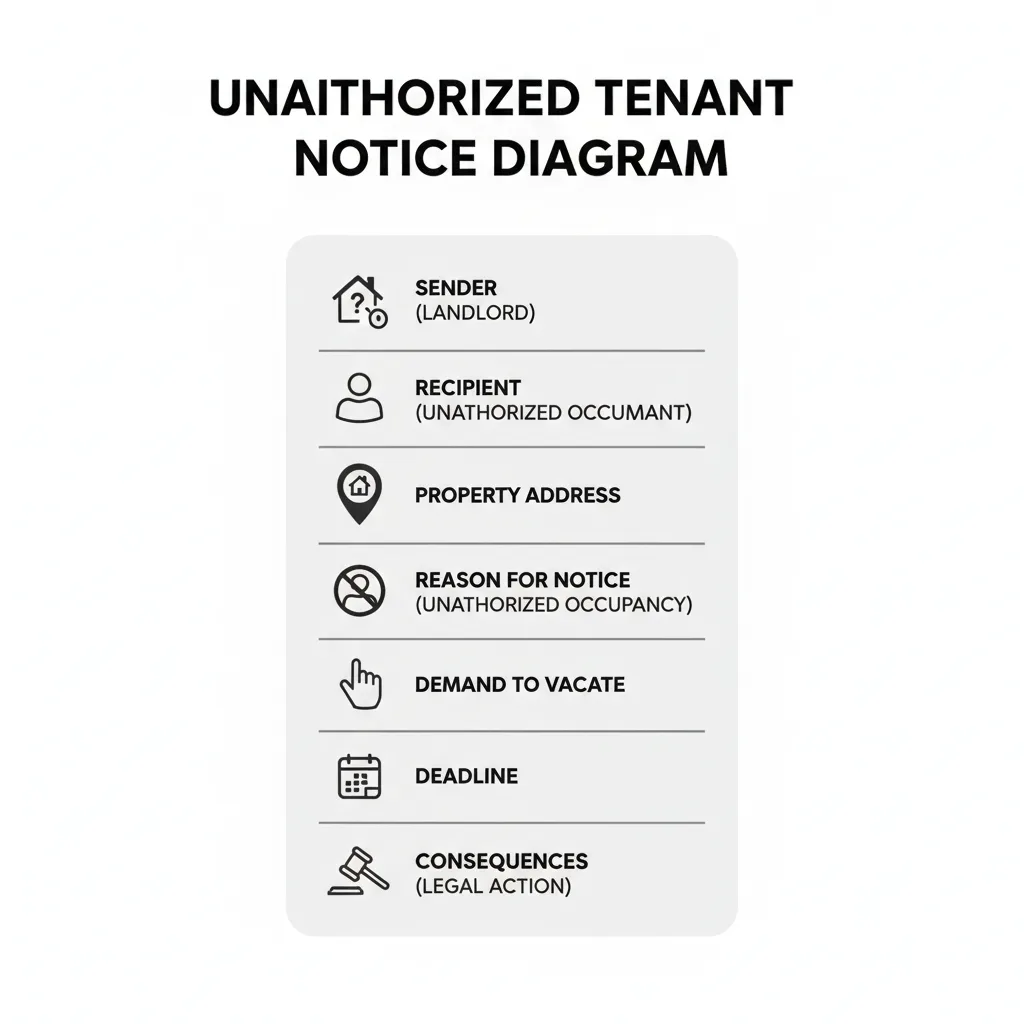
The Unauthorized Tenants Notice establishes a formal communication from the landlord to individuals residing on the property without consent. This document is essential for documenting the landlord's attempt to remedy a lease violation and for laying the groundwork for potential legal action, such as a holdover eviction case. It legally informs the unauthorized party of their status and the requirement to vacate, providing a necessary paper trail should court intervention become necessary.
Different jurisdictions specify various requirements for such notices. For instance, in some areas, the notice details the nature of the breach and the landlord’s intention to regain possession of the property. The legal basis for issuing such a notice stems from the landlord's right to control who occupies their property and to enforce the terms of a lease agreement, which typically prohibits unauthorized occupants.
- New York State Requirements - Landlords must serve a Notice to Quit to individuals occupying a home without the landlord's permission, instructing them to move out within 10 days (New York Courts).
- Montgomery County, Maryland Lease Breach - Landlords are required to provide at least 30 days' written notice to tenants for breaches of the lease, which must specify the nature of the breach and the landlord's intention to repossess the property (Montgomery County, Maryland).
- Montgomery County, Maryland Imminent Danger - A shorter 14-day notice is mandated if the lease breach involves behavior that poses a clear and imminent danger to others (Montgomery County, Maryland).
Issuing the Notice
The process of issuing an Unauthorized Tenants Notice requires careful adherence to jurisdictional guidelines to ensure its legal validity. Proper service of the notice is paramount, as a defect in service could invalidate the notice and delay any subsequent legal actions. Landlords must ensure the notice is delivered in a manner prescribed by local law, which often includes personal service, certified mail, or posting on the property.
The timeline for vacating the premises also varies by jurisdiction. The notice period is a critical component, providing the unauthorized occupants with a specific window to comply before further legal steps can be taken. This period allows the occupants to make arrangements to move and potentially avoid formal eviction proceedings.
- Notice to Quit Deadline (New York) - Unauthorized occupants in New York State must be given 10 days to move out after being served a Notice to Quit (New York Courts).
- General Lease Breach Notice (Montgomery County, MD) - For lease breaches, including unauthorized occupancy, landlords must provide at least 30 days' written notice (Montgomery County, Maryland).
- Imminent Danger Notice (Montgomery County, MD) - If unauthorized occupancy is linked to behavior posing a clear and imminent danger, a 14-day notice is required (Montgomery County, Maryland).
Required Information in the Notice
For an Unauthorized Tenants Notice to be legally effective, it must contain specific information that clearly communicates the landlord's demands and the consequences of non-compliance. The precision and completeness of this information are vital, as errors or omissions can lead to the notice being deemed insufficient in court.
The notice must clearly identify the property, the unauthorized occupants, and the nature of their unauthorized presence. It also needs to state the specific actions required by the occupants and the deadline by which these actions must be completed. This clarity helps ensure that all parties understand the situation and their obligations.
- Identification of Parties and Property - The full names of the landlord and the unauthorized occupants, along with the complete address of the rental property.
- Statement of Unauthorized Occupancy - A clear declaration that the individuals are occupying the premises without permission or a valid lease agreement.
- Reference to Lease Terms - If applicable, a reference to the specific clauses in the primary tenant's lease that prohibit unauthorized occupants or subletting without consent.
- Demand to Vacate - An unambiguous demand for the unauthorized occupants to vacate the property.
- Compliance Deadline - A specific date by which the unauthorized occupants must move out, adhering to the minimum notice periods required by local statutes.
- Consequences of Non-Compliance - A statement indicating that failure to comply by the deadline may result in the landlord initiating formal eviction proceedings.
- Landlord's Signature and Date - The landlord's signature and the date the notice was issued.
Consequences of Non-Compliance
When unauthorized tenants fail to comply with the notice to vacate, landlords typically proceed with formal eviction actions through the court system. This legal process is designed to regain possession of the property and ensures that the removal of occupants is conducted lawfully. It is critical for landlords to follow all legal procedures, as self-help evictions are illegal and can result in severe penalties.
Unauthorized occupants also face potential legal and financial repercussions, including court costs, attorney fees, and a judgment on their record, which can impact future housing opportunities. Adhering to the notice's demands is generally in the best interest of all parties involved to avoid prolonged legal battles.
- Formal Eviction Proceedings - If unauthorized occupants do not vacate after receiving the notice, the landlord may file a holdover case in court to legally remove them.
- Legal Enforcement of Eviction - In jurisdictions like New York City, only a City Marshal or Sheriff is authorized to carry out a Warrant of Eviction issued by a court (NYC311).
- Prohibition of Illegal Eviction - Landlords are prohibited from engaging in self-help eviction tactics, such as changing locks, removing belongings, or shutting off utilities, regardless of whether tenants are authorized or unauthorized.
- Reporting Illegal Evictions - Tenants in New York City who experience an illegal eviction or lockout can report it by calling 911 (NYC311).
Frequently Asked Questions
Sources
- Holdover Notices | New York Courts - Provides information on notices required for evicting unauthorized tenants in New York State.
- Illegal Eviction or Lockout · NYC311 - Details tenant rights and procedures to report illegal evictions or lockouts in New York City.
- Landlord Notices - Housing and Community Affairs - Montgomery County, Maryland - Outlines the requirements for landlords issuing notices to vacate for lease breaches in Montgomery County, Maryland.
Not the form you're looking for?
Try our legal document generator to create a custom document
Disclaimer: The templates available on this website are provided for general informational purposes only and do not constitute legal advice. They are not intended to be, and should not be interpreted as, compliant with any specific legal, regulatory, or privacy requirements. These templates are not a replacement for professional legal guidance and should not be relied upon for any particular matter or circumstance. Users are strongly encouraged to seek advice from a qualified attorney licensed in their jurisdiction before using, modifying, or relying on any template.
All templates are provided on an "as is," "with all faults," and "as available" basis. The provider disclaims any and all warranties of any kind, whether express, implied, statutory, or otherwise, including without limitation warranties of merchantability, fitness for a particular purpose, title, or non-infringement.
LegalTemplates.com makes no guarantees or representations regarding the accuracy, completeness, expected outcomes, or reliability of the materials contained in these templates or any materials referenced or linked from them.