Pay or Vacate Notice
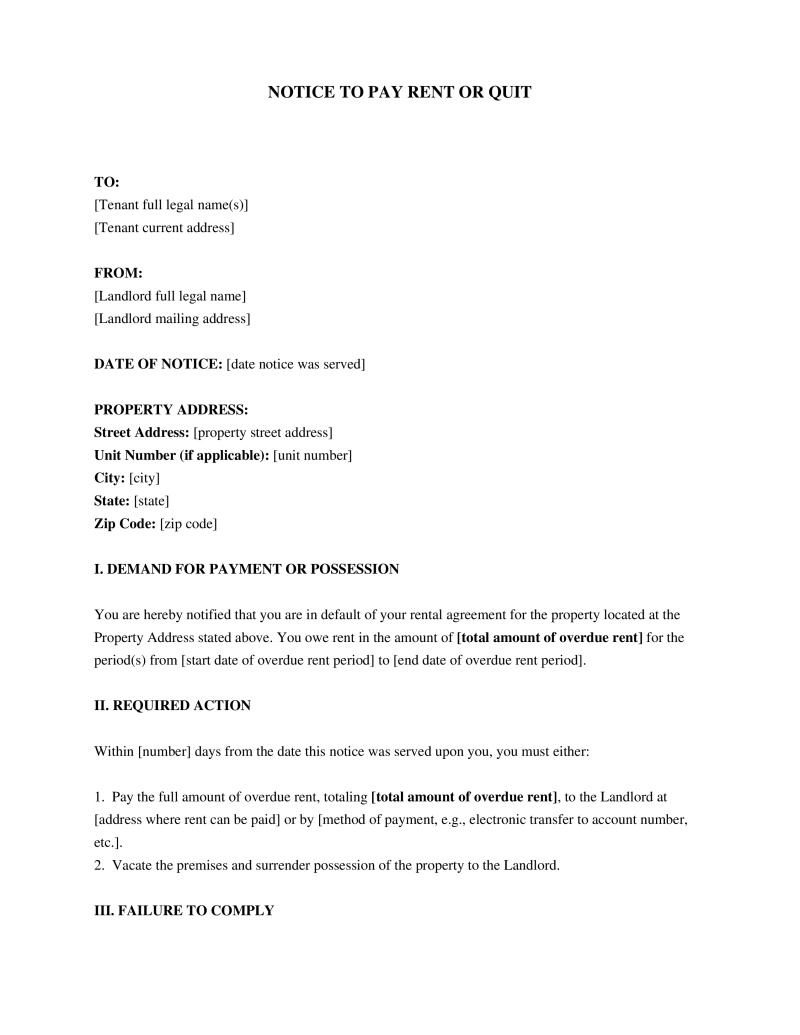
A Pay or Vacate Notice is a formal legal notification issued by a landlord to a tenant for overdue rent, demanding payment or possession of the premises by a specified deadline.
Notice Delivery Method
Select the primary method you will use to serve this notice. Local laws may require specific delivery methods.
Provide details if you selected 'Other'.
Table of Contents
What is a Pay or Vacate Notice?
A Pay or Vacate Notice is a formal written communication issued by a landlord to a tenant, primarily used when the tenant has failed to pay rent by the agreed-upon due date. This notice serves as a demand for the tenant to either remit the overdue rent within a specified timeframe or vacate the rental property. Its core purpose is to formally notify the tenant of a lease violation and initiate the legal process for eviction if the tenant does not comply, commonly within 3 to 14 days, depending on state laws and the lease agreement.
Purpose and Function
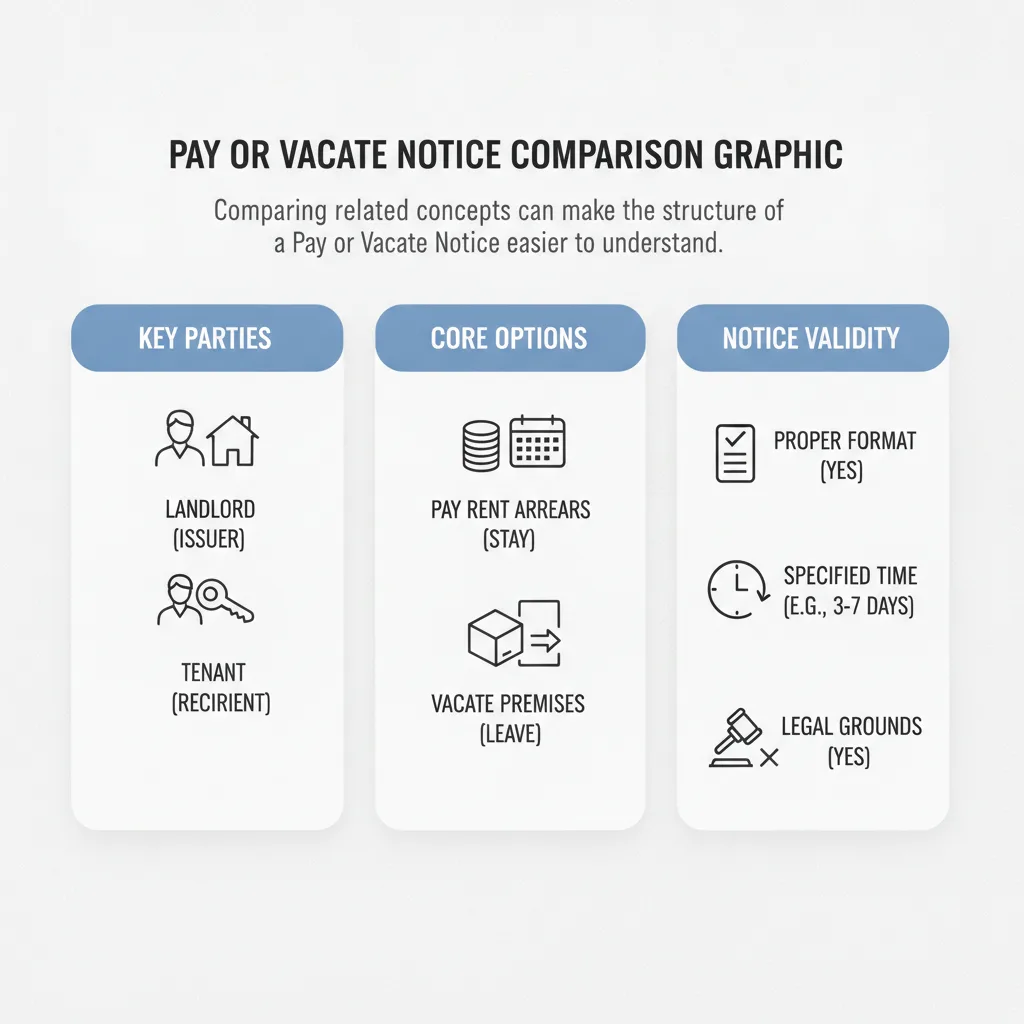
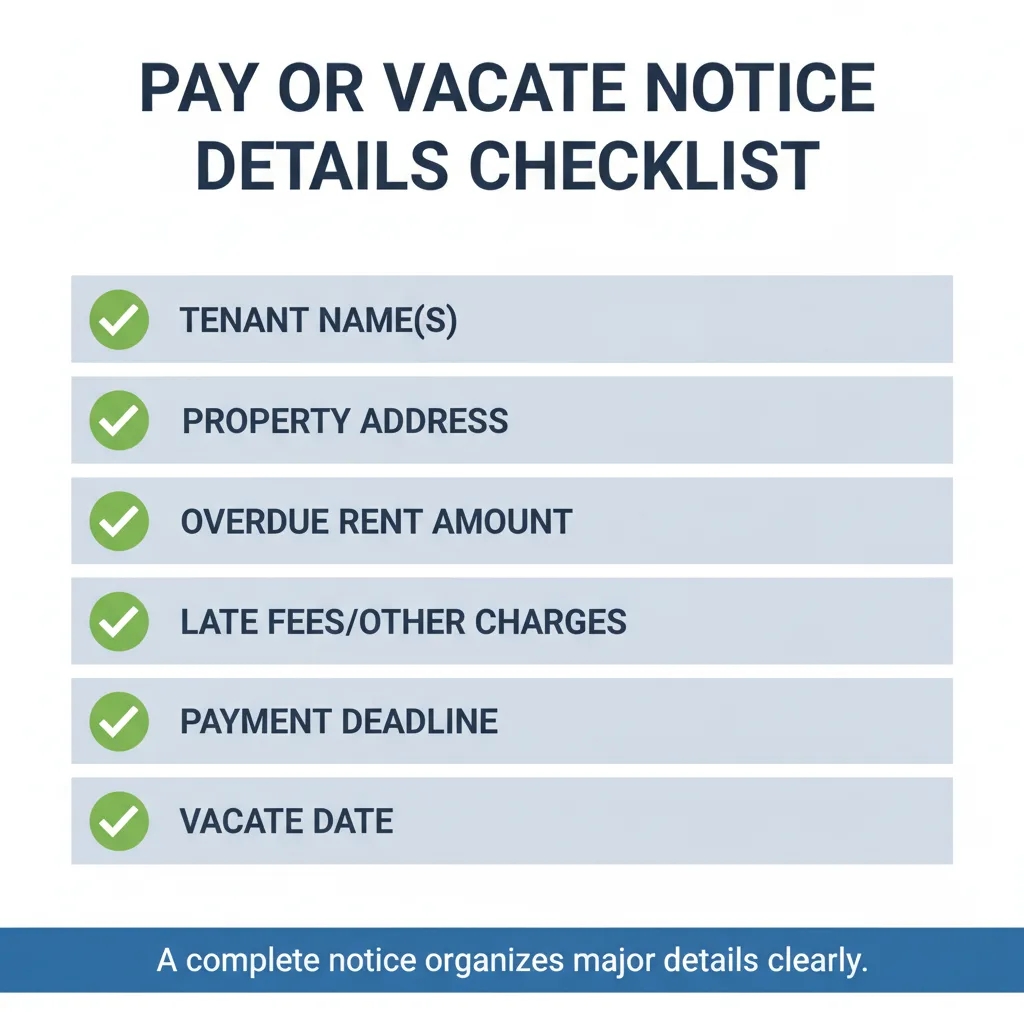
The primary function of a Pay or Vacate Notice is to provide a tenant with a final opportunity to rectify a breach of their lease agreement, specifically the failure to pay rent. It acts as a prerequisite for a landlord to file an eviction lawsuit, known as unlawful detainer actions in many jurisdictions, should the tenant not comply. Issuing this notice is a critical step in maintaining a transparent and legally compliant landlord-tenant relationship, ensuring due process before legal action.
Key aspects of its purpose include:
- Formal Notification - It formally informs the tenant of the exact amount of rent owed, any applicable late fees, and the deadline for payment.
Frequently Asked Questions
Sources
- RCW 59.18.057: Notice—Form - Provides the required form for a 14-day notice to pay rent or vacate in Washington State.
- RCW 59.18.170: Landlord to give notice if tenant fails to carry out duties—Late fees - Details landlord's obligations regarding notices when tenants fail to fulfill duties, including late fees and notice requirements in Washington State.
- Evictions - Utah Courts - Provides information on eviction processes, including the 3-day notice to pay or vacate in Utah.
Not the form you're looking for?
Try our legal document generator to create a custom document
Disclaimer: The templates available on this website are provided for general informational purposes only and do not constitute legal advice. They are not intended to be, and should not be interpreted as, compliant with any specific legal, regulatory, or privacy requirements. These templates are not a replacement for professional legal guidance and should not be relied upon for any particular matter or circumstance. Users are strongly encouraged to seek advice from a qualified attorney licensed in their jurisdiction before using, modifying, or relying on any template.
All templates are provided on an "as is," "with all faults," and "as available" basis. The provider disclaims any and all warranties of any kind, whether express, implied, statutory, or otherwise, including without limitation warranties of merchantability, fitness for a particular purpose, title, or non-infringement.
LegalTemplates.com makes no guarantees or representations regarding the accuracy, completeness, expected outcomes, or reliability of the materials contained in these templates or any materials referenced or linked from them.