Estoppel Certificate
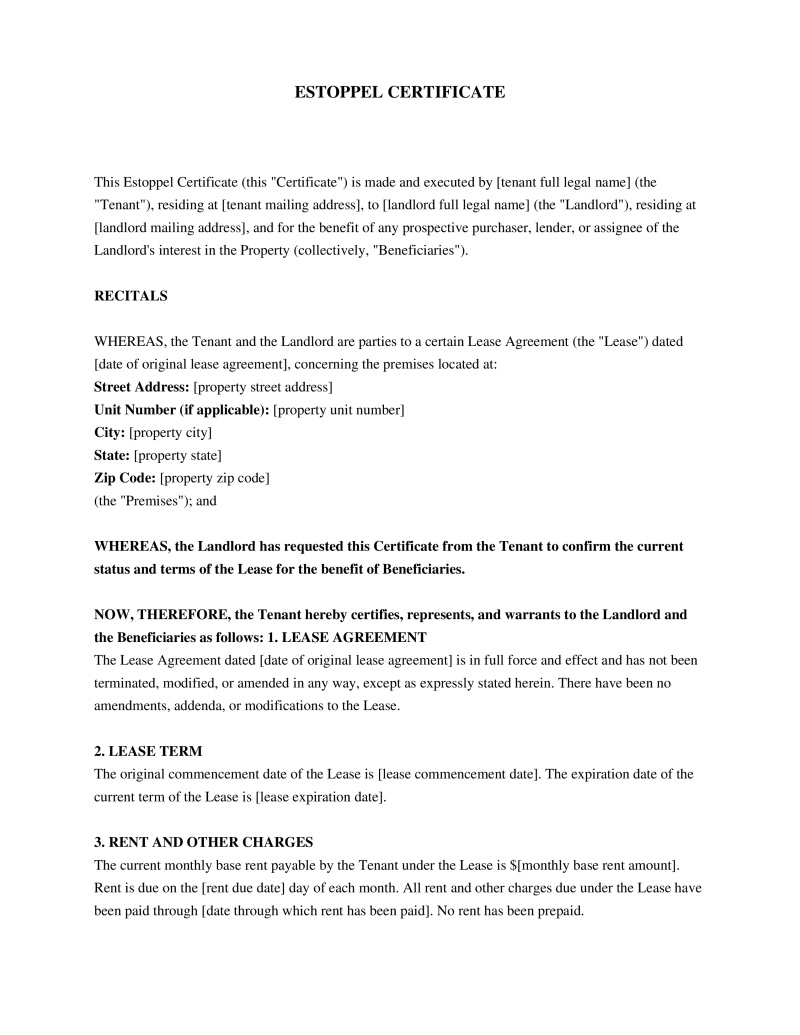
An Estoppel Certificate is a legal document that confirms the current status of a lease agreement or other contractual relationship, preventing a party from later asserting facts contrary to those stated.
Property Type
Select the property type as described in the lease agreement.
Provide a description if you selected 'Other'.
Table of Contents
What is an Estoppel Certificate?
An Estoppel Certificate is a legally binding document used in real estate transactions to establish the current status of lease terms or homeowner association assessments. It is typically requested by a third party, such as a potential buyer or lender, during the sale or refinancing of a property. The certificate provides verified information from the tenant or association, offering legal assurance regarding the accuracy of certain facts and preventing future disputes over those facts.
Purpose and Legal Significance
The primary purpose of an Estoppel Certificate is to confirm the existing agreements or obligations between parties as of a specific date, providing clarity and reducing risk for third parties. When a property owner is selling or refinancing, the buyer or lender needs to understand the exact terms of any existing leases or financial obligations tied to the property. This document serves as a declaration by the tenant or homeowner association that the facts presented in the certificate are true and accurate, and that they cannot later claim different facts.
This legal assurance is crucial because it binds the party signing the certificate to the statements made within it. For instance, a tenant who signs an Estoppel Certificate stating a specific monthly rent and lease term cannot later assert a different rent amount or lease duration to the detriment of a new owner or lender. Similarly, a homeowner association confirms the current assessment status, which is vital for a buyer or mortgagee to understand their financial commitments.
Key Information Included
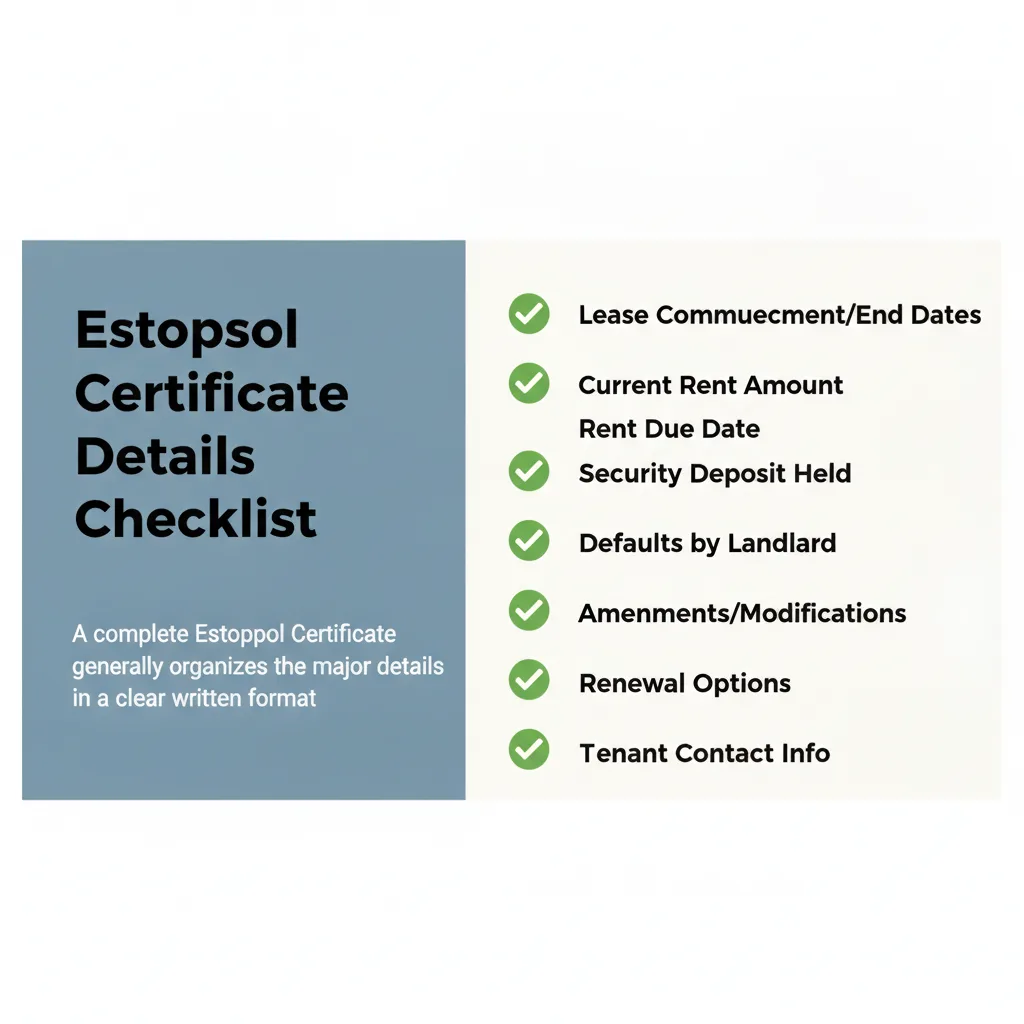
An Estoppel Certificate typically contains specific details that verify the current state of a lease agreement or association account. This information is critical for third parties to accurately assess the financial and legal standing of a property.
Common elements found in an Estoppel Certificate include:
- Date of Issuance - The specific date the certificate is prepared and issued.
- Parties Involved - The names of the parcel owner(s) or landlord(s) and the tenant(s) or association.
- Property Designation and Address - A clear identification of the leased premises or parcel subject to the certificate.
- Lease Term - The commencement and expiration dates of the lease agreement, including any renewal options.
- Rental Amount - The current monthly or periodic rent payable under the lease.
- Security Deposit Information - The amount of any security deposit held and conditions for its return.
- Rent Due Date - The specific day of the month rent is due.
- Outstanding Obligations - Any existing defaults by either the landlord or tenant, or any amounts currently owed.
- Amendments or Modifications - Confirmation of any amendments or modifications to the original lease agreement.
- Other Rights or Obligations - Any additional rights or obligations under the lease, such as options to purchase or specific maintenance responsibilities.
- Assessment Information - For homeowner associations, this includes the regular periodic assessment amount, any special assessments, and whether any assessments are past due.
When an Estoppel Certificate is Used
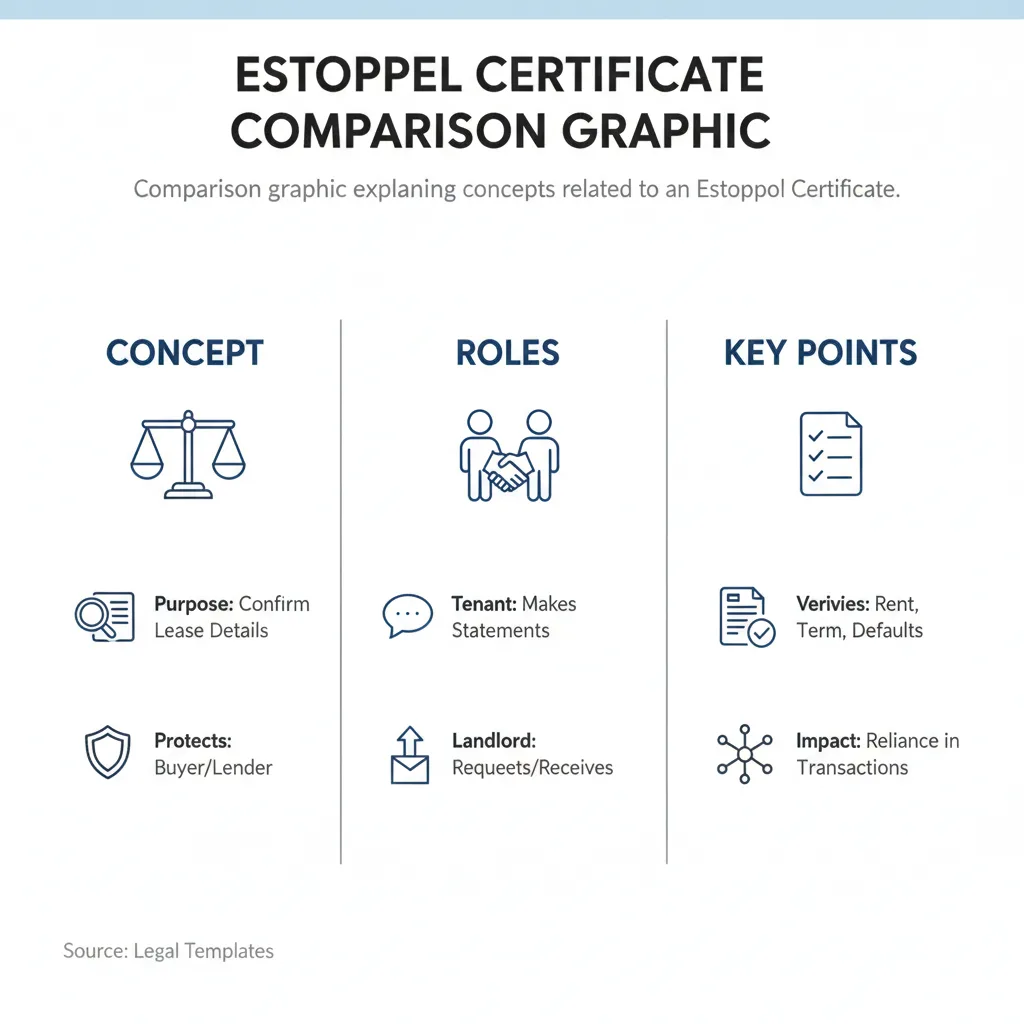
Estoppel Certificates are primarily utilized in real estate transactions where the interests of third parties are at stake. Their application ensures transparency and protects the financial interests of those relying on the property's current status.
Key scenarios for their use include:
- Property Sale - When a landlord or building owner sells a property, the buyer will request an Estoppel Certificate from existing tenants to confirm lease terms and prevent future discrepancies (House.gov).
- Property Refinancing - Lenders often require Estoppel Certificates during refinancing to verify rental income and lease conditions, which directly impact the property's value and the loan's security (House.gov).
- Tenant Requests - In some cases, tenants leasing land may request an Estoppel Tenant Certificate to confirm the current status of their lease agreement, including rental amounts and lease terms (pa.gov).
- Homeowners' Association Transactions - When a parcel within a homeowners' association is sold or refinanced, the association is typically required to issue an Estoppel Certificate detailing assessment information and any outstanding dues (Florida Statutes 720.30851).
Issuance and Deadlines
The process for requesting and issuing an Estoppel Certificate often involves specific timelines and requirements, which can vary by jurisdiction or agreement. Prompt issuance is generally expected to facilitate real estate transactions.
Key aspects of issuance and deadlines include:
- Timely Return - An Estoppel Certificate should be returned on or before the date requested by the party seeking the information (House.gov).
- Homeowners' Association Requirements - In Florida, associations must issue an Estoppel Certificate within 10 business days after receiving a written or electronic request from a parcel owner or mortgagee (Florida Statutes 720.30851).
- Required Information for HOAs - The certificate from a homeowners' association must include specific details such as the date of issuance, names of parcel owners, parcel designation, and assessment information (Florida Statutes 720.30851).
Failure to provide a timely and accurate Estoppel Certificate can delay or even jeopardize real estate transactions, making adherence to deadlines important for all parties involved.
Frequently Asked Questions
Sources
- Estoppel Certificate - Provides guidance on handling estoppel certificates for leases with the U.S. House of Representatives.
- Request a Commonwealth Estoppel Tenant Certificate - Explains the process for tenants leasing land from the Commonwealth of Pennsylvania to request an estoppel certificate.
- Chapter 720 Section 30851 - 2024 Florida Statutes - Details the requirements for estoppel certificates within Florida homeowners' associations, including information to be included and deadlines for issuance.
Not the form you're looking for?
Try our legal document generator to create a custom document
Disclaimer: The templates available on this website are provided for general informational purposes only and do not constitute legal advice. They are not intended to be, and should not be interpreted as, compliant with any specific legal, regulatory, or privacy requirements. These templates are not a replacement for professional legal guidance and should not be relied upon for any particular matter or circumstance. Users are strongly encouraged to seek advice from a qualified attorney licensed in their jurisdiction before using, modifying, or relying on any template.
All templates are provided on an "as is," "with all faults," and "as available" basis. The provider disclaims any and all warranties of any kind, whether express, implied, statutory, or otherwise, including without limitation warranties of merchantability, fitness for a particular purpose, title, or non-infringement.
LegalTemplates.com makes no guarantees or representations regarding the accuracy, completeness, expected outcomes, or reliability of the materials contained in these templates or any materials referenced or linked from them.