Escrow Agreement
An Escrow Agreement is a contractual instrument establishing terms under which a neutral third party, known as the escrow agent, holds assets or funds until specified conditions are fulfilled by the transacting parties.
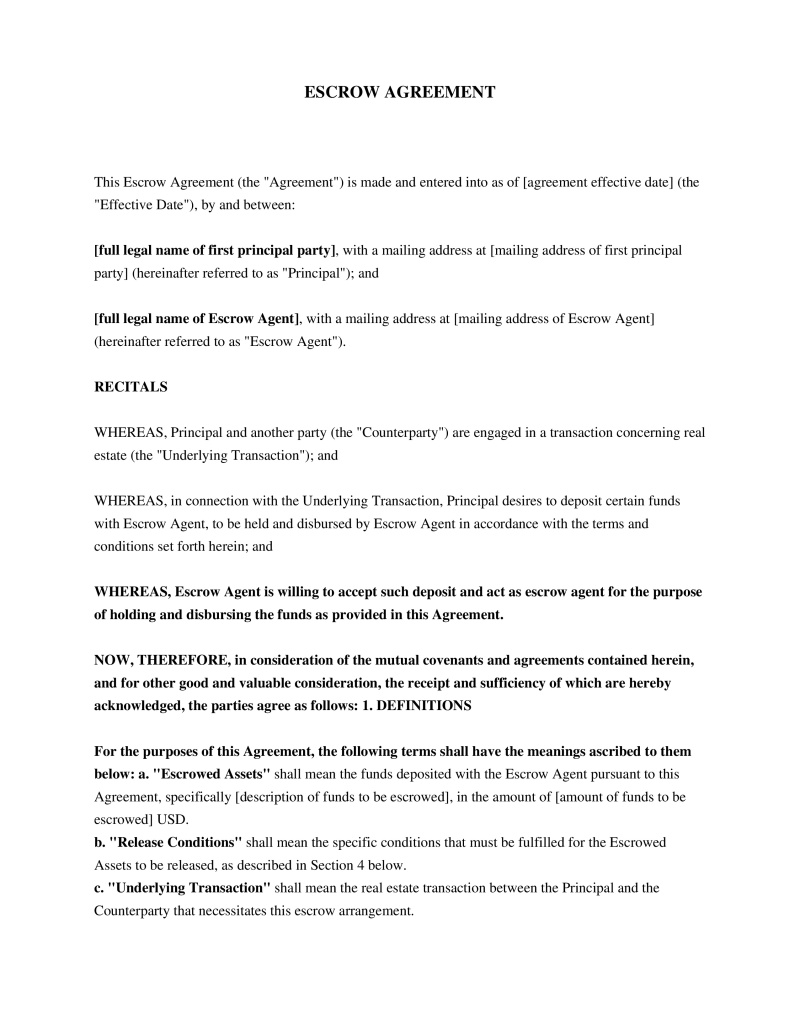
Escrow Subject Type
Select the primary subject of the escrow. This determines the agreement's structure and required details.
Provide a clear description if you selected 'Other'.
Table of Contents
What is a Escrow Agreement?
An Escrow Agreement is a contractual arrangement in which a third party, known as an escrow agent, holds and disburses funds, documents, or other assets on behalf of two other parties involved in a transaction. Its primary purpose is to provide security and mitigate risk for both the buyer and seller by ensuring that all specified conditions of a transaction are met before the transfer of assets occurs. This legally binding document outlines the terms and conditions under which the escrow agent will hold the assets and when they should be released to the appropriate party.
Purpose and Function of Escrow
The fundamental function of an escrow agreement is to act as a neutral intermediary, safeguarding assets until predetermined conditions are satisfied. This mechanism builds trust between parties who may not have an existing relationship, especially in high-value or complex transactions. By placing assets in escrow, both the buyer and seller are assured that their respective obligations will be fulfilled.
The escrow agent, typically a bank, title company, or a qualified attorney, is bound by the specific instructions detailed in the agreement. They do not have a vested interest in the outcome of the transaction, ensuring impartiality. This arrangement protects the buyer by guaranteeing that payment is not released until the seller has delivered the agreed-upon goods or services, and it protects the seller by ensuring that the buyer's funds are available and will be released upon fulfillment of their obligations.
Key Parties to an Escrow Agreement
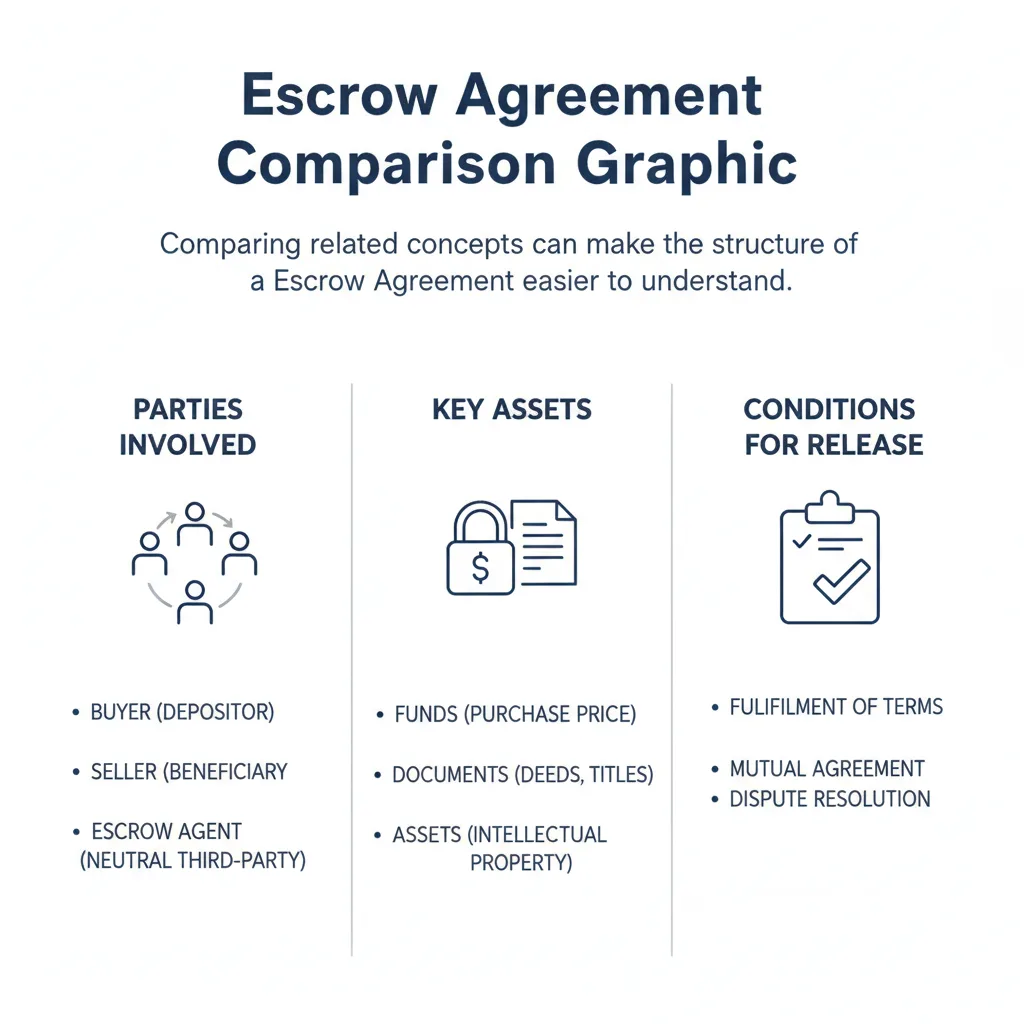
An Escrow Agreement typically involves three primary parties, each with distinct roles and responsibilities:
- Grantor/Depositor - This is the party who places the funds or assets into escrow. Often, this is the buyer in a purchase agreement, but it can also be a seller depositing documents like a deed.
- Grantee/Beneficiary - This is the party who receives the funds or assets from escrow once the agreed-upon conditions are met. This is often the seller, who receives payment, or the buyer, who receives documents.
- Escrow Agent - This is the neutral third party who holds the assets and facilitates the transaction according to the terms of the Escrow Agreement. The escrow agent has a fiduciary duty to both the grantor and the grantee, ensuring the terms are strictly followed.
Common Uses of Escrow Agreements
Escrow agreements are utilized across a wide range of industries and transaction types due to their effectiveness in securing complex deals. Some of the most common applications include:
- Real Estate Transactions - Funds for a property purchase, including earnest money deposits, are held in escrow until all closing conditions are met, such as title clearance and financing approval.
- Mergers and Acquisitions (M&A) - A portion of the purchase price may be held in escrow to cover potential indemnification claims or post-closing adjustments.
- Intellectual Property Licensing - Source code or other proprietary information may be held in escrow, to be released to the licensee only if the licensor ceases to support the product.
- Online Transactions and E-commerce - To protect buyers and sellers in peer-to-peer sales, funds are held until the buyer confirms receipt and satisfaction with the goods.
- Software Development - Payments for custom software projects can be placed in escrow and released in stages as development milestones are achieved.
- Litigation Settlements - Settlement funds may be held in escrow pending the fulfillment of certain conditions, such as the signing of release documents by all parties.
Essential Elements of an Escrow Agreement
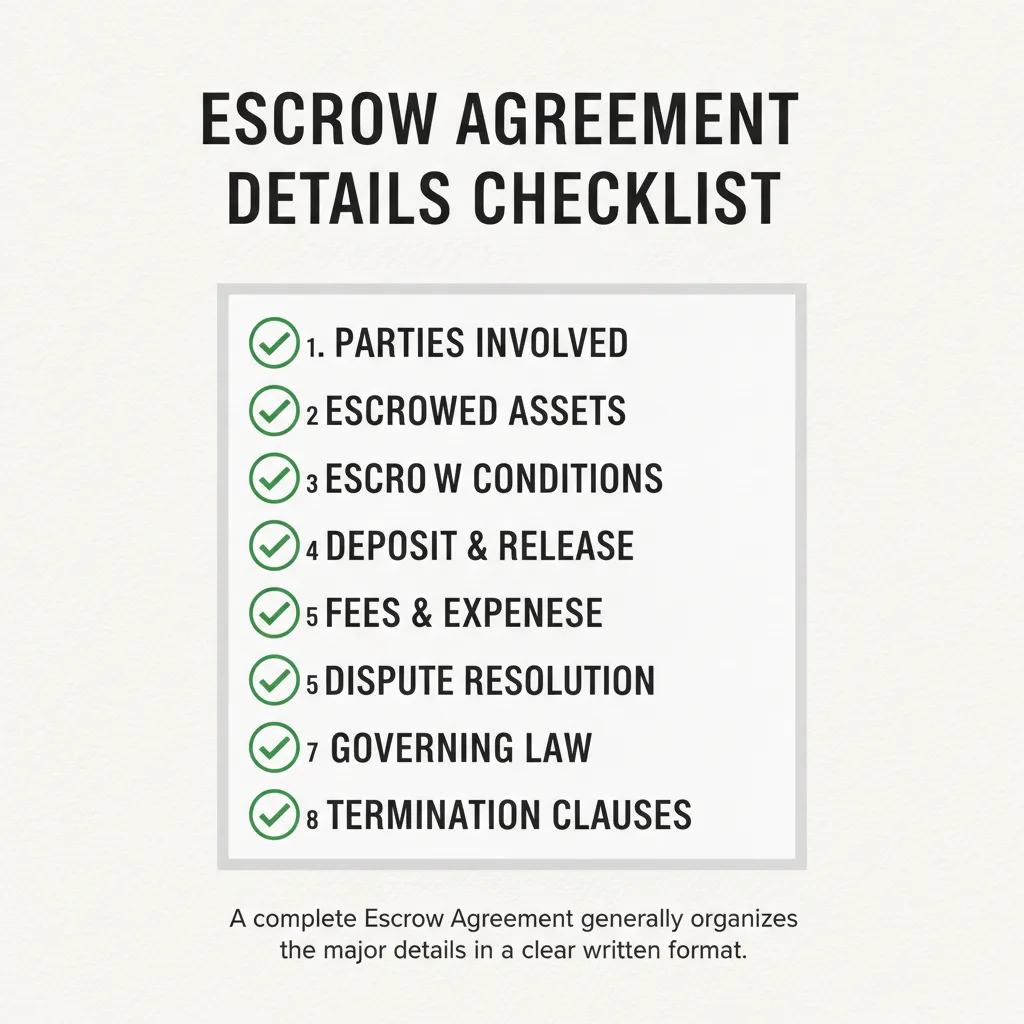
A well-drafted Escrow Agreement must contain specific provisions to clearly define the terms of the arrangement and protect all parties involved. Key elements typically include:
- Identification of Parties - Full legal names and contact information for the grantor, grantee, and escrow agent.
- Description of Escrow Property - A clear and precise description of the funds, documents, or other assets being held in escrow.
- Conditions for Release - Detailed, unambiguous instructions specifying the exact conditions or events that must occur before the escrow agent can release the property.
- Disbursement Instructions - Clear directions on how and to whom the escrow property should be distributed upon the fulfillment of conditions.
- Escrow Agent's Duties and Responsibilities - Outlines the specific actions the escrow agent is authorized and required to take, including their fiduciary obligations.
- Fees and Expenses - Specifies who is responsible for paying the escrow agent's fees and any other associated costs.
- Dispute Resolution - Procedures to follow if there is a disagreement between the grantor and grantee regarding the fulfillment of conditions or the release of assets.
- Governing Law - The jurisdiction whose laws will govern the interpretation and enforcement of the agreement.
- Termination Conditions - How and when the escrow arrangement can be terminated, including provisions for the return of funds if conditions are not met.
Establishing and Terminating an Escrow
Establishing an escrow begins with all parties agreeing to the terms and signing the Escrow Agreement. The grantor then deposits the specified assets with the escrow agent. The agent holds these assets securely until the conditions for release are satisfied.
Termination of an escrow arrangement typically occurs in one of two ways: either the conditions for release are met, and the assets are disbursed to the beneficiary, or the conditions are not met within a specified timeframe, leading to the return of assets to the grantor. If a dispute arises, the agreement's dispute resolution clause guides the process, which might involve mediation, arbitration, or interpleader action by the escrow agent to allow a court to decide the rightful owner.
Frequently Asked Questions
Not the form you're looking for?
Try our legal document generator to create a custom document
Disclaimer: The templates available on this website are provided for general informational purposes only and do not constitute legal advice. They are not intended to be, and should not be interpreted as, compliant with any specific legal, regulatory, or privacy requirements. These templates are not a replacement for professional legal guidance and should not be relied upon for any particular matter or circumstance. Users are strongly encouraged to seek advice from a qualified attorney licensed in their jurisdiction before using, modifying, or relying on any template.
All templates are provided on an "as is," "with all faults," and "as available" basis. The provider disclaims any and all warranties of any kind, whether express, implied, statutory, or otherwise, including without limitation warranties of merchantability, fitness for a particular purpose, title, or non-infringement.
LegalTemplates.com makes no guarantees or representations regarding the accuracy, completeness, expected outcomes, or reliability of the materials contained in these templates or any materials referenced or linked from them.