Demand for Payment Letter
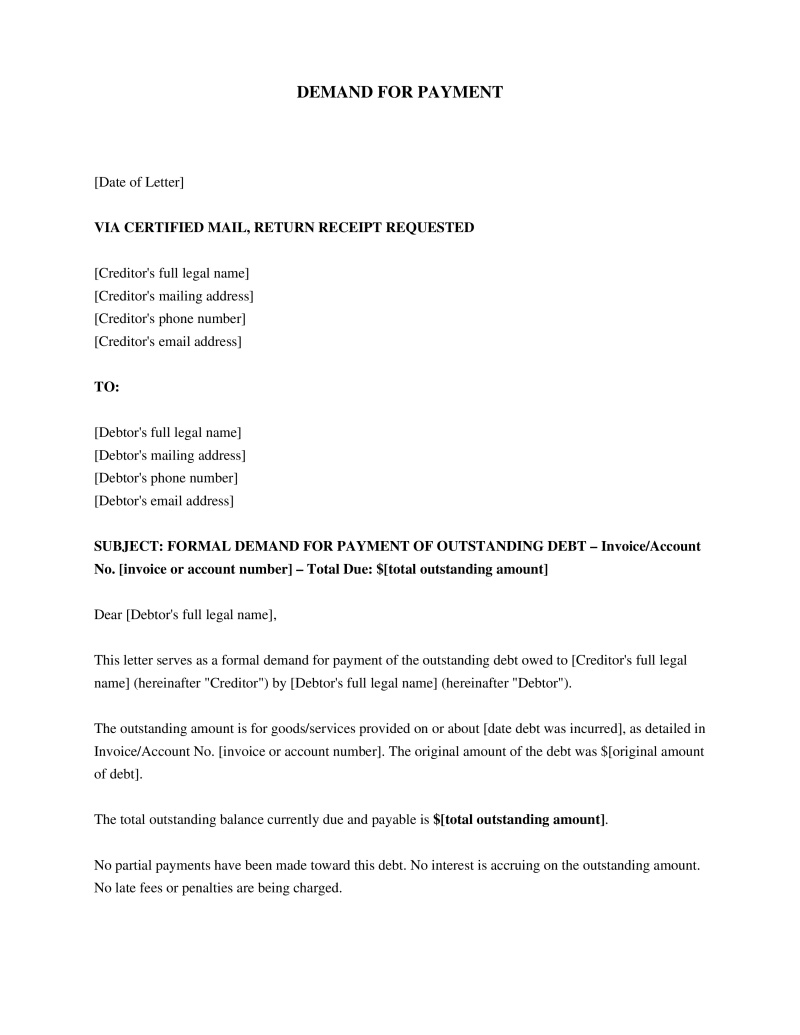
A Demand for Payment Letter is a formal legal communication issued to an individual or entity, asserting a claim for an outstanding monetary obligation.
Debt Type
Select the type of debt or obligation this demand relates to.
Provide a brief description of the debt if you selected 'Other'.
Table of Contents
What is a Demand for Payment Letter?
A Demand for Payment Letter is a formal written communication sent by a creditor to a debtor requesting the payment of an outstanding debt. Its primary purpose is to formally notify the debtor of the overdue amount, outline the specifics of the debt, and express the creditor's intent to collect. This letter serves as an official record of the demand and often precedes further legal action if the debt remains unpaid.
Purpose and Significance
The issuance of a Demand for Payment Letter holds significant importance in the debt collection process. It formalizes the creditor's request for payment, signaling a serious intent to recover the owed funds. By clearly stating the debt and the expectation of payment, it can often prompt debtors to resolve the issue without resorting to more extensive legal proceedings.
This letter provides a clear, documented record of the debt and the efforts made to collect it. This documentation can be crucial evidence if the matter escalates to litigation. It allows both parties to understand the precise nature of the claim, providing an opportunity for the debtor to either pay, dispute, or negotiate a settlement before court involvement.
Essential Components
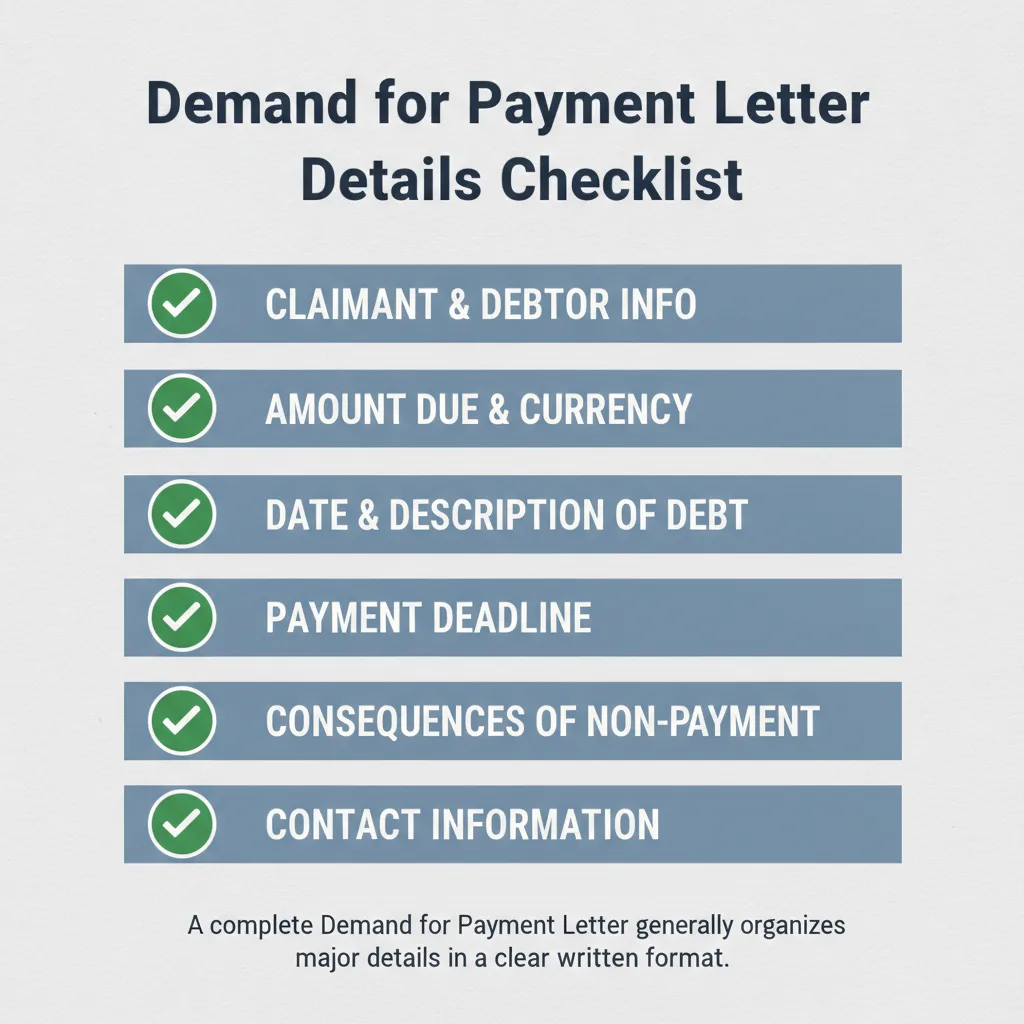
A well-drafted Demand for Payment Letter typically includes specific information to ensure clarity and legal enforceability. These details help to unambiguously identify the parties involved, the nature of the debt, and the expected resolution.
- Identification of Parties - Full legal names and contact information for both the creditor and the debtor.
- Clear Statement of Debt - The exact amount of money owed, including any accrued interest or late fees.
- Origin of Debt - A detailed explanation of how the debt arose, such as invoice numbers, contract dates, or specific services rendered.
- Payment Due Date - A reasonable deadline by which the payment is expected, often specifying a number of days from the date of the letter.
- Consequences of Non-Payment - A statement outlining the actions the creditor intends to take if the debt is not paid by the deadline, such as pursuing legal action or reporting to credit bureaus.
- Payment Instructions - Clear guidance on how the debtor can make the payment, including acceptable methods and recipient details.
- Contact Information - A designated point of contact for the debtor to discuss the debt or make payment arrangements.
Federal Agency Debt Collection Procedures
Federal agencies are mandated to follow specific procedures when collecting debts owed to the United States government. These regulations ensure a standardized approach to debt recovery and inform debtors of their obligations and potential consequences.
- Prompt Issuance - Federal agencies must issue a written demand for payment promptly upon identifying a debtor (31 CFR § 901.1; 47 CFR § 1.1910; 38 CFR § 1.901).
- Debtor Notification - The demand letter must inform the debtor of the consequences of failing to cooperate to resolve the debt (31 CFR § 901.1; 47 CFR § 1.1910; 38 CFR § 1.901).
- Content and Timing Flexibility - The specific content, timing, and number of demand letters depend on the type and amount of the debt and the debtor’s response (31 CFR § 901.1; 47 CFR § 1.1910; 38 CFR § 1.901).
- Sufficiency of One Letter - Generally, one demand letter is considered sufficient for federal agencies (31 CFR § 901.1; 47 CFR § 1.1910; 38 CFR § 1.901).
- Referral to DOJ - Agencies should give due regard to the need to refer debts promptly to the Department of Justice for litigation if payment is not received (31 CFR § 901.1; 47 CFR § 1.1910; 38 CFR § 1.901).
Responding to a Demand for Payment Letter
Upon receiving a Demand for Payment Letter, a debtor has several options, and the chosen response can significantly impact the outcome. It is generally advisable to address the letter promptly to avoid escalation of the matter.
Possible responses include:
- Full Payment - Paying the requested amount by the stated deadline.
- Dispute the Debt - Sending a written response explaining why the debt is invalid or incorrect, often requesting proof of the debt.
- Negotiate a Settlement - Offering to pay a reduced amount or proposing a payment plan if the full amount cannot be paid immediately.
- Ignore the Letter - Choosing not to respond, which can lead to further collection efforts, including potential litigation.
Next Steps After a Demand Letter
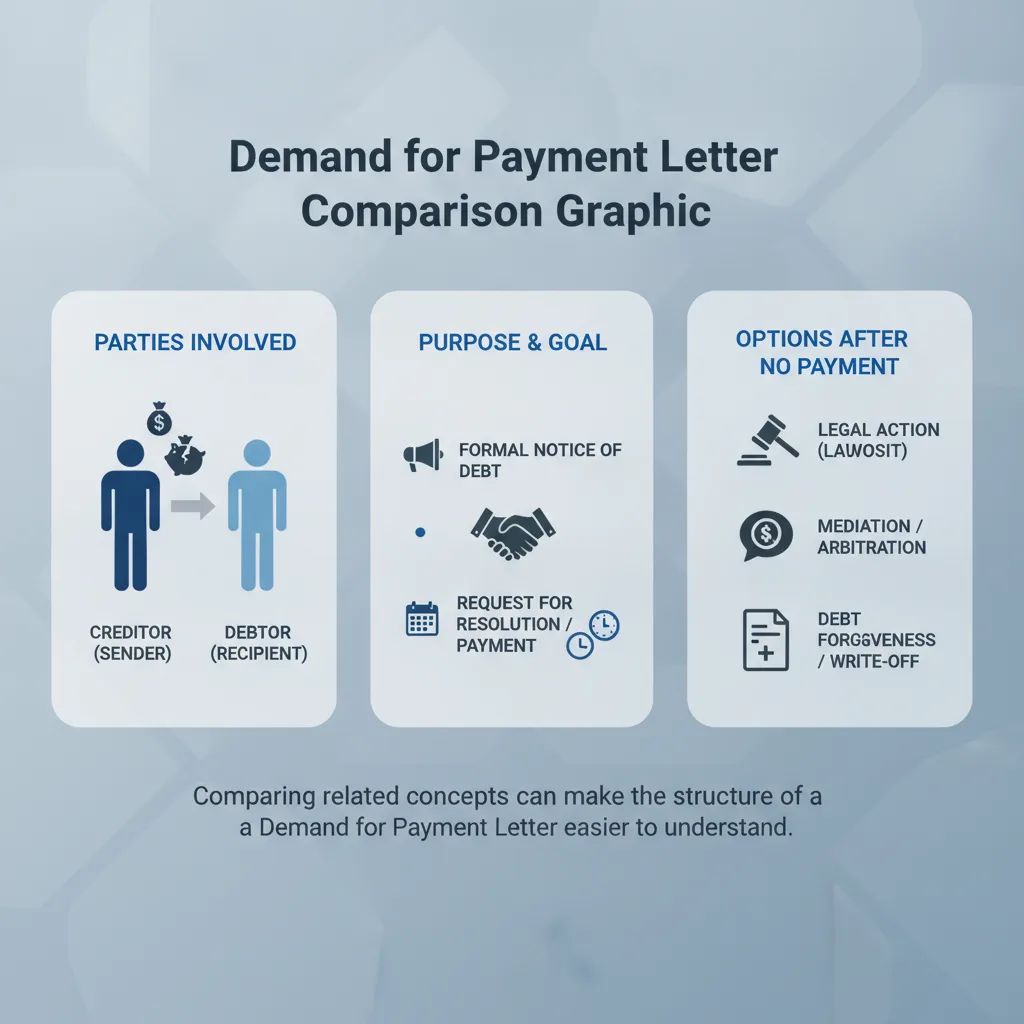
If a Demand for Payment Letter does not result in the desired payment or resolution, the creditor typically considers further actions to recover the debt. The specific next steps depend on the amount of the debt, the debtor's responsiveness, and the creditor's willingness to pursue more aggressive measures.
Common next steps include:
- Further Negotiation - Attempting to reach a mutually agreeable settlement through direct communication or mediation.
- Small Claims Court - For smaller debts, filing a lawsuit in small claims court, which often has simplified procedures and lower costs.
- Formal Litigation - Initiating a lawsuit in a higher court for larger or more complex debts, which can be a lengthy and expensive process.
- Debt Assignment - Selling the debt to a third-party collection agency, who then assumes responsibility for collection.
Frequently Asked Questions
Sources
- Federal Claims Collection Standards, Treas.–DOJ - Provides regulations on demand for payment procedures by federal agencies.
- Federal Communications Commission Debt Collection Procedures - Details the FCC's procedures for issuing demand letters for debt collection.
- Department of Veterans Affairs Debt Collection Procedures - Outlines the VA's procedures for issuing demand letters for debt collection.
Not the form you're looking for?
Try our legal document generator to create a custom document
Disclaimer: The templates available on this website are provided for general informational purposes only and do not constitute legal advice. They are not intended to be, and should not be interpreted as, compliant with any specific legal, regulatory, or privacy requirements. These templates are not a replacement for professional legal guidance and should not be relied upon for any particular matter or circumstance. Users are strongly encouraged to seek advice from a qualified attorney licensed in their jurisdiction before using, modifying, or relying on any template.
All templates are provided on an "as is," "with all faults," and "as available" basis. The provider disclaims any and all warranties of any kind, whether express, implied, statutory, or otherwise, including without limitation warranties of merchantability, fitness for a particular purpose, title, or non-infringement.
LegalTemplates.com makes no guarantees or representations regarding the accuracy, completeness, expected outcomes, or reliability of the materials contained in these templates or any materials referenced or linked from them.