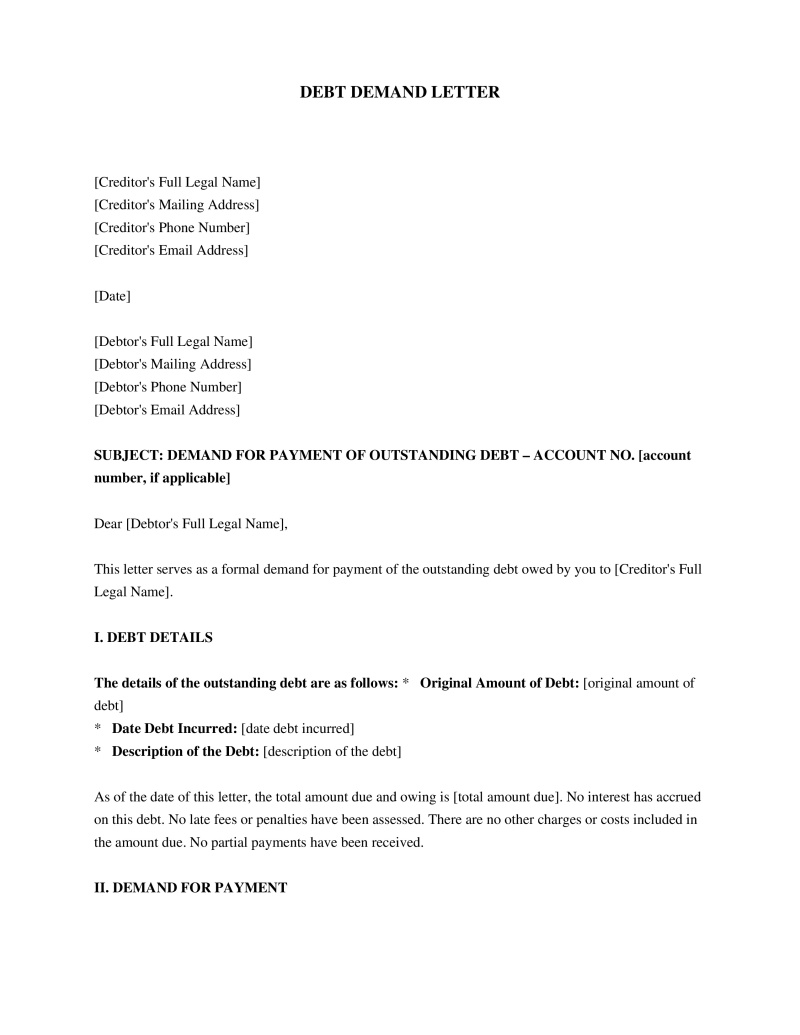
Debt Demand Letter
A Debt Demand Letter is a formal legal communication issued by a creditor to a debtor, requesting the settlement of an outstanding financial obligation within a specified timeframe, often preceding formal litigation.
Debt Type
Select the category that best describes the nature of the debt owed.
Provide a brief description of the debt if 'Other' was selected.
Table of Contents
What is a Debt Demand Letter?
A Debt Demand Letter is a formal written communication sent by a creditor to a debtor, requesting payment for an overdue debt. Its primary purpose is to formally notify the debtor of the outstanding obligation, specify the amount due, and often outline the potential consequences if the debt remains unpaid. This letter typically serves as a precursor to more aggressive collection actions or legal proceedings, aiming to resolve the debt amicably before escalating the matter.
Purpose and Function
The Debt Demand Letter plays a crucial role in the debt collection process by establishing a formal record of the creditor's efforts to collect payment. It provides a clear, documented request for payment, which can be essential evidence if the matter proceeds to litigation. For many creditors, including federal agencies, sending such a letter is a mandatory step before pursuing further collection activities or referring the debt to external collection entities.
The letter serves several key functions in debt recovery:
- Formal Notification - It provides official notice to the debtor of the outstanding balance and the creditor's expectation of payment.
- Clarification of Debt - It details the nature and amount of the debt, helping to avoid misunderstandings.
- Precursor to Action - It often serves as a final warning before legal action, reporting to credit bureaus, or referral to collection agencies.
- Compliance Requirement - For many governmental and regulated entities, it fulfills a legal requirement to make a written demand before escalating collection efforts.
Key Elements of a Demand Letter
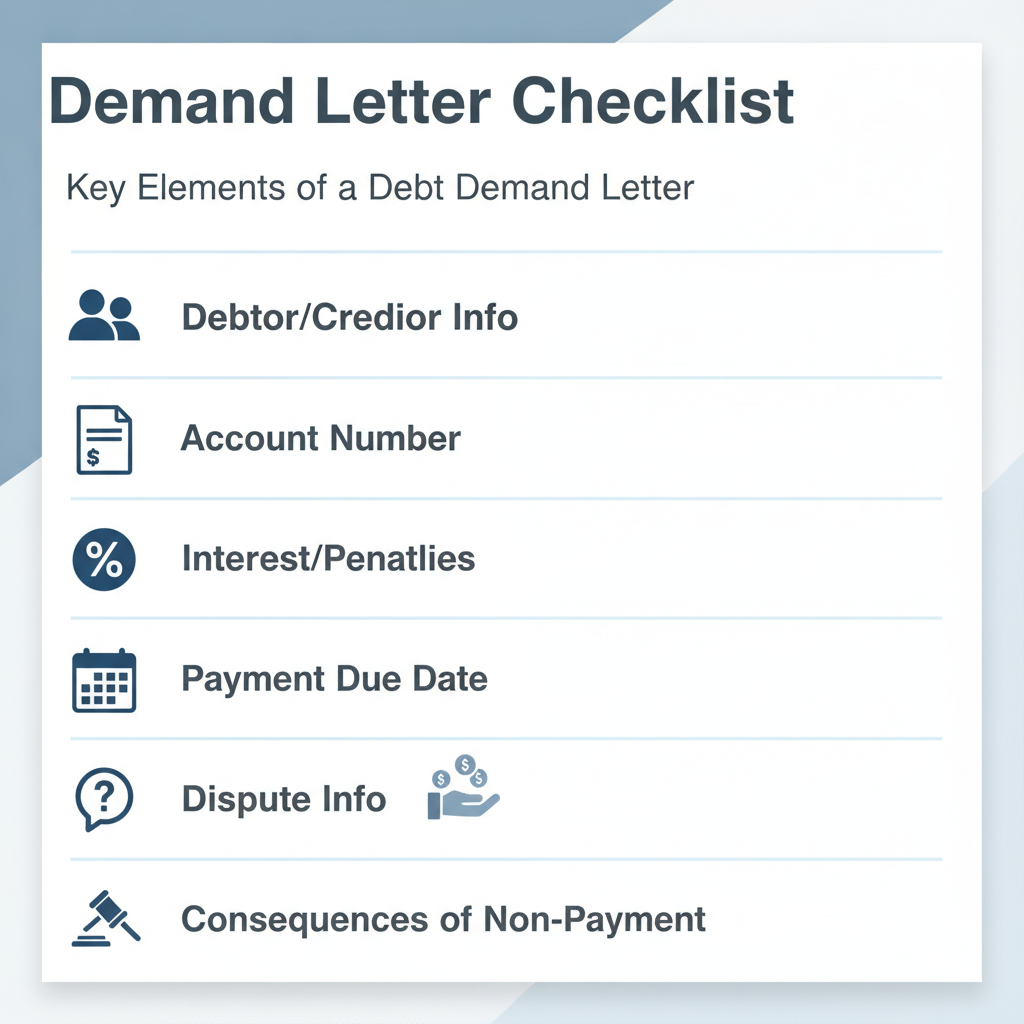
While the specific contents of a Debt Demand Letter can vary depending on the creditor and the nature of the debt, several core elements are typically included to ensure clarity and legal sufficiency. These elements are designed to inform the debtor fully and to establish a clear record of the demand.
- Debtor and Creditor Information - Full legal names and contact details for both parties involved in the debt.
- Account or Reference Number - A specific identifier for the debt, such as an account number, invoice number, or loan number (Sample GHP Demand Letter - CMS.gov).
- Nature and Amount of Debt - A clear description of how the debt arose and the total outstanding balance (Demand Letter Checklist - fiscal.treasury.gov).
- Explanation of Interest and Penalties - Details regarding any accrued interest, late fees, or other penalties applied to the debt (Demand Letter Checklist - fiscal.treasury.gov).
- Payment Due Date - A specific deadline by which the debtor is expected to make payment or respond (Sample GHP Demand Letter - CMS.gov).
- Payment Options - Instructions on how the debtor can make payment.
- Dispute Resolution Information - Details on how the debtor can dispute the debt or request further information.
- Consequences of Non-Payment - A statement outlining the potential actions the creditor may take if the debt is not paid by the due date, such as legal action or referral to a collection agency (Demand Letter Checklist - fiscal.treasury.gov).
Federal Agency Requirements
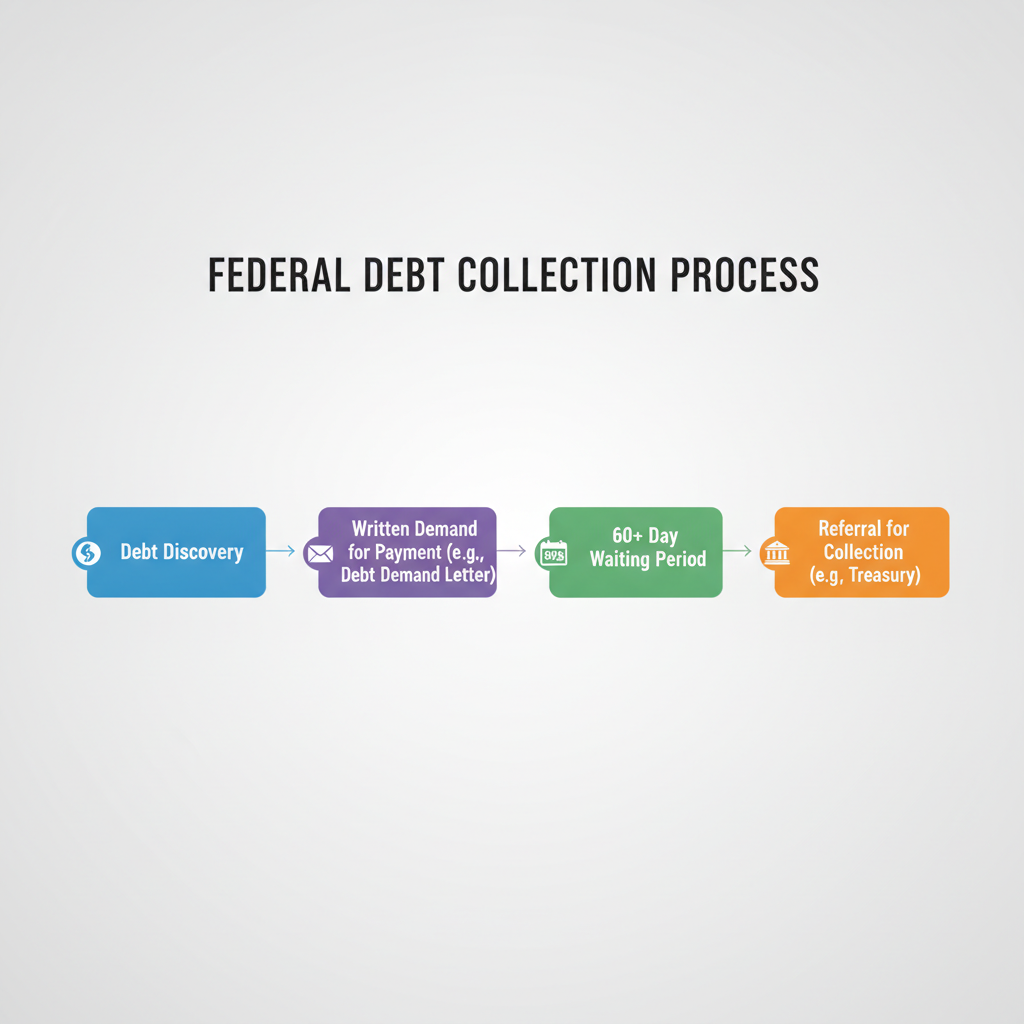
Federal agencies are subject to specific regulations regarding the collection of nontax debts, which include requirements for sending demand letters. These regulations ensure fairness and transparency in the collection process before more stringent measures are taken.
- Prompt Written Demand - Federal agencies are required to make a written demand for payment promptly after discovering that a debt is owed, typically beginning with a billing notice, invoice, or written demand letter (Part III: The Federal Nontax Debt Collection Process - fiscal.treasury.gov).
- Pre-Referral Requirement - Demand letters must be sent at least 60 days prior to referring a delinquent debt for collection to the Department of the Treasury or other designated entities (Demand Letter Checklist - fiscal.treasury.gov).
- Required Content for Federal Debts - Such letters must include specific information, such as the nature and amount of the debt, an explanation of interest and penalties, and potential collection actions (Demand Letter Checklist - fiscal.treasury.gov).
Medicare Debt Collection Demands
The Centers for Medicare & Medicaid Services (CMS) has distinct requirements for overpayment demand letters within the Medicare debt collection process. These ensure that providers and beneficiaries are properly notified of overpayments and their obligations.
- Two-Letter System - Medicare typically requires two types of overpayment demand letters: an Initial Demand Letter and an Intent to Refer Letter (ITR) (CMS Manual System Chapter 4 - Debt Collection - cms.gov).
- Specific Content and Timing - Each type of Medicare demand letter has specific content and timing requirements that must be met to comply with federal regulations (CMS Manual System Chapter 4 - Debt Collection - cms.gov).
- Sample GHP Letter - A sample Group Health Plan (GHP) demand letter illustrates the required details, including the debtor's name, account information, total debt due, and response due date (Sample GHP Demand Letter - cms.gov).
State-Specific Considerations (New York Example)
While federal agencies have their own rules, individual states may also impose specific requirements for debt demand letters, particularly in consumer transactions. These state laws often aim to protect consumers by ensuring they receive comprehensive information about their debts.
For instance, New York State law outlines particular information that must be included in a demand letter related to consumer transactions before legal action can be pursued:
- Date of Transaction - The specific date of the consumer transaction that gave rise to the debt (NYS Open Legislation | NYSenate.gov - nysenate.gov).
- Unpaid Amount - The exact amount that remains unpaid on the debt (NYS Open Legislation | NYSenate.gov - nysenate.gov).
- Original Debt Instrument - A copy of the original debt instrument, such as a contract or agreement, must be provided (NYS Open Legislation | NYSenate.gov - nysenate.gov).
- Intent to Use Court - A clear statement of the creditor's intent to use the court to obtain payment if the debt is not resolved (NYS Open Legislation | NYSenate.gov - nysenate.gov).
Legal Implications and Next Steps
Receiving or sending a Debt Demand Letter carries significant legal implications. For the debtor, it signals the creditor's seriousness in pursuing the debt and serves as an opportunity to address the issue before it escalates. Ignoring a demand letter can lead to further collection actions, including lawsuits, wage garnishment, or liens on property, depending on the jurisdiction and the nature of the debt.
For the creditor, sending a properly constructed demand letter establishes a paper trail that can be crucial in court. It demonstrates that a good-faith effort was made to collect the debt and that the debtor was duly notified. Compliance with federal and state regulations regarding the content and timing of these letters is essential to ensure that any subsequent legal actions are valid and enforceable.
Frequently Asked Questions
Sources
- Demand Letter ChecklistAppendix 8 - Provides guidelines for federal agencies on the content of demand letters before referring delinquent debts for collection.
- Part III: The Federal Nontax Debt Collection Process - Details the federal debt collection process, including the requirements for demand letters.
- CMS Manual System Chapter 4 - Debt Collection - Outlines the requirements for demand letters in the Medicare debt collection process.
- Sample GHP Demand Letter - Provides a sample demand letter for Group Health Plans (GHP) in the Medicare program.
- NYS Open Legislation | NYSenate.gov - Provides the legal requirements for demand letters in New York State civil actions.
Not the form you're looking for?
Try our legal document generator to create a custom document
Disclaimer: The templates available on this website are provided for general informational purposes only and do not constitute legal advice. They are not intended to be, and should not be interpreted as, compliant with any specific legal, regulatory, or privacy requirements. These templates are not a replacement for professional legal guidance and should not be relied upon for any particular matter or circumstance. Users are strongly encouraged to seek advice from a qualified attorney licensed in their jurisdiction before using, modifying, or relying on any template.
All templates are provided on an "as is," "with all faults," and "as available" basis. The provider disclaims any and all warranties of any kind, whether express, implied, statutory, or otherwise, including without limitation warranties of merchantability, fitness for a particular purpose, title, or non-infringement.
LegalTemplates.com makes no guarantees or representations regarding the accuracy, completeness, expected outcomes, or reliability of the materials contained in these templates or any materials referenced or linked from them.