Community Service Paper
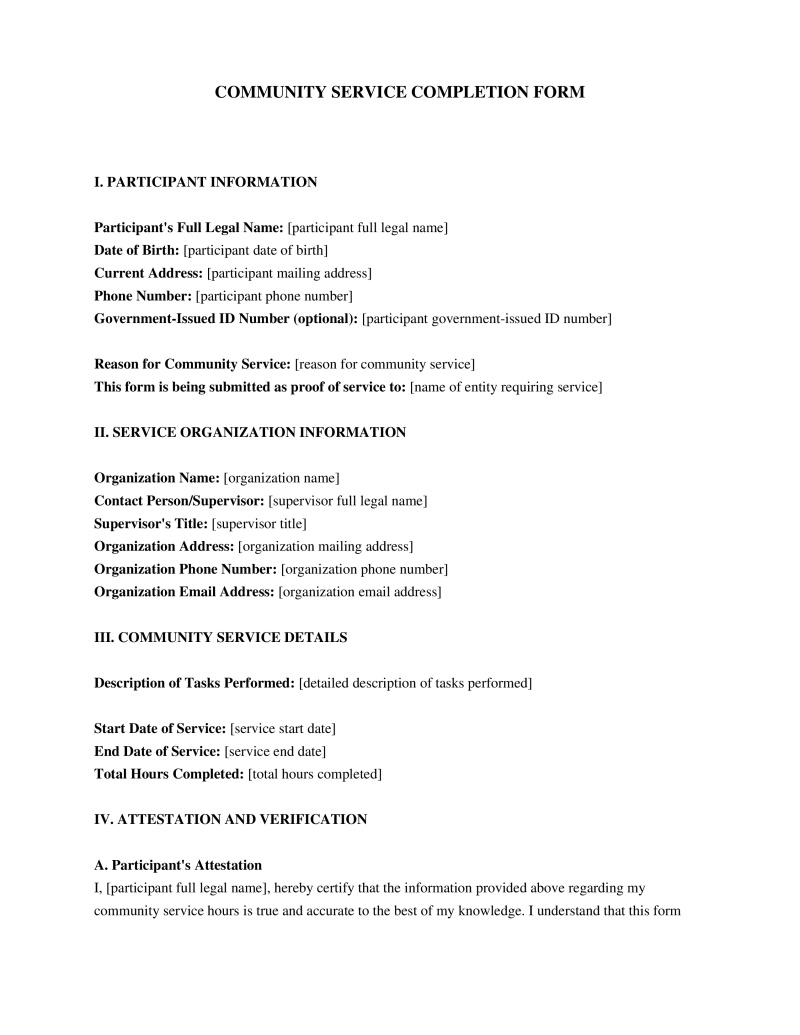
A Community Service Paper is a formal legal document that records an individual's participation in mandated or voluntary civic activities, often serving as proof of compliance with judicial directives or as an official record of contributions.
Service Context
Select the main reason this community service is being performed.
Provide details if you selected 'Other'.
Table of Contents
What is a Community Service Paper?
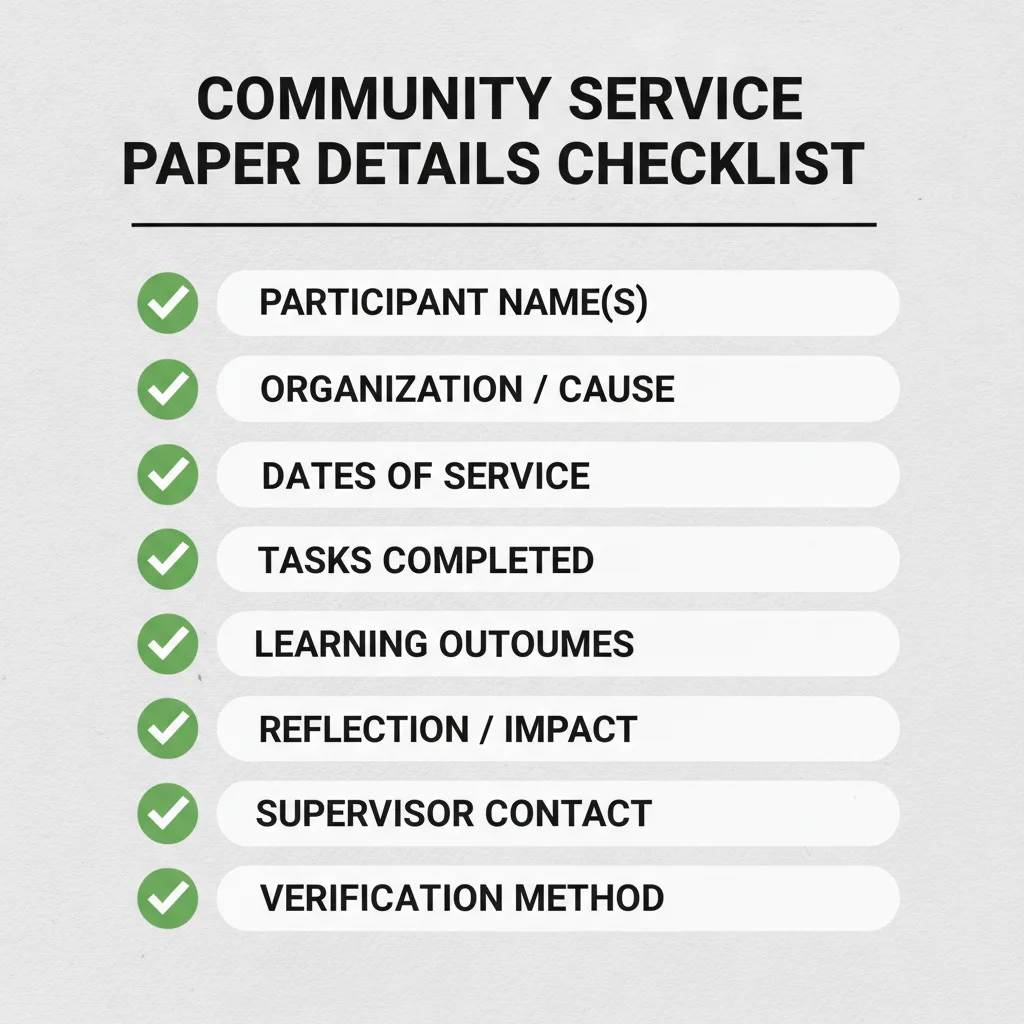
A Community Service Paper refers to the documentation, records, and reports associated with fulfilling a court-ordered or program-mandated community service obligation. This collection of documents serves to track, verify, and report the hours an individual has completed, ensuring compliance with legal or programmatic requirements. It typically includes time sheets, supervisor verification forms, and final completion certificates, which are then submitted to the relevant authority, such as a court, probation officer, or program administrator.
Purpose and Context of Community Service
Community service is a form of punishment or rehabilitation that requires individuals to perform unpaid work for the benefit of the community. It is often imposed by courts as an alternative to fines, incarceration, or as a condition of probation, aiming to provide restitution to society while fostering a sense of civic responsibility. The specific requirements and regulations governing community service vary significantly by state and jurisdiction.
In many legal systems, including Nebraska, community service serves as a flexible sentencing tool. Courts may impose community service in lieu of other penalties or as a component of a broader sentence, depending on the nature of the offense and the offender's circumstances. The duration of community service sentences can range widely, reflecting the severity of the offense.
Individuals assigned community service are generally expected to complete their hours within a specified timeframe and adhere to the rules of the assigned organization. Failure to comply can result in further legal repercussions, such as probation revocation or the imposition of alternative penalties.
Types of Community Service Programs
Community service can be performed in various settings, often managed by different types of programs. These programs ensure that the service provided is meaningful and properly supervised.
Examples of contexts where community service is conducted include:
- Court-Ordered Programs - These are typically overseen by probation departments or designated agencies that match individuals with approved non-profit organizations, government entities, or community projects.
- Community Work Force Programs - Some counties establish specific programs where individuals, including inmates, can participate in community service projects.
- Welfare-to-Work Programs - In certain contexts, participation in county-approved community service programs may fulfill work requirements for public assistance, though it is not considered employment for specific purposes.
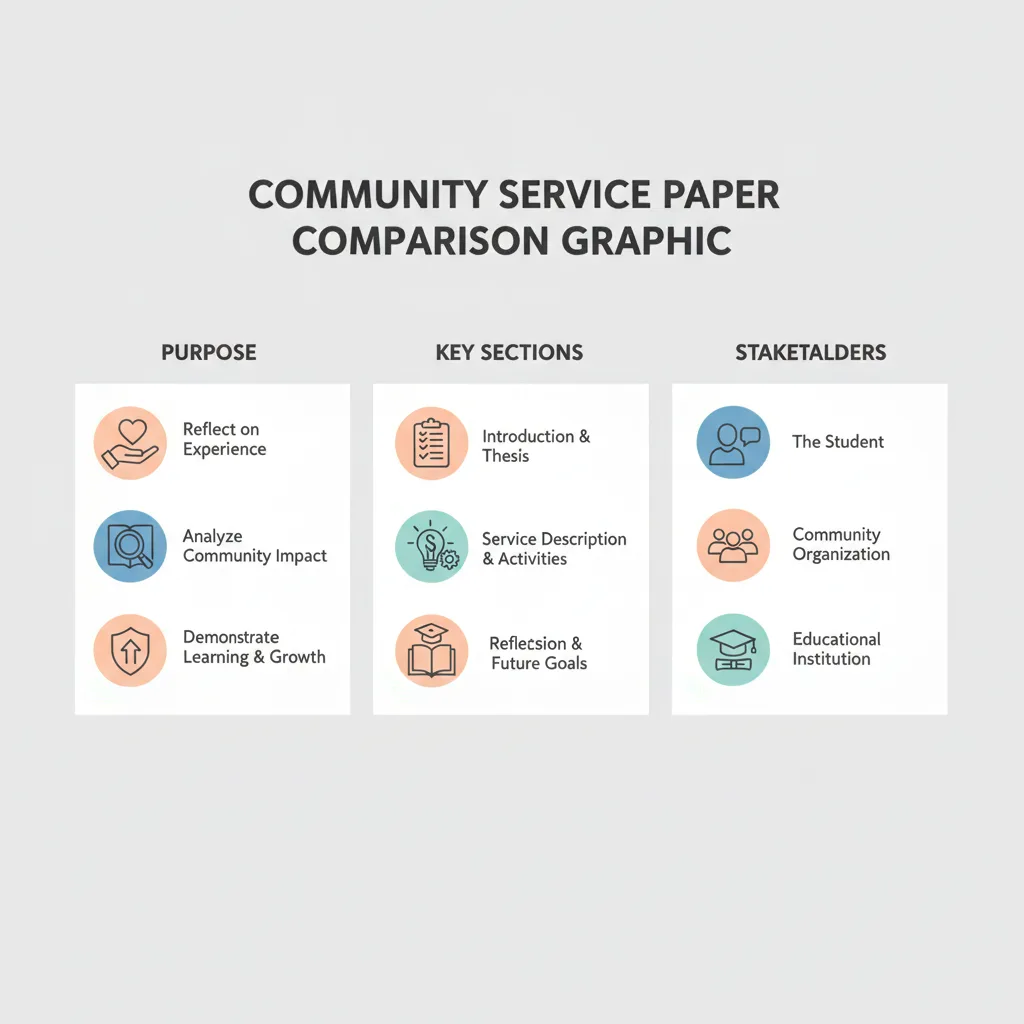
- Educational Institutions - Some schools or universities incorporate community service as a graduation requirement or part of a service-learning curriculum, though these are typically not court-ordered.
Frequently Asked Questions
Not the form you're looking for?
Try our legal document generator to create a custom document
Disclaimer: The templates available on this website are provided for general informational purposes only and do not constitute legal advice. They are not intended to be, and should not be interpreted as, compliant with any specific legal, regulatory, or privacy requirements. These templates are not a replacement for professional legal guidance and should not be relied upon for any particular matter or circumstance. Users are strongly encouraged to seek advice from a qualified attorney licensed in their jurisdiction before using, modifying, or relying on any template.
All templates are provided on an "as is," "with all faults," and "as available" basis. The provider disclaims any and all warranties of any kind, whether express, implied, statutory, or otherwise, including without limitation warranties of merchantability, fitness for a particular purpose, title, or non-infringement.
LegalTemplates.com makes no guarantees or representations regarding the accuracy, completeness, expected outcomes, or reliability of the materials contained in these templates or any materials referenced or linked from them.