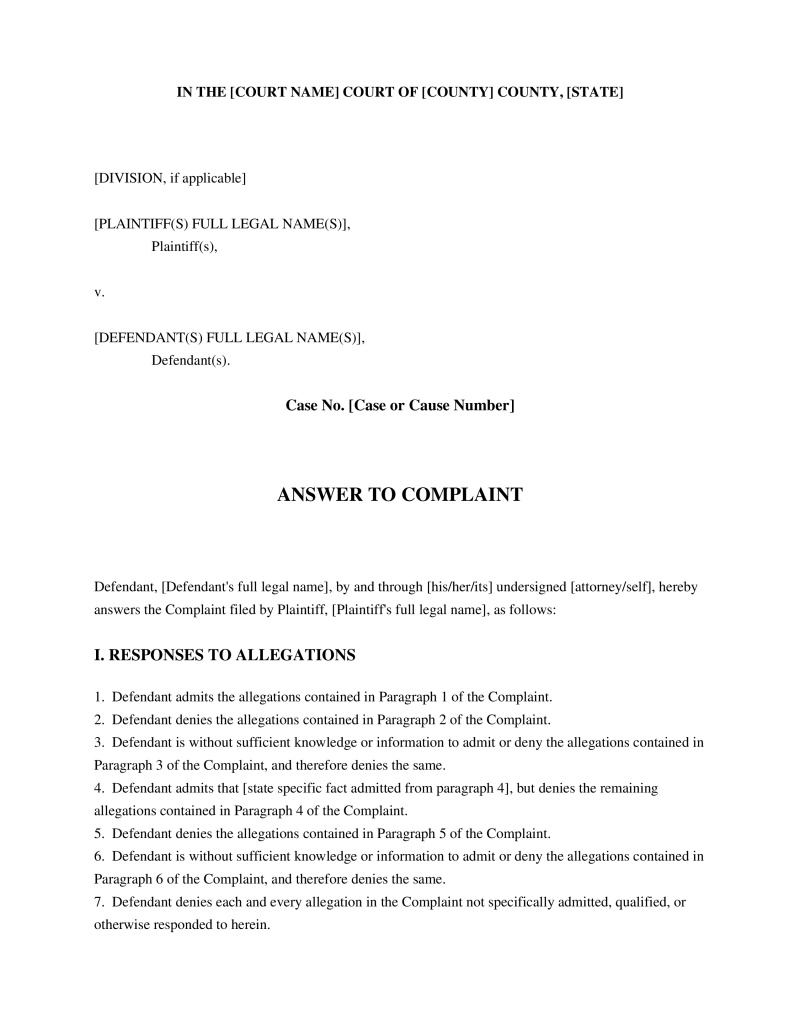
Civil Summons Response
A Civil Summons Response is a formal legal document filed with a court by a defendant, outlining their position in reply to allegations presented in a civil complaint and summons.
Response Type
Select the main way you wish to respond to the complaint or petition.
If your response doesn't fit the listed options, describe it here.
Table of Contents
What is a Civil Summons Response?
A Civil Summons Response refers to the formal legal actions taken by a defendant after receiving a summons and complaint in a civil lawsuit. This response is a critical step in the litigation process, as it formally acknowledges the lawsuit and presents the defendant's position to the court and the opposing party. The primary purpose of a response is to avoid a default judgment and to engage in the legal proceedings.
Understanding the Civil Summons
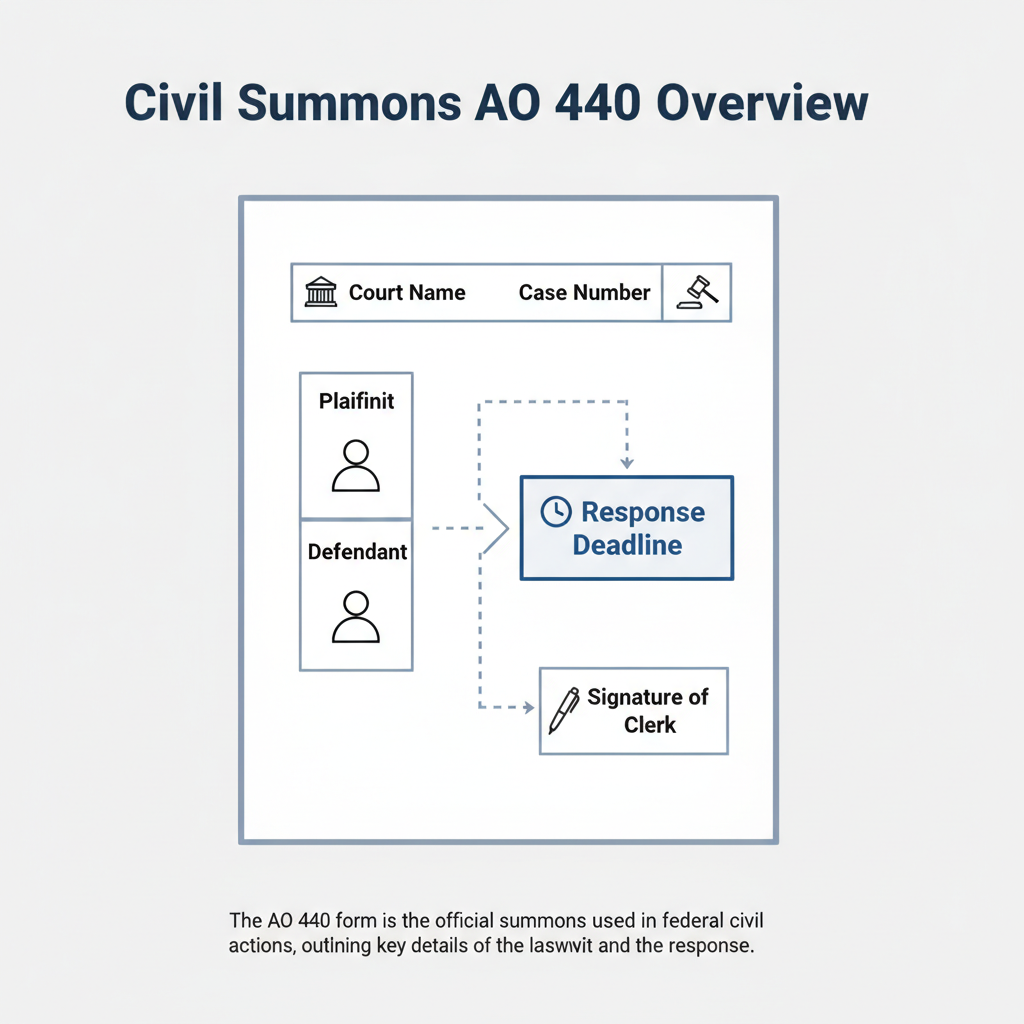
Before responding, it is essential to understand the document initiating the lawsuit: the civil summons. A summons is an official court document notifying an individual or entity that a lawsuit has been filed against them and that they must appear in court or respond by a certain date. In federal civil actions, the official form used for issuing a summons is the AO 440 form.
Key details regarding the summons include:
- Official Form - The AO 440 form serves as the standard summons in federal civil actions.
- Availability - This form is readily available for download on the United States Courts website, as well as on the websites of various district courts, such as the Middle District of Florida, the Central District of California, the Western District of Michigan, and the Eastern District of Arkansas.
- Issuance Process - A proposed summons, utilizing the AO 440 form, may be filed electronically with the complaint. The Clerk’s Office then issues the official summons electronically once a judge is assigned to the case.
The summons typically identifies the court, the parties involved, the case number, and most importantly, the deadline by which the defendant must respond to avoid a default judgment. It also usually includes a copy of the complaint, which details the plaintiff's allegations and the relief sought.
Initial Steps Upon Receiving a Summons
Receiving a civil summons can be an intimidating experience, but taking immediate and appropriate action is crucial. Ignoring a summons can lead to severe legal consequences, including a default judgment against the defendant.
Upon receipt, a defendant should:
- Review the Documents Carefully - Understand who is suing, why, and the deadline for response.
- Identify the Responding Party - Confirm if the summons is directed at an individual, a business, or another entity.
- Note the Deadline - The summons specifies a precise timeframe within which a response must be filed with the court. Missing this deadline can result in a default judgment.
- Seek Legal Counsel - Consulting with an attorney is highly recommended. A lawyer can assess the complaint, explain legal options, and ensure the response is properly prepared and filed.
- Preserve Evidence - Begin gathering any documents, communications, or other information relevant to the allegations in the complaint.
Types of Civil Summons Responses
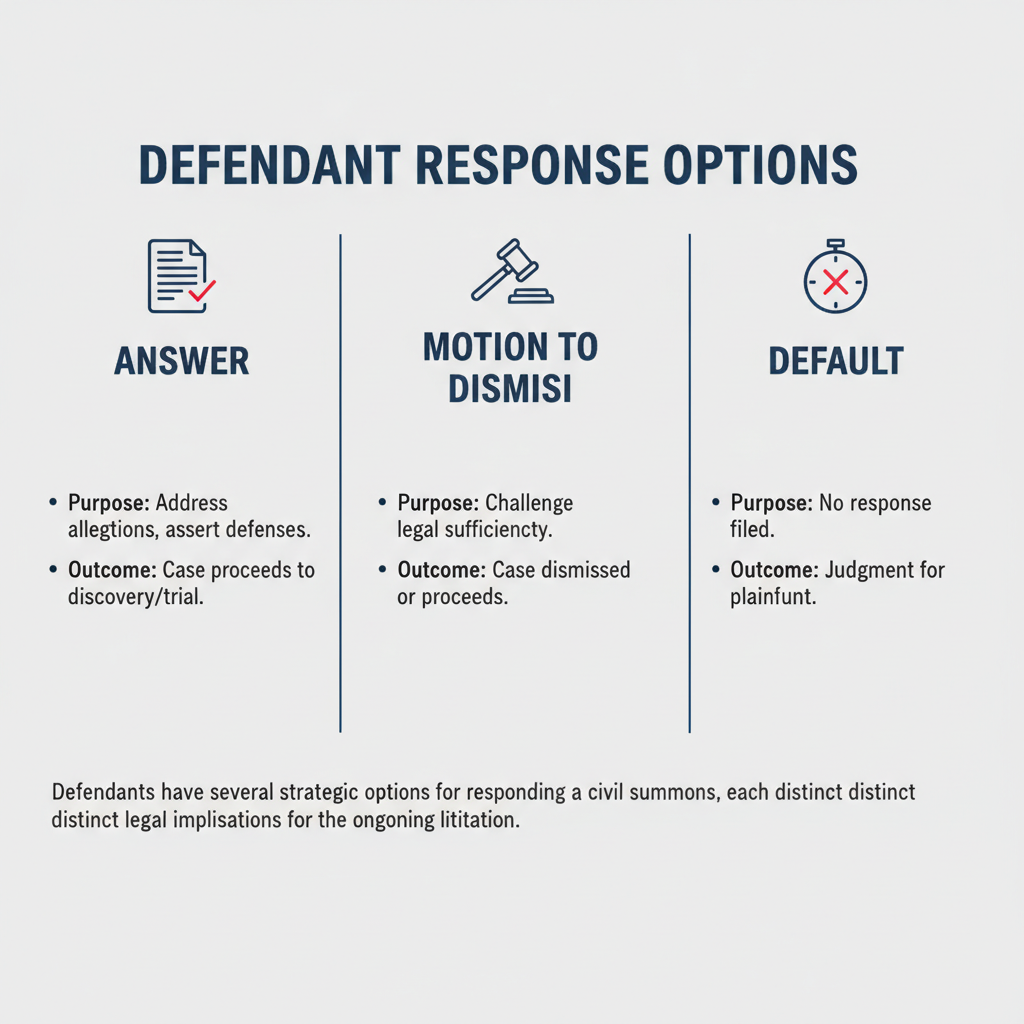
Defendants have several options when responding to a civil summons and complaint, each with distinct legal implications. The choice of response depends on the specific circumstances of the case, the allegations made, and the defendant's legal strategy.
- Answer - This is the most common form of response. In an answer, the defendant formally responds to each allegation in the complaint, typically by admitting, denying, or stating a lack of sufficient information to admit or deny. The answer may also include affirmative defenses, which are legal arguments that, if proven, would defeat the plaintiff's claim even if the plaintiff's allegations are true.
- Motion to Dismiss - Instead of an answer, a defendant may file a motion to dismiss the complaint. This motion argues that the complaint is legally insufficient for various reasons, such as lack of subject matter jurisdiction, lack of personal jurisdiction, improper venue, insufficient service of process, or failure to state a claim upon which relief can be granted. If granted, the lawsuit may be dismissed without proceeding to an answer or trial.
- Default - If a defendant fails to respond to a summons within the specified timeframe, the plaintiff can request the court to enter a default against the defendant. Once a default is entered, the plaintiff can then seek a default judgment, which can result in the court ruling in favor of the plaintiff without the defendant having an opportunity to present their case.
Key Elements of an Answer
When a defendant chooses to file an answer, it must adhere to specific structural and content requirements to be legally effective. A well-drafted answer addresses all points of the complaint and establishes the defendant's position in the litigation.
Typical components of a formal answer include:
- Caption - Identifies the court, the names of the parties, and the case number, matching the information on the summons and complaint.
- Responses to Allegations - For each numbered paragraph of the complaint, the defendant must state whether they admit, deny, or lack sufficient information to admit or deny the allegations. A general denial is sometimes permitted but is usually less effective than specific responses.
- Affirmative Defenses - These are legal arguments or facts that, if proven, would negate or reduce the plaintiff's liability, regardless of whether the plaintiff's claims are true. Examples include statutes of limitations, waiver, estoppel, or contributory negligence.
- Counterclaims - If the defendant believes they have a claim against the plaintiff, they may include a counterclaim in their answer. This initiates a separate claim within the same lawsuit.
- Cross-Claims - If there are multiple defendants, one defendant may file a cross-claim against another defendant for relief related to the original action.
- Demand for Jury Trial - If desired, the defendant must typically include a demand for a jury trial in their answer or risk waiving this right.
- Signature - The defendant or their attorney must sign the answer, certifying that the statements made are truthful and made in good faith.
Deadlines and Filing Procedures
Adhering to the established deadlines and proper filing procedures is paramount in responding to a civil summons. Failure to do so can lead to a default judgment, where the court rules in favor of the plaintiff without hearing the defendant's side.
General procedural considerations include:
- Response Period - The summons clearly specifies the number of days within which a response must be filed. In federal courts, this period is typically 21 days after being served with the summons and complaint, though it can vary based on the method of service or specific court rules.
- Calculation of Time - Understanding how to calculate the deadline is crucial, often involving rules for counting weekends and holidays.
- Filing with the Court - The response must be filed with the clerk of the court where the lawsuit was initiated. Many courts now accept electronic filing.
- Service on Opposing Counsel - After filing, a copy of the response must be formally served on the plaintiff's attorney (or the plaintiff if they are unrepresented) in accordance with court rules.
- Extensions - In some circumstances, a defendant may request an extension of time to respond, either by agreement with the plaintiff's counsel or by filing a motion with the court.
Proper record-keeping of all filed and served documents, along with their dates, is essential throughout the litigation process.
Frequently Asked Questions
Sources
- Summons in a Civil Action - Official form for issuing a summons in a civil action, including instructions and sample completed summons.
- Summons in a Civil Action | Middle District of Florida | United States District Court - Provides access to the AO 440 form and additional information for the Middle District of Florida.
- How do I get a summons issued? | Central District of California | United States District Court - Guidance on obtaining a summons in the Central District of California, including filing procedures and requirements.
- Civil Forms | Western District of Michigan | United States District Court - Provides access to various civil forms, including the AO 440 summons form, for the Western District of Michigan.
- Civil Forms | Eastern District of Arkansas | United States District Court - Offers a collection of civil forms, including the AO 440 summons form, for the Eastern District of Arkansas.
Not the form you're looking for?
Try our legal document generator to create a custom document
Disclaimer: The templates available on this website are provided for general informational purposes only and do not constitute legal advice. They are not intended to be, and should not be interpreted as, compliant with any specific legal, regulatory, or privacy requirements. These templates are not a replacement for professional legal guidance and should not be relied upon for any particular matter or circumstance. Users are strongly encouraged to seek advice from a qualified attorney licensed in their jurisdiction before using, modifying, or relying on any template.
All templates are provided on an "as is," "with all faults," and "as available" basis. The provider disclaims any and all warranties of any kind, whether express, implied, statutory, or otherwise, including without limitation warranties of merchantability, fitness for a particular purpose, title, or non-infringement.
LegalTemplates.com makes no guarantees or representations regarding the accuracy, completeness, expected outcomes, or reliability of the materials contained in these templates or any materials referenced or linked from them.