Annulment
An annulment is a legal decree or judgment that establishes a marriage was void or voidable from its inception, rendering it legally invalid as if it never occurred.
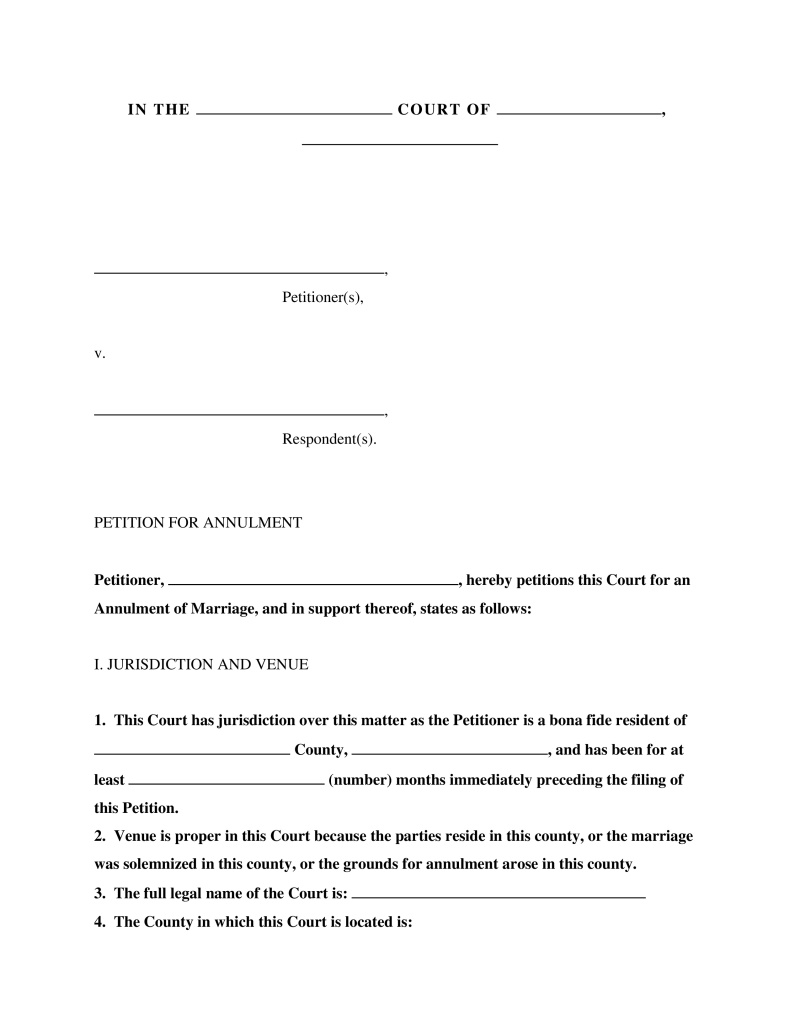
Annulment Ground
Select the main reason you believe the marriage should be declared null and void. If more than one applies, select the most significant.
Provide details if your ground for annulment is not listed above.
Table of Contents
What is an Annulment?
An annulment is a legal procedure that declares a marriage null and void, treating it as though it never legally existed. Unlike a divorce, which terminates a valid marriage, an annulment essentially erases the marital record from its inception. This legal remedy is sought when there was a fundamental flaw or impediment to the marriage at the time it was entered into, preventing it from being considered legally valid.
Annulment vs. Divorce
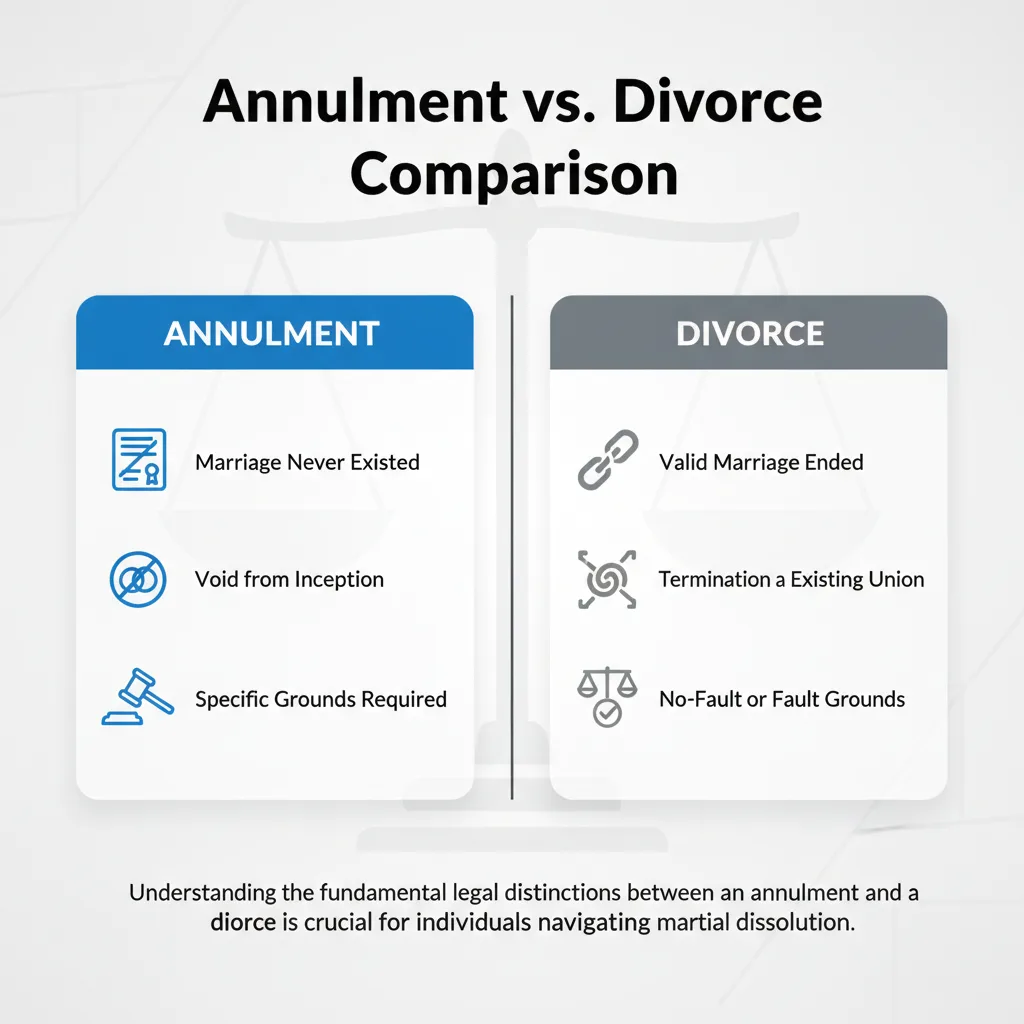
The distinction between an annulment and a divorce is foundational to understanding marital dissolution. While both processes terminate a marital relationship, they do so based on entirely different legal premises and result in different legal outcomes. A divorce acknowledges that a valid marriage existed but is now being terminated, often due to irreconcilable differences or other grounds.
Conversely, an annulment asserts that a valid marriage never legally occurred in the first place due to some inherent defect. This means that, from a legal standpoint, the parties were never truly married. This fundamental difference impacts various aspects, including property division, spousal support, and even the legal status of children born during the purported marriage.
Grounds for Annulment
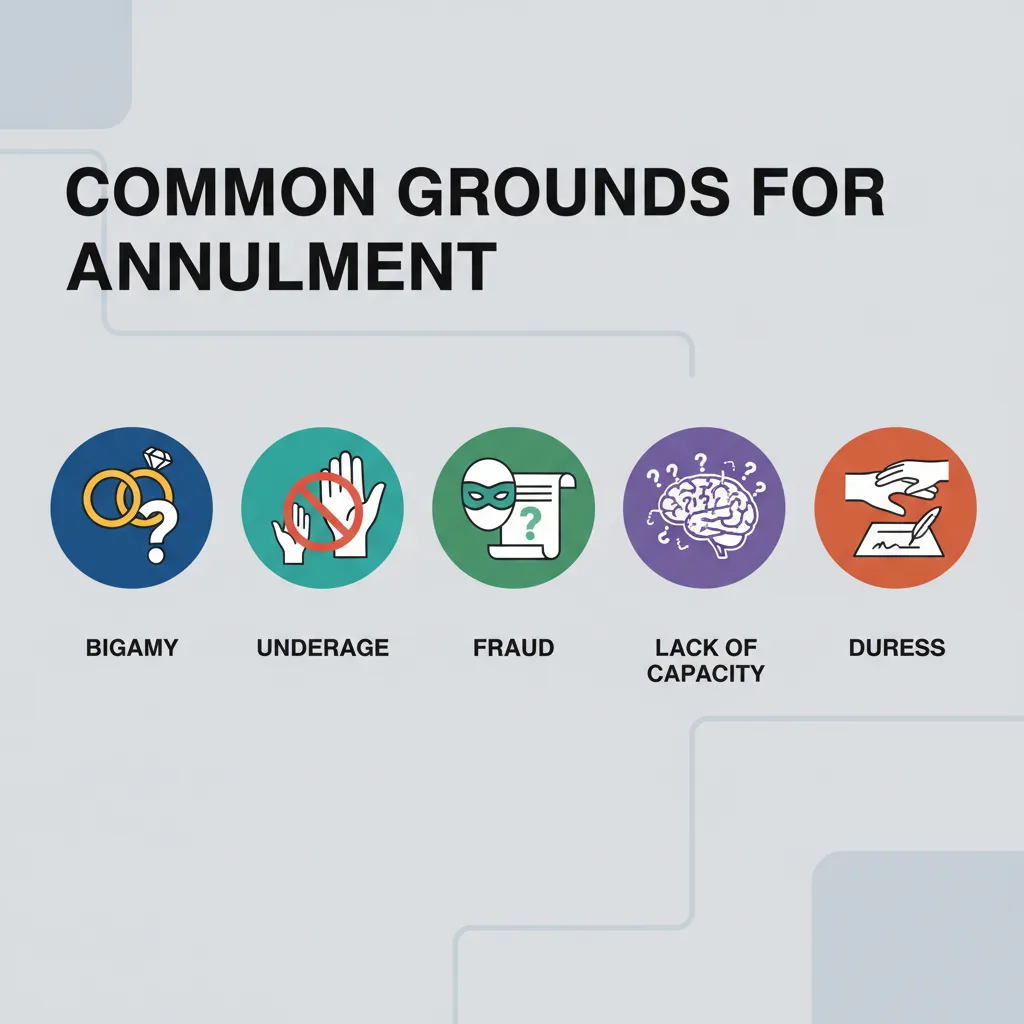
Courts grant annulments only under specific, legally defined circumstances, indicating that the marriage was void or voidable from its beginning. These grounds typically relate to an impediment that existed at the time the marriage ceremony took place:
- Bigamy/Polygamy - One party was already legally married to another person at the time of the second marriage. This renders the second marriage automatically void.
- Incest/Consanguinity - The parties are related within a degree prohibited by law (e.g., siblings, parent and child), making the marriage legally invalid.
- Underage Party - One or both parties were below the legal age of consent for marriage and did not obtain parental consent or judicial approval where required, and the marriage was not ratified after reaching the age of majority.
- Lack of Capacity/Mental Incapacity - One or both parties lacked the mental capacity to understand the nature of the marriage contract at the time of the ceremony, often due to severe intoxication, mental illness, or developmental disability.
- Fraud/Misrepresentation - Consent to marry was obtained through significant fraud or misrepresentation concerning an essential aspect of the marriage, such as identity, ability to procreate, or a party's true intent regarding the marriage. The fraud must go to the essence of the marital relationship, not merely misrepresentations about wealth or status.
- Duress/Force - One or both parties were forced into the marriage under threat, coercion, or undue influence, meaning consent was not freely given.
- Non-Consummation - In some jurisdictions, the willful and persistent refusal or inability of one party to engage in sexual relations after the marriage, without reasonable cause, can be a ground for annulment, provided it existed from the outset.
Legal Effects of Annulment
The legal effects of an annulment differ significantly from those of a divorce, primarily because an annulled marriage is deemed never to have existed. This 'erasure' can have profound implications for the parties involved, though some jurisdictions have adapted laws to mitigate harsh outcomes, particularly concerning children.
- Marital Status - Parties are legally returned to their single status, as if they had never married.
- Property Division - Since there was no legal marriage, traditional marital property laws may not apply. Property acquired during the purported marriage may be divided based on equitable principles, contributions, or pre-marital agreements, rather than standard community property or equitable distribution rules.
- Spousal Support (Alimony) - Generally, spousal support is not awarded in an annulment because there was no legal marriage to create a duty of support. However, some jurisdictions may allow limited rehabilitative support or restitution in cases of severe financial disparity or fraud.
- Children - Children born or conceived during an annulled marriage are almost universally considered legitimate, and courts will issue orders for child custody, visitation, and child support, treating the parents as if they were never married but are still biological parents.
- Inheritance Rights - An annulment typically extinguishes any inheritance rights that would have arisen from a valid marriage.
The Annulment Process
The process for obtaining an annulment generally mirrors that of a divorce in terms of court involvement, though the specific legal arguments and evidence required are distinct. It typically involves filing a petition with the appropriate court, followed by a series of legal steps:
- Filing a Petition - One party files a petition (sometimes called a complaint or declaration) with the court, stating the grounds for annulment and requesting the marriage be declared void.
- Service of Process - The petition and summons are formally served on the other party, informing them of the legal action and their need to respond.
- Response - The other party has an opportunity to respond to the petition, either agreeing to the annulment or contesting it.
- Discovery - Both parties may engage in discovery, exchanging information and evidence pertinent to the claimed grounds for annulment.
- Hearing/Trial - A judge will hear evidence and arguments from both sides to determine if the legal grounds for annulment have been sufficiently proven. The burden of proof typically rests with the party seeking the annulment.
- Judgment/Decree - If the court finds that the grounds for annulment exist, it will issue a judgment or decree of annulment, legally dissolving the marriage from its inception.
Religious Annulment
It is important to distinguish between a civil annulment, which is a legal proceeding recognized by the state, and a religious annulment, often referred to as a declaration of nullity by religious authorities. For example, the Roman Catholic Church offers a process for a declaration of nullity, which states that a marriage was not sacramentally valid according to canon law. This religious declaration has no bearing on the legal status of the marriage under civil law.
A civil annulment, if granted, legally ends the marriage in the eyes of the state, regardless of any religious declarations. Conversely, a religious annulment does not affect the legal standing of the marriage and does not negate the need for a civil divorce or annulment to dissolve the marriage in the eyes of the law. Individuals seeking both a civil and religious annulment must pursue them through separate processes.
Frequently Asked Questions
Not the form you're looking for?
Try our legal document generator to create a custom document
Disclaimer: The templates available on this website are provided for general informational purposes only and do not constitute legal advice. They are not intended to be, and should not be interpreted as, compliant with any specific legal, regulatory, or privacy requirements. These templates are not a replacement for professional legal guidance and should not be relied upon for any particular matter or circumstance. Users are strongly encouraged to seek advice from a qualified attorney licensed in their jurisdiction before using, modifying, or relying on any template.
All templates are provided on an "as is," "with all faults," and "as available" basis. The provider disclaims any and all warranties of any kind, whether express, implied, statutory, or otherwise, including without limitation warranties of merchantability, fitness for a particular purpose, title, or non-infringement.
LegalTemplates.com makes no guarantees or representations regarding the accuracy, completeness, expected outcomes, or reliability of the materials contained in these templates or any materials referenced or linked from them.