Business Proposal
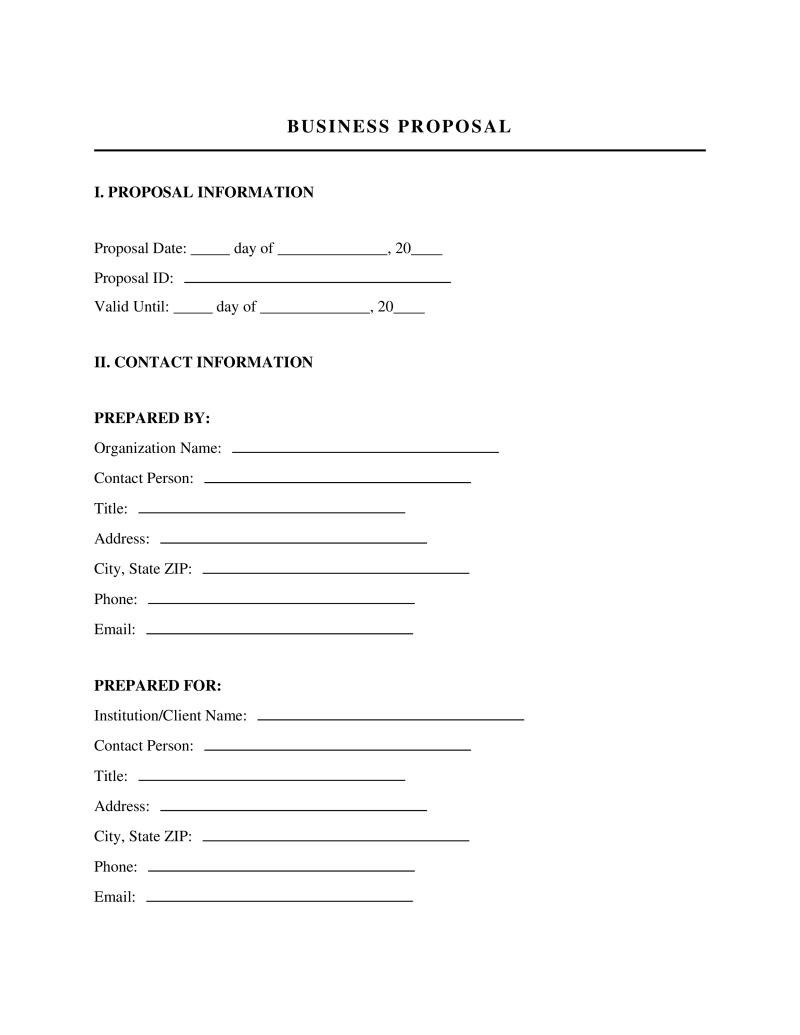
A Business Proposal is a written offer from a seller to a prospective buyer that outlines the terms, conditions, and scope of a potential business arrangement.
Proposal Type
Select the primary focus of your proposal. This helps tailor the form to your needs.
Provide a brief description if you selected 'Other'.
Table of Contents
What is a Business Proposal?
A business proposal is a written document submitted by a seller to a prospective buyer that outlines a specific service or product offering designed to meet the buyer's needs. This document functions primarily as a persuasive tool intended to demonstrate the seller's competency and value proposition while establishing the preliminary terms of a potential commercial relationship. Organizations ranging from freelance contractors to large corporations utilize these documents to secure new contracts, respond to requests for proposals (RFPs), and formalize business agreements before a final contract is signed.
Legal Nature and Enforceability
The legal status of a business proposal depends heavily on its specific wording and the intent of the parties involved. In contract law, a proposal may constitute a legally binding "offer" if it contains sufficiently definite terms and manifests an intention to be bound upon acceptance. When a proposal includes specific pricing, deliverables, timelines, and a signature line for the client, the client's signature can instantly convert the document into a binding contract. Many proposals, particularly those in early negotiation stages, include disclaimers stating that the document is merely an invitation to negotiate and not a binding offer until a formal agreement is executed.
How to Write a Business Proposal
The process of drafting a proposal requires careful attention to structure, persuasion, and accuracy to ensure the document is effective and legally sound. Learning how to write a business proposal involves following a systematic approach to address the client's specific requirements.
- Conduct Needs Analysis and Research - Gather comprehensive information about the prospective client's business, industry challenges, and specific project requirements before drafting begins. This step ensures the proposed solution aligns accurately with the client's goals and demonstrates a clear understanding of their pain points.
- Draft the Executive Summary - Create a concise overview that summarizes the problem, the proposed solution, and the key benefits of accepting the offer. This section serves as the primary hook for decision-makers who may not read the entire document in detail.
- Define the Scope of Work and Deliverables - Outline exactly what products, services, or tasks will be provided, including specific quantities, timelines, and technical specifications. Clear definition in this section mitigates scope creep and prevents future disputes regarding contract fulfillment.
- Calculate Pricing and Payment Schedules - Present a detailed breakdown of costs, fees, and payment terms, including any required deposits or milestone payments. Transparency in financial expectations helps establish trust and provides the necessary data for the client's budget approval process.
- Incorporate Legal Terms and Conditions - Include essential legal protections such as confidentiality clauses, intellectual property rights, termination conditions, and liability limitations. These provisions protect the issuing party in the event the proposal is accepted and becomes a binding agreement.
Solicited vs. Unsolicited Submissions
Proposals generally fall into two categories based on how the interaction originates. A solicited proposal responds to a specific request from a buyer, often in the form of a Request for Proposal (RFP), Request for Quotation (RFQ), or a verbal invitation. These documents must adhere strictly to the formatting and content guidelines provided by the buyer to remain eligible for consideration. Government contracts almost exclusively utilize solicited proposals. An unsolicited proposal originates from the seller without a prior request. These documents function as prospecting tools where the seller identifies a potential problem the buyer faces and offers a solution. The legal obligations differ significantly between the two, as solicited proposals often involve strict submission deadlines and compliance with procurement regulations.
Intellectual Property and Confidentiality
A significant concern during the proposal process involves the protection of proprietary information. Sellers often share innovative ideas, methodologies, or trade secrets within a proposal to demonstrate expertise. Without proper legal protection, a potential client could theoretically reject the proposal but utilize the presented ideas. To mitigate this risk, parties often execute a Non-Disclosure Agreement (NDA) prior to the exchange of detailed proposals. Alternatively, the proposal itself may contain a confidentiality statement asserting that the contents remain the intellectual property of the seller until a contract is signed. The effectiveness of these inline confidentiality notices varies by jurisdiction and the specific circumstances of the disclosure.
Required Elements for Enforceability
For a business proposal to serve as the foundation for a binding agreement or to stand as a contract upon signature, it must contain specific legal elements:
- Identification of Parties - Full legal names and addresses of both the service provider and the client.
- Consideration - A clear exchange of value, typically the service or product provided in exchange for monetary compensation.
- Meeting of the Minds - Mutual understanding and agreement on the essential terms of the deal.
- Definite Terms - Specific details regarding price, quantity, and timeframe that allow a court to determine if a breach has occurred.
- Authorized Signatures - Execution by individuals who possess the legal authority to bind their respective organizations.
Frequently Asked Questions
Business Proposal Sample
Not the form you're looking for?
Try our legal document generator to create a custom document
Disclaimer: The templates available on this website are provided for general informational purposes only and do not constitute legal advice. They are not intended to be, and should not be interpreted as, compliant with any specific legal, regulatory, or privacy requirements. These templates are not a replacement for professional legal guidance and should not be relied upon for any particular matter or circumstance. Users are strongly encouraged to seek advice from a qualified attorney licensed in their jurisdiction before using, modifying, or relying on any template.
All templates are provided on an "as is," "with all faults," and "as available" basis. The provider disclaims any and all warranties of any kind, whether express, implied, statutory, or otherwise, including without limitation warranties of merchantability, fitness for a particular purpose, title, or non-infringement.
LegalTemplates.com makes no guarantees or representations regarding the accuracy, completeness, expected outcomes, or reliability of the materials contained in these templates or any materials referenced or linked from them.