Intentional Infliction of Emotional Distress (IIED)
Intentional Infliction of Emotional Distress (IIED) is a tort claim allowing recovery for extreme and outrageous conduct that intentionally or recklessly causes severe emotional suffering.
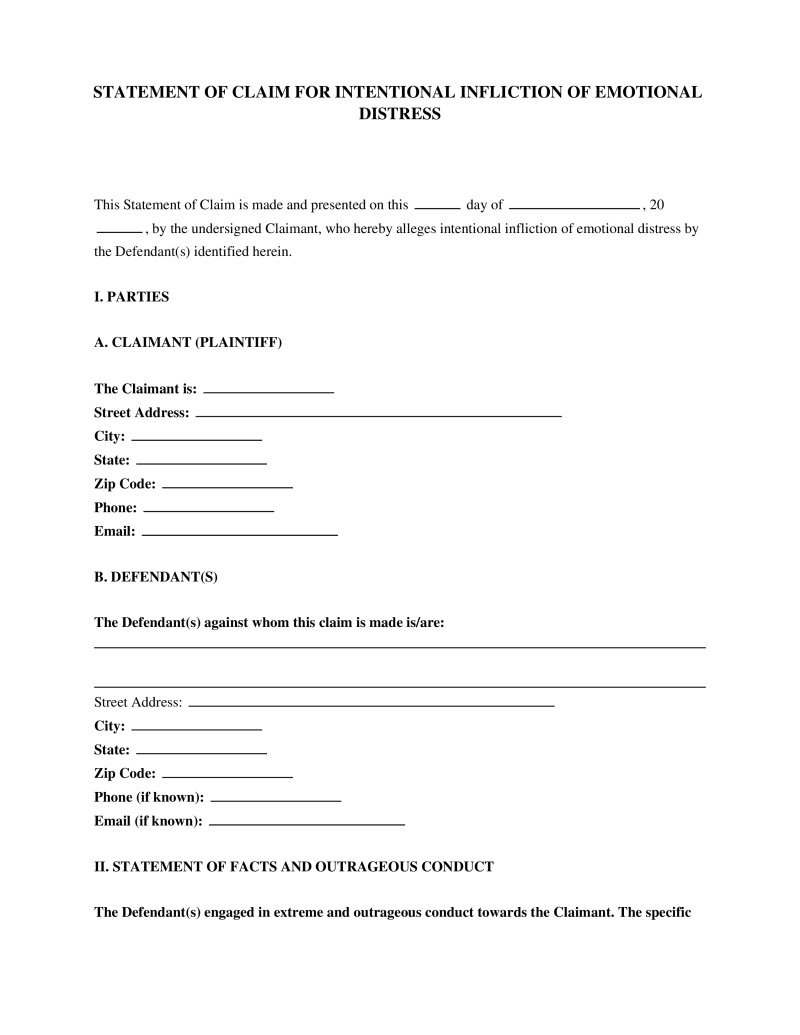
Alleged Conduct Type
Select the primary type of conduct that caused emotional distress.
Provide details if you selected 'Other'.
Table of Contents
What is Intentional Infliction of Emotional Distress (IIED)?
Intentional Infliction of Emotional Distress (IIED) is a tort claim allowing individuals to seek remedies for severe emotional suffering caused by another's extreme and outrageous conduct. This civil wrong recognizes that psychological harm can be as debilitating as physical injury when deliberately inflicted. A successful claim requires proving that the defendant acted intentionally or recklessly to cause severe distress, and that such distress actually resulted from their actions.
Elements of Intentional Infliction of Emotional Distress
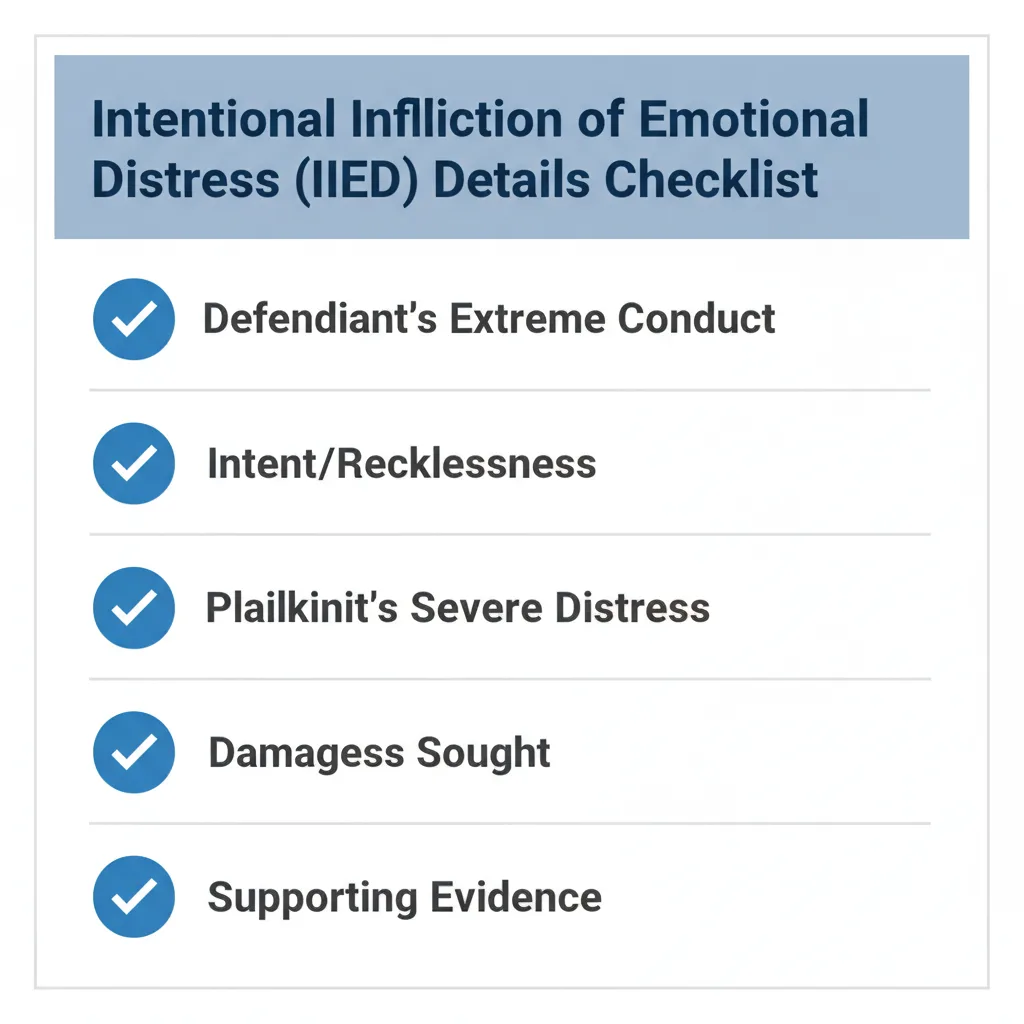
To establish a claim for Intentional Infliction of Emotional Distress, a plaintiff must generally prove four distinct elements. These elements collectively demonstrate that the defendant's conduct was sufficiently egregious and harmful to warrant legal redress:
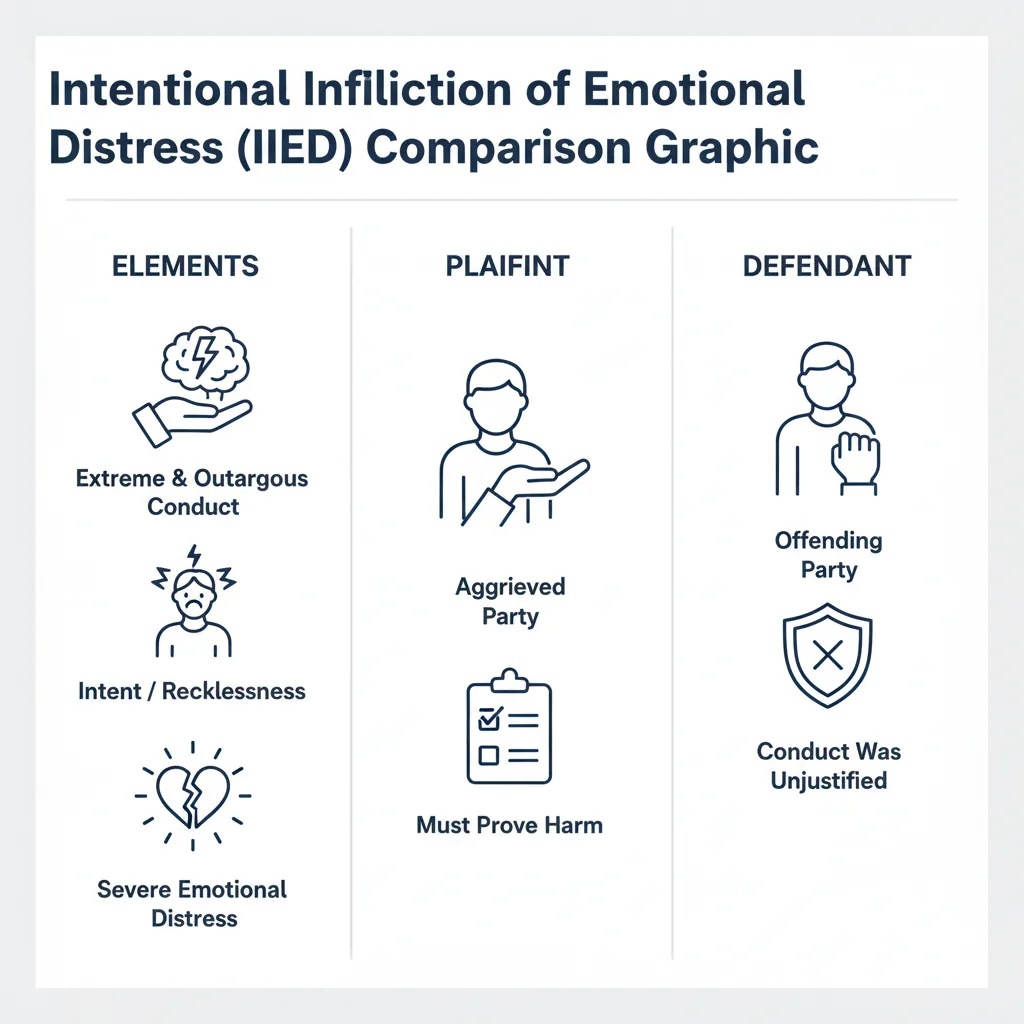
- Extreme and Outrageous Conduct - The defendant's conduct must be so extreme in degree as to go beyond all possible bounds of decency, and to be regarded as atrocious and utterly intolerable in a civilized community.
- Intent or Recklessness - The defendant must have intended to cause severe emotional distress or acted with reckless disregard of a high probability that emotional distress would result.
- Causation - The defendant's actions must be the actual and proximate cause of the plaintiff's emotional distress.
- Severe Emotional Distress - The plaintiff must have suffered severe emotional distress as a result of the defendant's conduct. The distress must be so severe that no reasonable person could be expected to endure it.
Defining Extreme and Outrageous Conduct
Frequently Asked Questions
Sources
- Massachusetts law about harassment, stalking, or intentional infliction of emotional distress - Provides information on Massachusetts laws regarding harassment, stalking, and intentional infliction of emotional distress, including relevant statutes and legal definitions.
Not the form you're looking for?
Try our legal document generator to create a custom document
Disclaimer: The templates available on this website are provided for general informational purposes only and do not constitute legal advice. They are not intended to be, and should not be interpreted as, compliant with any specific legal, regulatory, or privacy requirements. These templates are not a replacement for professional legal guidance and should not be relied upon for any particular matter or circumstance. Users are strongly encouraged to seek advice from a qualified attorney licensed in their jurisdiction before using, modifying, or relying on any template.
All templates are provided on an "as is," "with all faults," and "as available" basis. The provider disclaims any and all warranties of any kind, whether express, implied, statutory, or otherwise, including without limitation warranties of merchantability, fitness for a particular purpose, title, or non-infringement.
LegalTemplates.com makes no guarantees or representations regarding the accuracy, completeness, expected outcomes, or reliability of the materials contained in these templates or any materials referenced or linked from them.