Motion to Stay
A Motion to Stay is a formal application submitted to a court, requesting a temporary cessation of judicial proceedings or the enforcement of a judgment, pending the resolution of an associated matter.
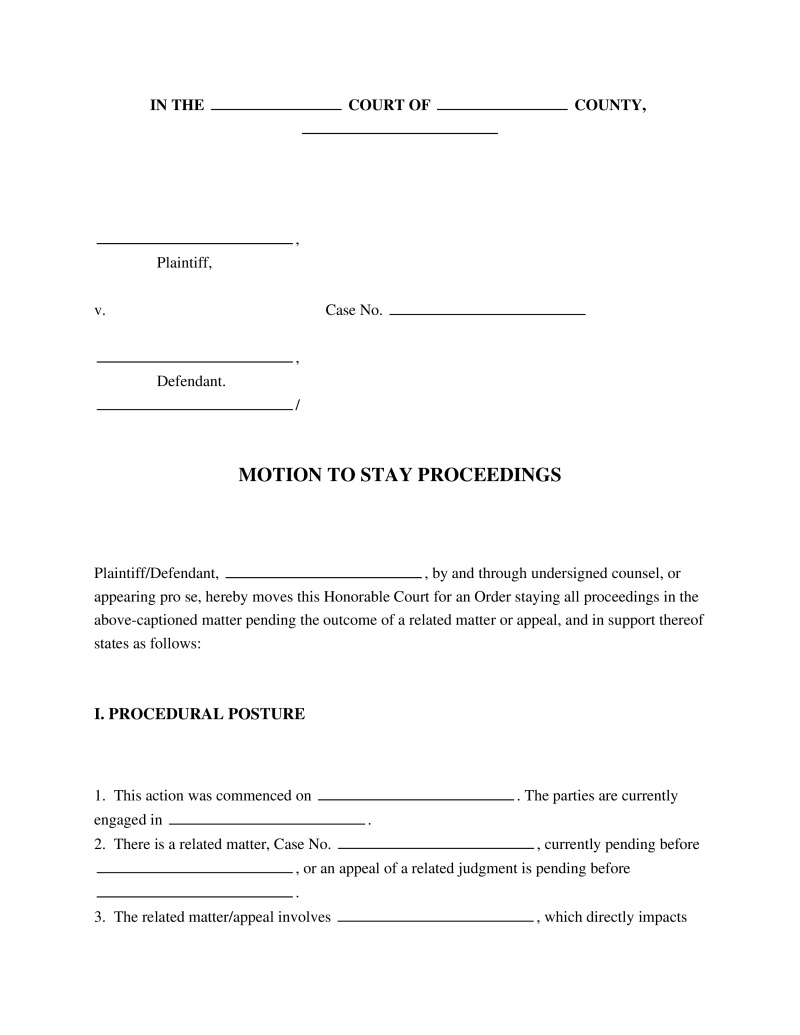
Stay Reason Type
Select the main basis for your Motion to Stay. This helps frame the legal grounds for your request.
Provide details if your reason does not fit the listed categories.
Table of Contents
What is a Motion to Stay?
A motion to stay is a formal request submitted to a court asking it to halt or suspend a legal proceeding, judgment, or action temporarily or indefinitely. This judicial mechanism allows a court to pause its own proceedings or those of a lower tribunal, often to prevent immediate enforcement of an order or to await the outcome of another related legal matter. The purpose of a stay is typically to preserve the status quo, prevent irreparable harm, or manage judicial resources efficiently.
Understanding the Automatic Stay in Bankruptcy
In the context of bankruptcy proceedings, an 'automatic stay' comes into effect immediately upon the filing of a bankruptcy petition. This stay is a powerful injunction that prevents creditors from continuing collection efforts against the debtor or the debtor's property. The automatic stay is a fundamental aspect of bankruptcy law, designed to provide debtors with immediate relief from financial pressure and to ensure an orderly administration of the bankruptcy estate.
While the automatic stay is, as its name suggests, automatic, its application and duration can be subject to specific judicial review and modification through various motions. These motions allow parties to request the court to alter, extend, impose, or reinstate the stay based on the specific circumstances of a case.
Motions Related to the Automatic Stay
Several types of motions can be filed by parties to address the automatic stay in bankruptcy proceedings:
- Motion to Extend Stay - This motion is filed by a debtor to request the court to prolong the duration of the automatic stay beyond its initial statutory period. Such motions are often governed by local bankruptcy rules, such as Local Bankruptcy Rule 4001(h) in the Middle District of Tennessee, which provides forms and procedures for extending the stay.
- Motion to Impose Stay - In certain circumstances, particularly when an automatic stay might not apply or has been lifted, a party may file a motion to impose the automatic stay. Courts like the Northern District of Georgia provide specific forms and requirements for filing such a motion to ensure the orderly application of the stay.
- Motion to Reimpose Automatic Stay - If the automatic stay has previously terminated or been lifted by court order, a debtor may file a motion to reimpose it. The Middle District of Florida, for example, outlines specific procedures and forms for filing motions to impose or reimpose the automatic stay, detailing the necessary filing requirements.
- Motion to Reinstate the Automatic Stay - Similar to a motion to reimpose, a motion to reinstate seeks to reactivate a stay that has been terminated. The District of New Jersey offers forms and instructions for filing a motion to reinstate the automatic stay, often referencing related local rules.
- Motion for Relief from Stay - This motion is typically filed by a creditor who wishes to proceed with an action against the debtor or the debtor's property despite the automatic stay. Creditors might seek relief to pursue foreclosure, repossession, or other collection activities. Courts, such as the District of Colorado, provide local bankruptcy forms for orders on motions for relief from the automatic stay, indicating the process for judicial review of such requests.
Filing Requirements and Procedures

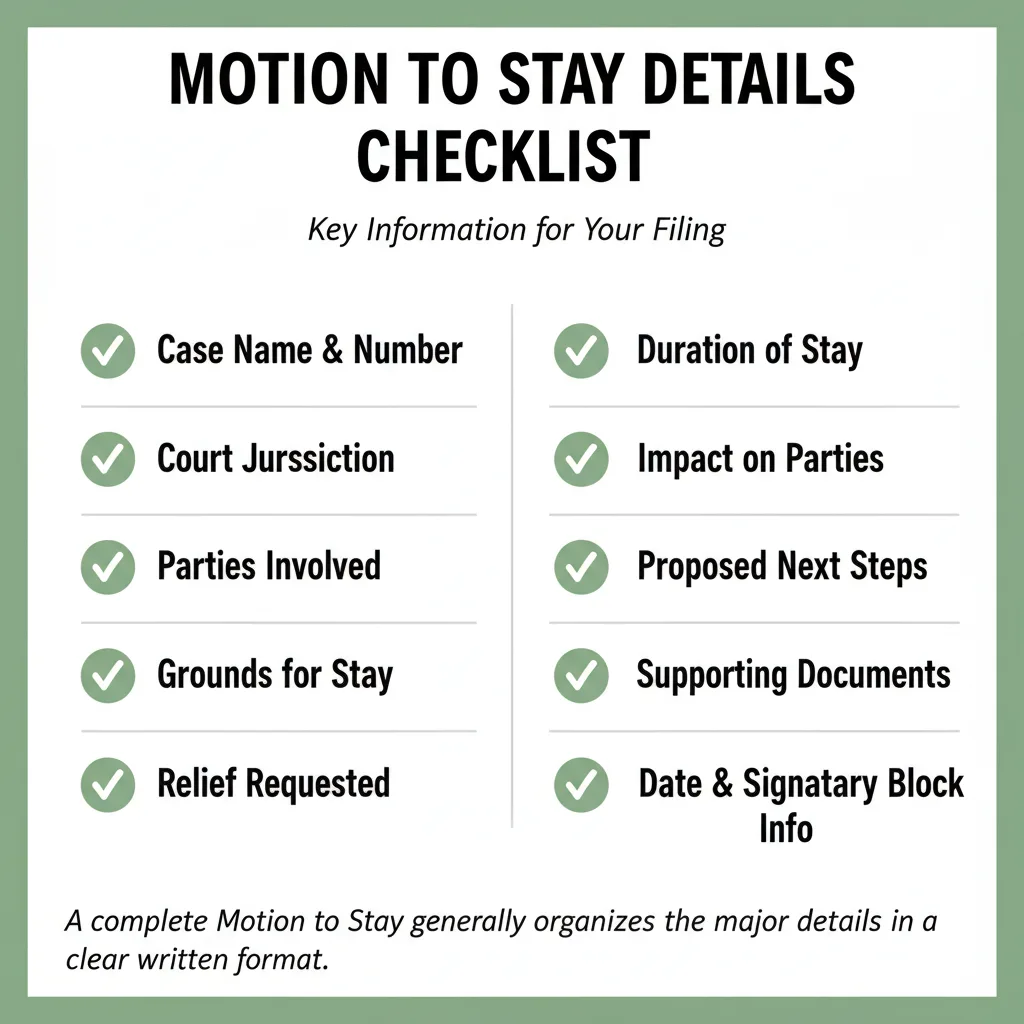
The process for filing a motion related to the automatic stay varies by jurisdiction and the specific type of motion. Generally, these motions must adhere to federal and local bankruptcy rules of procedure. Parties are required to submit specific forms and provide detailed information supporting their request.
Key elements typically involved in filing these motions include:
- Required Forms - Courts provide specific forms for motions to extend, impose, reinstate, or for relief from the automatic stay. These forms ensure that all necessary information is presented to the court in a standardized format.
- Supporting Documentation - Filers must often attach affidavits, declarations, or other evidence to support the factual assertions made in the motion. For instance, a motion to extend a stay might require documentation of the debtor's progress in their bankruptcy plan.
- Service Requirements - The moving party must properly serve the motion on all interested parties, including the trustee, debtor, and relevant creditors, in accordance with bankruptcy rules.
- Filing Fees - While not always applicable, some motions may require a filing fee.
- Local Rules Compliance - Beyond federal bankruptcy rules, local bankruptcy courts often have specific local rules that dictate filing deadlines, format requirements, and procedures for hearings related to stay motions.
Judicial review of these motions involves careful consideration of the specific circumstances, including the debtor's financial situation, the potential for harm to either party, and the overall objectives of bankruptcy law.
Grounds for Granting or Denying a Stay Motion
When a court considers a motion to stay, it typically evaluates several factors to determine whether granting the stay is appropriate. While the specific criteria can vary depending on the type of stay and the jurisdiction, common considerations include:
- Likelihood of Success on the Merits - For appellate stays, the moving party must often demonstrate a strong probability of success on appeal.
- Irreparable Harm - The court assesses whether the moving party will suffer irreparable harm if the stay is not granted.
- Harm to Other Parties - The potential harm to opposing parties if the stay is granted is weighed against the harm to the moving party if it is denied.
- Public Interest - The court considers whether granting or denying the stay would serve the public interest.
- Efficient Administration of Justice - The court evaluates whether a stay would promote the orderly and efficient resolution of legal matters, particularly in cases involving complex litigation or multiple related proceedings.
In bankruptcy, motions related to the automatic stay are often evaluated based on whether the stay serves its intended purpose of providing a breathing spell for the debtor and facilitating an equitable distribution of assets. For motions to lift the stay, creditors must often demonstrate a lack of adequate protection for their interest in collateral or that the debtor lacks equity in the property and it is not necessary for an effective reorganization.
Frequently Asked Questions
Sources
- Motion to Extend Stay (LBR 4001(h)) - Provides a form for filing a motion to extend the automatic stay under Local Bankruptcy Rule 4001(h).
- Motion to Impose Stay - Details the process for filing a motion to impose the automatic stay, including forms and filing requirements.
- Motion to Reinstate the Automatic Stay - Offers a form for filing a motion to reinstate the automatic stay, with related local rules and instructions.
- Motion to Impose/Reimpose Automatic Stay - Provides a procedure document for filing a motion to impose or reimpose the automatic stay, including filing requirements and forms.
- L.B.F. 4001-1.3 - Order on Motion for Relief from Stay - Offers a local bankruptcy form for an order on a motion for relief from the automatic stay, with related local rules.
Not the form you're looking for?
Try our legal document generator to create a custom document
Disclaimer: The templates available on this website are provided for general informational purposes only and do not constitute legal advice. They are not intended to be, and should not be interpreted as, compliant with any specific legal, regulatory, or privacy requirements. These templates are not a replacement for professional legal guidance and should not be relied upon for any particular matter or circumstance. Users are strongly encouraged to seek advice from a qualified attorney licensed in their jurisdiction before using, modifying, or relying on any template.
All templates are provided on an "as is," "with all faults," and "as available" basis. The provider disclaims any and all warranties of any kind, whether express, implied, statutory, or otherwise, including without limitation warranties of merchantability, fitness for a particular purpose, title, or non-infringement.
LegalTemplates.com makes no guarantees or representations regarding the accuracy, completeness, expected outcomes, or reliability of the materials contained in these templates or any materials referenced or linked from them.