Motion to Strike
A Motion to Strike is a procedural request in legal proceedings seeking the removal of specific allegations, defenses, or evidentiary material from a pleading or record.
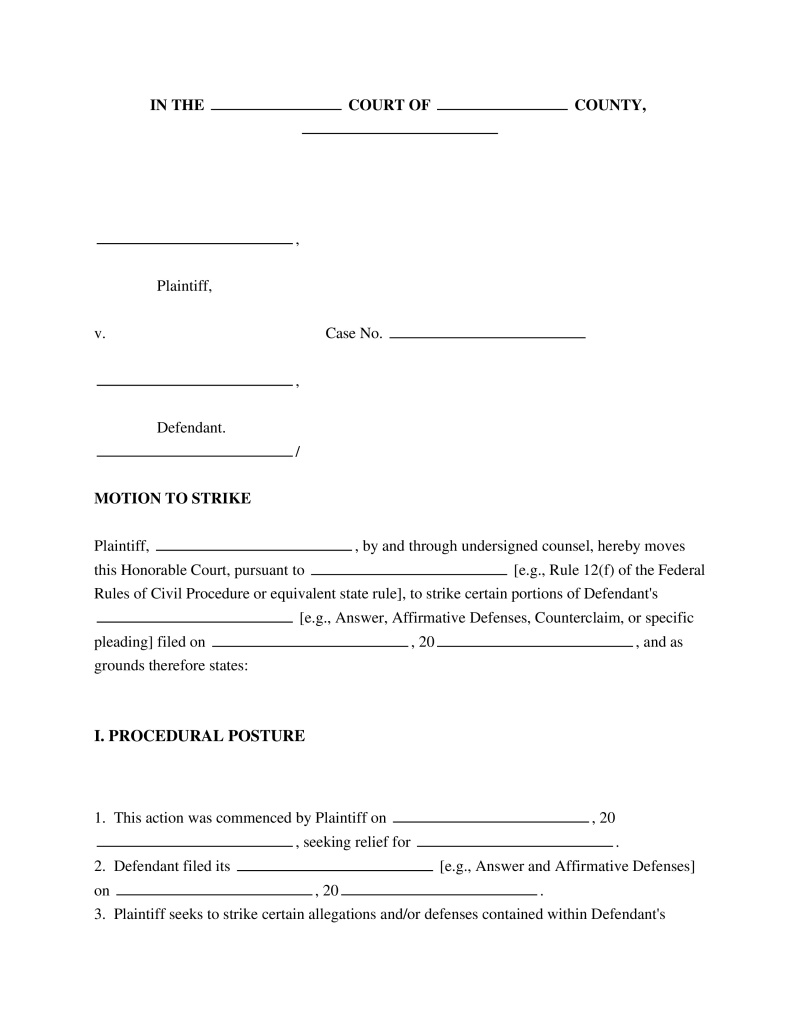
Strike Scope
Select the main target of your motion. You can specify details later.
Provide details if your request does not fit the listed options.
Table of Contents
What is a Motion to Strike?
A motion to strike is a procedural tool utilized in litigation to request that a court remove certain material from a pleading. Its primary purpose is to eliminate redundant, immaterial, impertinent, or scandalous matter, or any insufficient defense, from a complaint, answer, or other court filing. This motion is commonly used by parties to refine the issues presented to the court, prevent prejudice, and streamline the overall litigation process.
Purpose and Grounds for Filing
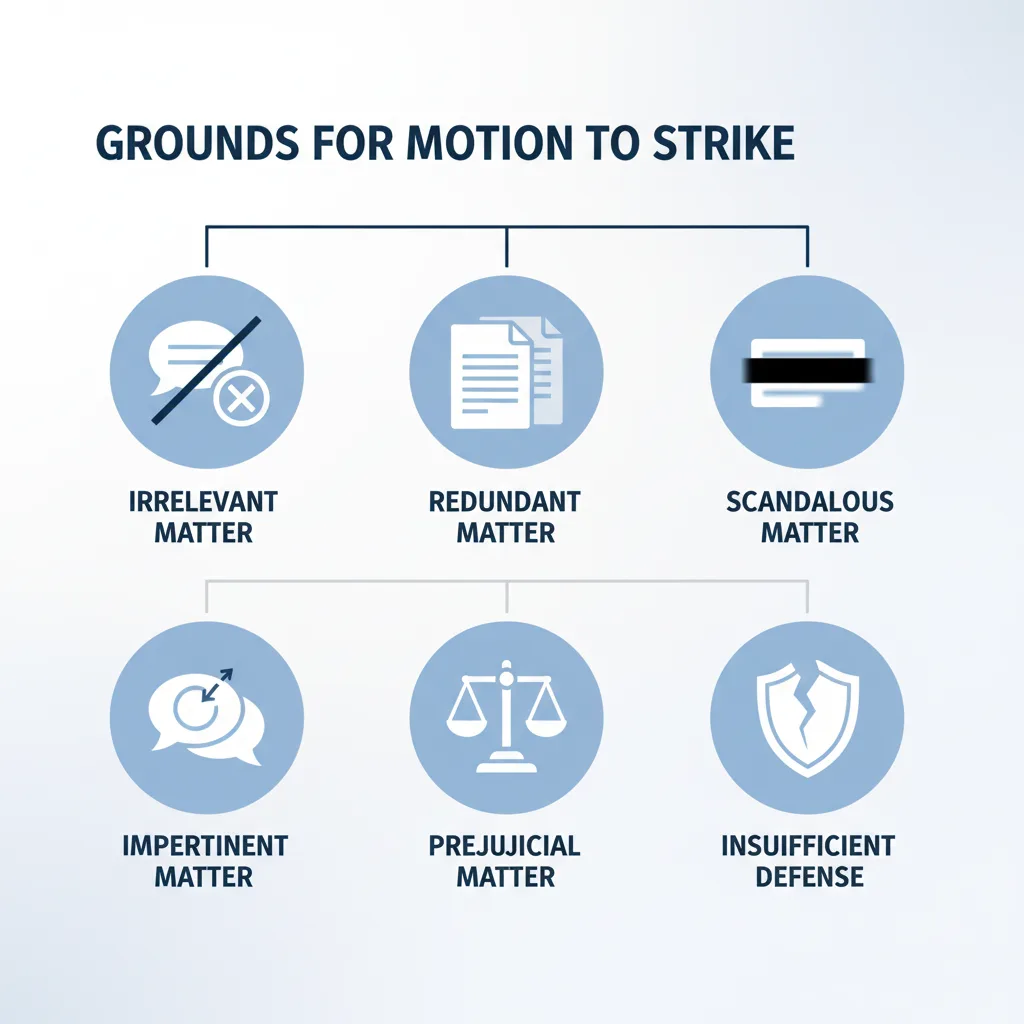
The overarching goal of a motion to strike is to 'clean up' pleadings by removing elements that are improper or unnecessary for the resolution of the case. Courts generally disfavor these motions and will typically grant them only when the challenged material is clearly objectionable and causes prejudice to the moving party. The common grounds for filing a motion to strike include:
- Irrelevant Matter - Allegations or statements that have no bearing on the claims or defenses in the action.
- Redundant Matter - Unnecessary repetition of allegations already made in the pleading.
- Scandalous Matter - Immaterial allegations that improperly cast a derogatory light on a party or other individuals, often involving salacious or inflammatory content that serves no legal purpose.
- Impertinent Matter - Allegations that are not responsive to the issues raised in the lawsuit and are outside the scope of the action.
- Prejudicial Matter - Material that, while potentially factual, could unfairly influence the trier of fact (judge or jury) and lead to an unjust outcome.
- Insufficient Defense - When a party's asserted defense is legally inadequate even if all its factual allegations are assumed to be true.
Types of Matter Subject to a Motion to Strike
A motion to strike can be directed at various components within a pleading, aiming to remove specific problematic parts rather than the entire document. The types of material commonly targeted by such motions include:
- Affirmative Defenses - If a defendant's asserted affirmative defense is legally insufficient, improperly pleaded, or irrelevant to the case, a plaintiff may move to strike it.
- Damages Claims - Portions of a complaint seeking types of damages that are not legally recoverable under the asserted cause of action (e.g., punitive damages where not permitted).
- Allegations of Fact - Specific factual assertions within a complaint or answer that are irrelevant, scandalous, impertinent, or otherwise improper.
- Exhibits - Documents attached to a pleading that are improperly included, irrelevant, or highly prejudicial.
- Portions of a Complaint or Answer - The motion often seeks to remove only specific paragraphs, sentences, or phrases from a pleading, leaving the remainder intact.
Distinction from Related Motions
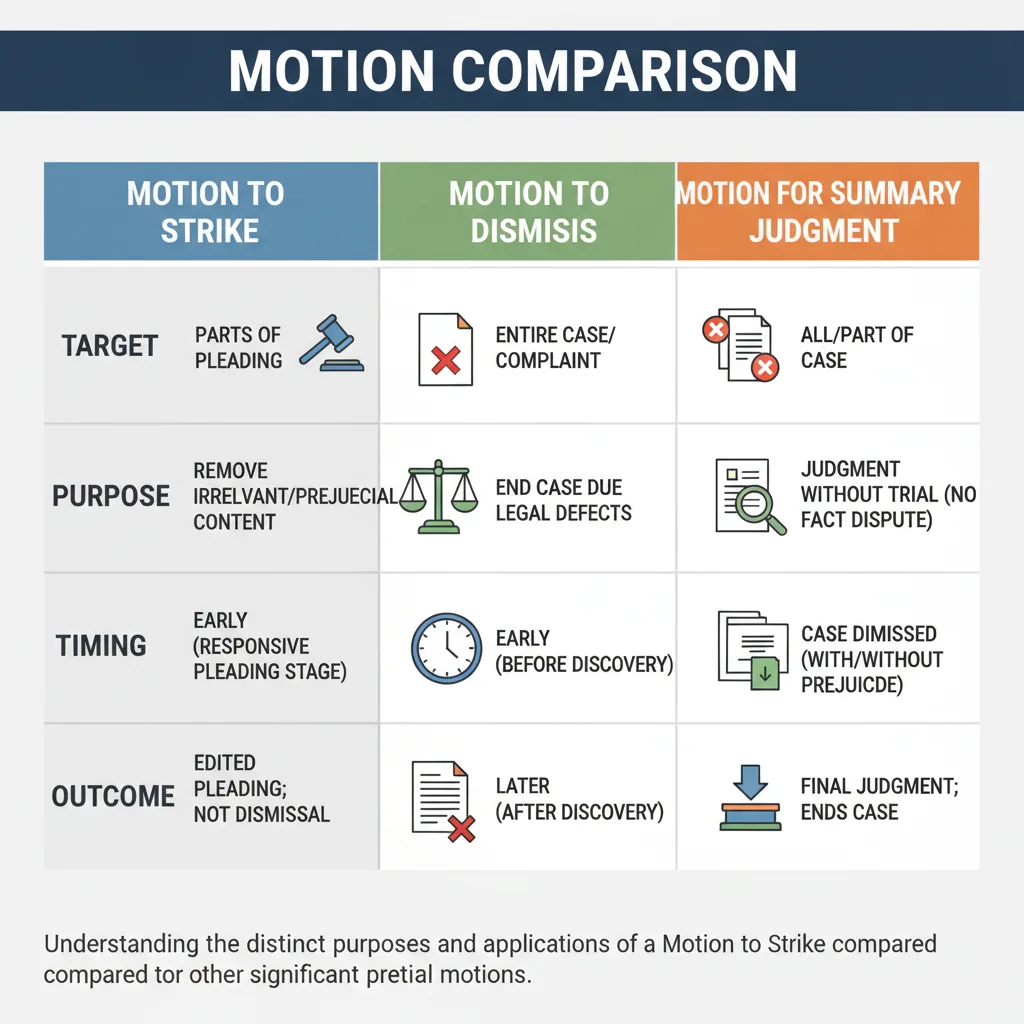
While a motion to strike addresses deficiencies in pleadings, it is distinct from other common pretrial motions that serve different purposes:
- Motion to Dismiss - This motion typically challenges the *entire* pleading, arguing that it fails to state a claim upon which relief can be granted, or that the court lacks jurisdiction. A motion to strike, in contrast, usually targets *parts* of a pleading, seeking to remove specific objectionable material rather than invalidate the whole document.
- Motion for More Definite Statement - When a pleading is so vague or ambiguous that a party cannot reasonably be expected to frame a responsive pleading, a motion for more definite statement can be filed. This motion seeks clarification or greater detail, not the removal of improper or irrelevant material.
- Motion for Summary Judgment - This motion is filed later in litigation, after discovery, and asks the court to rule on the merits of a case because there are no genuine disputes of material fact and the moving party is entitled to judgment as a matter of law. It focuses on the substantive merits, unlike a motion to strike which focuses on the form and content of pleadings.
Procedural Aspects
The procedural rules governing motions to strike can vary by jurisdiction, but general principles apply in most legal systems. Adhering to these procedural requirements is crucial for the motion to be considered by the court.
- Filing Party - A motion to strike is typically filed by the party responding to the pleading that contains the objectionable material. For instance, a defendant might move to strike portions of a plaintiff's complaint, or a plaintiff might move to strike an insufficient defense from a defendant's answer.
- Timing - The motion is usually filed relatively early in the litigation, often before or concurrently with the responsive pleading. Some jurisdictions specify deadlines, such as within a certain number of days after service of the pleading.
- Court's Discretion - The decision to grant or deny a motion to strike rests within the sound discretion of the trial court. Courts tend to be reluctant to grant these motions unless the moving party demonstrates actual prejudice or that the material is clearly irrelevant and improper.
- Burden of Proof - The party filing the motion bears the burden of demonstrating why the challenged material should be removed from the pleading. They must show that the material falls within one of the recognized grounds for striking.
- Opportunity to Respond - The party whose pleading is being challenged is typically given an opportunity to file a response opposing the motion to strike, arguing that the material is proper or relevant.
Impact and Outcomes
The outcome of a motion to strike can significantly influence the trajectory of a lawsuit, affecting how the case proceeds and what issues are ultimately presented for adjudication. The court's decision determines whether the challenged material remains part of the official court record.
- If Granted - The objectionable material is formally removed from the pleading. This action can narrow the scope of the issues to be litigated, prevent the introduction of unfairly prejudicial evidence, or eliminate legally invalid claims or defenses, thereby streamlining discovery and trial.
- If Denied - The challenged material remains a part of the pleading. A denial often indicates that the court finds the material to be relevant, not unduly prejudicial, or that the motion was premature. The party who filed the motion may then need to address the challenged material through other means, such as discovery or motions in limine.
- Leave to Amend - If a motion to strike an insufficient defense or claim is granted, courts often provide the party whose pleading was affected with leave to amend their pleading. This allows the party an opportunity to cure the defects identified by the court, rather than facing an outright dismissal of a portion of their case.
Frequently Asked Questions
Not the form you're looking for?
Try our legal document generator to create a custom document
Disclaimer: The templates available on this website are provided for general informational purposes only and do not constitute legal advice. They are not intended to be, and should not be interpreted as, compliant with any specific legal, regulatory, or privacy requirements. These templates are not a replacement for professional legal guidance and should not be relied upon for any particular matter or circumstance. Users are strongly encouraged to seek advice from a qualified attorney licensed in their jurisdiction before using, modifying, or relying on any template.
All templates are provided on an "as is," "with all faults," and "as available" basis. The provider disclaims any and all warranties of any kind, whether express, implied, statutory, or otherwise, including without limitation warranties of merchantability, fitness for a particular purpose, title, or non-infringement.
LegalTemplates.com makes no guarantees or representations regarding the accuracy, completeness, expected outcomes, or reliability of the materials contained in these templates or any materials referenced or linked from them.