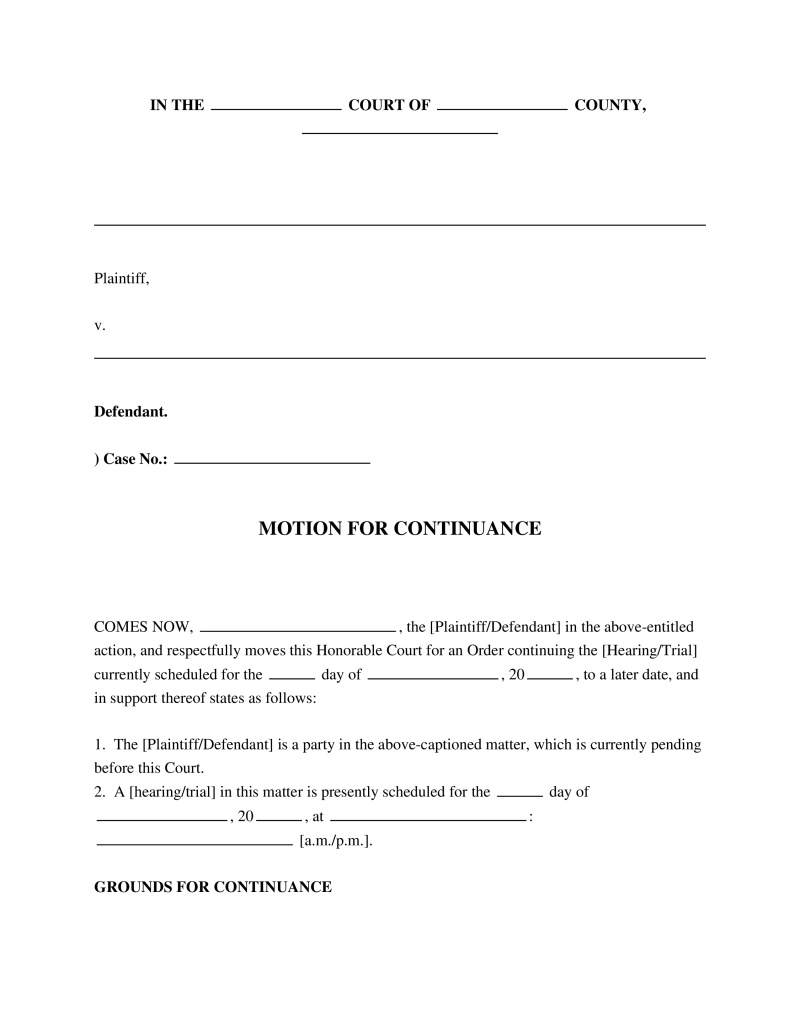
Motion for Continue
A Motion for Continue is a formal legal application submitted to a court, requesting the postponement or adjournment of a scheduled hearing, trial, or other judicial proceeding.
Continuance Type
Select the type of court event you are seeking to postpone.
Provide details if you selected 'Other'.
Table of Contents
What is a Motion for Continue?
A Motion for Continue is a formal request submitted to a court by a party involved in a legal proceeding, seeking to postpone a scheduled event such as a hearing, trial, or deposition. Its primary purpose is to allow additional time for preparation, address unforeseen circumstances, or facilitate the resolution of outstanding issues that impact the case's readiness. This procedural mechanism is utilized by litigants, their attorneys, or, in some instances, initiated by the court itself to ensure fairness and the orderly administration of justice.
Grounds for a Motion for Continue
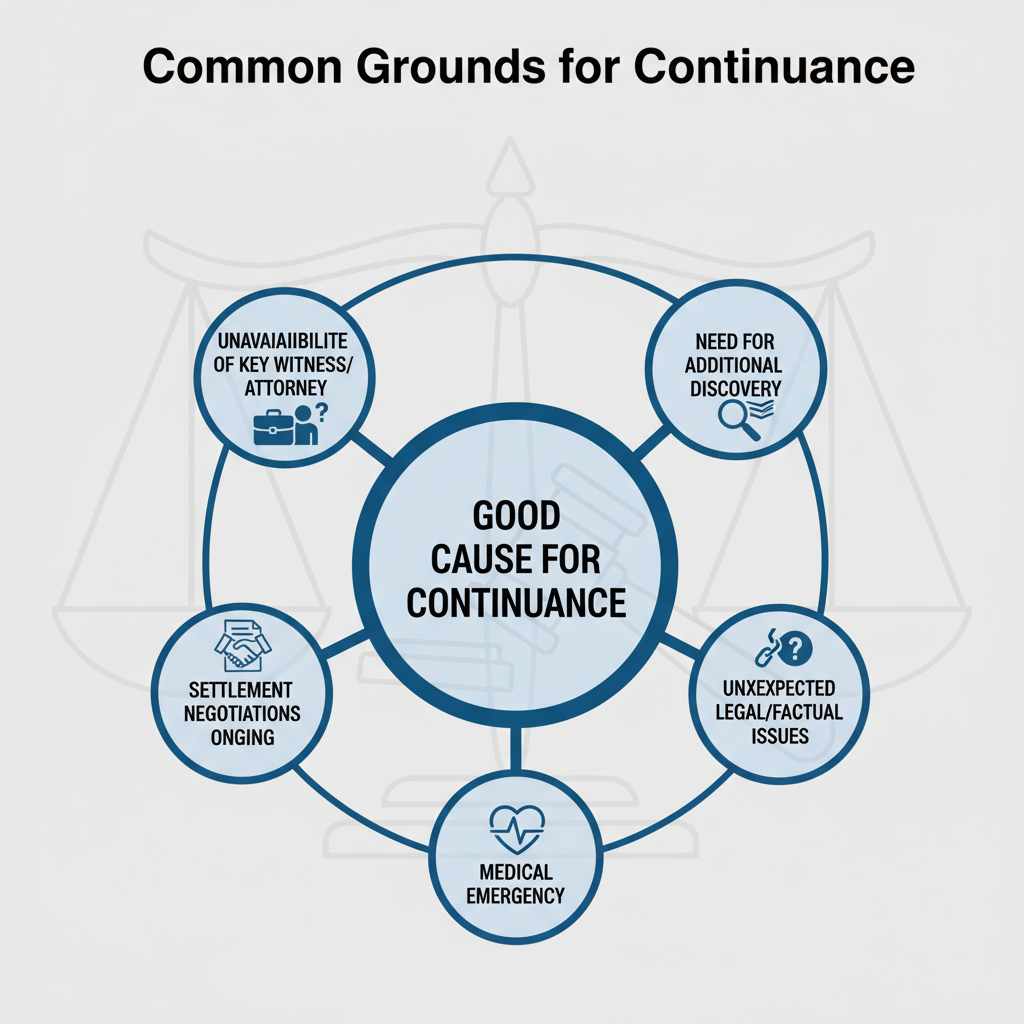
Courts generally require a showing of "good cause" or "good reason" before granting a motion to continue. The specific circumstances that warrant a continuance can vary, but common grounds often relate to unforeseen events or necessary procedural delays. These reasons must typically be beyond the control of the requesting party and materially impact their ability to proceed effectively.
- Unavailability of Key Personnel - This includes the unexpected absence of a crucial witness, an attorney involved in the case, or a party whose presence is essential due to illness, accident, or other legitimate reasons.
- Need for Additional Discovery - When new evidence emerges, or a party requires more time to complete depositions, document requests, or expert witness reports before a scheduled event.
- Settlement Negotiations - Parties may request a continuance if they are actively engaged in settlement discussions and believe that a short delay could lead to a resolution, thereby avoiding the need for a trial.
- Unexpected Legal or Factual Issues - The emergence of complex legal questions or new factual developments that require substantial additional research, investigation, or amendment of pleadings.
- Scheduling Conflicts - While generally disfavored if avoidable, unavoidable conflicts for attorneys or key witnesses with other court proceedings or essential obligations may sometimes justify a continuance.
- Medical Emergencies - A sudden illness or injury to a party, attorney, or essential witness that renders them unable to participate in the scheduled proceeding.
Information Included in the Motion
A Motion for Continue must be meticulously prepared and typically includes specific information to justify the request to the court. The level of detail required can vary by jurisdiction and court rules, but the core elements aim to provide the court with a clear understanding of the situation.
- Case Caption and Identification - Standard information identifying the court, case name, and case number.
- Specific Proceeding to be Continued - Clearly stating which hearing, trial, or other event the party seeks to postpone.
- Detailed Grounds for the Request - A comprehensive explanation of the specific reasons necessitating the continuance, accompanied by any supporting documentation (e.g., medical certificates, affidavits from unavailable witnesses).
- Diligence of the Moving Party - A statement demonstrating that the party has acted diligently in preparing for the proceeding and that the grounds for the continuance are not a result of their own procrastination or lack of effort.
- Duration of Continuance Sought - A specific request for the length of the postponement, often including proposed new dates or a range of dates.
- Statement Regarding Opposing Counsel's Position - Indication of whether the opposing party agrees to the continuance or if they object, which can influence the court's decision.
- Absence of Prejudice - An argument or statement that granting the continuance will not unfairly prejudice the opposing party or unduly delay the administration of justice.
The Process of Filing and Court's Discretion
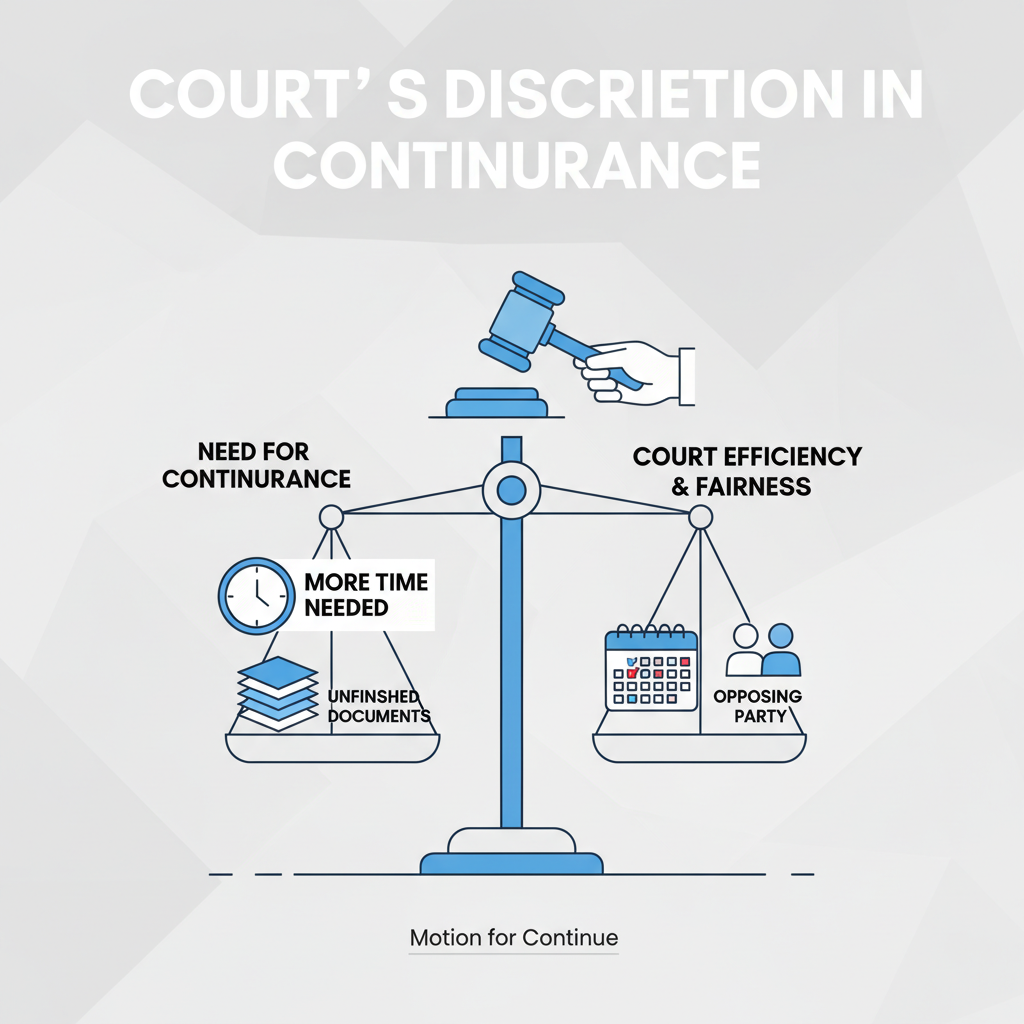
The filing of a Motion for Continue follows established court procedures, typically requiring submission in writing to the clerk of courts, with a copy served upon all other parties involved in the case. Courts often prefer that such motions be filed as soon as the grounds for the continuance become apparent, allowing adequate time for the court and other parties to adjust their schedules.
Upon receiving the motion, the court exercises significant discretion in deciding whether to grant or deny the request. This discretion is guided by the principle of ensuring justice while maintaining an efficient judicial calendar. The court considers various factors when evaluating a motion to continue, balancing the moving party's need against potential impacts on others.
- Prejudice to Opposing Party - The extent to which granting the continuance would unfairly harm or disadvantage the non-moving party, such as by delaying discovery or causing financial hardship.
- Prior Continuances - Whether the moving party has previously requested and been granted continuances in the same case, which may indicate a pattern of delay.
- Impact on Court's Calendar - The effect of the postponement on the court's schedule and other cases awaiting resolution.
- Diligence of the Moving Party - The court assesses whether the party seeking the continuance has made reasonable efforts to prepare for the proceeding and if the reason for the delay is truly unavoidable.
- Timeliness of the Motion - Whether the motion was filed promptly once the grounds for the continuance became known.
Distinction from Related Motions
While a Motion for Continue seeks to postpone a specific event, other procedural motions exist that serve different, albeit sometimes related, purposes. Understanding these distinctions is crucial for proper legal strategy and court procedure.
A **Motion to Stay** differs significantly from a motion for continue. A motion to stay typically requests a temporary halt to *all* proceedings in a case, or a specific part of a case, rather than just postponing a single event. Stays are often sought when there is an ongoing appeal of a related matter, when parties are pursuing arbitration, or when the court needs to await the outcome of another crucial legal action before proceeding. A stay effectively puts the entire case on hold, whereas a continuance merely reschedules a particular date.
Another distinct motion is a **Motion to Reopen Evidence**, which is filed after the close of evidence but before a verdict or judgment, to allow for the introduction of new evidence. This is not a request for a delay but for a specific modification of the trial's evidentiary phase. Similarly, a **Motion for a New Trial** is filed after a verdict or judgment, seeking to set aside the outcome and conduct a new trial due to legal errors or newly discovered evidence, which is fundamentally different from merely rescheduling an event.
Frequently Asked Questions
Not the form you're looking for?
Try our legal document generator to create a custom document
Disclaimer: The templates available on this website are provided for general informational purposes only and do not constitute legal advice. They are not intended to be, and should not be interpreted as, compliant with any specific legal, regulatory, or privacy requirements. These templates are not a replacement for professional legal guidance and should not be relied upon for any particular matter or circumstance. Users are strongly encouraged to seek advice from a qualified attorney licensed in their jurisdiction before using, modifying, or relying on any template.
All templates are provided on an "as is," "with all faults," and "as available" basis. The provider disclaims any and all warranties of any kind, whether express, implied, statutory, or otherwise, including without limitation warranties of merchantability, fitness for a particular purpose, title, or non-infringement.
LegalTemplates.com makes no guarantees or representations regarding the accuracy, completeness, expected outcomes, or reliability of the materials contained in these templates or any materials referenced or linked from them.