Motion to Compel Discovery
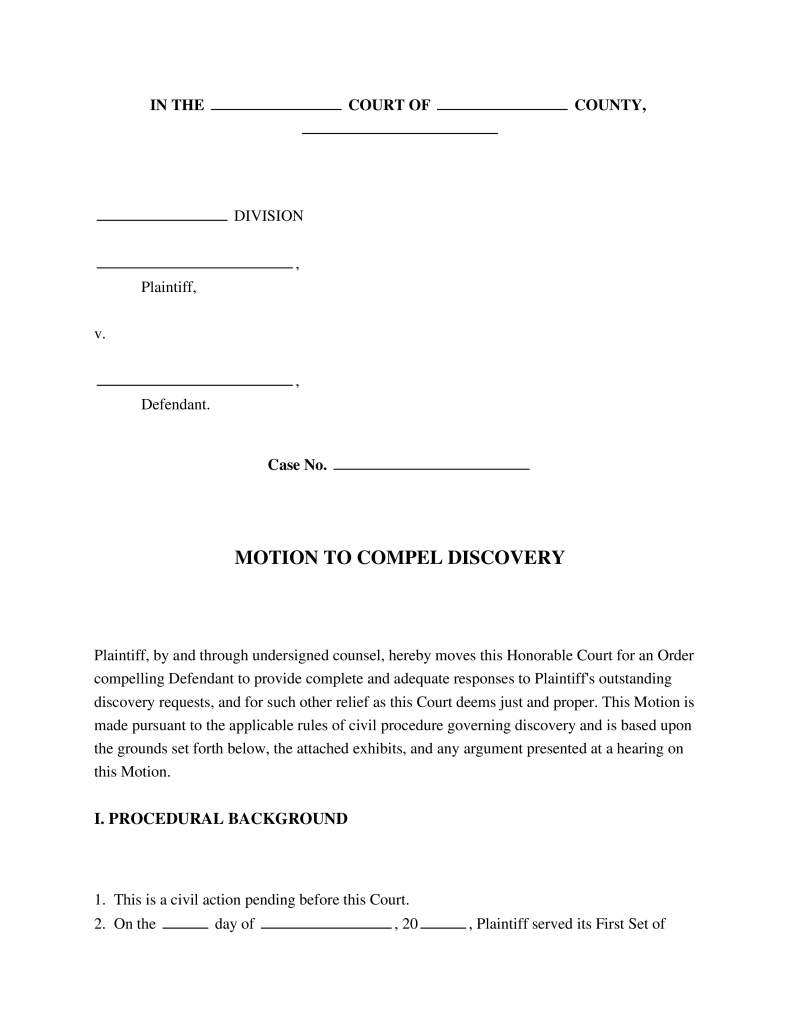
A Motion to Compel Discovery is a formal legal request submitted to a court, seeking an order to mandate an opposing party's compliance with discovery obligations by producing withheld or insufficient information.
Discovery Type
Select all types of discovery you want to compel by checking the boxes next to each option that applies. Discovery types include written questions (Interrogatories), requests for documents (Requests for Production), admissions of facts (Requests for Admission), sworn statements (Depositions), and legal orders for information (Subpoenas). Each selected option helps the court understand what evidence or information you need from the other party.
Describe any other discovery method at issue.
Table of Contents
What is a Motion to Compel Discovery?
A Motion to Compel Discovery is a formal request filed with a court by one party in a lawsuit, asking the judge to order the opposing party to comply with discovery obligations. This legal tool becomes necessary when a party fails to respond to discovery requests, provides incomplete or evasive answers, or improperly objects to legitimate requests for information. Its primary purpose is to ensure that all parties have access to relevant information needed to prepare their case for trial, thereby facilitating a fair and just resolution.
When a Motion to Compel is Filed
Parties typically file a Motion to Compel Discovery after attempts to informally resolve discovery disputes have failed. This motion is a critical step in litigation when an opposing party is perceived to be obstructing the discovery process. The need for such a motion arises in various scenarios where information relevant to the case is being withheld or inadequately provided.
Common situations warranting the filing of a motion to compel include:
- Failure to Respond - The opposing party has not answered interrogatories, responded to requests for production of documents, or replied to requests for admission within the legally prescribed timeframe.
- Incomplete or Evasive Responses - The answers provided are vague, do not fully address the questions, or seem designed to avoid disclosing relevant information.
- Improper Objections - The opposing party raises objections to discovery requests that lack a valid legal basis, such as claiming privilege without proper justification or asserting undue burden without sufficient explanation.
- Refusal to Produce Documents - After a request for production, the opposing party either states they will not produce certain documents or produces an incomplete set without adequate explanation.
- Failure to Appear for Deposition - A noticed deponent fails to attend a scheduled deposition without a valid excuse.
Grounds for Filing a Motion to Compel
To successfully bring a Motion to Compel, the moving party must establish specific grounds demonstrating the opposing party's failure to comply with discovery rules. The court will evaluate whether the requested discovery is relevant to the claims or defenses in the action and not privileged.
Valid grounds typically involve:
- Relevance of Information - The requested information must be relevant to the subject matter involved in the action.
- Lack of Privilege - The information sought must not be protected by an applicable privilege, such as attorney-client privilege or work-product doctrine, or the privilege must have been improperly asserted.
- Specificity of Request - The initial discovery request must have been clear and specific enough for the responding party to understand what was being asked.
- Failure of Opposing Party - The responding party either failed to respond, responded inadequately, or raised unfounded objections to the discovery request.
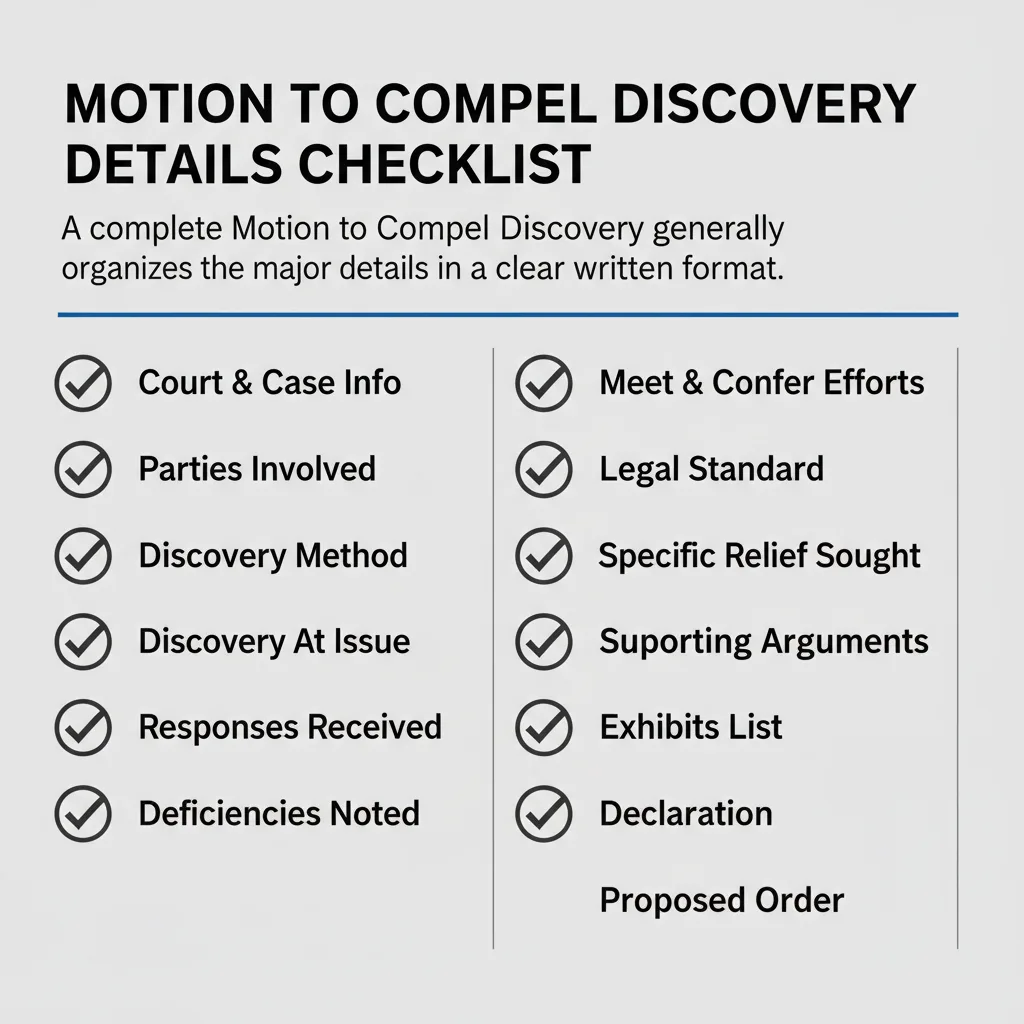
- Compliance with Meet and Confer - The moving party must demonstrate that they made a good faith effort to resolve the dispute informally before filing the motion.
Types of Discovery Subject to Compulsion
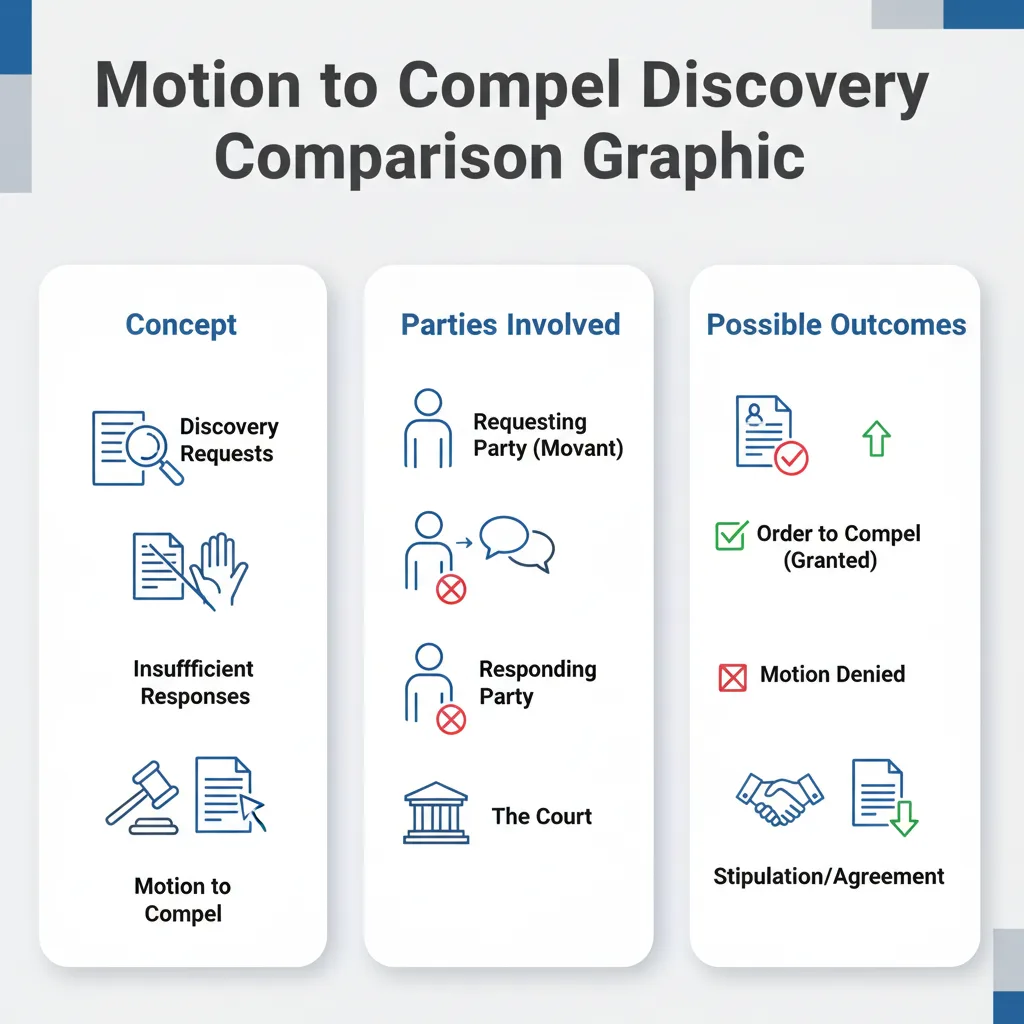
A Motion to Compel Discovery can apply to various forms of discovery tools used in civil litigation. Each tool is designed to gather different kinds of information, and non-compliance with any of them can lead to the filing of this motion:
- Interrogatories - Written questions submitted by one party to another, which must be answered under oath. A motion to compel may address unanswered interrogatories or insufficient responses.
- Requests for Production of Documents - Formal requests for the opposing party to provide specific documents, electronic data, or tangible items relevant to the case. A motion can compel the production of withheld items.
- Requests for Admission - Written statements of fact or opinion presented to an opposing party for admission or denial. Failure to respond or an evasive response can lead to a motion to compel.
- Depositions - Out-of-court sworn testimony taken from a witness or party. A motion to compel can be used if a deponent refuses to answer questions or fails to appear.
- Requests for Physical or Mental Examination - In cases where a party's physical or mental condition is at issue, a court may order an examination. A motion to compel could be filed if a party refuses to submit to such an examination.
The Meet and Confer Requirement
Frequently Asked Questions
Not the form you're looking for?
Try our legal document generator to create a custom document
Disclaimer: The templates available on this website are provided for general informational purposes only and do not constitute legal advice. They are not intended to be, and should not be interpreted as, compliant with any specific legal, regulatory, or privacy requirements. These templates are not a replacement for professional legal guidance and should not be relied upon for any particular matter or circumstance. Users are strongly encouraged to seek advice from a qualified attorney licensed in their jurisdiction before using, modifying, or relying on any template.
All templates are provided on an "as is," "with all faults," and "as available" basis. The provider disclaims any and all warranties of any kind, whether express, implied, statutory, or otherwise, including without limitation warranties of merchantability, fitness for a particular purpose, title, or non-infringement.
LegalTemplates.com makes no guarantees or representations regarding the accuracy, completeness, expected outcomes, or reliability of the materials contained in these templates or any materials referenced or linked from them.