Room Rental Agreement
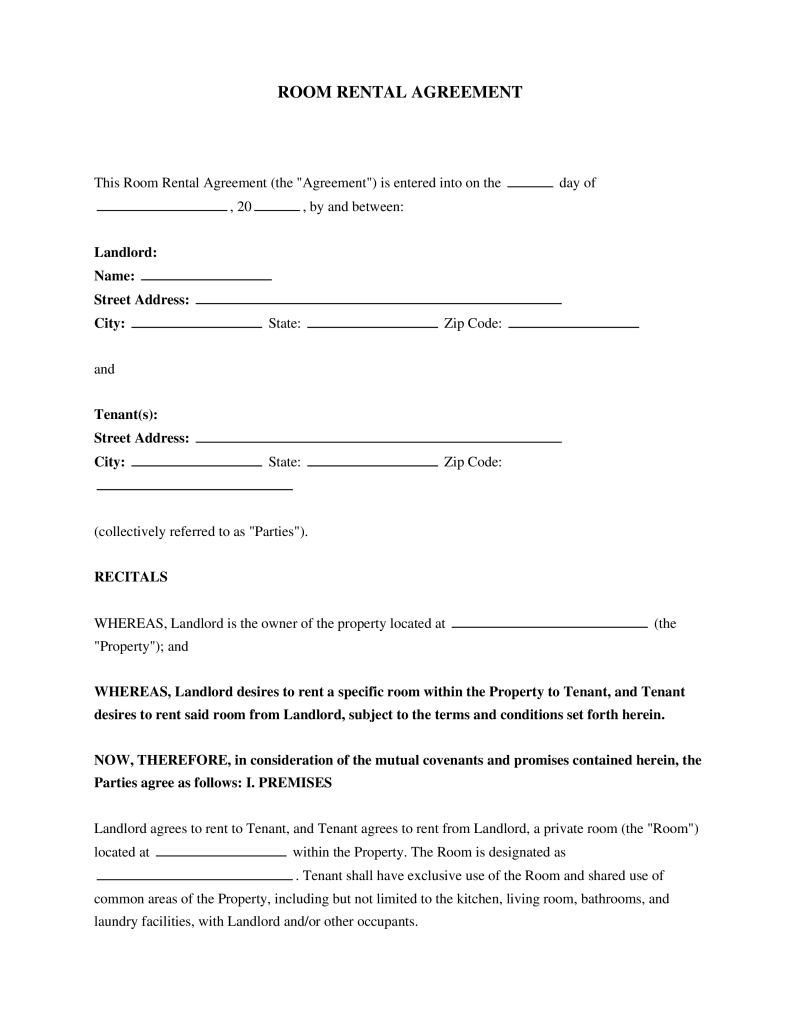
A Room Rental Agreement is a legal contract outlining the terms and conditions under which a tenant occupies a room within a larger residential property.
Dwelling Type
Select the residential property type where the Tenant will rent a room.
Use this if the property type is not listed.
Table of Contents
What is a Room Rental Agreement?
A Room Rental Agreement is a legally binding contract between a property owner or master tenant (landlord) and an individual (tenant or roomer) who agrees to rent a single room within a larger dwelling. Unlike a full residential lease that grants exclusive possession of an entire property, this agreement specifically outlines the terms and conditions for renting only a portion of a property, typically a private bedroom, while sharing common areas such as kitchens, bathrooms, and living rooms. Its primary purpose is to establish clear expectations regarding rent, utilities, house rules, and the rights and responsibilities of all parties involved, thereby preventing disputes and ensuring a structured living arrangement.
Purpose and Common Use Cases
Room rental agreements are commonly utilized in various living situations where multiple individuals share a single residential unit without each having their own separate lease for an entire property. This arrangement is particularly prevalent in urban areas, college towns, and amongst individuals seeking more affordable housing options or temporary accommodations. The agreement serves to formalize the tenancy, providing legal recourse for both the landlord and the roomer should disputes arise.
Common scenarios for their use include:
- Shared Housing - When a homeowner or primary tenant rents out spare bedrooms to individual tenants.
- Student Housing - Often used by college students sharing an apartment or house to delineate individual responsibilities and shared costs.
- Boarding Houses - Traditional arrangements where rooms are rented, and some services (like meals) might be included.
- Temporary Relocation - Individuals needing short-term housing may opt for a room rental rather than a full apartment lease.
Key Elements of a Room Rental Agreement
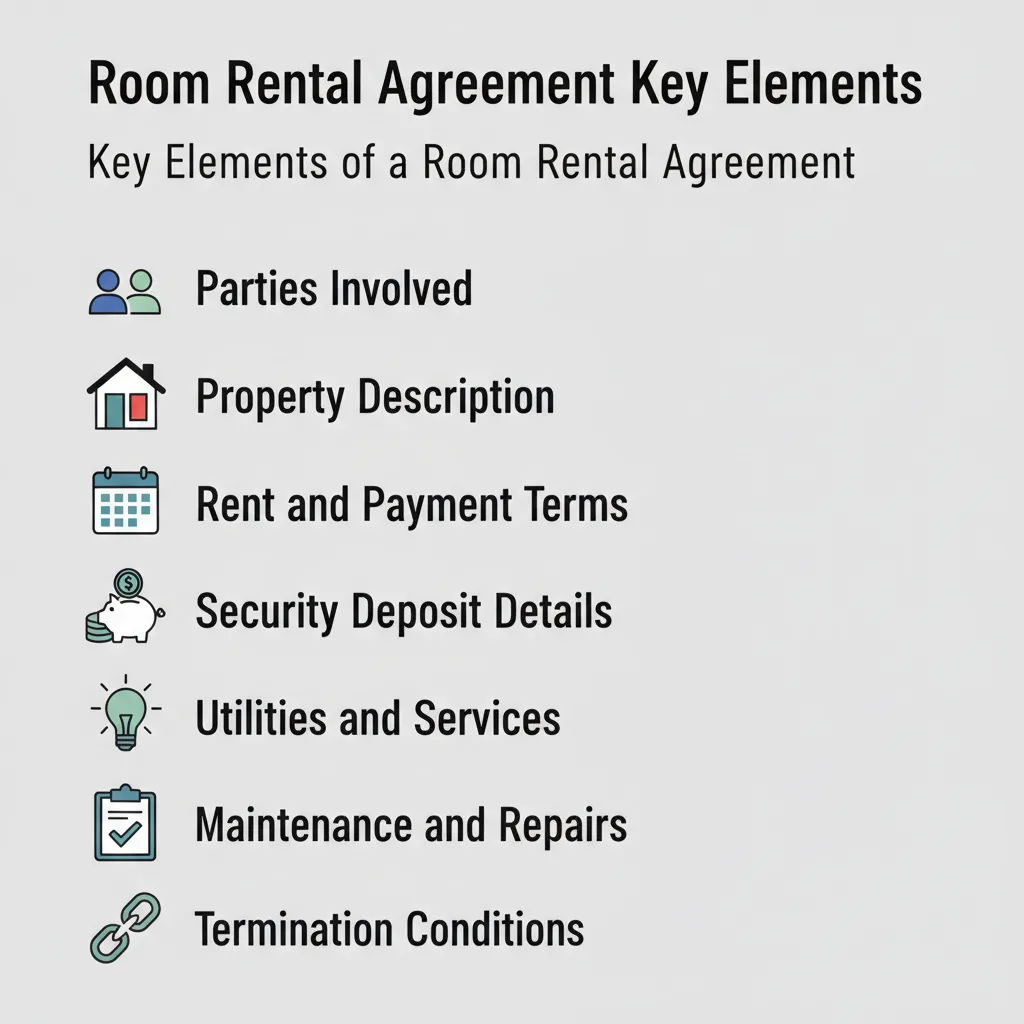
A comprehensive Room Rental Agreement typically includes several essential provisions that define the scope of the tenancy and the obligations of each party. These elements ensure clarity and can help prevent misunderstandings during the rental period. Drawing from common practices, especially as seen in sample agreements, key details often cover:
- Identification of Parties - Names and contact information for both the landlord/homeowner and the roomer/tenant.
- Property Description - Specific details of the property, including the address, the particular room being rented, and a clear outline of shared common areas (e.g., kitchen, living room, bathroom).
- Term of Tenancy - The start and end dates of the rental period, indicating whether it is a fixed-term agreement (e.g., six months, one year) or a month-to-month tenancy.
- Rent Amount and Payment Terms - The exact amount of monthly rent, the due date, acceptable payment methods, and any penalties for late payments.
- Security Deposit Details - The amount of the security deposit, conditions for its return, and any permissible deductions.
- Utilities and Services - A clear breakdown of how utilities (e.g., electricity, water, gas, internet) will be paid, whether they are included in the rent, or how they will be divided among occupants.
- House Rules and Regulations - Guidelines for living in the shared space, which may cover guest policies, quiet hours, cleaning schedules, pet policies, and usage of common areas.
- Maintenance and Repairs - Responsibilities for maintaining the rented room and shared spaces, including who is responsible for minor repairs and reporting issues.
- Termination Conditions - Procedures and notice periods required by either party to terminate the agreement, including conditions for early termination.
- Governing Law - A clause specifying the jurisdiction whose laws will govern the agreement, which is typically the state or local municipality where the property is located.
Distinction from a Standard Lease Agreement
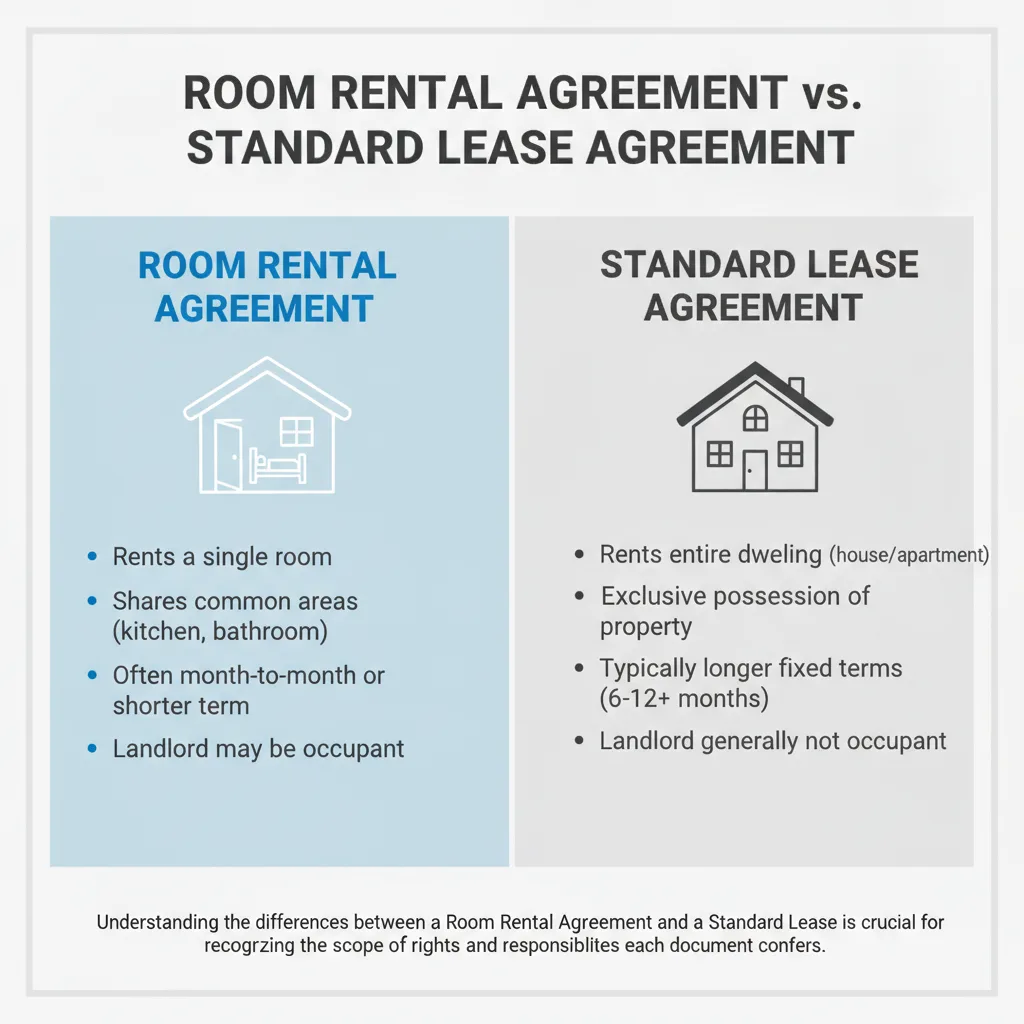
While both a Room Rental Agreement and a standard residential lease agreement are contracts for renting property, they differ significantly in scope and the rights they confer. A standard lease agreement typically grants the tenant exclusive possession of an entire dwelling unit, such as an apartment or a house. This means the tenant has sole control over the property, subject only to the landlord's right of entry as stipulated by law (e.g., for repairs or emergencies).
In contrast, a Room Rental Agreement grants a tenant exclusive possession of only a specific room within a larger property. The tenant shares common areas with other occupants or the homeowner. This distinction impacts privacy expectations, responsibilities for shared spaces, and the landlord's access rights to the overall property. Furthermore, if the landlord is also an occupant, the legal framework can sometimes differ from a traditional landlord-tenant relationship, potentially falling under a lodger agreement in some jurisdictions, which may offer fewer tenant protections.
Legal Considerations and Requirements
Room rental agreements are subject to various legal regulations that can differ significantly by jurisdiction, encompassing state, county, and municipal laws. These regulations often dictate specific requirements for validity and enforceability, emphasizing the importance of a written contract to clearly define the terms of the tenancy.
General legal considerations often include:
- Written Agreement Mandate - Some jurisdictions explicitly require rental agreements, including those for rooms, to be in writing to be legally binding and enforceable. For example, North Carolina law mandates that vacation rental agreements be in writing to be valid and enforceable (Chapter 42A, Article 2: Vacation Rental Agreements). While this specific statute addresses vacation rentals, it exemplifies the legislative trend toward requiring written contracts for various types of rental arrangements to protect both parties.
- Fair Housing Laws - Federal laws like the Fair Housing Act prohibit discrimination in housing based on protected characteristics such as race, color, religion, sex, familial status, national origin, or disability (42 U.S.C. § 3601 et seq.). Many states and localities have additional protected classes.
- Security Deposit Regulations - Laws often govern the maximum amount a landlord can charge for a security deposit, how it must be held (e.g., in a separate account), and the timeframe for its return after the tenancy ends.
- Notice Requirements - Specific notice periods are typically required for rent increases, lease termination, or landlord entry into the rented premises. These periods vary by jurisdiction and type of tenancy.
- Habitability Standards - Landlords are generally required to maintain the property in a safe and habitable condition, providing essential services like plumbing, heating, and electricity.
It is crucial for both landlords and tenants to be aware of the specific laws governing rental agreements in their locality to ensure compliance and protect their respective rights. Consulting local housing authorities or legal counsel can provide tailored guidance.
Frequently Asked Questions
Sources
- Room Rental Dwelling Lease - Provides a sample room rental lease agreement with terms and conditions.
- Chapter 42A - Article 2: Vacation Rental Agreements - Outlines requirements for vacation rental agreements in North Carolina.
Not the form you're looking for?
Try our legal document generator to create a custom document
Disclaimer: The templates available on this website are provided for general informational purposes only and do not constitute legal advice. They are not intended to be, and should not be interpreted as, compliant with any specific legal, regulatory, or privacy requirements. These templates are not a replacement for professional legal guidance and should not be relied upon for any particular matter or circumstance. Users are strongly encouraged to seek advice from a qualified attorney licensed in their jurisdiction before using, modifying, or relying on any template.
All templates are provided on an "as is," "with all faults," and "as available" basis. The provider disclaims any and all warranties of any kind, whether express, implied, statutory, or otherwise, including without limitation warranties of merchantability, fitness for a particular purpose, title, or non-infringement.
LegalTemplates.com makes no guarantees or representations regarding the accuracy, completeness, expected outcomes, or reliability of the materials contained in these templates or any materials referenced or linked from them.