Rent-to-Own Contract Template
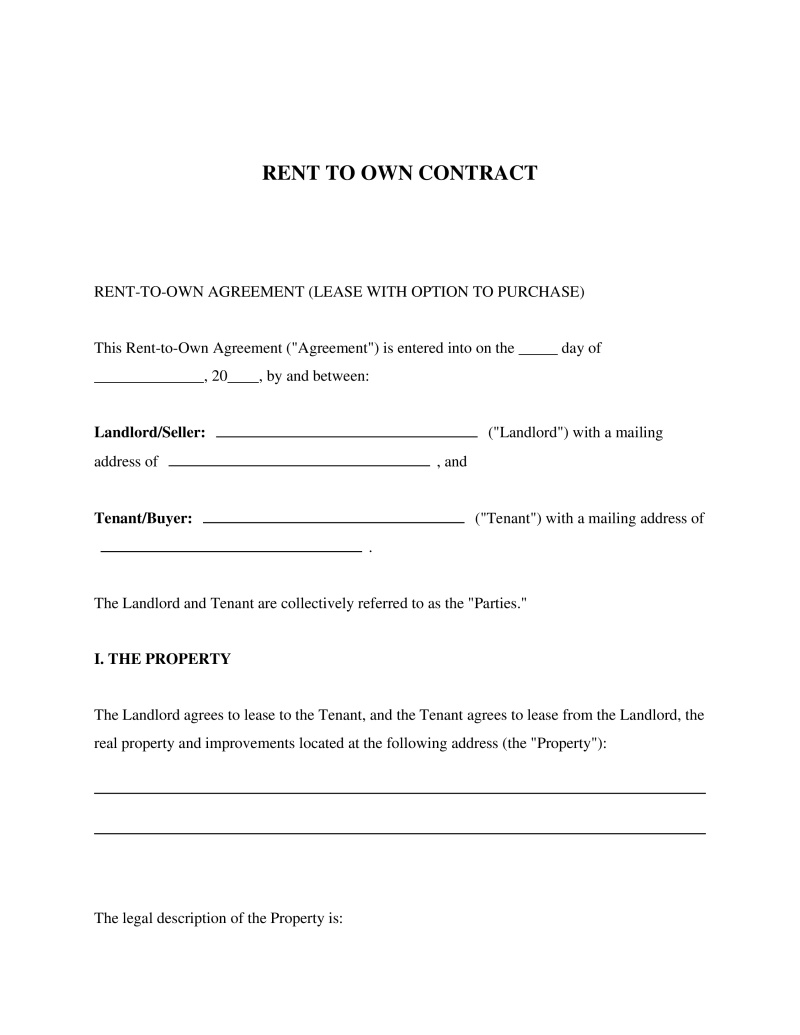
A Rent-to-Own Contract Template is a standardized legal document outlining an agreement where a tenant leases a property with an included option, or sometimes an obligation, to purchase it at a predetermined future date.
Property Type
Select the property type involved in this agreement.
Provide details if 'Other' was selected.
Table of Contents
What is a Rent-to-Own Contract Template?
A rent-to-own contract template is a standardized legal document that outlines an agreement where a tenant rents a property with the option, or in some cases the obligation, to purchase it at a later date. This type of agreement provides a pathway to homeownership for individuals who may not immediately qualify for a traditional mortgage, while also offering property owners a broader pool of potential buyers. It serves as a comprehensive framework, detailing the terms of both the rental period and the subsequent purchase option, thereby establishing clear expectations and responsibilities for both parties involved.
Legal Requirements and Validity
For a rent-to-own contract to be legally valid and enforceable, it must adhere to fundamental principles of contract law and often specific real estate regulations. These agreements typically involve two distinct components: a standard lease agreement and an option to purchase agreement. The clarity and comprehensiveness of the terms are paramount to prevent future disputes.
Key elements generally required for a valid rent-to-own contract include:
- Clear Identification of Parties - The full legal names and contact information of both the landlord/seller and the tenant/buyer must be accurately stated.
- Property Description - A precise legal description of the property, including its address, parcel number, and any relevant boundaries, is essential to avoid ambiguity.
- Rental Terms - Details regarding the monthly rent amount, due date, late fees, lease duration, and responsibilities for maintenance and utilities during the rental period.
- Option Fee - The non-refundable fee paid by the tenant for the exclusive right to purchase the property, along with its amount and whether it will be credited towards the purchase price.
- Purchase Price - The agreed-upon price at which the tenant can buy the property, or a clear methodology for determining the price, such as an appraisal at the time of purchase.
- Option Period - The specific timeframe during which the tenant can exercise their right to purchase the property.
- Terms of Exercise - The precise procedure the tenant must follow to formally exercise the purchase option, including notice requirements.
- Financing Contingencies - Any conditions related to the tenant's ability to secure financing, if applicable.
- Signatures and Dates - All parties must sign and date the agreement, often requiring witnesses or notarization depending on state law, to confirm their consent and intent to be bound by the terms.
Rights and Obligations of Parties Involved
A rent-to-own contract establishes a unique set of rights and obligations for both the property owner (seller/landlord) and the prospective buyer (tenant). Understanding these responsibilities is crucial for a smooth transaction and to protect the interests of each party.
The property owner's primary obligations and rights typically include:
- Property Maintenance - During the rental period, the landlord generally remains responsible for major structural repairs and ensuring the property meets habitability standards, unless otherwise specified in the agreement.
- Honoring the Option - The seller is obligated to sell the property to the tenant if the tenant chooses to exercise the purchase option within the agreed timeframe and according to the contract terms.
- Receiving Rent and Option Fee - The landlord has the right to collect timely rent payments and the non-refundable option fee as stipulated in the rent to own contract.
- Forfeiture Rights - If the tenant defaults on rent or fails to exercise the option, the landlord typically retains the option fee and any accumulated rent premiums, and the tenant loses the right to purchase.
- Disclosure Requirements - Sellers must comply with all mandated disclosures, such as lead-based paint hazards for older homes.
The tenant's primary obligations and rights typically include:
- Timely Rent Payments - The tenant must pay rent on time, which often includes a premium amount that may or may not be credited towards the purchase price.
- Property Maintenance - Tenants are usually responsible for routine maintenance and minor repairs, similar to a standard rental agreement, and must maintain the property in good condition.
- Exercising the Option - The tenant has the right, but not the obligation, to purchase the property within the specified option period by following the contract's exercise procedures.
- Forfeiture Risk - If the tenant fails to exercise the option or defaults on the lease terms, they typically forfeit the option fee and any rent premiums.
- Right to Inspect - The tenant usually has the right to conduct inspections and appraisals before committing to the purchase.
How to Complete a Rent-to-Own Contract Template
Completing a rent-to-own contract template requires careful attention to detail to ensure all legal and financial aspects are accurately addressed for both parties.
- Gather Essential Information - Begin by collecting all necessary details, including the full legal names and current addresses of both the seller and the prospective buyer. You will also need the property's complete legal description, the desired rental term, and the proposed purchase price. Ensure all parties have valid identification ready for verification purposes.
- Define Rental Terms Clearly - Specify the monthly rent amount, the due date for payments, and any applicable late fees. Clearly outline the duration of the lease period and determine who will be responsible for utilities, property taxes, and maintenance during this time. It is also crucial to state whether a portion of the monthly rent will be credited towards the eventual purchase price.
- Establish Purchase Option Details - Determine the non-refundable option fee the tenant will pay for the exclusive right to purchase the property. Clearly state the agreed-upon purchase price or the method for calculating it (e.g., a future appraisal). Define the exact option period, which is the timeframe during which the tenant can choose to buy the property.
- Outline Exercise and Closing Procedures - Detail the precise steps the tenant must take to formally exercise their option to purchase, including any required written notice and deadlines. Include provisions for financing contingencies, outlining what happens if the tenant cannot secure a mortgage. Specify the target closing date and the responsibilities of each party leading up to the closing.
- Include Contingencies and Disclosures - Add any relevant contingencies, such as a satisfactory home inspection or appraisal, that must be met before the purchase is finalized. Ensure all mandatory disclosures, such as lead-based paint warnings for properties built before 1978, are included and acknowledged by both parties. Review local and state laws for any additional required disclosures.
- Review, Sign, and Distribute - Thoroughly review the entire completed rent-to-own contract with legal counsel to ensure accuracy and compliance with all applicable laws. Once reviewed, all parties must sign and date the document. Depending on local regulations, the contract may need to be witnessed or notarized. Provide each party with a signed copy for their records.
Applicable Federal and State Laws
Rent-to-own contracts, while often governed by state-specific real estate and landlord-tenant laws, are also subject to certain federal regulations that ensure fair practices and consumer protection.
Federal Statutes
Several federal laws govern this document type and related housing practices:
- Fair Housing Act - Prohibits discrimination in housing based on race, color, national origin, religion, sex, familial status, or disability, ensuring equal opportunity in all housing-related transactions, including rent-to-own agreements (42 U.S.C. § 3601 et seq.).
- Lead-Based Paint Disclosure Requirements - Mandates that sellers and landlords of housing built before 1978 disclose known lead-based paint hazards and provide tenants/buyers with an EPA-approved pamphlet on lead poisoning prevention (42 U.S.C. § 4852d).
- Real Estate Settlement Procedures Act (RESPA) - Requires lenders and mortgage brokers to provide disclosures to borrowers regarding the nature and costs of the real estate settlement process, which may become relevant if the rent-to-own transitions to a financed purchase (12 U.S.C. § 2601 et seq.).
- Truth in Lending Act (TILA) - Aims to protect consumers in credit transactions by requiring clear disclosure of key terms of the lending arrangement, which could apply if the rent-to-own agreement is structured as a credit sale (15 U.S.C. § 1601 et seq.).
State Laws and Requirements
State laws play a significant role in defining the specifics of rent-to-own contracts, often varying considerably from one jurisdiction to another. These laws typically address:
- Uniform Residential Landlord and Tenant Act (URLTA) - Many states have adopted versions of this model act, which establishes standard rights and responsibilities for landlords and tenants, including provisions on lease agreements, security deposits, and eviction procedures, all of which can impact the rental phase of a rent-to-own contract.
- Statute of Frauds - Requires that contracts for the sale of real estate, or contracts that cannot be performed within one year, must be in writing to be enforceable. This universally applies to rent-to-own agreements due to their nature as real estate transactions.
- Consumer Protection Laws - State consumer protection statutes may regulate certain aspects of rent-to-own agreements, particularly concerning fairness in contract terms and disclosures, to prevent predatory practices.
- Recording Requirements - Some states may require that the option to purchase, or even the entire rent-to-own contract, be recorded in public land records to provide constructive notice to third parties and protect the tenant's interest in the property.
- Eviction Procedures - State landlord-tenant laws dictate the specific legal processes that must be followed for eviction, even in a rent-to-own scenario, if the tenant defaults on the rental portion of the agreement.
- Security Deposit and Rent Credit Regulations - States often have specific rules regarding the maximum amount of security deposits, how they must be held, and the conditions under which they are returned. Similarly, state laws may influence how rent premiums intended for purchase credit are treated.
Penalties for non-compliance with these laws can range from monetary fines and rescission of the contract to more severe legal consequences, depending on the nature and severity of the violation. For example, failure to disclose lead-based paint hazards can result in significant penalties under federal law, while violations of state landlord-tenant laws might lead to double damages for wrongfully withheld security deposits or inability to enforce eviction.
Risks and Considerations
While rent-to-own contracts offer distinct advantages, both parties should be fully aware of the inherent risks and considerations before entering such an agreement. These contracts are complex and carry different implications than standard leases or outright property purchases.
For the tenant/buyer, significant risks and considerations include:
- Forfeiture of Funds - If the tenant fails to exercise the purchase option or defaults on the lease terms, they typically lose the non-refundable option fee and any accumulated rent premiums, which can be a substantial financial loss.
- Property Value Changes - The agreed-upon purchase price might be higher than the property's market value at the time the option is exercised, especially in a declining market, potentially leading to overpaying for the home.
- Inability to Secure Financing - Despite the initial intention, the tenant may still be unable to qualify for a mortgage at the end of the option period, resulting in the loss of the option and related payments.
- Seller Default - The seller might encounter financial difficulties, such as foreclosure, during the lease term, which could jeopardize the tenant's option to purchase if the agreement is not properly recorded or protected.
- Maintenance Responsibilities - While tenants may invest in property improvements, they do not build equity until the purchase is complete, and major repair costs during the rental period might fall on them without ownership benefits.
For the landlord/seller, key risks and considerations include:
- Market Value Fluctuations - If property values increase significantly during the option period, the seller may be obligated to sell at a lower, pre-determined price, missing out on potential profits.
- Tenant Default - A tenant's failure to pay rent or maintain the property can lead to costly eviction proceedings and potential damage to the property, delaying the ability to sell to another buyer.
- Limited Flexibility - The existence of a rent-to-own contract restricts the seller's ability to market the property to other potential buyers during the option period, regardless of changing market conditions.
- Tax Implications - The IRS may view rent-to-own agreements as installment sales, which can have complex tax implications that differ from standard rental income or capital gains.
- Legal Complexities - Drafting and enforcing a rent-to-own contract requires a thorough understanding of landlord-tenant and real estate laws, and errors can lead to expensive legal disputes.
Frequently Asked Questions
Not the form you're looking for?
Try our legal document generator to create a custom document
Disclaimer: The templates available on this website are provided for general informational purposes only and do not constitute legal advice. They are not intended to be, and should not be interpreted as, compliant with any specific legal, regulatory, or privacy requirements. These templates are not a replacement for professional legal guidance and should not be relied upon for any particular matter or circumstance. Users are strongly encouraged to seek advice from a qualified attorney licensed in their jurisdiction before using, modifying, or relying on any template.
All templates are provided on an "as is," "with all faults," and "as available" basis. The provider disclaims any and all warranties of any kind, whether express, implied, statutory, or otherwise, including without limitation warranties of merchantability, fitness for a particular purpose, title, or non-infringement.
LegalTemplates.com makes no guarantees or representations regarding the accuracy, completeness, expected outcomes, or reliability of the materials contained in these templates or any materials referenced or linked from them.