Land Lease Agreement
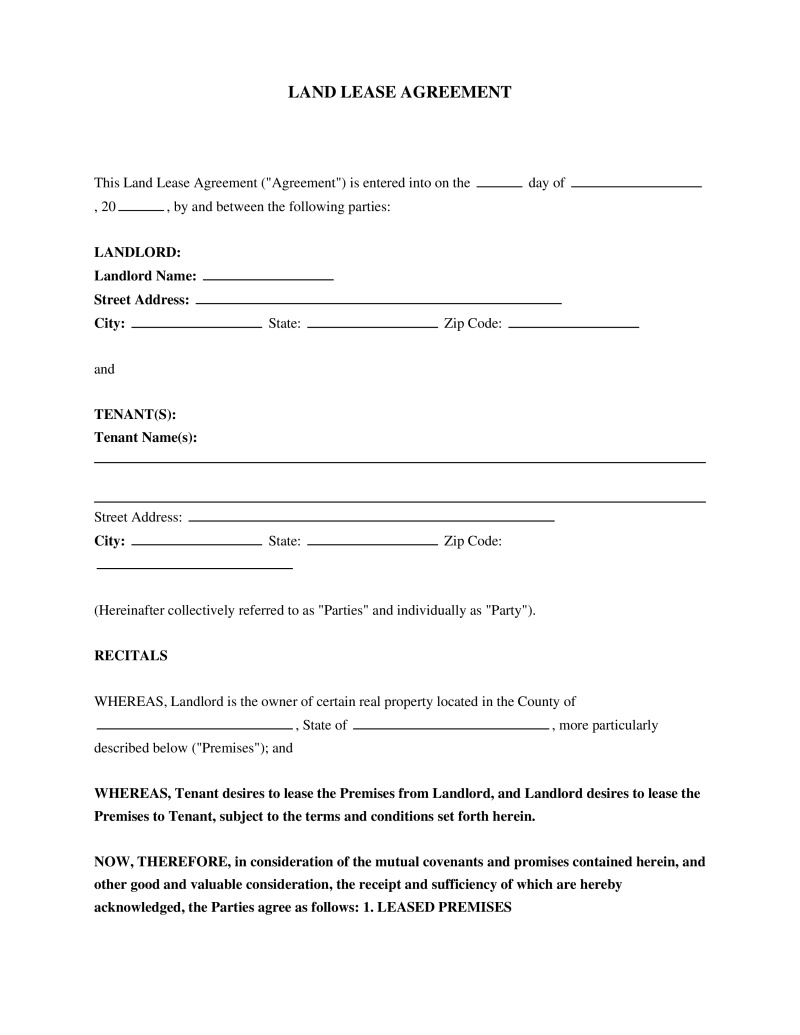
A Land Lease Agreement is a legal contract granting a tenant the right to use land for a specified period in exchange for rent, without transferring ownership.
Lease Purpose
Select the main intended use for the leased land. This will tailor the agreement to your scenario.
Provide details if the land will be used for a purpose not listed above.
Table of Contents
What is a Land Lease Agreement?
A land lease agreement, also known as a ground lease, is a contractual arrangement where a landowner, the lessor, agrees to lease a parcel of land to a tenant, the lessee, for a specified period. The lessee typically uses the land for various purposes, such as constructing a building, agricultural activities, or commercial development, while the lessor retains ownership of the underlying land. This type of agreement is commonly employed in commercial real estate, agriculture, and situations where a developer wishes to build on land without purchasing it outright.
Legal Requirements and Validity
For a land lease agreement to be legally binding and enforceable, it must meet several fundamental requirements. These requirements ensure clarity, protect the interests of both parties, and comply with real property law principles. Failure to adhere to these legal stipulations can render the agreement void or subject to challenge.
- Written Form - Most jurisdictions, through the Statute of Frauds, require any lease of real property for a term exceeding one year to be in writing. An oral agreement for a long-term land lease is generally unenforceable.
- Identification of Parties - The agreement must clearly name and identify both the lessor (landowner) and the lessee (tenant) with their full legal names and addresses.
- Precise Land Description - The leased land must be described with sufficient specificity to identify it uniquely. This often involves a legal description, such as a metes and bounds description, plat map reference, or parcel identification number.
- Lease Term - The duration of the lease must be clearly stated, including the commencement and termination dates. Land leases can range from short-term (e.g., a few years) to very long-term (e.g., 99 years).
- Rent Amount and Payment Terms - The agreement must specify the amount of rent, the frequency of payments (e.g., monthly, annually), and the method of payment. It should also outline any provisions for rent escalation or adjustments over the lease term.
- Permitted Use of Land - The agreement must define the specific purposes for which the lessee is allowed to use the land. This is crucial as it restricts the lessee from engaging in unauthorized activities.
- Signatures - Both the lessor and the lessee, or their duly authorized representatives, must sign the land lease agreement. Depending on state law, witnesses or notarization may also be required for long-term leases or those intended for recording.
- Delivery - The signed agreement must be delivered to both parties to signify their mutual assent and the agreement's effectiveness.
Rights and Obligations of Parties Involved
A land lease agreement meticulously delineates the rights and responsibilities of both the landowner (lessor) and the tenant (lessee). These provisions are critical for maintaining a harmonious relationship and ensuring the land is used and managed according to the agreed terms. Understanding these roles is paramount for all involved parties.
Lessor's Rights and Obligations
The landowner, as the lessor, holds specific rights over their property and carries certain duties throughout the lease term.
- Right to Receive Rent - The lessor has the fundamental right to receive timely rent payments as stipulated in the agreement.
- Right to Enforce Lease Terms - The lessor can enforce all covenants and conditions of the lease, including restrictions on land use, maintenance obligations, and insurance requirements.
- Right to Reversion - Upon the expiration or termination of the lease, the lessor has the right to regain full possession and control of the leased land.
- Obligation to Provide Quiet Enjoyment - The lessor must ensure the lessee's quiet and undisturbed possession and use of the land, free from interference by the lessor or those claiming through them, provided the lessee abides by the lease terms.
- Obligation to Disclose Known Defects - In some jurisdictions, the lessor may have an obligation to disclose known latent defects or environmental hazards on the land that could affect the lessee's use.
- Obligation to Adhere to Lease Terms - The lessor must comply with all their own obligations outlined in the land lease agreement.
Lessee's Rights and Obligations
The tenant, as the lessee, acquires specific rights to use the land and assumes responsibilities for its management and condition.
- Right to Use and Possess Land - The lessee has the exclusive right to use and possess the leased land for the purposes specified in the agreement for the duration of the lease term.
- Right to Erect Improvements - Unless restricted by the lease, the lessee typically has the right to construct buildings or make other improvements on the land, which often revert to the lessor at the end of the lease term.
- Right to Assign or Sublease - Subject to the lease terms and often with the lessor's consent, the lessee may have the right to assign their interest in the lease or sublease a portion of the land to another party.
- Obligation to Pay Rent - The primary obligation of the lessee is to pay rent punctually and in the agreed-upon amount.
- Obligation to Maintain the Land - The lessee is generally responsible for maintaining the leased land in good condition, preventing waste, and complying with all applicable laws and regulations related to its use.
- Obligation to Adhere to Permitted Use - The lessee must use the land only for the purposes explicitly allowed by the land lease agreement and must not engage in any prohibited activities.
- Obligation to Return Land - At the end of the lease term, the lessee must surrender the land to the lessor in the condition specified in the agreement, often requiring removal of their improvements or leaving them for the lessor.
How to Complete a Land Lease Agreement
Drafting a comprehensive land lease agreement requires careful consideration of numerous details to ensure all aspects of the arrangement are clearly defined and legally sound. Following a structured process helps to create a robust and enforceable document that protects both parties.
- Identify Parties and Property Details - Begin by accurately identifying the full legal names and contact information for both the lessor and the lessee. Crucially, include a precise legal description of the land being leased, such as lot and block numbers, metes and bounds descriptions, or a parcel identification number. This ensures there is no ambiguity about the exact property involved in the agreement.
- Define Lease Term and Rent Structure - Clearly state the start and end dates of the lease. For long-term leases, consider provisions for lease renewal or extension. Establish the rent amount, payment frequency (e.g., monthly, annually), due dates, and acceptable payment methods. Include details regarding any late payment penalties or grace periods. It is also important to specify if and how rent will escalate over the lease term, such as through fixed increases or adjustments tied to an index like the Consumer Price Index (CPI).
- Specify Permitted Use and Restrictions - Articulate in detail the exact purposes for which the lessee is allowed to use the land. This might include agricultural farming, commercial development, or recreational activities. Explicitly list any prohibited uses or activities to prevent disputes. Additionally, outline any zoning or environmental regulations that the lessee must comply with during their tenure.
- Outline Maintenance, Improvements, and Insurance - Define who is responsible for the maintenance and upkeep of the land and any existing structures. If the lessee plans to construct improvements, detail the approval process, ownership of those improvements during and after the lease term (e.g., reversion to lessor, removal by lessee), and any demolition requirements. Stipulate insurance requirements, including liability insurance, and specify who is responsible for paying property taxes and utilities.
- Include Default, Indemnification, and Termination Clauses - Develop clear provisions outlining what constitutes an event of default by either party, such as non-payment of rent or breach of a material covenant. Define the remedies available to the non-defaulting party, including cure periods, rights to terminate the lease, and rights to seek damages. Include indemnification clauses to protect parties from liabilities arising from the other's actions. Detail the procedures for early termination, notice requirements, and the disposition of improvements upon lease expiration or termination.
- Review, Sign, and Record the Agreement - Before signing, both parties should thoroughly review the entire agreement, preferably with legal counsel, to ensure all terms are understood and acceptable. Once finalized, all parties must sign the document. For long-term leases, it is often legally required or highly advisable to have the agreement notarized and recorded in the county land records. Recording provides public notice of the leasehold interest, protecting the lessee's rights against subsequent claims on the property.
Required Elements
A legally sound land lease agreement must incorporate several key components to ensure clarity, enforceability, and the protection of both the lessor's and lessee's interests. These elements form the foundational structure of the contractual relationship.
- Identification of Parties - Full legal names and contact information for the lessor and lessee.
- Precise Land Description - A clear and unambiguous legal description of the leased property.
- Lease Term - The specific duration of the lease, including start and end dates.
- Rent Amount and Payment Schedule - The agreed-upon rent, payment frequency, due dates, and any late fee provisions.
- Permitted Use of Land - Explicit statements detailing how the lessee may use the property.
- Maintenance and Repair Responsibilities - Clear allocation of duties for upkeep of the land and any improvements.
- Insurance Requirements - Specification of required insurance coverage and responsible party for premiums.
- Taxes and Utilities - Designation of responsibility for property taxes and utility payments.
- Default and Remedies - Defined conditions constituting a breach of contract and the actions available to the non-defaulting party.
- Termination Provisions - Clauses outlining conditions for early termination, notice periods, and procedures.
- Governing Law - Identification of the state or jurisdiction whose laws will govern the interpretation and enforcement of the agreement.
- Signatures - Duly executed signatures of all parties involved in the agreement.
- Notarization - Required in some jurisdictions for leases exceeding a certain term or for recording purposes.
Applicable Federal and State Laws
Land lease agreements are subject to a complex interplay of federal and state laws, which govern everything from environmental protection to basic contract enforceability. Compliance with these statutes is crucial to the validity and ongoing operation of the lease.
Federal Statutes
Several federal laws may impact land lease agreements, particularly concerning environmental matters or specific land uses:
- Comprehensive Environmental Response, Compensation, and Liability Act (CERCLA) - This act, also known as Superfund, establishes liability for the cleanup of hazardous waste sites. Both lessors and lessees can potentially be held liable for environmental contamination on leased land, making due diligence critical (42 U.S.C. § 9601 et seq.).
- Clean Water Act - Regulates the discharge of pollutants into U.S. waters and establishes water quality standards. Land leases involving activities near wetlands or other navigable waters must comply with its provisions, including obtaining necessary permits (33 U.S.C. § 1251 et seq.).
- Endangered Species Act - Protects endangered and threatened species and their habitats. Lessees undertaking development or land-altering activities must ensure their actions do not jeopardize protected species or critical habitats (16 U.S.C. § 1531 et seq.).
- Agricultural Adjustment Act - While primarily dealing with agricultural subsidies and production, this act and related federal farm bills can influence the terms and viability of land leases for agricultural purposes by affecting market conditions and support programs (7 U.S.C. § 601 et seq.).
State Laws and Requirements
State laws primarily govern the creation, enforcement, and termination of land leases, as real property law is largely a matter of state jurisdiction:
- Statute of Frauds - Almost all states have a Statute of Frauds requiring leases of real property for a term exceeding one year to be in writing to be legally enforceable (e.g., Cal. Civ. Code § 1624).
- Recording Acts - State recording statutes dictate the procedures for recording land leases (especially long-term ones) in county land records. Recording provides constructive notice to third parties of the lessee's interest in the property, protecting their rights (e.g., Tex. Prop. Code Ann. § 13.001).
- State Environmental Protection Laws - Beyond federal mandates, each state has its own set of environmental laws governing land use, waste management, pollution control, and remediation, which lessees must rigorously adhere to (e.g., New York Environmental Conservation Law).
- Property and Contract Law - General principles of state property law (governing ownership, possession, and transfer of real estate) and contract law (governing agreement formation, interpretation, and breach) underpin all land lease agreements.
- Agricultural Lease Statutes - Several states have specific statutes addressing leases of agricultural land, which may include provisions regarding notice for termination, crop liens, and compensation for improvements (e.g., Iowa Code Chapter 562).
Penalties for Non-Compliance
Failure to comply with the terms of a land lease agreement or applicable laws can result in significant legal and financial consequences for both the lessor and the lessee.
- Breach of Contract - If either party violates a material term of the lease, the non-breaching party can sue for damages (financial compensation for losses incurred), specific performance (a court order to fulfill the contract terms), or termination of the lease.
- Eviction/Forfeiture - If the lessee defaults on rent payments or other significant lease obligations, the lessor typically has the right to initiate eviction proceedings to regain possession of the land, potentially forfeiting any improvements made by the lessee.
- Environmental Fines and Liabilities - Non-compliance with federal or state environmental laws can lead to substantial fines, cleanup costs, and even criminal penalties. Both the lessor and lessee may face joint and several liability for environmental contamination.
- Loss of Rights - Failure to properly record a long-term lease in accordance with state recording acts could result in the lessee's interest being subordinate to later-recorded interests or claims.
- Invalidation of Lease - If the agreement does not meet fundamental legal requirements, such as being in writing when required by the Statute of Frauds, a court may deem the lease invalid and unenforceable.
Frequently Asked Questions
Not the form you're looking for?
Try our legal document generator to create a custom document
Disclaimer: The templates available on this website are provided for general informational purposes only and do not constitute legal advice. They are not intended to be, and should not be interpreted as, compliant with any specific legal, regulatory, or privacy requirements. These templates are not a replacement for professional legal guidance and should not be relied upon for any particular matter or circumstance. Users are strongly encouraged to seek advice from a qualified attorney licensed in their jurisdiction before using, modifying, or relying on any template.
All templates are provided on an "as is," "with all faults," and "as available" basis. The provider disclaims any and all warranties of any kind, whether express, implied, statutory, or otherwise, including without limitation warranties of merchantability, fitness for a particular purpose, title, or non-infringement.
LegalTemplates.com makes no guarantees or representations regarding the accuracy, completeness, expected outcomes, or reliability of the materials contained in these templates or any materials referenced or linked from them.