Kinship Care Agreement
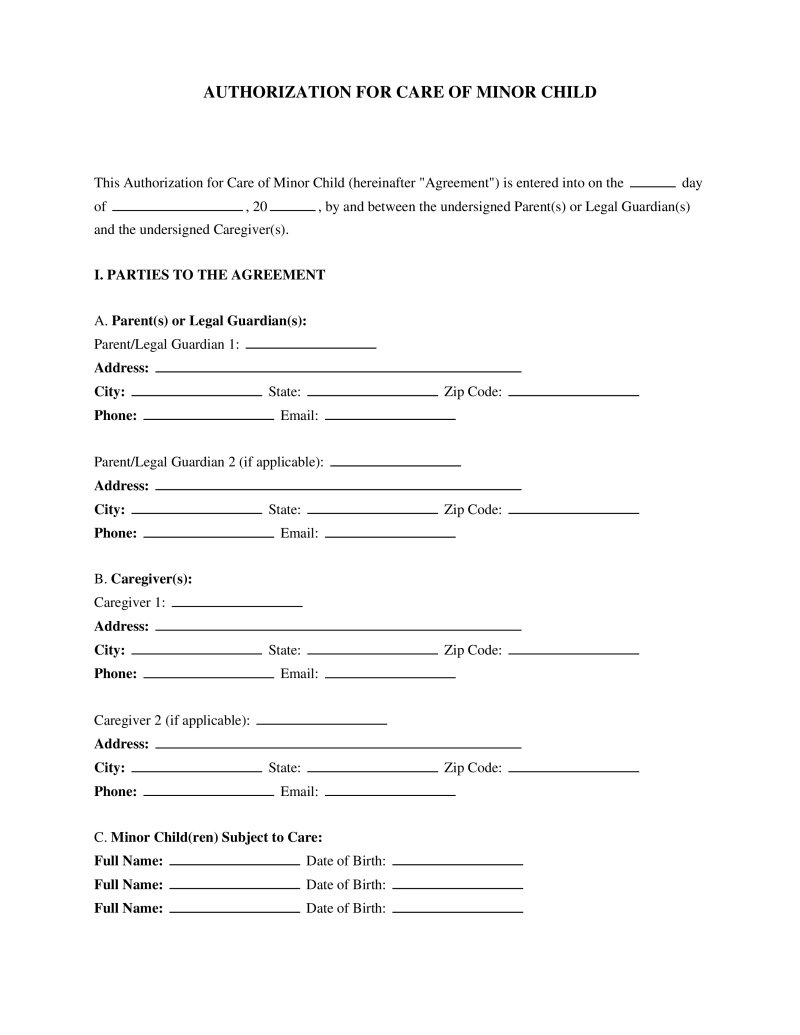
A Kinship Care Agreement is a legal document that formalizes the private arrangement for a child's care by a relative or close family friend, often outlining responsibilities and financial support.
Care Type
Select whether the arrangement is for a defined period or ongoing/indefinite.
Table of Contents
What is a Kinship Care Agreement?
A Kinship Care Agreement is a voluntary, legally recognized document outlining the terms and conditions for a child's care by a relative or close family friend, often referred to as a kinship caregiver. Its primary purpose is to provide a stable and nurturing environment for a child when their biological parents are temporarily unable to provide care, without necessarily involving the formal child welfare system. These agreements typically detail responsibilities, decision-making authority, visitation schedules, and financial arrangements, serving as a structured framework for the child's well-being outside the traditional parental home.
Legal Requirements and Validity
The legal validity and specific requirements for a Kinship Care Agreement vary significantly by jurisdiction, as there is no single federal standard governing these arrangements. Generally, for an agreement to be considered legally enforceable, it must meet basic contract law principles and often specific state statutes related to child welfare or family law. Key elements contribute to the enforceability and recognition of such an agreement:
- Written Format - The agreement must be in writing to clearly delineate the terms and responsibilities of all parties involved, minimizing ambiguity and providing tangible proof of the arrangement.
- Voluntary Consent - All parties, including the biological parents and the kinship caregiver, must enter into the agreement voluntarily and without coercion, indicating their informed consent to its provisions.
- Best Interest of the Child - The primary consideration in any Kinship Care Agreement is the child's best interest, ensuring the arrangement promotes their safety, well-being, and development.
- Clear Terms and Conditions - The agreement must explicitly state the duration of care, the scope of the caregiver's authority (e.g., medical, educational), visitation schedules for parents, and any financial support arrangements.
- Signatures of All Parties - The document must be signed by all biological parents (or legal guardians) and the kinship caregiver, signifying their acceptance and commitment to the terms.
- Notarization - While not always legally required, having the agreement notarized can strengthen its legal standing by verifying the identities of the signatories and the authenticity of their signatures.
- Compliance with State Law - The agreement must align with applicable state laws regarding child custody, guardianship, and parental rights, as some states have specific provisions for kinship care or require judicial approval for certain authorities.
Rights and Obligations of Parties Involved
A Kinship Care Agreement establishes a framework of rights and obligations for the child, the biological parents, and the kinship caregiver. These provisions are crucial for ensuring clarity and accountability among all parties and for safeguarding the child's welfare.
- Kinship Caregiver's Rights and Obligations
- Daily Care and Supervision - The primary obligation to provide a safe, stable, and nurturing environment, including food, shelter, clothing, and emotional support.
- Educational Decision-Making - The right to enroll the child in school, access educational records, and make routine decisions regarding the child's education, often requiring specific authorization from parents or court order (Family Educational Rights and Privacy Act - 20 U.S.C. § 1232g).
- Medical Consent - The right to consent to routine and emergency medical care for the child, which typically requires explicit authorization from the parents or a court order. Access to medical records is governed by HIPAA and often requires specific authorization (45 CFR Part 164).
- Access to Support Services - The right to seek and potentially receive financial assistance, childcare subsidies, or other support services available to kinship caregivers through state or federal programs (e.g., Title IV-E of the Social Security Act - 42 U.S.C. § 670 et seq.).
- Maintaining Communication - The obligation to facilitate communication and visitation between the child and their biological parents as outlined in the agreement.
- Biological Parents' Rights and Obligations
- Visitation Rights - The right to visit and maintain contact with their child according to the agreed-upon schedule, unless restricted by court order.
- Financial Support - The ongoing obligation to provide financial support for the child's needs, often specified as a regular payment amount within the agreement.
- Major Decision-Making - Retention of the right to make major decisions regarding the child's life, such as non-emergency medical procedures, religious upbringing, or long-term educational plans, unless specifically delegated to the caregiver or limited by court order.
- Reunification Planning - The right to work towards conditions that would allow for the child's return to their care, often with specified goals and timelines.
- Child's Rights
- Safe and Stable Environment - The fundamental right to live in a safe, healthy, and stable home free from abuse or neglect.
- Education and Healthcare - The right to receive appropriate education and necessary medical and dental care.
- Contact with Family - The right to maintain relationships with both biological parents and the kinship caregiver, as appropriate and in their best interest.
Required Elements of a Valid Kinship Care Agreement
For a Kinship Care Agreement to be comprehensive and effective, it should include several key elements that clearly define the scope of the arrangement and the responsibilities of each party:
- Identification of Parties - Full legal names, addresses, and contact information for the child(ren), biological parent(s), and kinship caregiver(s).
- Child's Information - Full legal name, date of birth, and any relevant identifying details for each child covered by the agreement.
- Statement of Intent - A clear declaration of the purpose of the agreement, acknowledging the voluntary nature of the arrangement and the commitment to the child's best interests.
- Duration of Agreement - The specified start date and, if applicable, an end date or conditions under which the agreement will terminate.
- Caregiver Responsibilities - Detailed outline of the daily care, supervision, and decision-making authority granted to the kinship caregiver regarding the child's upbringing, including education, medical care, and extracurricular activities.
- Parental Responsibilities and Rights - Specification of the biological parents' ongoing responsibilities, such as financial contributions, and their retained rights, including visitation schedules and involvement in major decisions.
- Financial Provisions - Clear terms regarding financial support for the child, including who is responsible for what expenses (e.g., food, clothing, medical co-pays, school supplies) and the method and frequency of payments.
- Medical and Educational Authority - Specific authorization for the kinship caregiver to make routine medical decisions, consent to treatments, and access medical and educational records. This often requires additional signed forms for hospitals and schools.
- Visitation Schedule - A detailed plan for parental visitation with the child, including dates, times, locations, and any supervision requirements.
- Communication Protocol - Guidelines for how parents and caregivers will communicate about the child's progress, well-being, and any significant issues.
- Dispute Resolution - A mechanism for resolving disagreements that may arise between the parties, such as mediation or arbitration, before resorting to court intervention.
- Amendment and Termination Clauses - Provisions for how the agreement can be modified, renewed, or terminated, including required notice periods and conditions for termination.
- Signatures and Dates - Signatures of all involved parties (biological parents, kinship caregiver) and the date of signing.
- Notarization - A notary public's seal and signature, which verifies the identities of the signatories.
How to Complete a Kinship Care Agreement
Creating a comprehensive Kinship Care Agreement involves careful consideration and clear communication among all parties to ensure the child's well-being and the clarity of responsibilities.
- Initiate Discussion and Establish Intent - Begin by openly discussing the need for the agreement with the biological parents and the prospective kinship caregiver. Clearly define the reasons for the arrangement, its intended duration, and the shared goal of prioritizing the child's best interests. This initial conversation should establish mutual understanding and commitment before drafting any document.
- Outline Caregiver's Daily Responsibilities and Authority - Detail the specific duties and decision-making authority the kinship caregiver will assume. This includes responsibilities for daily care, supervision, discipline, and routine decisions regarding education and healthcare. Be explicit about the extent of their authority, such as the ability to enroll the child in school or consent to non-emergency medical treatment.
- Define Biological Parents' Ongoing Roles and Support - Clearly articulate the biological parents' continuing responsibilities, including financial contributions for the child's care, clothing, medical expenses, and extracurricular activities. Establish a clear visitation schedule, specifying dates, times, and any conditions for visits. Also, define their retained rights regarding major decisions, such as religious upbringing or long-term educational paths.
- Address Financial Arrangements and Support - Determine how the child's financial needs will be met. This involves specifying any direct financial contributions from the biological parents to the caregiver, outlining responsibilities for health insurance premiums, co-pays, and other significant expenses. Research potential state or federal financial assistance programs available to kinship caregivers to help offset costs.
- Establish Communication and Dispute Resolution Protocols - Develop a plan for regular communication between the parents and caregiver regarding the child's progress, health, and any significant issues. Crucially, include a section outlining how disagreements or disputes will be resolved, such as through mediation, to avoid escalating conflicts and ensure a stable environment for the child.
- Review, Finalize, and Execute the Agreement - Once a draft is complete, all parties should thoroughly review the document, preferably with independent legal counsel, to ensure clarity, fairness, and compliance with state laws. Make any necessary revisions, then have all biological parents and the kinship caregiver sign and date the final agreement. It is highly recommended to have the document notarized to enhance its legal standing.
Federal Statutes
While no single federal law directly establishes a Kinship Care Agreement, several federal statutes impact the rights and responsibilities outlined within such agreements, particularly concerning children's welfare, privacy, and access to services:
- Family Educational Rights and Privacy Act (FERPA) - Protects the privacy of student education records and grants parents certain rights regarding their children's records. Kinship caregivers typically need specific authorization from the biological parents, or a court order granting them educational decision-making authority, to access these records or make educational decisions (20 U.S.C. § 1232g).
- Health Insurance Portability and Accountability Act (HIPAA) - Sets national standards for the protection of protected health information. For kinship caregivers to access a child's medical records or make medical decisions, they usually require specific written authorization from the biological parents, a medical power of attorney, or a court order (45 CFR Part 164).
- Title IV-E of the Social Security Act - Provides federal funding to states for foster care and adoption assistance. Some states extend Title IV-E eligibility to kinship caregivers, offering financial assistance if the child would otherwise be placed in traditional foster care, aiming to keep children with family (42 U.S.C. § 670 et seq.).
- Child Abuse Prevention and Treatment Act (CAPTA) - Provides federal funding to states to support child protection efforts and mandates reporting requirements for suspected child abuse and neglect, which can indirectly affect kinship care arrangements if concerns arise (42 U.S.C. § 5101 et seq.).
State Laws and Requirements
State laws play a significant role in defining the scope and enforceability of Kinship Care Agreements, as family law and child welfare are primarily state jurisdictions. While some states have specific statutes addressing kinship care or caregiver authorizations, others rely on general contract law and existing guardianship or custody statutes.
- Kinship Care Statutes - Many states have enacted specific legislation to define "kinship care" and provide a legal framework for these arrangements, sometimes offering avenues for temporary custody or guardianship that grant caregivers more formal authority (e.g., California Welfare and Institutions Code § 309, Florida Statute § 39.5085).
- Power of Attorney for Minor Children - Several states allow biological parents to grant a non-parent caregiver a temporary power of attorney for a minor child, which can authorize the caregiver to make educational and medical decisions (e.g., Texas Family Code § 34.001 et seq., Uniform Power of Attorney Act, adopted in various forms by many states).
- Educational Consent Laws - State laws often specify who can enroll a child in school and access their records, and many have provisions for non-parent caregivers to obtain this authority through affidavits or court orders.
- Medical Consent Laws - State statutes dictate who can consent to medical treatment for a minor. Kinship caregivers typically require explicit parental consent or a court order to consent to non-emergency medical care.
- Child Support Enforcement - State child support laws and agencies can be utilized to enforce financial support obligations outlined in a Kinship Care Agreement if a parent fails to comply (e.g., Uniform Interstate Family Support Act, adopted by all states).
- Child Welfare Oversight - State child welfare agencies may have policies and programs to support kinship care families, even if the child is not formally in state custody, providing resources or monitoring services.
Penalties for Non-Compliance
Non-compliance with the terms of a Kinship Care Agreement can have various consequences, depending on the specific nature of the breach, the jurisdiction, and whether the agreement was formalized through a court or remains a private contractual arrangement.
- Breach of Contract - If the Kinship Care Agreement is treated as a private contract, a party's failure to adhere to its terms (e.g., failure to provide financial support, denial of visitation) may constitute a breach. The non-breaching party could potentially seek civil remedies, such as monetary damages for financial losses incurred or specific performance to compel compliance.
- Child Welfare Involvement - If a breach of the agreement jeopardizes the child's safety, well-being, or access to essential services (e.g., caregiver neglecting duties, parent failing to provide agreed-upon support leading to hardship), it could lead to an investigation by state child protective services. This may result in the child being removed from the home and placed in formal foster care.
- Legal Action for Enforcement - Parties may petition a court to enforce specific terms of the agreement. For instance, a caregiver might seek a court order for child support payments, or a parent might seek enforcement of visitation rights. If the agreement was previously incorporated into a court order (e.g., a temporary custody order), non-compliance could lead to contempt of court charges.
- Termination of Agreement - Persistent or severe non-compliance by one party, particularly if it undermines the child's best interests, may lead to the other party seeking to terminate the Kinship Care Agreement. This could prompt a request for formal guardianship, a change in custody arrangements, or, in extreme cases, the involvement of the child welfare system.
- Loss of Parental Authority - For biological parents, repeated failure to fulfill their obligations under the agreement, especially concerning financial support or maintaining contact, could be considered by a court in future custody proceedings and potentially lead to a reduction or loss of parental rights.
Frequently Asked Questions
Not the form you're looking for?
Try our legal document generator to create a custom document
Disclaimer: The templates available on this website are provided for general informational purposes only and do not constitute legal advice. They are not intended to be, and should not be interpreted as, compliant with any specific legal, regulatory, or privacy requirements. These templates are not a replacement for professional legal guidance and should not be relied upon for any particular matter or circumstance. Users are strongly encouraged to seek advice from a qualified attorney licensed in their jurisdiction before using, modifying, or relying on any template.
All templates are provided on an "as is," "with all faults," and "as available" basis. The provider disclaims any and all warranties of any kind, whether express, implied, statutory, or otherwise, including without limitation warranties of merchantability, fitness for a particular purpose, title, or non-infringement.
LegalTemplates.com makes no guarantees or representations regarding the accuracy, completeness, expected outcomes, or reliability of the materials contained in these templates or any materials referenced or linked from them.