LLC Operating Agreement
Create LLC Operating Agreement
LLC Operating Agreement
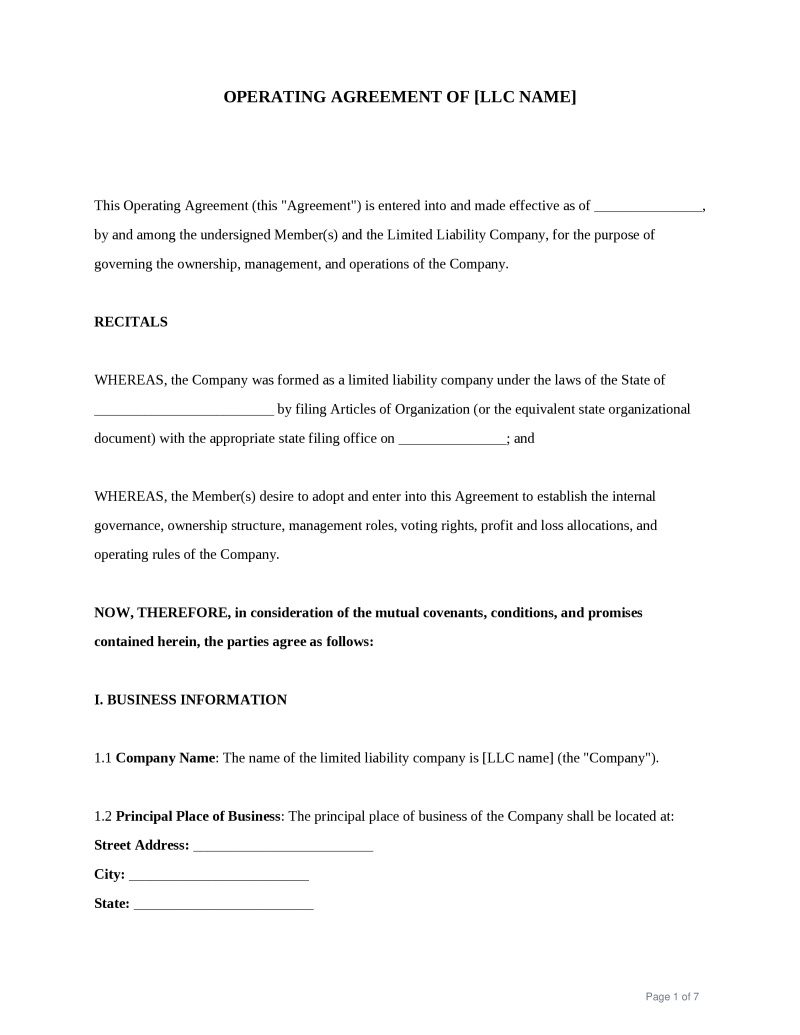
A Limited Liability Company (LLC) Operating Agreement is a foundational legal document that delineates the internal governance, operational procedures, and the respective rights and responsibilities of its members.
Answer the question(s) below to create your LLC Operating Agreement
Llc Status
This helps tailor provisions about initial organization, ratification of prior actions, and effective governance.
Table of Contents
What is a LLC Operating Agreement?
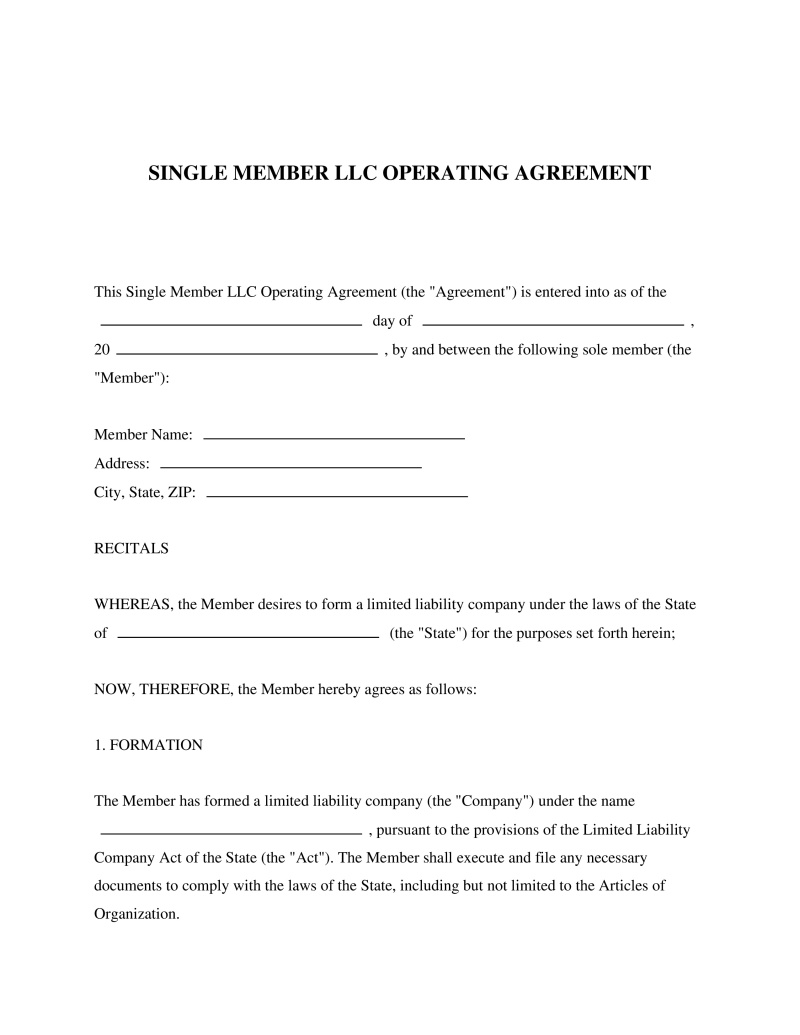
A Limited Liability Company (LLC) Operating Agreement is a foundational internal document that outlines the ownership, management, and operational procedures for an LLC. It functions as a contract among the LLC members, or between the sole member and the LLC itself in a single-member entity. The primary purpose of this agreement is to define the rights and responsibilities of each member, establish the company's governance structure, and protect the limited liability status of its owners.
Purpose and Importance
While many states do not legally mandate an LLC Operating Agreement, its creation is considered critical for the effective functioning and legal protection of the business. This document provides a framework for how the business will be run, addressing potential disputes and clarifying member roles before issues arise. Without a customized agreement, an LLC may be subject to the default rules of the state's LLC statutes, which might not align with the members' intentions or the specific needs of the business.
Key reasons for establishing an LLC Operating Agreement include:
- Defining Member Contributions - Specifies the initial capital, property, or services each member contributes to the LLC.
- Establishing Profit and Loss Distributions - Outlines how the company's profits and losses will be allocated among members, which may not always be proportionate to ownership percentages.
- Clarifying Management Structure - Determines whether the LLC will be member-managed (all members participate in daily operations) or manager-managed (appointed managers oversee operations).
- Setting Voting Rights and Procedures - Details how decisions are made, including the voting power of each member and the thresholds required for significant actions.
- Outlining Transfer of Ownership Interests - Provides rules for how members can sell or transfer their ownership shares, including buy-sell provisions and rights of first refusal.
- Addressing Dissolution Procedures - Specifies the conditions under which the LLC might be dissolved and the process for winding up its affairs.
- Protecting Limited Liability Status - Helps reinforce the legal separation between the members and the LLC, which can be crucial in upholding the limited liability shield in legal challenges.
Key Provisions of an Operating Agreement
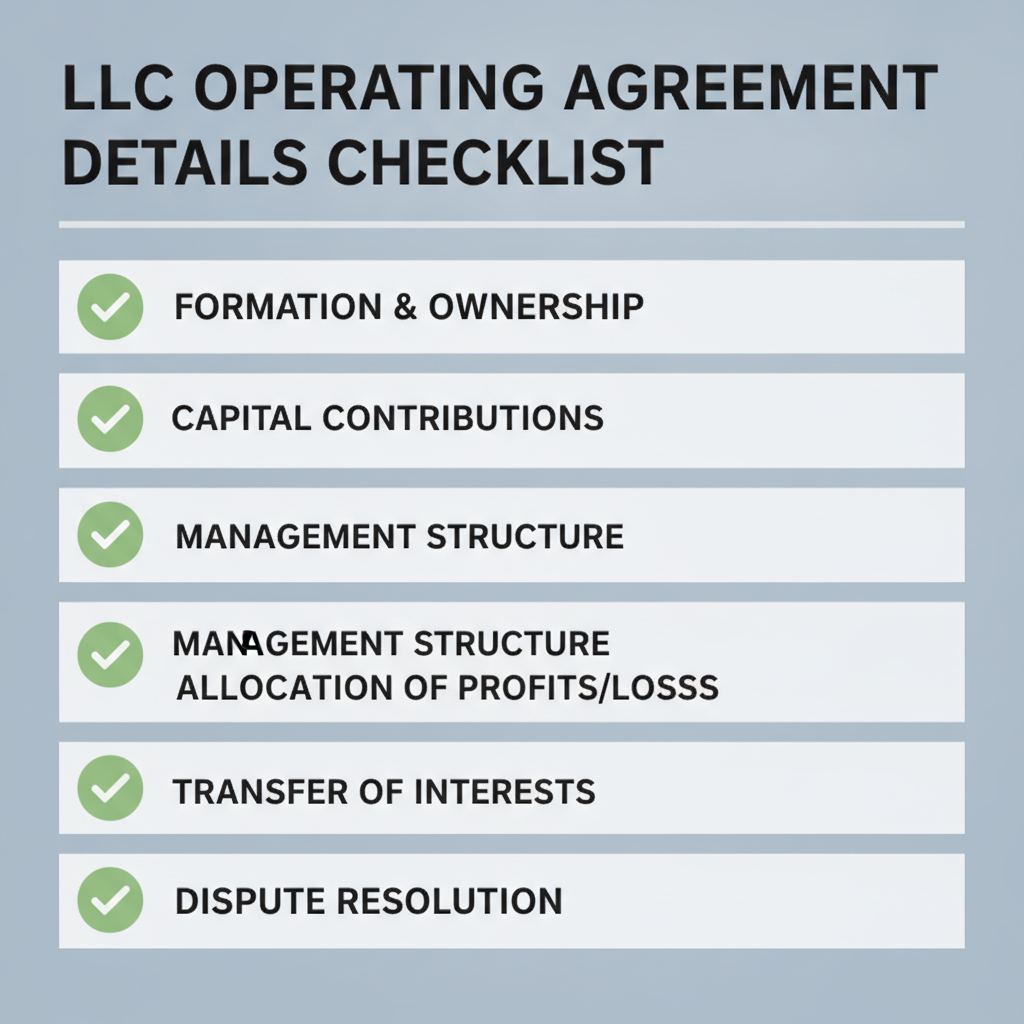
An LLC Operating Agreement typically includes a comprehensive set of provisions designed to govern the internal affairs of the company. These provisions ensure clarity and provide a roadmap for various business scenarios, from daily operations to significant structural changes. The specific content can vary widely depending on the number of members, the nature of the business, and the complexity desired by the owners.
Common elements found in an LLC Operating Agreement often include:
- Company Name and Purpose - Formal identification of the LLC and a statement of its business activities.
- Registered Agent and Office - Details of the official contact person and address for legal and tax purposes.
- Member Information - A list of all members, their ownership percentages, and their initial capital contributions.
- Allocation of Profits and Losses - The method for distributing income, expenses, and tax implications among members.
- Management Structure - Whether the LLC is member-managed or manager-managed, and the roles, responsibilities, and authority of each.
- Voting Rights - How many votes each member has and what percentage of votes is required for various decisions.
- Meetings of Members - Provisions for regular or special meetings, notice requirements, and quorum rules.
- Capital Calls - Procedures for requiring additional capital contributions from members if needed.
- Transfer of Membership Interests - Rules governing the sale, transfer, or assignment of a member's interest, including restrictions and valuation methods.
- Buy-Sell Provisions - Agreements on how a member's interest will be handled upon death, disability, retirement, or withdrawal.
- Dissolution Procedures - The conditions and process for winding down the LLC, distributing assets, and settling debts.
- Indemnification - Protection for members and managers from liability for actions taken on behalf of the LLC.
- Amendments - The process by which the operating agreement itself can be changed.
Single-Member vs. Multi-Member LLCs
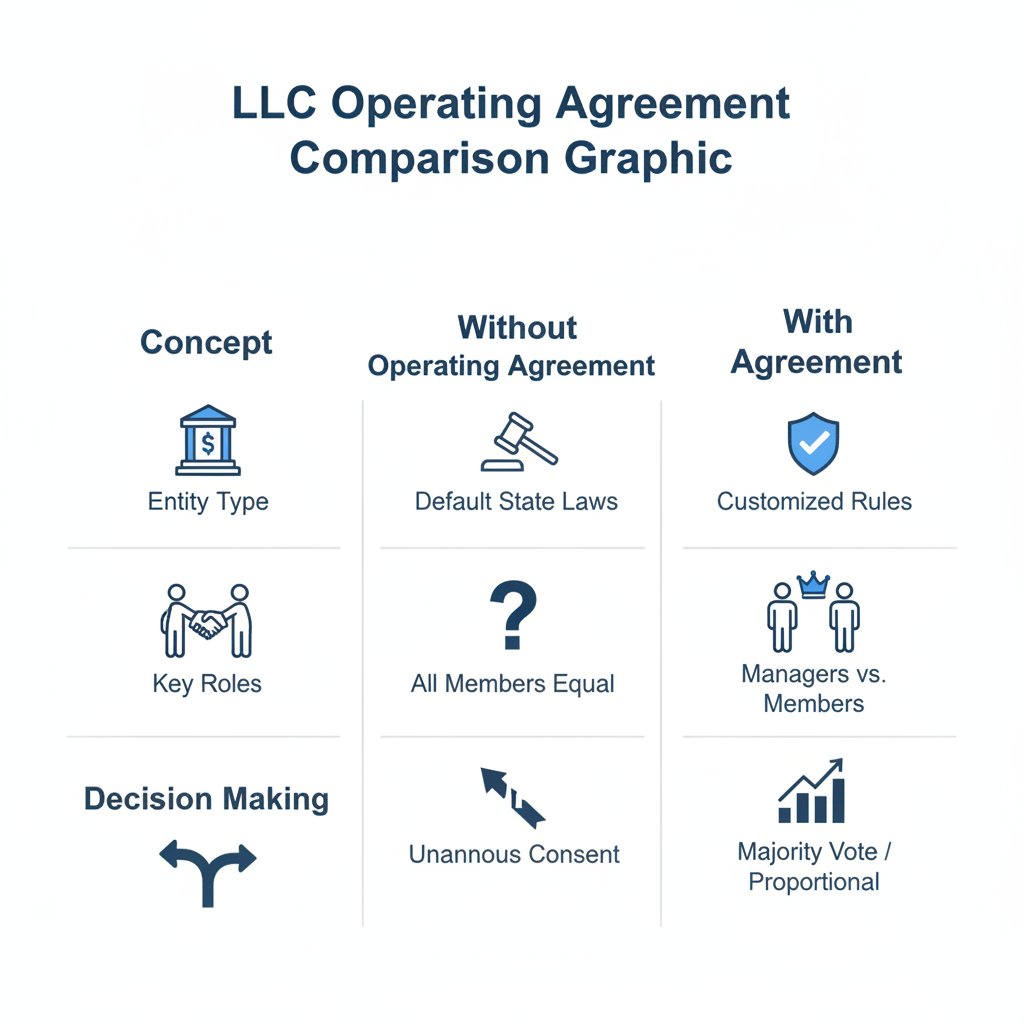
The structure and complexity of an LLC Operating Agreement often depend on whether the LLC has a single owner or multiple owners. While the core purpose remains the same, the specific provisions will reflect the unique dynamics of each setup.
- Single-Member LLC Operating Agreement - Although a single-member LLC (SMLLC) has only one owner, an operating agreement is still highly recommended. For an SMLLC, the agreement serves to formalize the business structure, separate personal and business assets, and help reinforce the limited liability protection in the eyes of courts and creditors. It outlines the sole member's duties, management decisions, and how the business would be managed if the member becomes incapacitated.
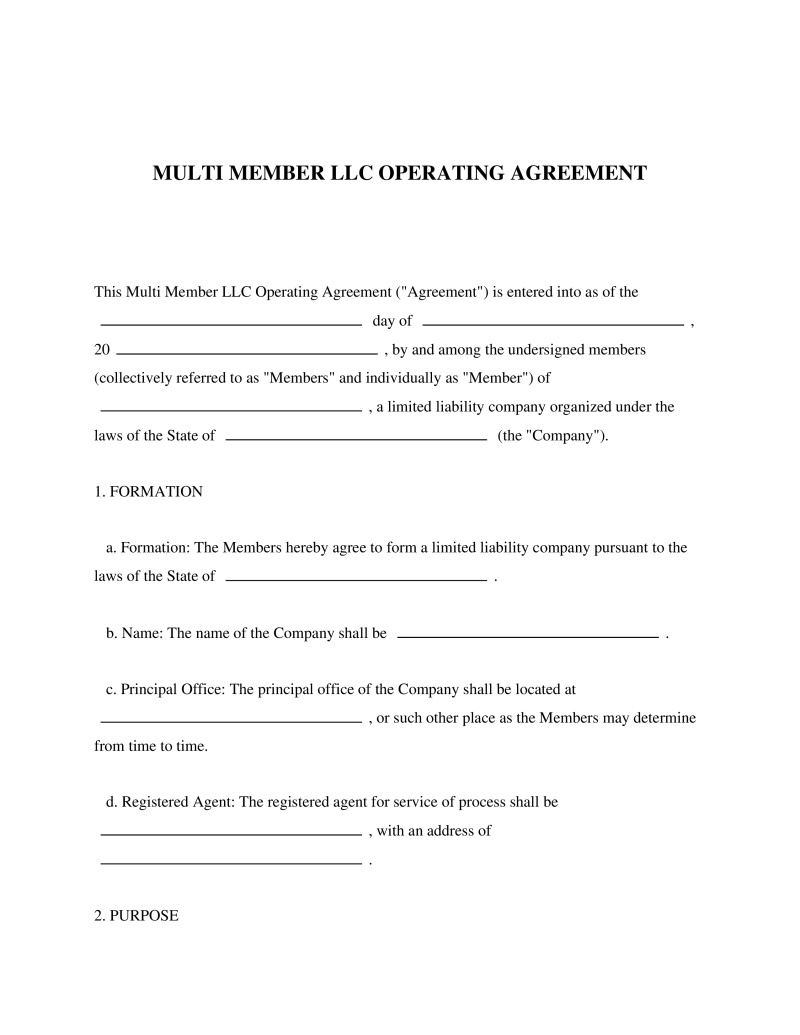
- Multi-Member LLC Operating Agreement - For LLCs with two or more members, the operating agreement is indispensable. It acts as a partnership agreement, detailing the rights, responsibilities, and financial contributions of each member. This agreement is crucial for preventing disputes, establishing clear decision-making processes, and defining exit strategies for members. It addresses complex issues such as voting power, profit distribution, and procedures for admitting new members or handling a member's departure.
Distinction from Articles of Organization
It is important to differentiate the LLC Operating Agreement from the Articles of Organization, as they serve distinct but complementary roles in forming an LLC. Both documents are fundamental to establishing an LLC, but they address different aspects of the entity's existence.
- Articles of Organization - This document is typically filed with the state's Secretary of State or equivalent agency to legally create the LLC. It is a public record that contains basic information about the LLC, such as its name, the address of its registered agent, and sometimes its purpose. The Articles of Organization formally register the LLC as a legal entity within the state.
- LLC Operating Agreement - In contrast, the operating agreement is an internal document that is generally not filed with any state agency. It governs the internal operations and relationships among the members, detailing how the LLC will be managed, how profits and losses will be allocated, and the rights and responsibilities of the members. It is a private contract that dictates the internal workings of the business, building upon the legal existence established by the Articles of Organization.
Amending the LLC Operating Agreement
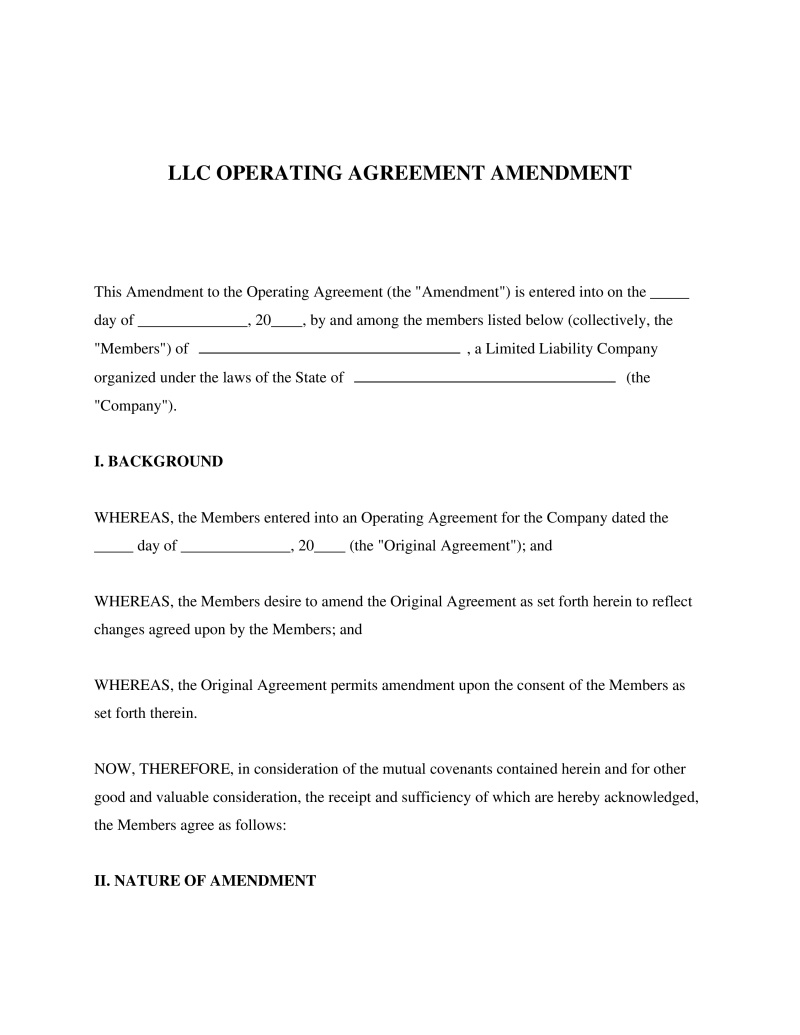
An LLC Operating Agreement is a dynamic document that can be updated or changed over time to reflect the evolving needs of the business or its members. As an LLC grows, takes on new members, or changes its operational focus, amendments to the agreement may become necessary. The process for amending the agreement is typically outlined within the agreement itself.
Generally, amendments require:
- Member Consent - Most operating agreements specify that changes must be approved by a certain percentage or all of the members.
- Written Document - Amendments should be made in writing, clearly stating the changes to the original agreement.
- Signatures - All necessary members or managers should sign the amended document to indicate their agreement.
- Integration into Original Document - The amendment should be formally incorporated into the existing operating agreement, either by replacing specific sections or adding new clauses.
Regular review of the LLC Operating Agreement is a recommended best practice to ensure it remains aligned with the current business structure and objectives.
Frequently Asked Questions
While not all states legally mandate an LLC Operating Agreement, it is highly recommended for all LLCs. It establishes internal rules and helps protect the limited liability status of the members.
Without an Operating Agreement, the LLC will be governed by the default rules of the state's LLC statutes. These default rules may not align with the members' intentions and could lead to disputes or unfavorable outcomes.
All members of a multi-member LLC should sign the Operating Agreement. For a single-member LLC, the sole member typically signs the agreement to acknowledge and formalize the terms.
Yes, an LLC Operating Agreement can be amended or changed. The process for making amendments is usually outlined within the agreement itself, typically requiring member consent and a written, signed document.
No, the LLC Operating Agreement is generally an internal document and is not filed with the state's Secretary of State or any other government agency. It is a private contract among the LLC members.
Even a single-member LLC greatly benefits from an Operating Agreement. It helps establish the company as a distinct legal entity, reinforcing limited liability protection and outlining operational procedures for the sole owner.
Related Documents
Forms commonly used with LLC Operating Agreement.
Already have a LLC Operating Agreement?
Get it reviewed free — checked against your state's laws in about a minute.
Not the form you're looking for?
Try our legal document generator to create a custom document
Disclaimer: The templates available on this website are provided for general informational purposes only and do not constitute legal advice. They are not intended to be, and should not be interpreted as, compliant with any specific legal, regulatory, or privacy requirements. These templates are not a replacement for professional legal guidance and should not be relied upon for any particular matter or circumstance. Users are strongly encouraged to seek advice from a qualified attorney licensed in their jurisdiction before using, modifying, or relying on any template.
All templates are provided on an "as is," "with all faults," and "as available" basis. The provider disclaims any and all warranties of any kind, whether express, implied, statutory, or otherwise, including without limitation warranties of merchantability, fitness for a particular purpose, title, or non-infringement.
LegalTemplates.com makes no guarantees or representations regarding the accuracy, completeness, expected outcomes, or reliability of the materials contained in these templates or any materials referenced or linked from them.