Bench Warrant
A Bench Warrant is a legal instrument issued by a judge, typically in open court, ordering the arrest of an individual who has failed to appear in court as required or has violated a court order.
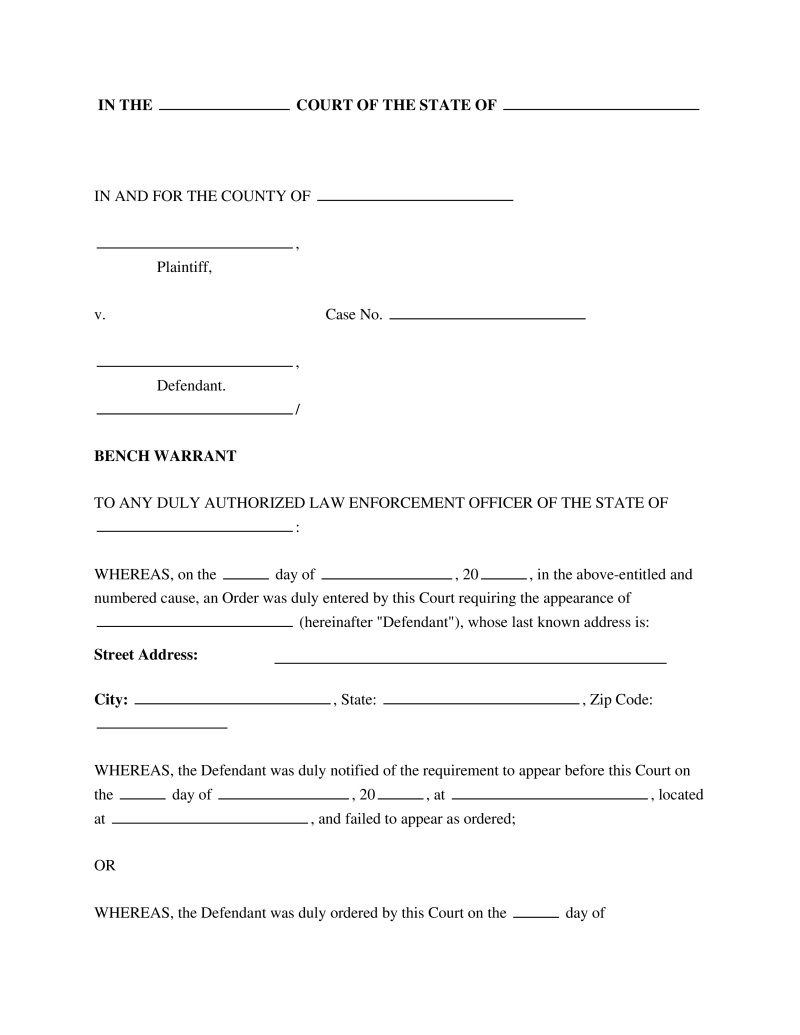
Warrant Basis
Select the main reason for issuing the Bench Warrant from the options provided. This should reflect the specific situation, such as not showing up in court or breaking a court order. Choosing the correct option is important as it affects the legal proceedings and consequences that may follow.
Provide details if the reason is not listed above.
Table of Contents
What is a Bench Warrant?
A bench warrant is a specific type of arrest warrant issued by an authorized judicial officer, such as a judge, directing law enforcement to apprehend and detain an individual. Its primary purpose is to compel a person's appearance in court when they have failed to comply with a court order or legal obligation. This judicial order serves as a directive for law enforcement agencies to locate, seize, and bring the named individual before the court to address the underlying issue.
Issuance and Purpose
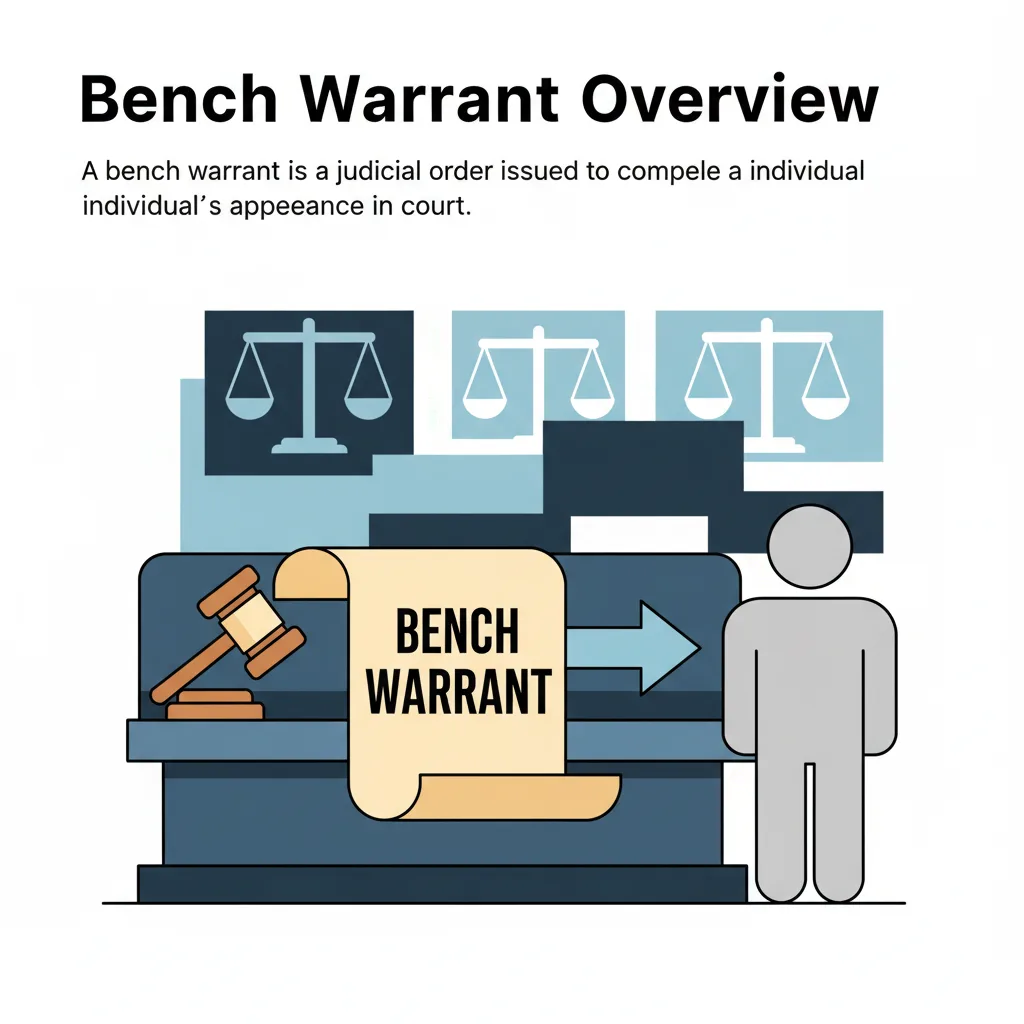
Bench warrants are typically issued when an individual fails to appear in court as required, violates terms of probation, or is found in contempt of court. They are a critical tool for maintaining the integrity of the judicial process by ensuring that individuals comply with court directives and attend scheduled proceedings. The issuance of a bench warrant signals that the court has lost direct control over an individual's presence and requires law enforcement intervention.
The definition of a bench warrant is broad, encompassing various types of arrest warrants issued by judicial officers. These warrants are crucial for enforcing judicial authority and ensuring individuals fulfill their legal duties. The court relies on these warrants to enforce compliance with its orders and to bring individuals who evade justice back into the legal system.
Types of Bench Warrants
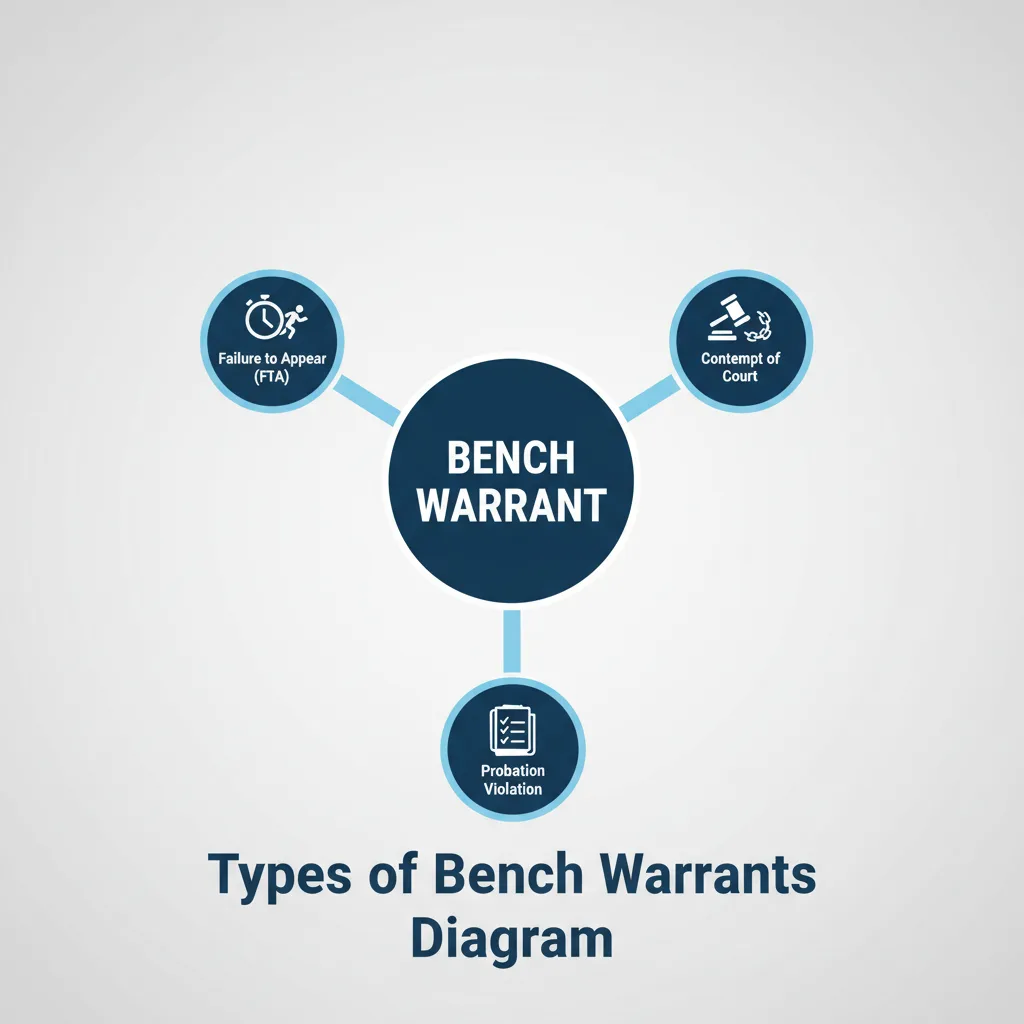
The term "bench warrant" encompasses a range of specific arrest warrants, each issued for distinct reasons based on an individual's failure to meet a legal obligation or court order. These types are defined by the circumstances that lead to their issuance:
- Affidavit Warrants - Issued based on a sworn statement or affidavit providing probable cause for an arrest.
- Contempt Warrants - Issued when an individual fails to obey a court order or shows disrespect for the court's authority.
- Failure to Pay (FTP) Warrants - Issued when an individual fails to pay court-ordered fines, fees, or restitution.
- Failure to Appear (FTA) Warrants - Issued when an individual does not appear in court for a scheduled hearing, trial, or other proceeding (Title 15, §651).
- Juvenile Warrants - Specifically issued for the arrest or detention of a minor who has violated a court order or is suspected of an offense.
- Probation Violation Warrants - Issued when an individual on probation fails to adhere to the conditions set forth by the court.
Electronic Warrants and Their Validity
Modern legal systems increasingly rely on electronic means for managing and transmitting judicial documents, including bench warrants. This shift aims to enhance efficiency and accessibility within the justice system.
Key provisions regarding electronic warrants include:
- Electronic Maintenance and Transmission - Bench warrants and their returns of service must generally be maintained and transmitted electronically. Exceptions apply if a statewide warrant management system is unavailable or if other exigent circumstances prevent electronic processing (Title 15, §654).
- Equal Validity of Electronic Signatures - An electronic warrant bearing a digital signature or an electronic signature holds the same legal validity as a manually signed paper warrant. It carries the full force and effect of law, ensuring that electronic processes do not diminish legal authority (Title 15, §654).
- Integrated Statewide System - Jurisdictions may establish integrated statewide systems to manage and enforce electronic warrants, streamlining the process for law enforcement and judicial officers (PUBLIC Law, Chapter 214).
Execution Jurisdiction of Bench Warrants
The geographical scope within which a bench warrant can be executed depends on the court that issued it. This jurisdictional aspect determines where law enforcement officers are authorized to apprehend the individual named in the warrant.
The execution authority generally varies by court type:
- Superior Court Warrants - A bench warrant issued by a superior court or a superior court judge acting as a local criminal court can be executed anywhere within the state (NYS CPL 530.70).
- District Court Warrants - Warrants issued by a district court also hold statewide execution authority (NYS CPL 530.70).
- City, Town, or Village Court Warrants - Bench warrants from city courts, town courts, or village courts can typically be executed in the county where they were issued or in any adjoining county. For execution elsewhere in the state, a written endorsement by a local criminal court judge of that jurisdiction is usually required (NYS CPL 530.70).
Voluntary Appearance After Warrant Issuance
In some jurisdictions, specific procedures are in place for individuals who voluntarily present themselves to the court after a bench warrant has been issued. These procedures aim to facilitate a resolution and avoid unnecessary detention.
Key considerations for voluntary appearance include:
- Processing Procedures - Individuals who voluntarily present themselves to the court after a bench warrant is issued must be processed according to specific statutory procedures (MCL - Section 762.10d).
- Prompt Arraignment - If a judicial officer is available to arraign the person within two hours of their appearance, the court is typically required to conduct the arraignment. Following arraignment, the case is then set for the next stage of criminal proceedings (MCL - Section 762.10d).
- Avoidance of Detention - The intent behind such provisions is often to allow for a quicker resolution and potentially avoid the immediate detention of an individual who proactively addresses the warrant.
Frequently Asked Questions
Sources
- Title 15, §651: Definitions - Defines 'bench warrant' as an arrest warrant issued by an authorized judicial officer directing law enforcement to seize or detain an individual, including various types of arrest warrants.
- Title 15, §654: Warrants - Establishes that bench warrants and returns of service must be maintained and transmitted electronically, with provisions for paper warrants under certain circumstances.
- MCL - Section 762.10d - Michigan Legislature - Outlines procedures for individuals who voluntarily present themselves to the court after a bench warrant is issued, including arraignment processes and exceptions.
- NYS Open Legislation | NYSenate.gov - Specifies the execution jurisdiction of bench warrants issued by various courts in New York State.
- PUBLIC Law, Chapter 214, An Act To Establish an Integrated Statewide System To Manage and Enforce Electronic Warrants - Defines 'bench warrant' and other related terms, and establishes an integrated statewide system to manage and enforce electronic warrants in Maine.
Not the form you're looking for?
Try our legal document generator to create a custom document
Disclaimer: The templates available on this website are provided for general informational purposes only and do not constitute legal advice. They are not intended to be, and should not be interpreted as, compliant with any specific legal, regulatory, or privacy requirements. These templates are not a replacement for professional legal guidance and should not be relied upon for any particular matter or circumstance. Users are strongly encouraged to seek advice from a qualified attorney licensed in their jurisdiction before using, modifying, or relying on any template.
All templates are provided on an "as is," "with all faults," and "as available" basis. The provider disclaims any and all warranties of any kind, whether express, implied, statutory, or otherwise, including without limitation warranties of merchantability, fitness for a particular purpose, title, or non-infringement.
LegalTemplates.com makes no guarantees or representations regarding the accuracy, completeness, expected outcomes, or reliability of the materials contained in these templates or any materials referenced or linked from them.