Transfer of Ownership
A transfer of ownership document is a legal instrument that formally conveys rights, title, and interest in property from one party to another, establishing a record of the change in proprietorship.
Asset Category
Select the category that best describes the asset being transferred.
Provide a brief description of the asset category if 'Other' was selected.
What is a Transfer of Ownership?
A transfer of ownership refers to the legal process by which the rights, title, and interests in a property or asset are conveyed from one party to another. This process establishes a new owner and terminates the previous owner's legal claim to the item. It is a fundamental concept in property law, ensuring clarity and enforceability of property rights, whether for real estate, vehicles, or other personal property.
Common Methods of Transfer
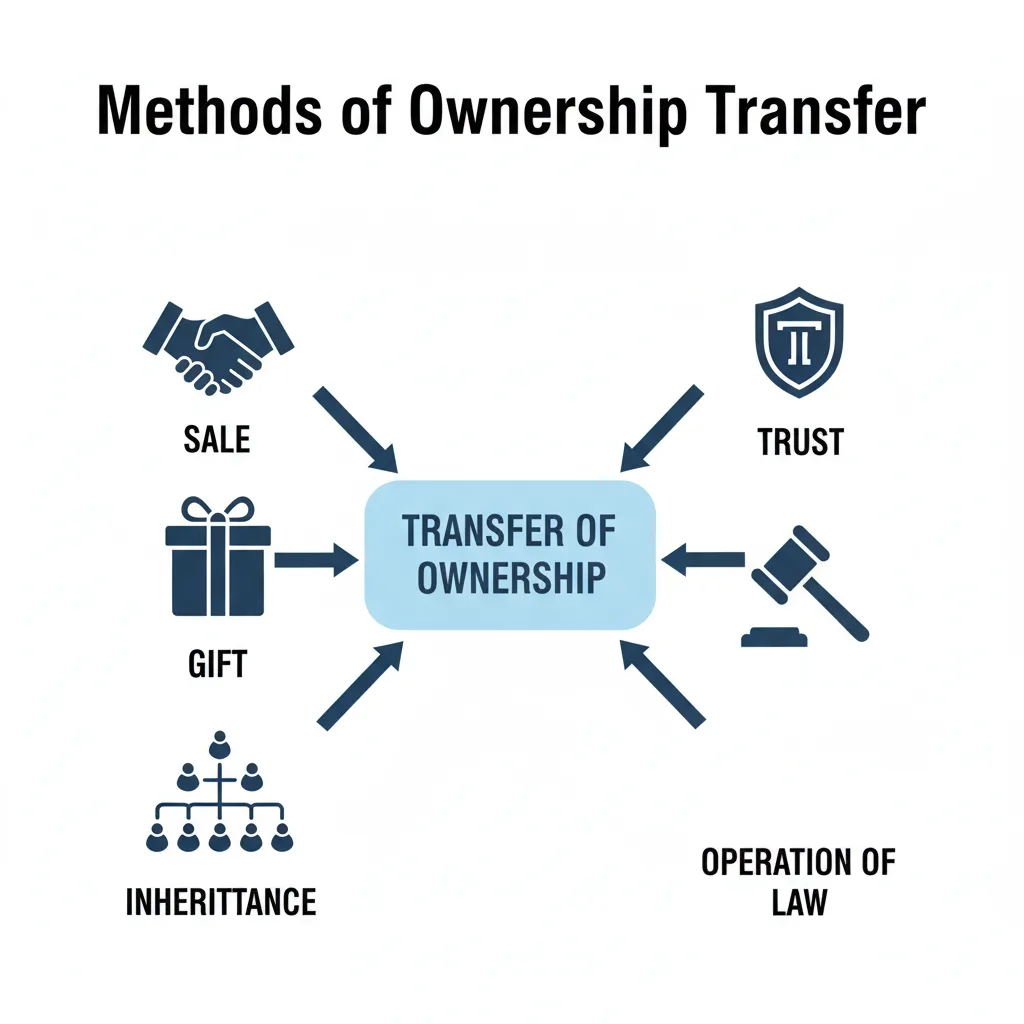
Ownership can be transferred through various legal mechanisms, each with specific requirements and implications. These methods ensure that the change in legal control over an asset is formally recognized and recorded.
- Sale - The most common method, where an asset is exchanged for monetary compensation or other valuable consideration. This typically involves a contract of sale and the execution of a deed or title document.
- Gift - An owner voluntarily conveys property to another without expecting compensation. For a gift to be legally effective, there must be intent to give, delivery of the property, and acceptance by the recipient.
- Inheritance - Ownership transfers upon the death of the owner, according to a will or the laws of intestacy. This process often involves probate court proceedings to validate the transfer to designated heirs.
- Trust - Property is transferred to a trustee who holds legal title for the benefit of another party, known as the beneficiary. The terms of the trust agreement govern the management and eventual distribution of the property.
- Operation of Law - Ownership transfers automatically due to specific legal events, such as bankruptcy, foreclosure, or judicial sale, without the explicit intent of the previous owner.
Vehicle Ownership Transfer Specifics
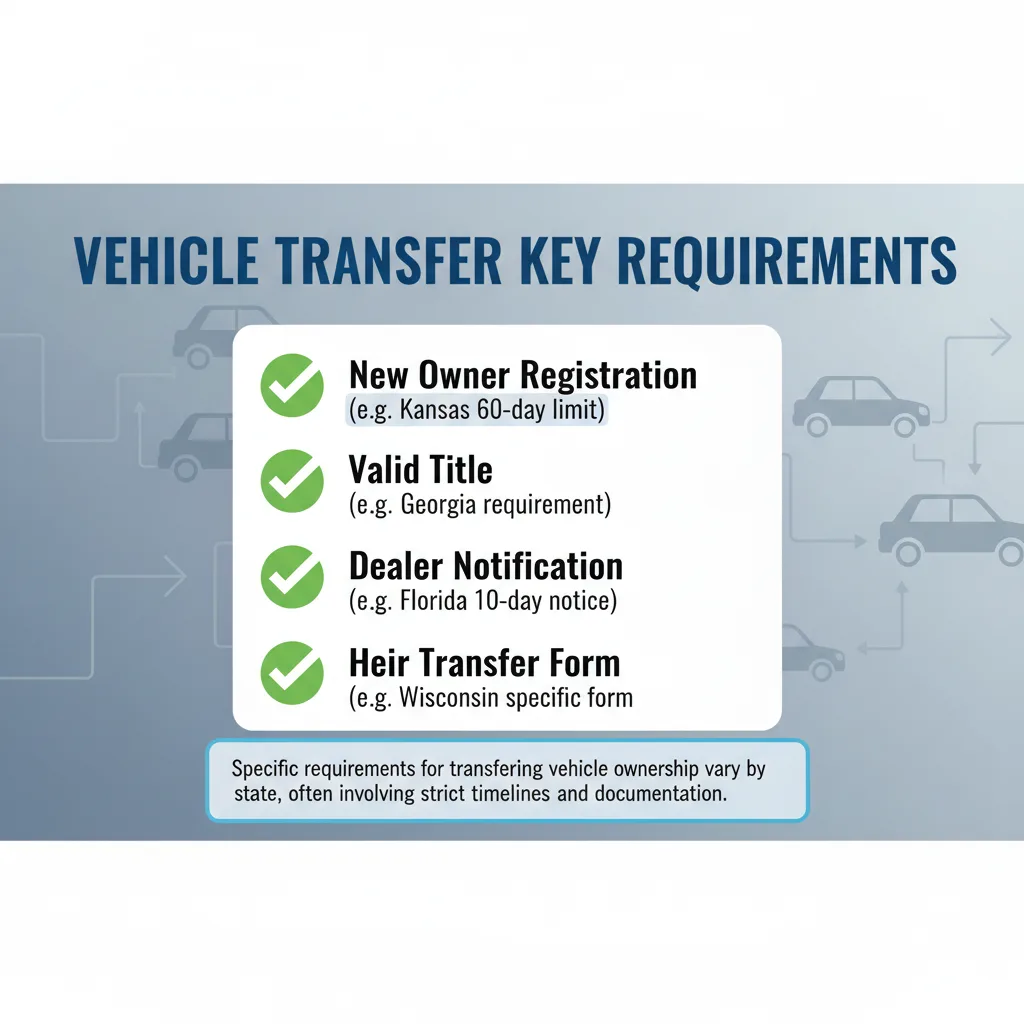
The transfer of vehicle ownership is a highly regulated process, varying significantly by state. These regulations ensure proper registration, tax collection, and the accurate identification of vehicle owners for public safety and legal purposes.
- New Owner Registration - In Kansas, upon the transfer of a vehicle, its registration expires, and the license plates must be removed by the former owner. The new owner is required to apply for registration within 60 days, including weekends and holidays, from the date of transfer (Kansas Statutes § 008.001.0035).
- Title Requirement for Transfer - In Georgia, every owner, other than a licensed dealer, must obtain a title in their name before transferring ownership of a vehicle that requires a Georgia title. Titles and tags for vehicles inherited or purchased from an estate can be obtained at County Tag Offices (Georgia Department of Revenue).
- Dealer Notification for Ownership Change - Florida law mandates that dealers must notify manufacturers or distributors in writing at least 10 business days before closing a sale that involves a change in ownership (Florida Statutes § 0320.3206).
- Transfer to an Heir (Wisconsin) - An heir who is not a surviving spouse or domestic partner may transfer ownership of a vehicle if the decedent's property does not exceed $50,000 in value. The 'Statement of Transfer of Vehicles to or by a Surviving Family Member, Domestic Partner or Heir' form is required for this type of transfer (Wisconsin Department of Transportation).
Requirements and Documentation for Transfer
Regardless of the asset type, certain documentation and procedural steps are typically required to legally effectuate a transfer of ownership. These requirements ensure the transaction is legitimate, recorded, and legally binding.
- Valid Title or Deed - The primary document proving ownership. For vehicles, this is a certificate of title; for real estate, it is a deed. This document must be properly endorsed or executed by the transferring party.
- Bill of Sale or Purchase Agreement - A contract detailing the terms of the transfer, including the parties involved, the asset being transferred, the purchase price (if applicable), and the date of the transaction.
- Proof of Identity - Both parties may need to provide government-issued identification to verify their identities, especially for notarized documents.
- Notarization - Many jurisdictions require certain transfer documents, particularly for real estate or high-value personal property, to be notarized to attest to the authenticity of signatures.
- Registration and Fees - For vehicles, the new owner must typically register the vehicle with the appropriate state department of motor vehicles and pay any associated fees and taxes.
Transfer by Operation of Law
Transfer of ownership by operation of law occurs automatically when certain legal conditions are met, without the need for a voluntary act by the previous owner. This mechanism is crucial for maintaining legal order in situations such as death, insolvency, or court-ordered sales.
Florida statutes illustrate specific circumstances under which vehicle ownership can transfer by operation of law:
- Inheritance - When a vehicle owner passes away, ownership may transfer to their heirs or beneficiaries as determined by probate law, even without an explicit transfer document from the deceased.
- Bankruptcy - In cases of bankruptcy, a debtor's assets, including vehicles, may transfer to a bankruptcy trustee to be managed or liquidated for the benefit of creditors.
- Judicial Sales - If a vehicle is subject to a court order, such as a foreclosure or repossession, ownership can be transferred to a new party through a judicial sale process.
- Department of Highway Safety and Motor Vehicles Action - The Florida Department of Highway Safety and Motor Vehicles is authorized to issue a new certificate of title upon application and payment of the prescribed fee in cases of transfer by operation of law (Florida Statutes § 0319.28).
Frequently Asked Questions
Sources
- Transfer of Ownership by Operation of Law - Florida Statutes - Defines circumstances under which vehicle ownership transfers by operation of law in Florida.
- Transfer of Ownership of Vehicles; Registration; Fees and Penalties - Kansas Statutes - Outlines requirements for transferring vehicle ownership and associated registration in Kansas.
- Transfer of Ownership; Family Succession - Florida Statutes - Details procedures for transferring vehicle ownership within families in Florida.
- Transfer a Vehicle to an Heir - Wisconsin Department of Transportation - Provides guidance on transferring vehicle ownership to an heir in Wisconsin.
- Transfer Ownership of a Vehicle - Georgia Department of Revenue - Outlines the process for transferring vehicle ownership in Georgia.
Not the form you're looking for?
Try our legal document generator to create a custom document
Disclaimer: The templates available on this website are provided for general informational purposes only and do not constitute legal advice. They are not intended to be, and should not be interpreted as, compliant with any specific legal, regulatory, or privacy requirements. These templates are not a replacement for professional legal guidance and should not be relied upon for any particular matter or circumstance. Users are strongly encouraged to seek advice from a qualified attorney licensed in their jurisdiction before using, modifying, or relying on any template.
All templates are provided on an "as is," "with all faults," and "as available" basis. The provider disclaims any and all warranties of any kind, whether express, implied, statutory, or otherwise, including without limitation warranties of merchantability, fitness for a particular purpose, title, or non-infringement.
LegalTemplates.com makes no guarantees or representations regarding the accuracy, completeness, expected outcomes, or reliability of the materials contained in these templates or any materials referenced or linked from them.