Pet Addendum
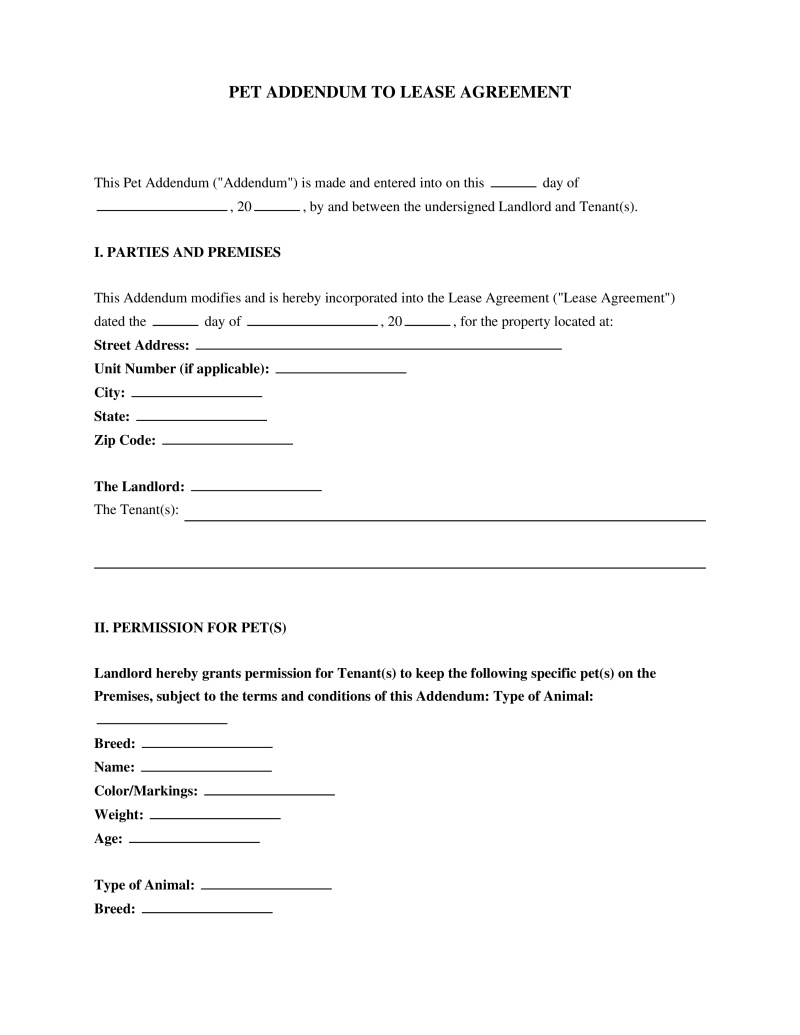
A Pet Addendum is a legal document that serves as an amendment to an existing lease agreement, establishing the specific terms and conditions governing the presence of pets on the leased premises.
Property Type
Select the property type as it appears in the main lease.
Provide a description if 'Other' was selected.
Table of Contents
What is a Pet Addendum?
A Pet Addendum is a supplemental legal document attached to a primary residential lease agreement, modifying its terms to include provisions for pets. Its primary purpose is to establish clear rules, responsibilities, and expectations between landlords and tenants regarding the presence of animals on the rented property. This addendum is used to formalize the landlord's consent for a tenant to keep pets and to mitigate potential issues such as property damage, noise complaints, or liability concerns.
Purpose and Scope of a Pet Addendum
The core function of a Pet Addendum is to provide a comprehensive framework for pet ownership within a rental property. It ensures that both parties understand their obligations, thereby preventing misunderstandings that could lead to disputes or breaches of the lease agreement. The addendum typically covers a range of topics from pet identification to tenant responsibilities for pet behavior and property maintenance.
Different jurisdictions and landlords may incorporate specific requirements, but the general scope remains consistent across various addendums. For example, a model pet addendum for HUD leases in Michigan outlines tenant obligations regarding pet rules and grounds for pet removal or tenancy termination (Michigan HUD Model Lease - Pet Addendum). Similarly, Oklahoma’s standardized addendum details tenant duties like paying pet fees and maintaining renter's insurance (Oklahoma Real Estate Commission Pet Addendum).
Key Elements and Provisions
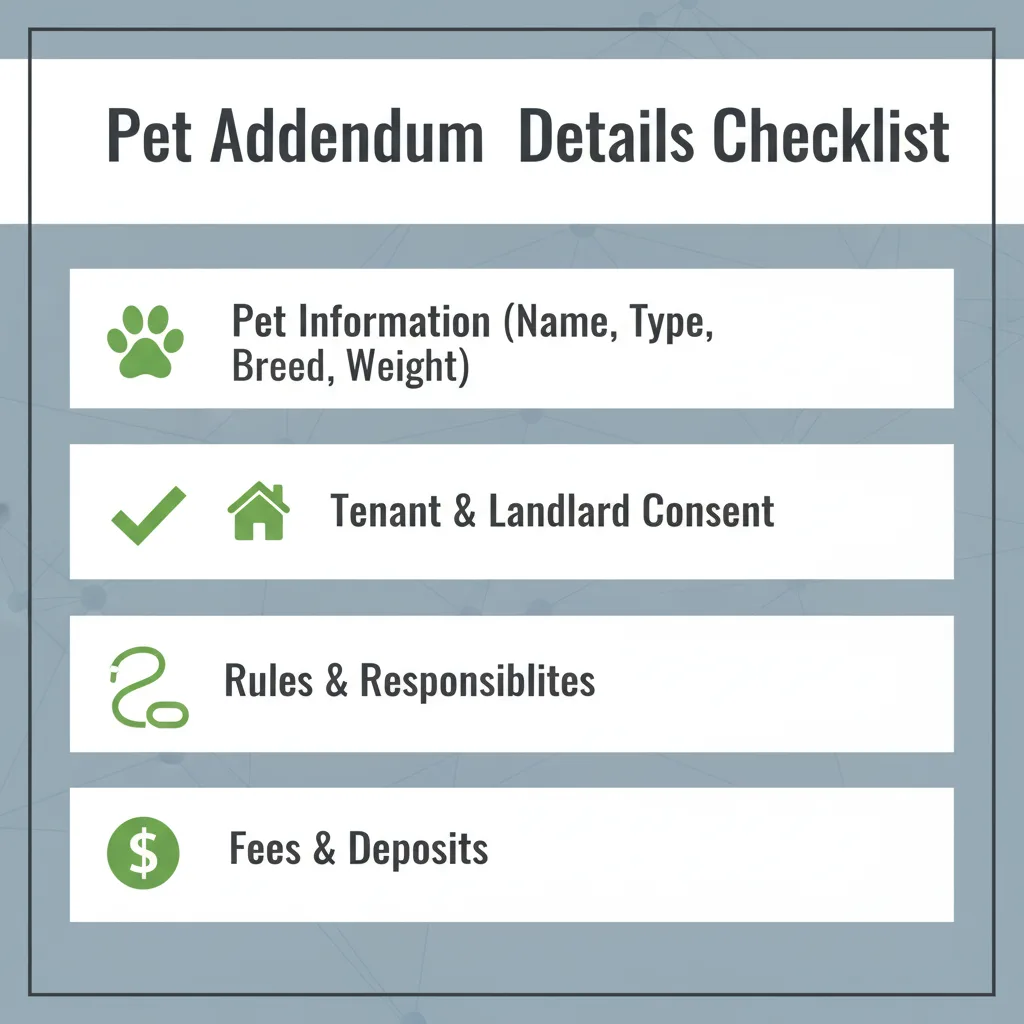
A comprehensive Pet Addendum includes several critical components to clearly define the terms of pet occupancy. These elements ensure that all necessary information is documented and agreed upon by both the landlord and tenant.
Key information commonly found in a Pet Addendum includes:
- Pet Identification - Details about each approved pet, such as type, breed, color, number, age, and sometimes a photo. The California Department of Transportation's addendum, for instance, requires tenants to provide this information and attach a pet photo (California Department of Transportation Pet Addendum).
- Pet Fees and Deposits - Specifications for non-refundable pet fees, refundable pet deposits, or monthly pet rent. The Oklahoma Real Estate Commission's addendum includes tenant obligations to pay a pet fee.
- Renter's Insurance Requirement - Mandates that the tenant obtain and maintain renter's insurance that covers pet-related damages and liabilities. This is a common requirement, explicitly stated in addendums from both Oklahoma and California (Oklahoma Real Estate Commission Pet Addendum; California Department of Transportation Pet Addendum).
- Pet Behavior Rules - Guidelines for pet conduct, including noise restrictions, leash requirements, waste disposal protocols, and prohibitions against aggressive behavior. Tenants are typically required to ensure pets are under control at all times and do not cause nuisance or damage (Oklahoma Real Estate Commission Pet Addendum).
- Veterinary Care and Licensing - Requirements for pets to be vaccinated, licensed according to local ordinances, and to wear identification tags.
- Grounds for Pet Removal or Lease Termination - Conditions under which the landlord may require the removal of the pet or terminate the tenancy, such as violations of pet rules or property damage. The Michigan HUD model lease addendum details potential grounds for pet removal or tenancy termination.
Tenant and Landlord Responsibilities
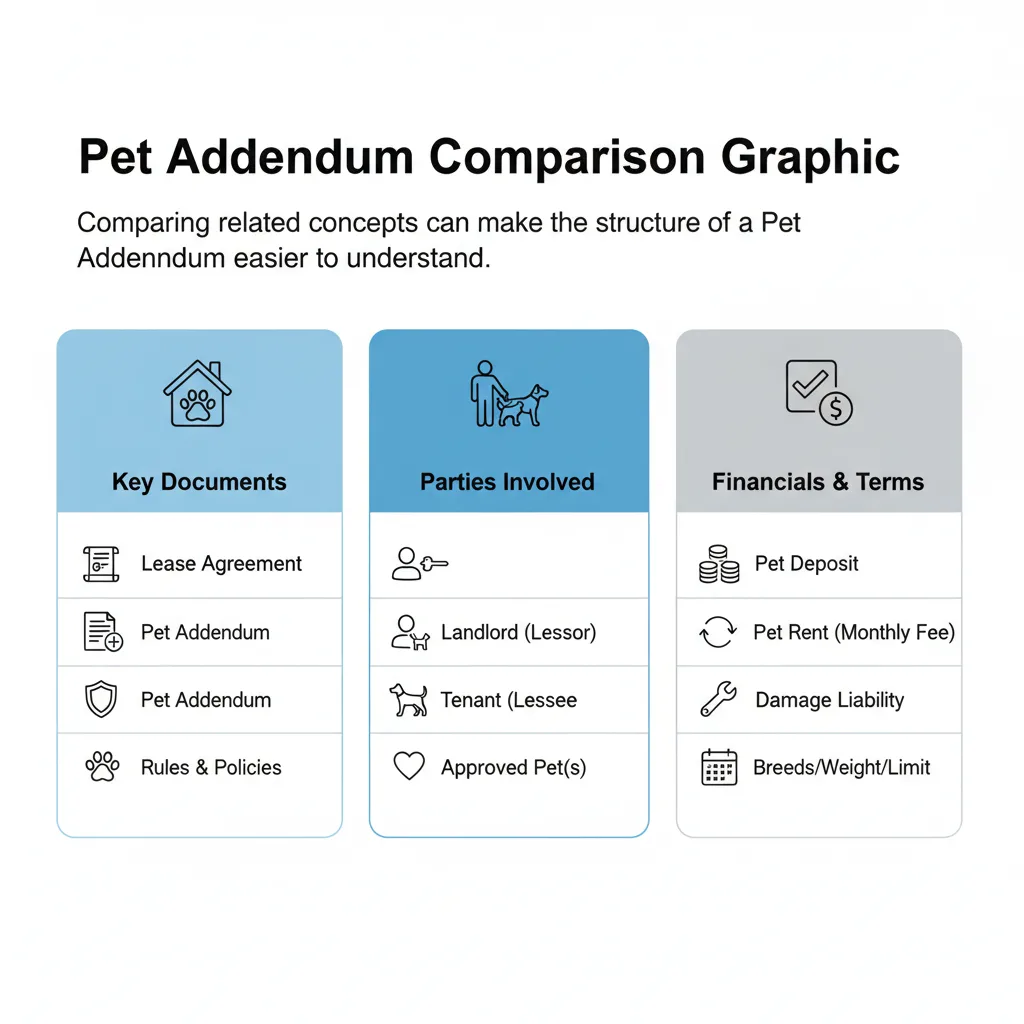
The Pet Addendum delineates specific duties for both the tenant and the landlord to ensure a harmonious living environment and proper maintenance of the property. Clear responsibilities help prevent disputes and ensure compliance with the lease terms.
Tenant responsibilities typically include:
- Compliance with Pet Rules - Adhering to all established pet rules, including those related to pet control, waste disposal, and noise.
- Damage Liability - Taking full responsibility for any damage caused by the pet to the premises or common areas.
- Nuisance Prevention - Ensuring pets do not create a nuisance for other tenants or neighbors, such as excessive barking or aggressive behavior. This is emphasized in Oklahoma's addendum, prohibiting pets from causing damage or nuisance to the premises or neighboring properties (Oklahoma Real Estate Commission Pet Addendum).
- Proper Care and Supervision - Providing adequate care, food, water, and supervision for the pet.
- Insurance Maintenance - Keeping renter's insurance active, with specific coverage for pet-related incidents, as required by the addendum.
Landlord responsibilities generally involve:
- Enforcement of Rules - Consistently enforcing the pet rules outlined in the addendum for all tenants.
- Notification of Changes - Providing proper notice if any pet-related policies or rules are to be changed during the tenancy.
- Reasonable Accommodation - Adhering to federal and state laws regarding reasonable accommodations for service and assistance animals.
Frequently Asked Questions
Sources
- Michigan HUD Model Lease - Pet Addendum - Provides a model pet addendum for HUD leases in Michigan, detailing tenant and landlord responsibilities regarding pets.
- Oklahoma Real Estate Commission Pet Addendum - Offers a standardized pet addendum for lease agreements in Oklahoma, outlining tenant and landlord responsibilities.
- California Department of Transportation Pet Addendum - Provides a pet addendum template for rental agreements related to properties managed by the California Department of Transportation.
Not the form you're looking for?
Try our legal document generator to create a custom document
Disclaimer: The templates available on this website are provided for general informational purposes only and do not constitute legal advice. They are not intended to be, and should not be interpreted as, compliant with any specific legal, regulatory, or privacy requirements. These templates are not a replacement for professional legal guidance and should not be relied upon for any particular matter or circumstance. Users are strongly encouraged to seek advice from a qualified attorney licensed in their jurisdiction before using, modifying, or relying on any template.
All templates are provided on an "as is," "with all faults," and "as available" basis. The provider disclaims any and all warranties of any kind, whether express, implied, statutory, or otherwise, including without limitation warranties of merchantability, fitness for a particular purpose, title, or non-infringement.
LegalTemplates.com makes no guarantees or representations regarding the accuracy, completeness, expected outcomes, or reliability of the materials contained in these templates or any materials referenced or linked from them.