Early Termination of Lease Term Addendum
An Early Termination of Lease Term Addendum is a legal instrument that modifies an existing lease agreement by establishing the conditions and procedures for the premature conclusion of the tenancy.
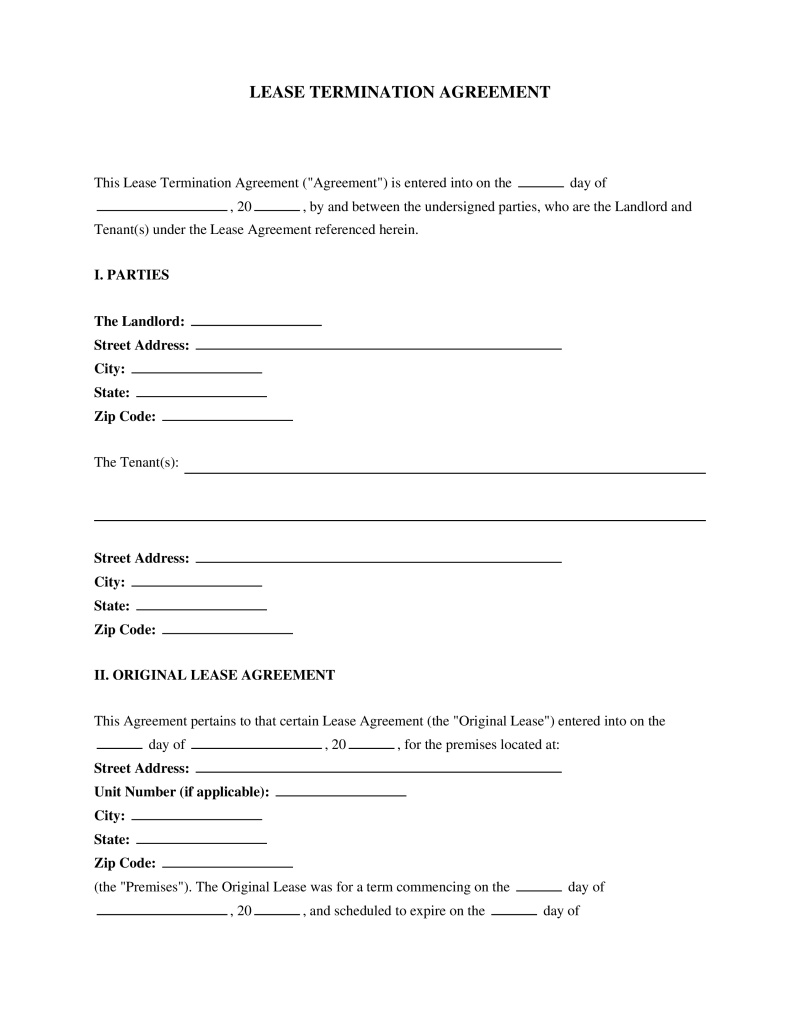
Termination Initiator
Select the party requesting to end the lease early.
Table of Contents
What is an Early Termination of Lease Term Addendum?
An Early Termination of Lease Term Addendum is a formal legal document that modifies an existing lease agreement, allowing one or more parties to terminate the lease before its original expiration date. This addendum serves as a mutual agreement between the landlord and tenant, outlining the specific terms and conditions under which the early termination will occur. Its primary purpose is to supersede the original lease's provisions regarding the lease term, providing a structured and legally binding framework for an early exit, often involving financial considerations or other obligations for the departing tenant.
Purpose and Function of the Addendum
The Early Termination of Lease Term Addendum provides a mechanism for both landlords and tenants to address unforeseen circumstances that necessitate ending a lease prematurely. Without such an agreement, early termination by a tenant could constitute a breach of contract, potentially leading to legal disputes and financial penalties. For landlords, it offers a way to regain possession of a property under agreed-upon terms, facilitating re-rental and minimizing vacancy periods while potentially recovering costs associated with the early termination.
This addendum functions by documenting the consent of all parties to deviate from the original lease's term. It often details the exact date the tenancy will end, any financial penalties or fees the tenant must pay, and any other responsibilities, such as property condition requirements or notice periods. Official government bodies, such as the U.S. Department of Housing and Urban Development, incorporate provisions for early termination within their tenancy addendum forms, highlighting the standardized nature of such agreements in various housing contexts (U.S. Department of Housing and Urban Development: PBV Tenancy Addendum).
Key Provisions Typically Included
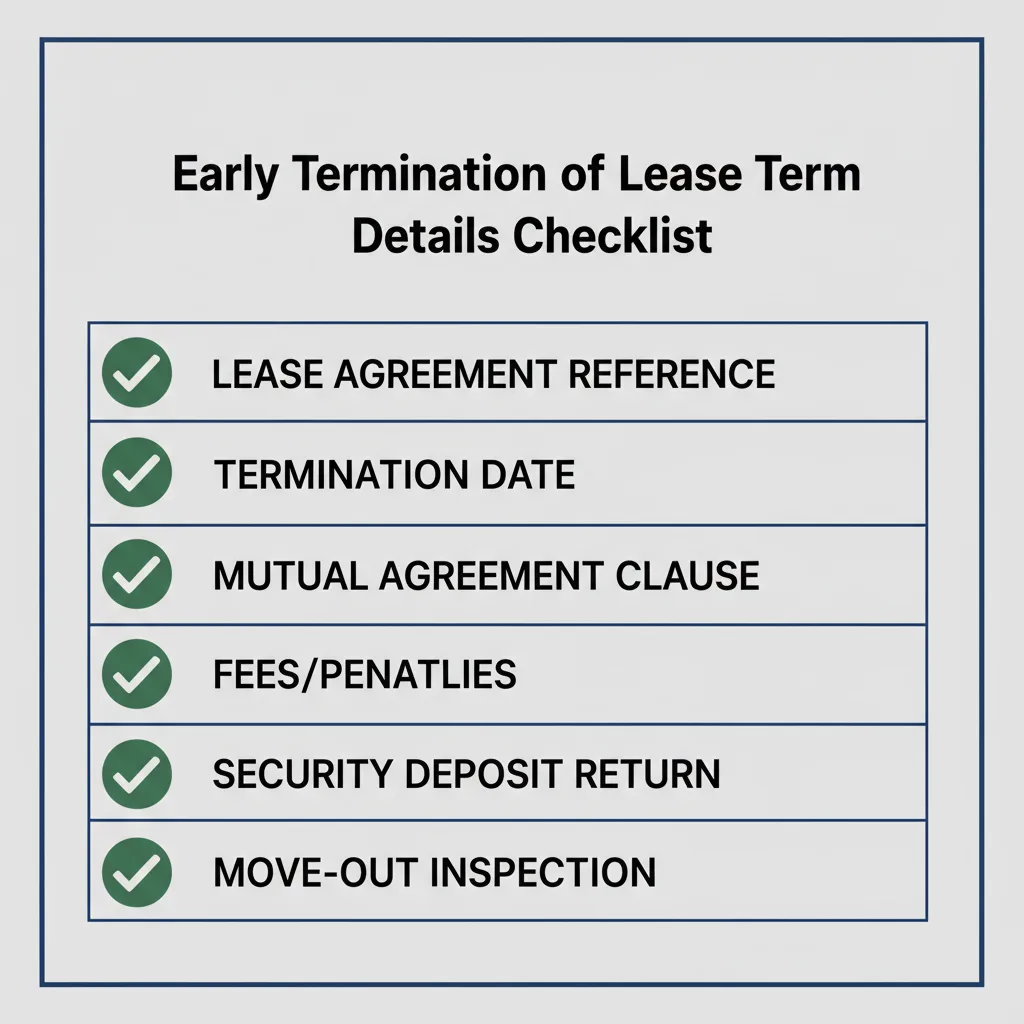
An Early Termination of Lease Term Addendum typically includes several critical components to ensure clarity and enforceability. These provisions are designed to cover all aspects of the early termination process and protect the interests of both the landlord and the tenant:
- Identification of Parties and Original Lease - Clearly states the names of the landlord(s) and tenant(s) and references the original lease agreement, including its effective date and property address, to which the addendum applies.
- Early Termination Date - Specifies the exact date on which the lease agreement will officially terminate, after which the tenant must vacate the premises.
- Early Termination Fee or Penalties - Outlines any financial obligations the tenant must fulfill for early termination. This may include a fixed fee, a specified number of months' rent, forfeiture of a security deposit, or responsibility for rent until a new tenant is found.
- Security Deposit Handling - Details how the security deposit will be handled, including any deductions for damages or unpaid rent, and the timeline for its return.
- Condition of Premises - Stipulates the condition in which the tenant must leave the property upon vacating, often referencing the original lease's move-out requirements.
- Waiver of Further Claims - May include language where both parties release each other from further obligations under the original lease, except for those explicitly surviving the termination (e.g., payment of outstanding damages).
- Notice Requirements - Confirms that appropriate notice for termination has been given, if required by the original lease or local law.
- Governing Law - Specifies the jurisdiction whose laws will govern the interpretation and enforcement of the addendum.
Circumstances for Use
Tenants and landlords may consider using an Early Termination of Lease Term Addendum in various situations where the original lease term becomes impractical or undesirable. These circumstances often involve significant life changes or property-related issues:
- Relocation for Employment - A common reason for tenants to seek early termination is a job transfer or new employment opportunity in a different geographic area.
- Military Deployment - Service members may need to terminate a lease early due to deployment or permanent change of station orders. Federal law, such as the Servicemembers Civil Relief Act (SCRA), often provides specific protections for military personnel in such cases.
- Health or Family Emergencies - Unforeseen health issues, family caregiving responsibilities, or other personal emergencies can necessitate a move.
- Property Sale by Landlord - A landlord may wish to sell the property before the lease term ends, requiring the tenant to vacate.
- Unsuitable Living Conditions - While often grounds for constructive eviction, some tenants might agree to an early termination addendum if the landlord is unwilling or unable to rectify serious habitability issues, preferring a clean break over litigation.
- Mutual Agreement for Convenience - Sometimes, both parties simply agree that an early termination is mutually beneficial, perhaps if the landlord has a new tenant ready to move in who offers better terms, or if the tenant found a more suitable living arrangement.
Government agencies frequently include provisions for early termination in their standard lease conditions to accommodate various scenarios. For instance, the Maryland Department of General Services includes general conditions for state leases that may address early termination, acknowledging the need for flexibility in contractual agreements (Maryland Department of General Services: Standard State Lease General Conditions).
Parties Involved and Their Obligations
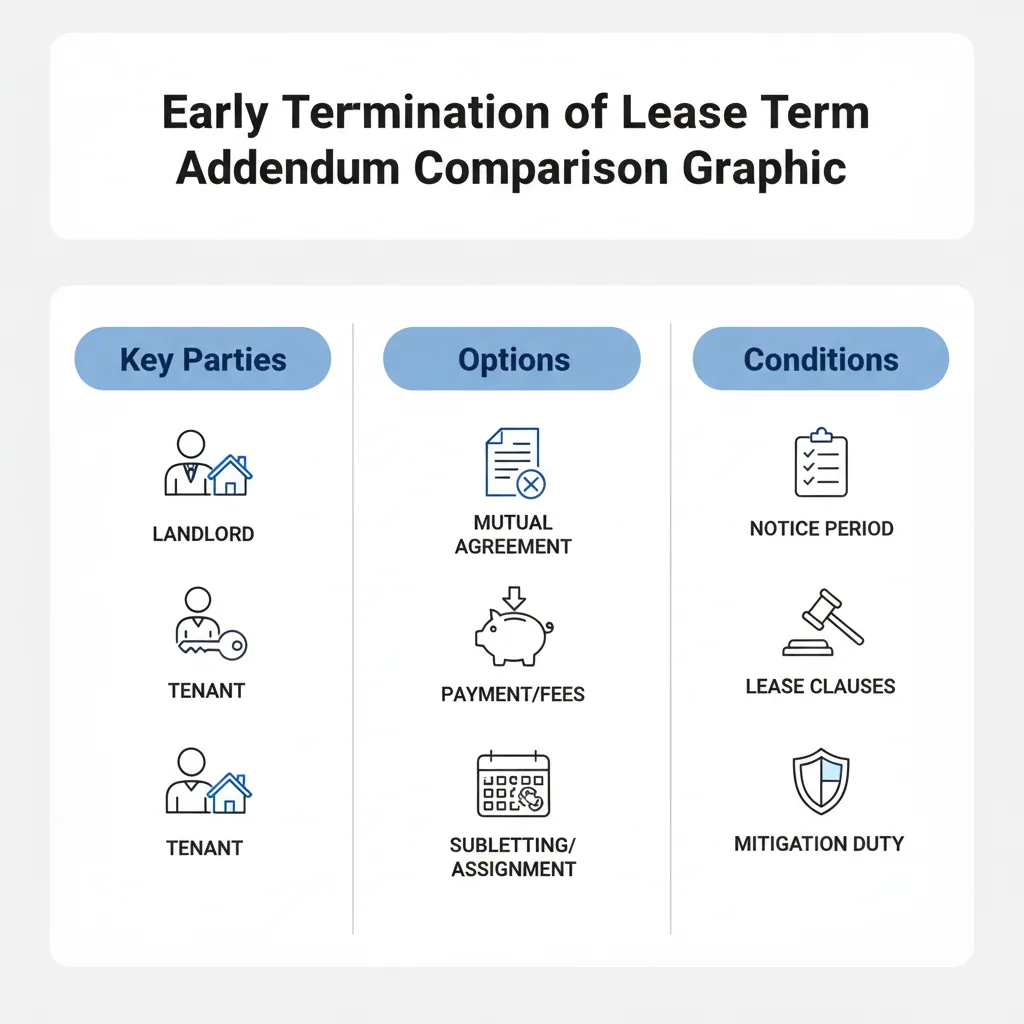
The primary parties involved in an Early Termination of Lease Term Addendum are the landlord(s) and the tenant(s). Each party has distinct obligations and rights under the agreement:
- Landlord's Obligations - The landlord is typically obligated to accept the early termination as outlined in the addendum, often in exchange for an agreed-upon early termination fee or other concessions. They must also process the security deposit according to the addendum's terms and applicable law. The landlord is generally expected to mitigate damages by attempting to re-rent the property after the tenant vacates.
- Tenant's Obligations - The tenant's primary obligation is to vacate the property by the specified early termination date and to pay any agreed-upon early termination fees, outstanding rent, and costs for damages beyond normal wear and tear. They must also return the property in the condition specified in the addendum and the original lease.
- Co-Tenants - If multiple tenants are on the original lease, all co-tenants typically must agree to the early termination addendum. The addendum should clarify whether all tenants are released from the lease or if some remain responsible.
Distinction from Lease Assignment or Subletting
An Early Termination of Lease Term Addendum differs fundamentally from a lease assignment or subletting, though all three concern changes to an existing lease agreement. The key distinction lies in the continuity of the original lease and the parties' ongoing responsibilities.
With an Early Termination of Lease Term Addendum, the original lease agreement is brought to a definitive end by mutual consent on a new, earlier date. The tenant's obligations cease (save for any specified surviving obligations) and the landlord regains full possession and control of the property. In contrast, a lease assignment involves the original tenant transferring all their rights and responsibilities under the lease to a new tenant, known as the assignee. The original tenant (assignor) may or may not remain secondarily liable for the lease obligations, depending on the terms of the assignment and state law. In a subletting arrangement, the original tenant (sublessor) remains fully responsible to the landlord for the entire lease, while renting out part or all of the property to a subtenant (sublessee). The original lease continues in full force, and the sublessor acts as a landlord to the sublessee.
Frequently Asked Questions
Sources
- Maryland Department of General Services: Standard State Lease General Conditions - Provides standard conditions for state leases, including early termination provisions.
- U.S. Department of Housing and Urban Development: PBV Tenancy Addendum - Contains tenancy addendum forms, including provisions for early termination of lease agreements.
Not the form you're looking for?
Try our legal document generator to create a custom document
Disclaimer: The templates available on this website are provided for general informational purposes only and do not constitute legal advice. They are not intended to be, and should not be interpreted as, compliant with any specific legal, regulatory, or privacy requirements. These templates are not a replacement for professional legal guidance and should not be relied upon for any particular matter or circumstance. Users are strongly encouraged to seek advice from a qualified attorney licensed in their jurisdiction before using, modifying, or relying on any template.
All templates are provided on an "as is," "with all faults," and "as available" basis. The provider disclaims any and all warranties of any kind, whether express, implied, statutory, or otherwise, including without limitation warranties of merchantability, fitness for a particular purpose, title, or non-infringement.
LegalTemplates.com makes no guarantees or representations regarding the accuracy, completeness, expected outcomes, or reliability of the materials contained in these templates or any materials referenced or linked from them.