Child Support Agreement
Create Child Support Agreement
Child Support Agreement
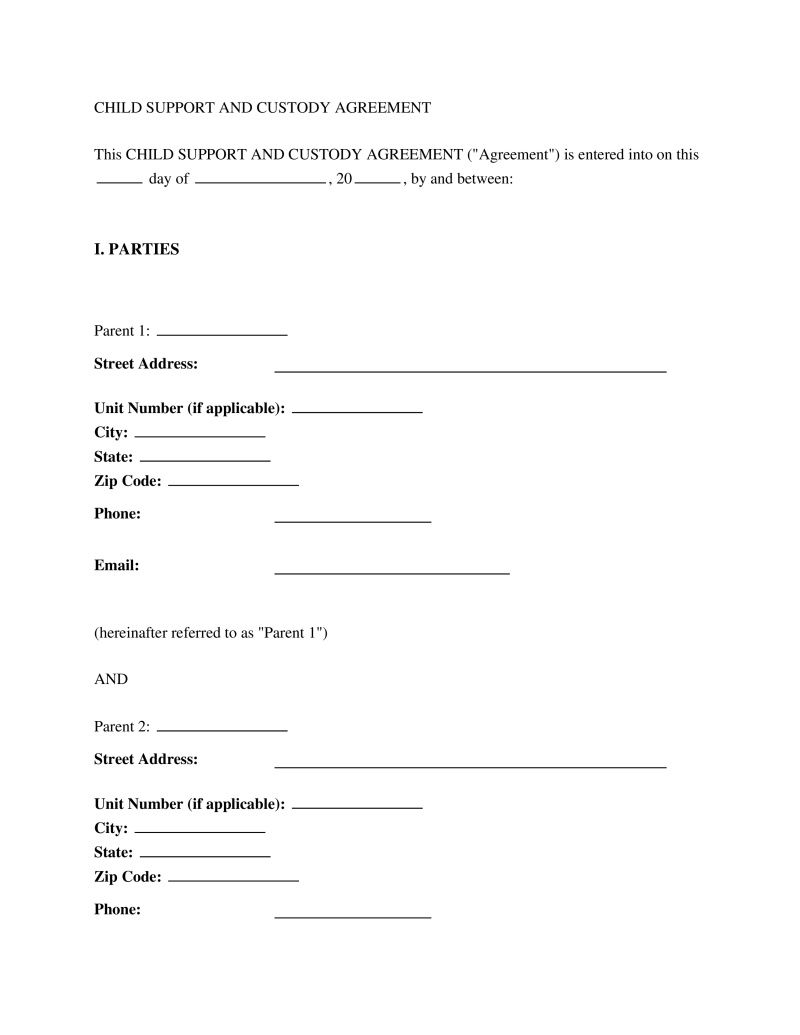
A Child Support Agreement is a legally binding contract outlining financial obligations for the care and upbringing of a child following parental separation.
Answer the question(s) below to create your Child Support Agreement
Case Posture
Select whether this agreement relates to an ongoing court case or is being submitted independently.
Enter the official case number if known.
Table of Contents
What is a Child Support Agreement?
A Child Support Agreement is a legally binding document that outlines the financial responsibilities of parents for the care and upbringing of their children following separation or divorce. Its primary purpose is to ensure that both parents contribute equitably to their child's needs, covering expenses such as housing, food, clothing, education, healthcare, and extracurricular activities. These agreements are typically entered into by parents who wish to determine support terms outside of a court order, though they generally require judicial review and approval to become enforceable.
Legal Requirements
For a Child Support Agreement to be legally valid and enforceable, it must meet specific criteria established by state and federal laws. While parents have the flexibility to negotiate terms that best suit their family's unique circumstances, the agreement must always prioritize the child's best interests. Courts retain the authority to review and modify agreements if they deem the terms to be unfair or inadequate for the child's welfare.
Key requirements for the validity of a Child Support Agreement include:
- Written Form - The agreement must be documented in writing, clearly outlining all terms and conditions of support. Oral agreements are generally not enforceable in matters of child support.
- Parental Consent - Both parents must voluntarily agree to the terms of the agreement without coercion or undue influence. Each parent should have the opportunity to seek independent legal advice.
- Full Disclosure - Both parents must provide full and accurate financial disclosure, including income, assets, debts, and expenses. This ensures that the support calculation is based on complete information.
- Consideration of Child's Best Interests - The agreement's terms must adequately provide for the child's financial, educational, medical, and emotional needs. A court will scrutinize the agreement to ensure it serves the child's welfare above all else.
- Notarization and Signatures - The agreement must be signed by both parents, and their signatures are often required to be notarized to confirm their authenticity.
- Court Approval - While negotiated privately, a Child Support Agreement typically needs to be filed with and approved by a court to become a legally enforceable order. The court will review the terms against state guidelines and the child's best interests.
Rights and Obligations of Parties Involved
A Child Support Agreement establishes clear rights and obligations for both the custodial and non-custodial parent, as well as implicitly protecting the child's right to receive support. The specific details vary depending on the agreement's terms and state law, but general principles apply.
The primary obligations of the parent paying child support (often the non-custodial parent) include:
- Financial Contribution - Making regular, timely payments of the agreed-upon child support amount.
- Healthcare Coverage - Often, providing health insurance for the child or contributing to the cost of premiums and out-of-pocket medical expenses.
- Contribution to Special Expenses - Sharing costs for childcare, education (e.g., tuition, school supplies), extracurricular activities, and other agreed-upon extraordinary expenses.
- Compliance with Court Orders - Adhering to all terms of the agreement once it has been incorporated into a court order.
The primary rights of the parent receiving child support (often the custodial parent) include:
- Receipt of Support Payments - The right to receive the agreed-upon financial contributions for the child's care.
- Enforcement of Agreement - The right to seek legal enforcement of the agreement if the paying parent fails to meet their obligations.
- Information Sharing - Often includes the right to be informed about the child's health, education, and general welfare.
The child, while not a direct party to the agreement, has the fundamental right to receive financial support from both parents. This right is paramount and cannot be waived by either parent. The agreement is designed to ensure their well-being and maintain a standard of living similar to what they would have experienced had the parents remained together.
How to Complete a Child Support Agreement
Completing a Child Support Agreement involves several critical steps, from initial discussions to formal court approval. This process requires careful consideration, open communication, and often legal guidance to ensure all parties' rights are protected and, most importantly, the child's needs are met.
- Gather Financial Information - Both parents must compile comprehensive financial documentation, including recent pay stubs, tax returns, W-2s, 1099s, bank statements, investment account statements, and records of any other income or significant assets. This step is crucial for accurately calculating support and ensuring transparency.
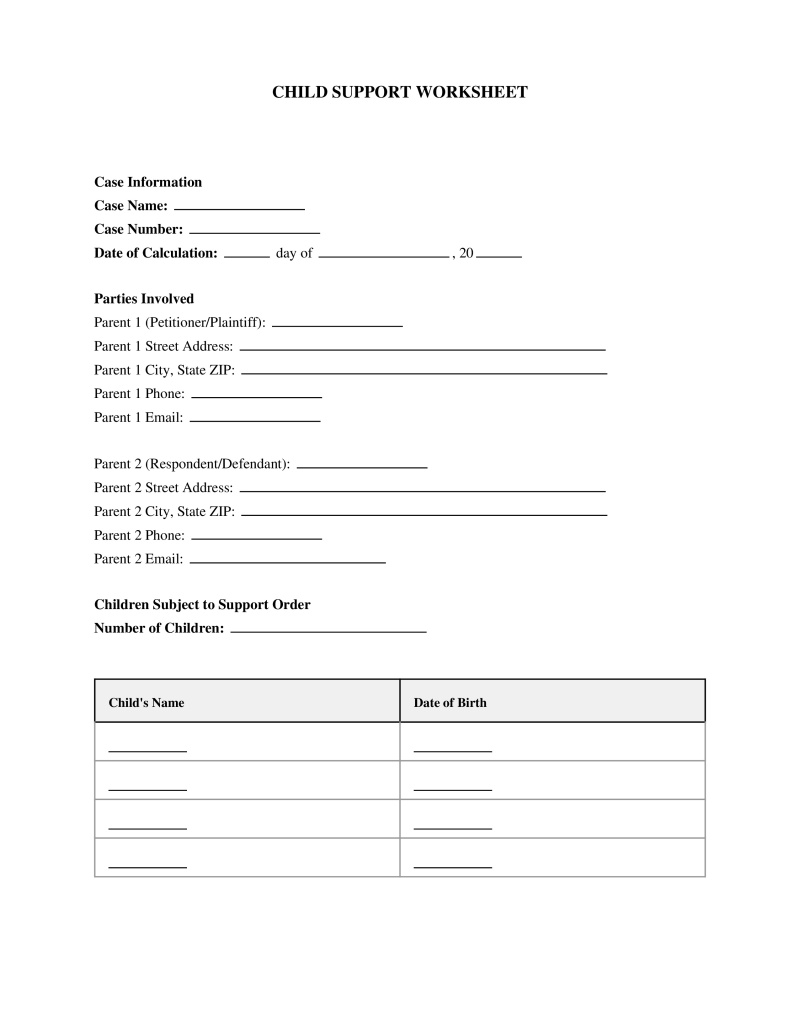
- Calculate Child Support - Using state child support guidelines, which often involve formulas based on parental income, the number of children, and custody arrangements, parents should calculate a preliminary support amount. Many states provide online calculators or worksheets to assist with this, but legal counsel can help ensure accuracy and address unique circumstances.
- Negotiate Terms - Parents should discuss and negotiate all aspects of the agreement, including the base support amount, allocation of medical expenses (insurance premiums, deductibles, co-pays), childcare costs, educational expenses, and extracurricular activities. This stage may involve attorneys or mediators to facilitate productive discussions and reach mutually agreeable terms.
- Draft the Agreement - Once terms are agreed upon, a formal written document must be drafted. This document should clearly state the names of the parents and children, the support amount, payment schedule, duration of support, provisions for medical and dental care, and any other specific agreements regarding the child's welfare. It is highly recommended to have a legal professional draft or review this document to ensure it is legally sound and comprehensive.
- Sign and Notarize the Agreement - Both parents must sign the completed Child Support Agreement in the presence of a notary public. Notarization verifies the identity of the signers and confirms that they signed the document voluntarily.
- Submit for Court Approval - The signed agreement must be filed with the appropriate family court. A judge will review the agreement to ensure it complies with state law and, critically, that it is in the best interests of the child. If approved, the agreement will be incorporated into a court order, making it legally enforceable.
Applicable Federal and State Laws
Child Support Agreements are heavily influenced by a complex interplay of federal and state laws designed to ensure uniformity, enforceability, and the welfare of children across jurisdictions.
Federal Statutes
Several federal laws impact child support enforcement and interstate cooperation:
- Social Security Act (Title IV-D) - Mandates that states establish programs for establishing paternity, establishing and enforcing child support orders, and collecting support payments. This federal requirement underpins state child support agencies and their functions (42 U.S.C. § 651 et seq.).
- Uniform Interstate Family Support Act (UIFSA) - A federal law, adopted by all states, that provides mechanisms for establishing, enforcing, and modifying child support orders across state lines. It aims to prevent conflicting orders and streamline interstate enforcement (28 U.S.C. § 1738B, codified by states).
- Full Faith and Credit for Child Support Orders Act (FFCCSOA) - Requires states to enforce child support orders issued by other states, preventing parents from avoiding obligations by moving across state lines (28 U.S.C. § 1738B).
- Consumer Credit Protection Act - Restricts the amount of an individual's earnings that can be garnished for child support, typically allowing for a higher percentage than other types of debt (15 U.S.C. § 1673).
State Laws and Requirements
State laws provide the primary framework for establishing, calculating, and enforcing Child Support Agreements:
- State Family Codes/Domestic Relations Laws - Each state has comprehensive statutes governing family matters, including child support. These laws define parental obligations, factors for determining support amounts, and procedures for modification and enforcement (e.g., California Family Code § 4050 et seq., New York Domestic Relations Law § 240).
- Child Support Guidelines - All states have statutory guidelines or formulas that courts use to calculate child support. These guidelines typically consider parental income, number of children, custody arrangements, healthcare costs, and childcare expenses. While parents can agree to deviate from these guidelines, courts must approve such deviations and ensure they are in the child's best interest.
- Age of Majority - State laws define the age at which child support obligations typically terminate, usually 18 or 21, or upon graduation from high school, whichever occurs later. Some states also have provisions for continued support for children with disabilities.
- Enforcement Mechanisms - State agencies and courts possess various tools to enforce child support orders, including wage garnishment, interception of tax refunds, suspension of driver's licenses, and liens on property.
Penalties for Non-Compliance
Failure to comply with a court-ordered Child Support Agreement can result in significant legal consequences:
- Contempt of Court - A parent who willfully fails to pay child support may be found in contempt of court, which can lead to fines, probation, or even incarceration in severe cases.
- Wage Garnishment - Courts can order an employer to withhold child support payments directly from a non-compliant parent's wages.
- Tax Refund Interception - Federal and state tax refunds can be intercepted to satisfy past-due child support.
- License Suspension - Driver's licenses, professional licenses, and even recreational licenses (e.g., hunting, fishing) may be suspended or revoked.
- Liens on Property - Liens can be placed on real estate or personal property, preventing its sale or transfer until the support arrears are paid.
- Credit Reporting - Unpaid child support can be reported to credit bureaus, negatively impacting the non-compliant parent's credit score.
- Passport Denial - The U.S. Department of State may deny a passport application to individuals with significant child support arrears.
Required Elements of a Valid Child Support Agreement
For a Child Support Agreement to be legally recognized and enforceable by a court, it must contain several essential components that clearly define the terms of support and the responsibilities of each parent. These elements ensure the agreement is comprehensive and protects the child's interests.
- Identification of Parties - Full legal names and contact information for both parents and all children covered by the agreement.
- Parental Income Information - Detailed disclosure of each parent's gross and net income, including all sources of income, to ensure accurate support calculation.
- Child Support Amount - The specific dollar amount of support to be paid, along with the frequency (e.g., weekly, bi-weekly, monthly) and method of payment.
- Payment Schedule and Duration - A clear outline of when payments are due and when the support obligation will terminate (e.g., child reaching age of majority, high school graduation).
- Healthcare Provisions - Details regarding health, dental, and vision insurance coverage for the child, including which parent will provide it and how uninsured medical expenses will be shared.
- Childcare Expenses - Allocation of costs for daycare, after-school care, or other childcare necessary due to parental employment or education.
- Educational Expenses - Provisions for school tuition, fees, supplies, extracurricular activities, and potentially college expenses, if agreed upon.
- Tax Exemptions/Credits - Designation of which parent will claim the child(ren) as dependents for federal and state income tax purposes.
- Life Insurance - Often includes a clause requiring one or both parents to maintain a life insurance policy with the child as the beneficiary to secure future support.
- Modification Clause - A statement acknowledging that the agreement can be modified in the future if there is a significant change in circumstances for either parent or the child.
- Signatures and Notarization - Original signatures of both parents, duly notarized, signifying their agreement to the terms.
- Governing Law - Specification of the state laws that will govern the interpretation and enforcement of the agreement.
Related Documents
Forms commonly used with Child Support Agreement.
Not the form you're looking for?
Try our legal document generator to create a custom document
Disclaimer: The templates available on this website are provided for general informational purposes only and do not constitute legal advice. They are not intended to be, and should not be interpreted as, compliant with any specific legal, regulatory, or privacy requirements. These templates are not a replacement for professional legal guidance and should not be relied upon for any particular matter or circumstance. Users are strongly encouraged to seek advice from a qualified attorney licensed in their jurisdiction before using, modifying, or relying on any template.
All templates are provided on an "as is," "with all faults," and "as available" basis. The provider disclaims any and all warranties of any kind, whether express, implied, statutory, or otherwise, including without limitation warranties of merchantability, fitness for a particular purpose, title, or non-infringement.
LegalTemplates.com makes no guarantees or representations regarding the accuracy, completeness, expected outcomes, or reliability of the materials contained in these templates or any materials referenced or linked from them.