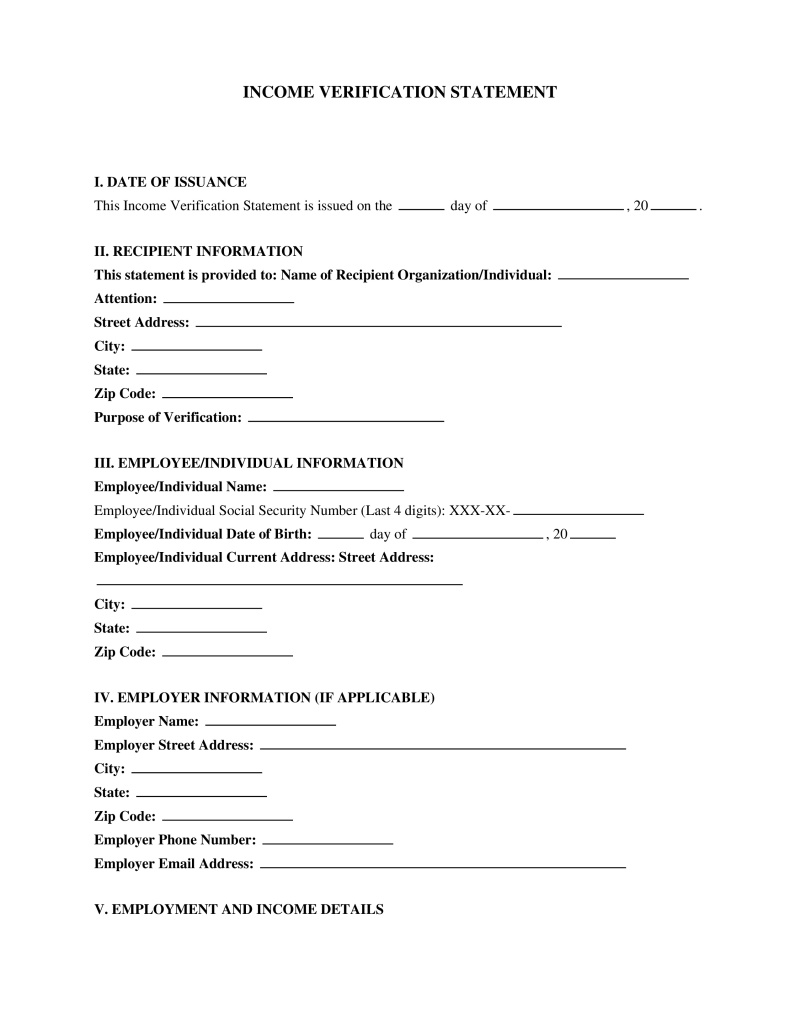
Evidence of Income Letter
An Evidence of Income Letter is a formal legal document that attests to an individual's financial earnings or salary from a specified source over a defined period, often required for various financial or legal transactions.
Income Source Type
Select the main type of income for this letter. Additional sources can be added later.
Provide details if your income source is not listed above.
Table of Contents
What is an Evidence of Income Letter?
An Evidence of Income Letter, more broadly understood as income verification, is a document or collection of documents used to formally verify an individual's financial earnings. Its primary purpose is to confirm a person's ability to meet financial obligations or qualify for certain services. This documentation is frequently required by various entities, including lenders, landlords, government agencies, and educational institutions, to assess an applicant's financial stability and eligibility.
Common Scenarios Requiring Income Verification
The need to prove income arises in numerous personal and professional contexts where financial capacity is a determining factor. Providing accurate and verifiable income information helps institutions mitigate risk and ensure fairness in their assessment processes. Common situations that necessitate the submission of income evidence include:
- Loan Applications - For mortgages, auto loans, personal loans, and business loans, lenders require income verification to assess repayment capacity and creditworthiness.
- Rental Applications - Landlords and property management companies typically ask for proof of income to ensure prospective tenants can consistently pay rent.
- Benefit Programs - Eligibility for government assistance programs, unemployment benefits, social security, or other welfare benefits often depends on an applicant's income level.
- Scholarships and Financial Aid - Educational institutions and scholarship committees may require income verification to determine financial need for grants, scholarships, or student loans.
- Child Support Calculations - In family law matters, income verification is crucial for calculating child support payments and alimony.
- Immigration Processes - Some immigration applications require proof of income to demonstrate self-sufficiency or the ability to support family members.
Types of Documents Used for Income Verification
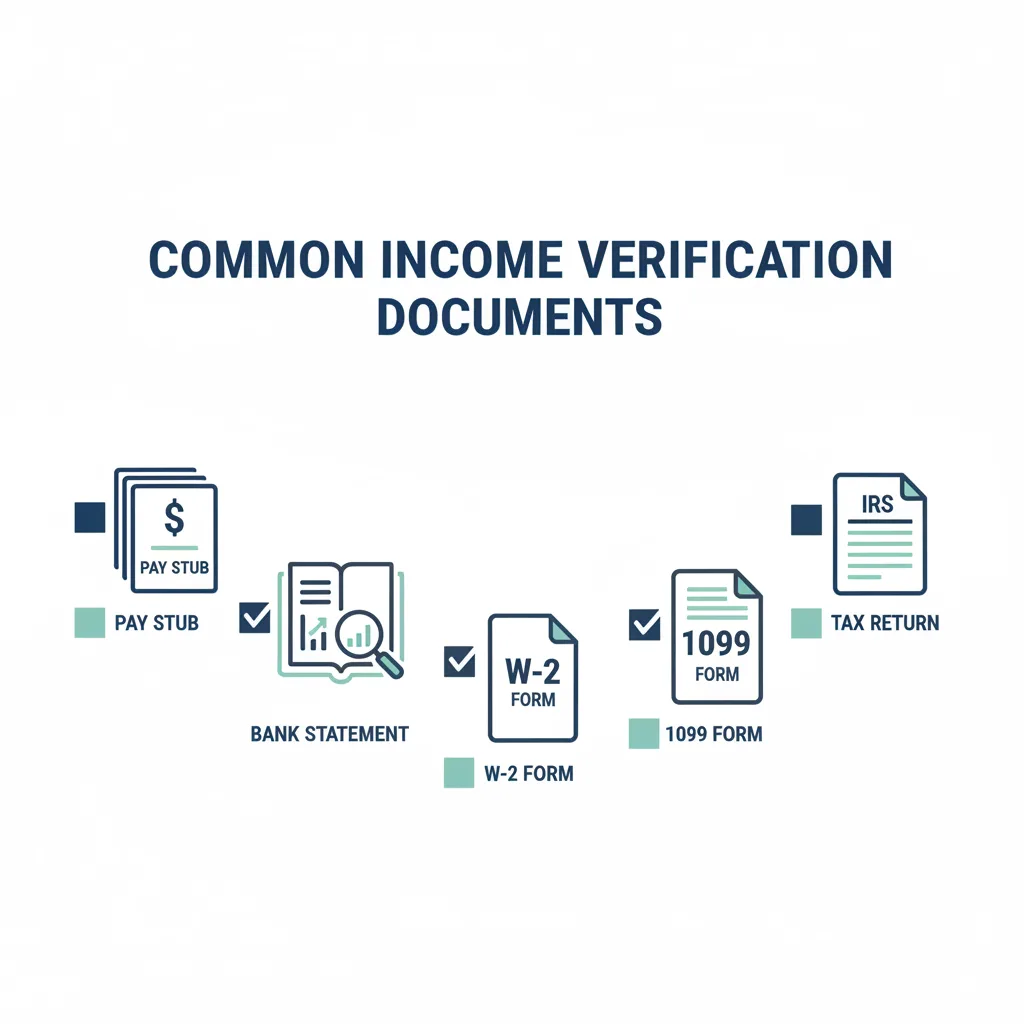
Various documents can serve as evidence of income, each suitable for different employment types and verification needs. The specific type of document requested often depends on the requesting entity and the nature of the income. Common forms of income verification include:
- Pay Stubs - Recent pay stubs from an employer typically show gross pay, net pay, deductions, and pay frequency. These are commonly requested for salaried or hourly employees.
- Bank Statements - Bank statements can demonstrate regular income deposits over a period, particularly useful for self-employed individuals or those with varied income sources.
- Employment Verification Letter - A formal letter from an employer confirming employment status, salary, and duration of employment.
- Tax Return Transcripts - Provided by the Internal Revenue Service (IRS), these free documents summarize key tax return information, including adjusted gross income. They can be downloaded immediately online and are widely accepted as official proof of income (USA.gov).
- Copies of Tax Returns - Exact replicas of an individual's filed tax return and all attached forms, also available from the IRS. These provide a comprehensive overview of reported income and deductions (USA.gov).
- W-2 Forms - Wage and Tax Statements issued by employers, summarizing annual earnings and taxes withheld.
- 1099 Forms - Various forms (e.g., 1099-MISC, 1099-NEC) used to report non-employee compensation, interest, dividends, or other types of income not from regular employment.
- Profit and Loss Statements - For self-employed individuals or business owners, these financial statements detail revenues, costs, and expenses over a period.
- Social Security or Pension Statements - Documents confirming regular payments from social security, pensions, or retirement accounts.
Obtaining Official Income Verification
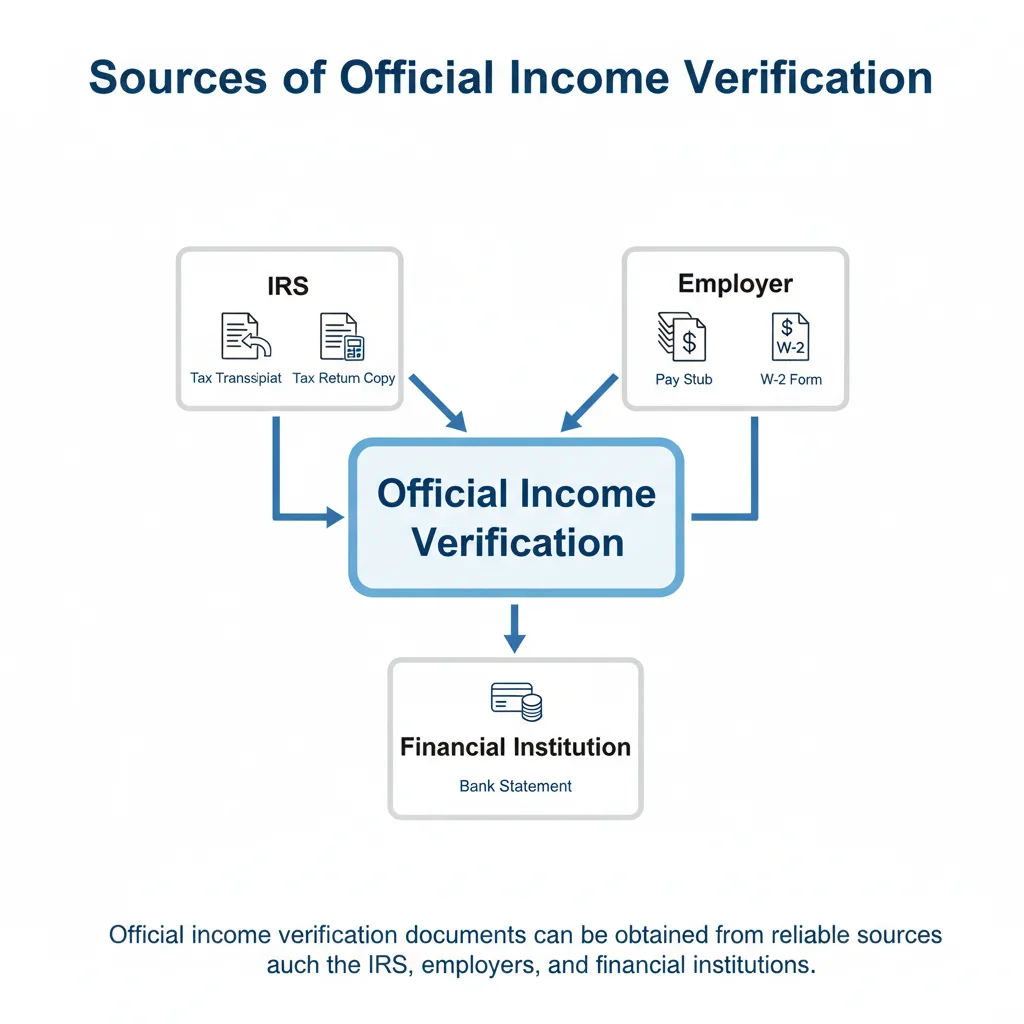
Individuals can obtain official documentation of their income through several channels, depending on the type of verification required. For many critical applications, official government-issued documents like tax transcripts are preferred due to their reliability and authenticity.
The Internal Revenue Service (IRS) offers convenient methods for individuals to retrieve their tax information, which serves as a robust form of income verification. These resources are critical for proving income for purposes such as loans, housing, or benefits:
- Tax Transcripts - These are free summaries of key information from a tax return. They can be obtained immediately online through the IRS website. Transcripts are often preferred by third parties because they are direct from the IRS and less susceptible to alteration (USA.gov).
- Copies of Tax Returns - For situations requiring a complete copy of the filed return and all accompanying schedules and forms, individuals can request an exact replica from the IRS. While transcripts are summaries, copies provide the full detail of what was submitted (USA.gov).
- Employer-Issued Documents - Pay stubs and W-2 forms are typically provided directly by employers. Individuals can request these from their employer's payroll or human resources department.
- Financial Institutions - Bank statements can be accessed through online banking portals, mailed statements, or by requesting them directly from the bank.
Importance of Accuracy and Completeness
Providing accurate and complete income verification is crucial for the success of any application. Discrepancies or omissions can lead to delays, rejection of applications, or even legal consequences if misrepresentation is suspected. Entities reviewing income evidence rely on the provided documents to make informed decisions, and any inconsistencies can raise red flags.
It is important for applicants to ensure that all submitted documents are current, legible, and directly address the income period specified by the requesting party. For instance, a lender may require the most recent two years of tax returns, while a landlord might only need the last three months of pay stubs. Understanding and fulfilling these specific requirements helps streamline the verification process and builds trust with the requesting institution.
Frequently Asked Questions
Sources
- Get transcripts and copies of tax returns - Provides information on obtaining tax transcripts and copies of tax returns, which can serve as evidence of income.
Not the form you're looking for?
Try our legal document generator to create a custom document
Disclaimer: The templates available on this website are provided for general informational purposes only and do not constitute legal advice. They are not intended to be, and should not be interpreted as, compliant with any specific legal, regulatory, or privacy requirements. These templates are not a replacement for professional legal guidance and should not be relied upon for any particular matter or circumstance. Users are strongly encouraged to seek advice from a qualified attorney licensed in their jurisdiction before using, modifying, or relying on any template.
All templates are provided on an "as is," "with all faults," and "as available" basis. The provider disclaims any and all warranties of any kind, whether express, implied, statutory, or otherwise, including without limitation warranties of merchantability, fitness for a particular purpose, title, or non-infringement.
LegalTemplates.com makes no guarantees or representations regarding the accuracy, completeness, expected outcomes, or reliability of the materials contained in these templates or any materials referenced or linked from them.