Counter Claim
A Counter Claim is a formal legal pleading filed by a defendant in a lawsuit against the plaintiff, asserting a new and independent cause of action to obtain relief.
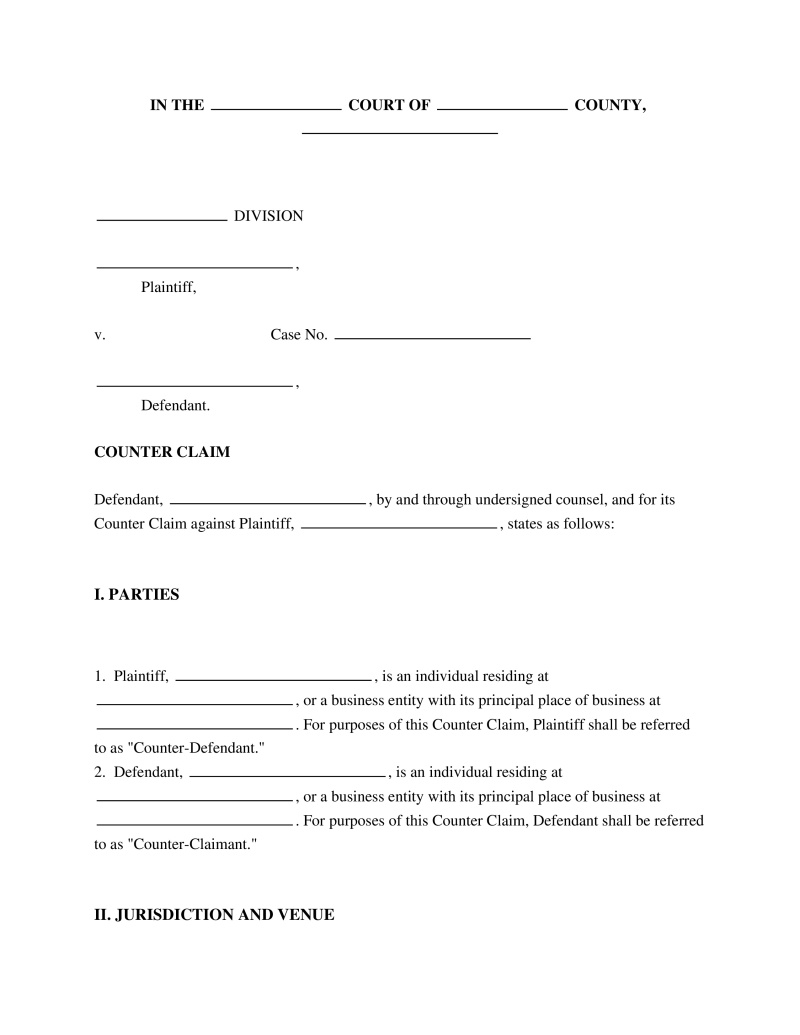
Court Name
Enter the complete name of the court as it appears on the original complaint.
If the court has a specific division or department, enter it here.
Enter the county name where the court sits.
Select the state or jurisdiction of the court.
Table of Contents
What is a Counter Claim?
A counterclaim is a formal claim filed by a defendant against a plaintiff within the same lawsuit. It asserts that the defendant is entitled to relief from the plaintiff, effectively reversing the roles where the defendant becomes the claimant for their specific cause of action. This pleading is typically included as part of the defendant's answer to the plaintiff's initial complaint, allowing all related disputes between the parties to be resolved in a single legal proceeding (N.Y. C.P.L.R. § 3011, N.Y. C.P.L.R. § 3019).
Types of Counterclaims
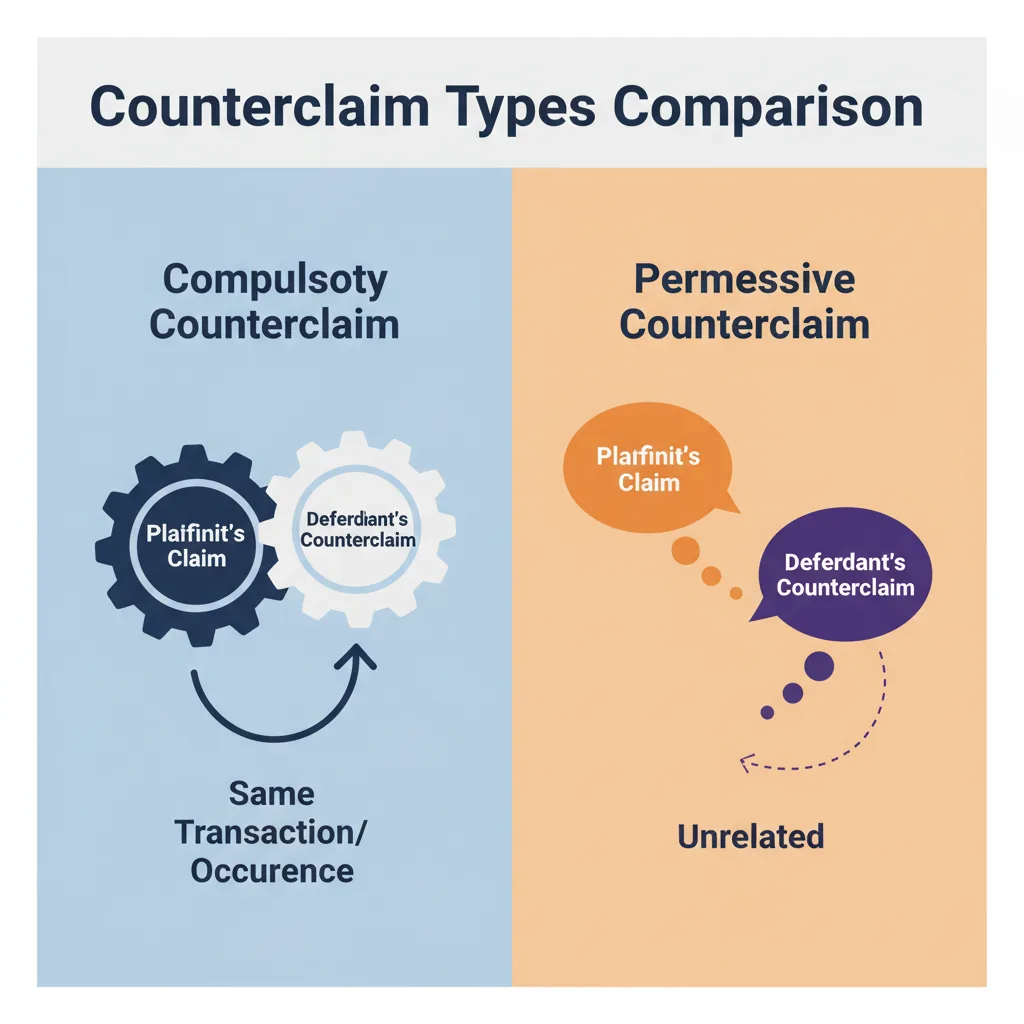
Counterclaims are generally categorized into two main types based on their relationship to the plaintiff's original claim. These distinctions determine whether a defendant is required to bring the claim in the current lawsuit or if they have the option to pursue it separately.
- Compulsory Counterclaim - A claim that arises out of the same transaction or occurrence that is the subject matter of the opposing party's claim (Mass. R. Civ. P. 13; Kan. Stat. § 60-213). If a defendant does not raise a compulsory counterclaim in the current lawsuit, they may be barred from asserting it in a future action. This rule promotes judicial efficiency by ensuring all closely related disputes are resolved together.
- Permissive Counterclaim - Any claim that a defendant has against a plaintiff that does not arise out of the same transaction or occurrence as the plaintiff's original claim (Mass. R. Civ. P. 13). While permissive counterclaims can be brought in the current action, the defendant is not required to do so and may choose to pursue them in a separate lawsuit.
Purpose and Strategic Considerations
The primary purpose of a counterclaim is to allow a defendant to seek affirmative relief against the plaintiff, rather than merely defending against the plaintiff's allegations. This transforms the lawsuit from a purely defensive posture for the defendant into an offensive one, where they assert their own rights and seek damages or other remedies.
From a strategic standpoint, filing a counterclaim can serve several important functions:
- Offsetting Damages - A successful counterclaim can reduce or entirely negate any damages awarded to the plaintiff.
- Leverage in Settlement Negotiations - The existence of a valid counterclaim can strengthen the defendant's position during settlement discussions, as it introduces additional risk for the plaintiff.
- Judicial Economy - Resolving all related claims between the parties in a single lawsuit prevents multiple trials and potentially inconsistent judgments.
- Affirmative Relief - It allows the defendant to obtain a judgment in their favor, potentially awarding them monetary damages or other equitable relief.
Distinction from Related Pleadings
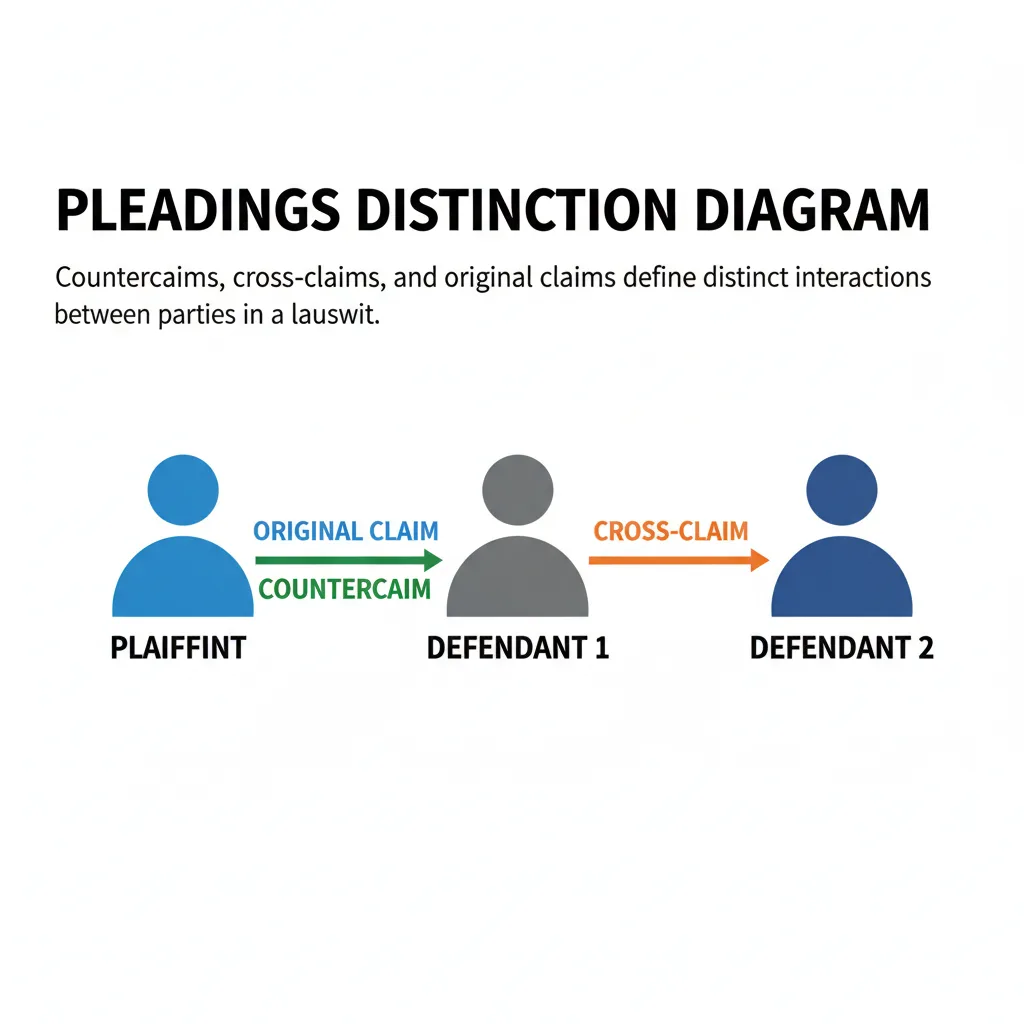
While often discussed in conjunction with other responsive pleadings, a counterclaim has distinct characteristics that set it apart from cross-claims and affirmative defenses.
Cross-Claims
A cross-claim is a claim brought by one party against a co-party in the same lawsuit (N.Y. C.P.L.R. § 3011). For instance, a defendant might file a cross-claim against another defendant, or a plaintiff against another plaintiff. Unlike a counterclaim, which is always directed against an opposing party (the plaintiff), a cross-claim is directed against a party on the same side of the litigation, typically for contribution or indemnity.
Affirmative Defenses
An affirmative defense is an argument made by the defendant that, even if the plaintiff's allegations are true, the defendant is not liable due to some other legal reason. Examples include statute of limitations, self-defense, or accord and satisfaction. While an affirmative defense seeks to defeat the plaintiff's claim, it does not seek affirmative relief from the plaintiff. A counterclaim, by contrast, is an independent cause of action that seeks a judgment in the defendant's favor against the plaintiff (N.J. Courts Glossary: Counterclaim).
Procedural Aspects of Filing
The filing of a counterclaim is governed by rules of civil procedure, which typically dictate when and how such a claim must be presented. Generally, a counterclaim is included as part of the defendant's answer to the plaintiff's complaint.
Key procedural considerations include:
- Timing - Counterclaims are usually filed at the same time as the defendant's answer to the original complaint. Late filing may require leave of court.
- Jurisdiction - The court must have jurisdiction over the subject matter of the counterclaim, especially for permissive counterclaims that might not arise from the original transaction.
- Service - The counterclaim must be properly served on the plaintiff, just like an original complaint.
- Pleading Requirements - The counterclaim must meet the same pleading standards as a complaint, clearly stating the factual basis and legal theory for the relief sought.
Impact on Litigation
The introduction of a counterclaim can significantly alter the trajectory and complexity of a lawsuit. It expands the scope of the dispute, potentially introducing new legal issues, facts, and parties.
The impact can include:
- Increased Discovery - Both parties will likely engage in broader discovery to gather evidence related to both the original claim and the counterclaim.
- Potential for Multiple Judgments - The court will need to render judgments on both the plaintiff's claim and the defendant's counterclaim, which may result in offsetting awards.
- Settlement Dynamics - The presence of a counterclaim can alter the bargaining positions, making settlement negotiations more intricate as each party weighs their potential liability and recovery on both claims.
- Trial Complexity - A trial involving counterclaims may require more time and presentation of evidence for multiple claims, potentially leading to longer proceedings.
Frequently Asked Questions
Sources
- Civil Practice Law & Rules § 3011: Kinds of pleadings - Defines the types of pleadings, including counterclaims, in civil practice.
- Civil Practice Law & Rules § 3019: Counterclaims and cross-claims - Details the subject matter and requirements for counterclaims and cross-claims in civil practice.
- Civil Procedure Rule 13: Counterclaim and cross-claim - Outlines the rules for compulsory and permissive counterclaims in Massachusetts civil procedure.
- Counterclaim | NJ Courts - Provides a definition of a counterclaim in the context of New Jersey courts.
- Kansas Statute § 60-213: Counterclaims and cross-claims - Describes the rules for compulsory and permissive counterclaims in Kansas civil procedure.
Not the form you're looking for?
Try our legal document generator to create a custom document
Disclaimer: The templates available on this website are provided for general informational purposes only and do not constitute legal advice. They are not intended to be, and should not be interpreted as, compliant with any specific legal, regulatory, or privacy requirements. These templates are not a replacement for professional legal guidance and should not be relied upon for any particular matter or circumstance. Users are strongly encouraged to seek advice from a qualified attorney licensed in their jurisdiction before using, modifying, or relying on any template.
All templates are provided on an "as is," "with all faults," and "as available" basis. The provider disclaims any and all warranties of any kind, whether express, implied, statutory, or otherwise, including without limitation warranties of merchantability, fitness for a particular purpose, title, or non-infringement.
LegalTemplates.com makes no guarantees or representations regarding the accuracy, completeness, expected outcomes, or reliability of the materials contained in these templates or any materials referenced or linked from them.