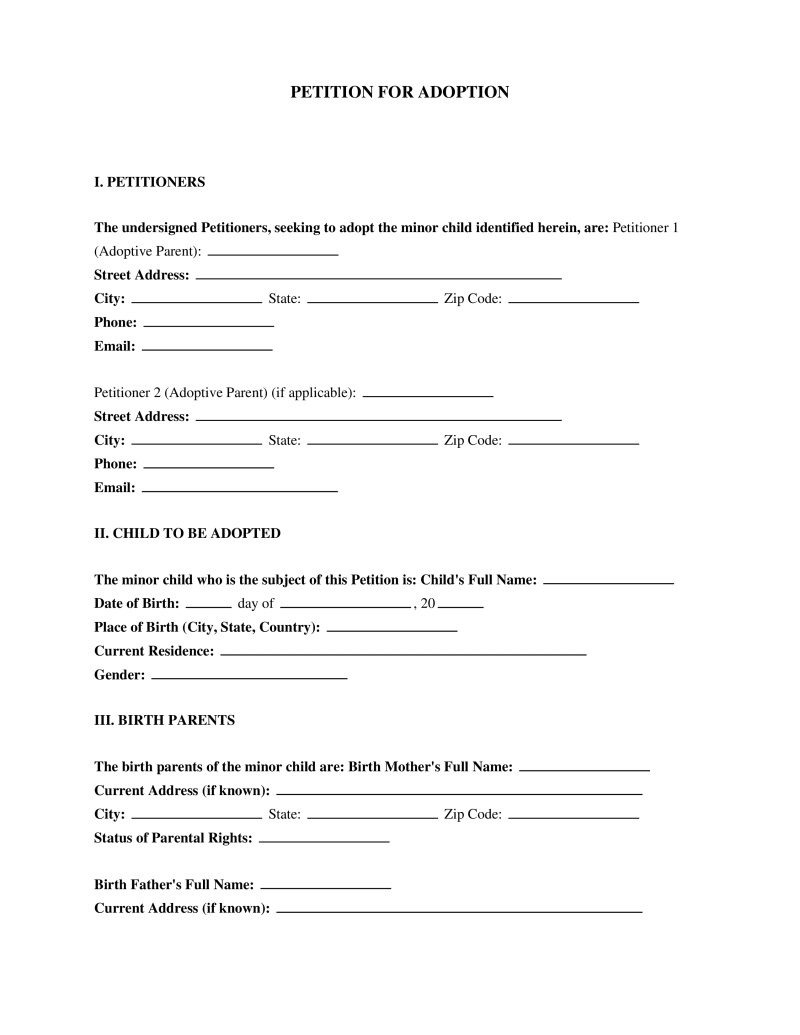
Adoption Paper
An Adoption Paper is a formal legal instrument that officially records and establishes the legal parent-child relationship between individuals and a child, superseding prior parental rights.
Adoption Type
Select the type of adoption. If unsure, choose 'Other' and specify.
Provide details if the adoption type is not listed.
Table of Contents
What is a Adoption Paper?
Adoption paper refers to the comprehensive collection of legal documents required to formalize the permanent transfer of parental rights and responsibilities from biological parents or legal guardians to adoptive parents. These documents collectively establish a new, legally recognized parent-child relationship. The purpose of these papers is to ensure all legal requirements are met, consent is properly obtained, and the child's best interests are served throughout the adoption process. These legal instruments are utilized by prospective adoptive parents, birth parents, adoption agencies, legal representatives, and the courts to manage, record, and finalize an adoption.
Key Documents in the Adoption Process
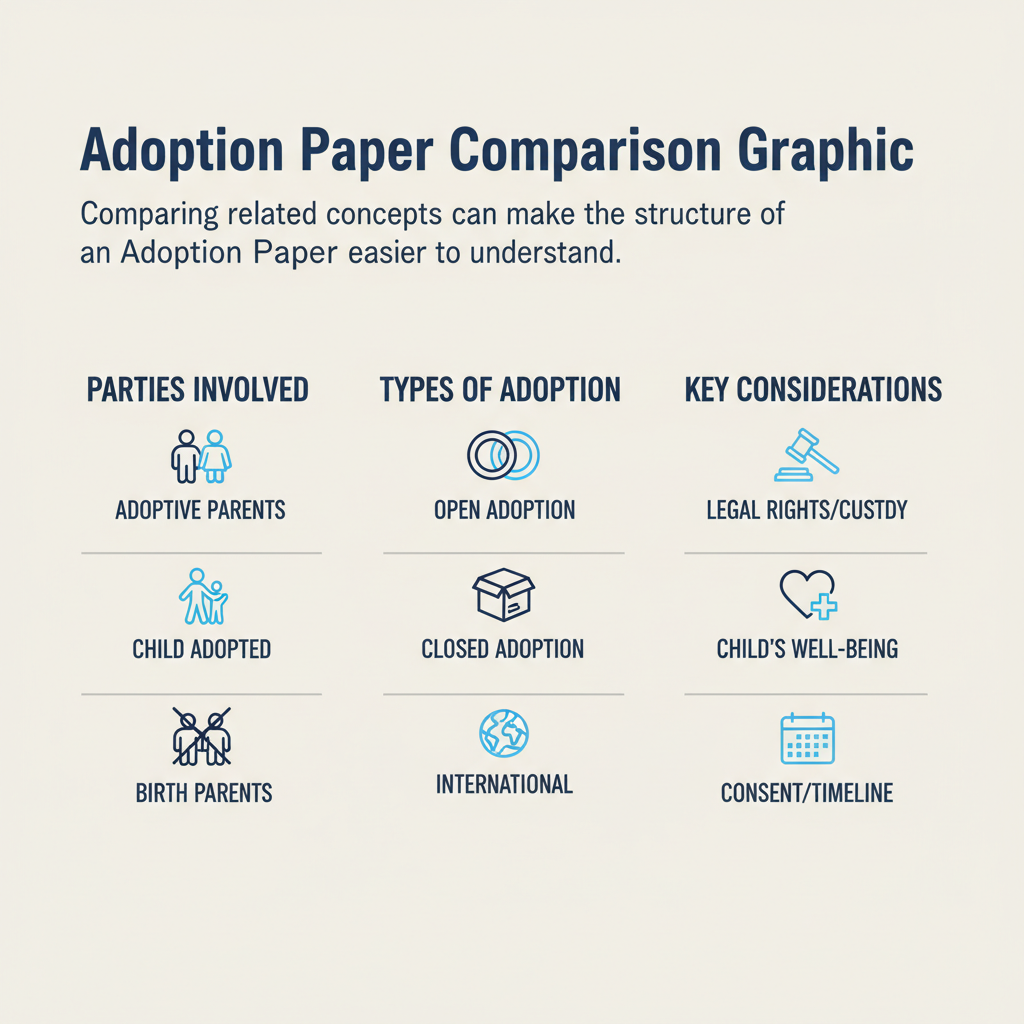
The journey to adoption involves numerous legal forms and records, collectively known as adoption paper, each serving a critical function in establishing the new family unit. These documents are meticulously prepared, reviewed, and filed with the appropriate court or agency to ensure legal compliance and the well-being of the child. The primary documents typically include:
- Petition for Adoption - The formal legal request filed with the court by the prospective adoptive parents, initiating the adoption proceedings. It typically includes identifying information about the petitioners, the child, and the type of adoption sought.
- Consent to Adopt - A legal document signed by the birth parents, or other legal guardians, voluntarily relinquishing their parental rights and agreeing to the child's adoption. In some cases, if the child is above a certain age (often 12 or 14), their consent may also be required.
- Termination of Parental Rights Order - A court order that legally severs the rights and responsibilities of the birth parents to the child. This order is a prerequisite for most adoptions and is often issued simultaneously with or prior to the final adoption decree.
- Home Study Report - A comprehensive assessment conducted by a licensed social worker or agency to evaluate the prospective adoptive parents' suitability to provide a safe, stable, and nurturing home environment. This report includes background checks, interviews, and home visits.
- Adoption Decree/Order - The final legal document issued by the court that officially establishes the adoptive parents as the child's legal parents, granting them all parental rights and responsibilities. This decree often includes a new birth certificate request.
- Medical and Social History Report - A collection of information about the child's and birth family's medical background, developmental history, and social circumstances, provided to the adoptive parents to inform them about the child's heritage.
- Interstate Compact on the Placement of Children (ICPC) Documents - Required when a child is adopted across state lines. These documents ensure that the child's placement complies with the laws of both the sending and receiving states, safeguarding the child's welfare during interstate transport and placement.
- Affidavit of Financial Disclosure - A document detailing the financial status of the prospective adoptive parents, often required to demonstrate their ability to provide for the child's needs.
Parties Involved and Their Roles
The creation and management of adoption paper involve a collaborative effort among several key parties, each with distinct roles and responsibilities. Their coordinated actions ensure that the legal process is followed correctly and that the child's best interests are paramount.
- Prospective Adoptive Parents - These individuals initiate the process by filing petitions, providing personal and financial disclosures, undergoing home studies, and ultimately becoming the legal parents. They are responsible for adhering to all legal requirements.
- Birth Parents/Legal Guardians - They provide essential consents, relinquish parental rights, and often contribute medical and social history information about themselves and the child. Their consent must be informed and voluntary, typically documented in specific legal forms.
- Adopted Child - While often too young to directly participate in the paperwork, their welfare is the central focus. If the child is of sufficient age and maturity, their consent to the adoption may be legally required and documented.
- Adoption Agencies/Social Workers - Licensed professionals who facilitate placements, conduct home studies, provide counseling, and prepare various reports necessary for court review. They act as intermediaries and ensure compliance with state regulations.
- Attorneys - Legal counsel represents all parties involved, including adoptive parents, birth parents, or the child. They draft, review, and file adoption paper, ensure legal accuracy, and represent their clients in court proceedings.
- Courts/Judges - The judicial system reviews all submitted adoption paper, conducts hearings, issues orders (such as termination of parental rights and the final adoption decree), and ultimately grants the legal adoption.
Legal Requirements and Filing Procedures
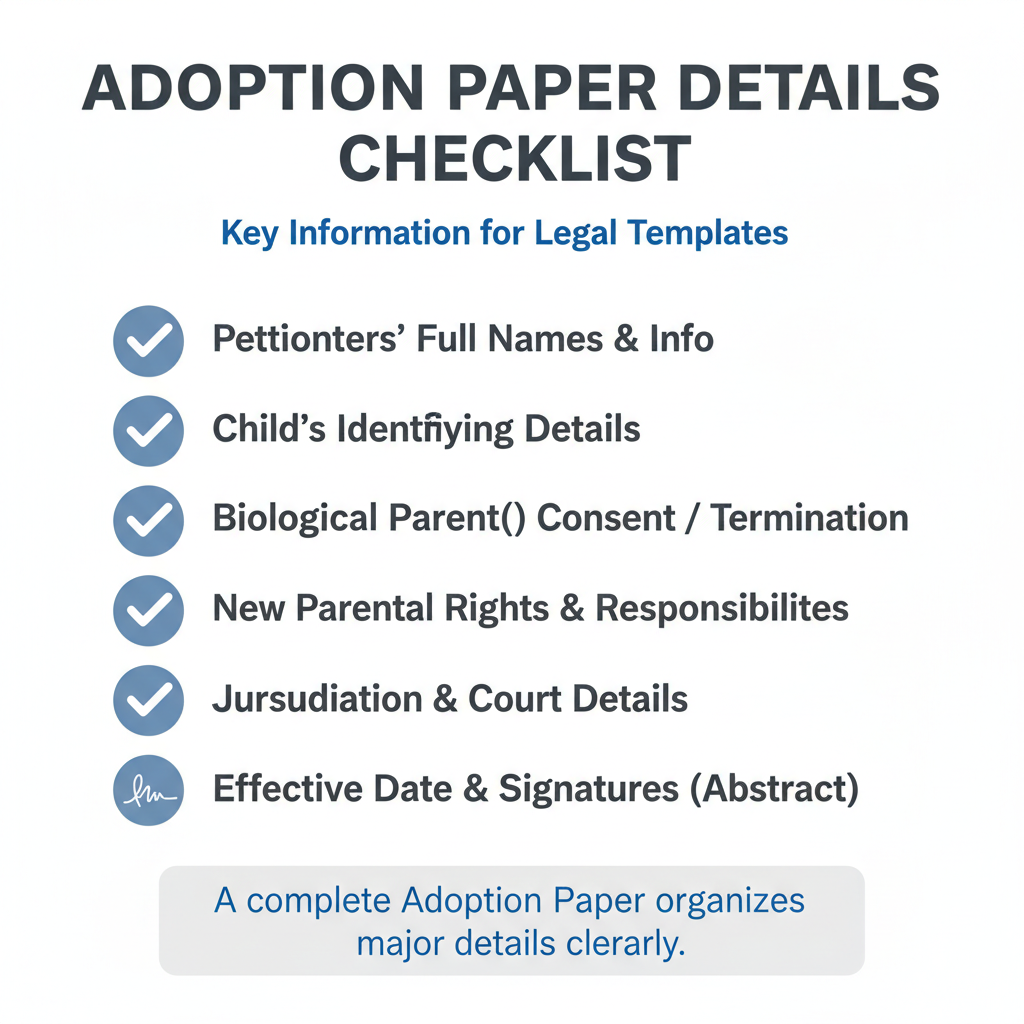
Navigating the legal framework for adoption requires strict adherence to specific requirements and filing procedures, which vary significantly by jurisdiction. These regulations are designed to protect the rights of all parties involved, especially the child. Key considerations for the adoption paper process include:
- Jurisdiction - The adoption petition must be filed in the appropriate court, typically in the county where the adoptive parents reside, where the child resides, or where the adoption agency is located.
- Consent Validity - Birth parent consents must be obtained voluntarily, often after the child's birth, and may be irrevocable after a specified waiting period. Specific legal forms and witnessing requirements apply.
- Home Study Approval - A favorable home study report is almost universally required before a child can be placed in a home for adoption, and certainly before an adoption is finalized. This report becomes a critical piece of the adoption paper.
- Filing Deadlines - While specific deadlines vary, certain documents, like the petition for adoption, must be filed within a particular timeframe after a child's placement.
- Notarization and Witnessing - Many critical adoption documents, especially consents and affidavits, require notarization and/or the presence of witnesses to attest to the authenticity of signatures.
- Post-Placement Supervision - After a child is placed but before the final adoption decree, social workers typically conduct supervisory visits, and reports from these visits become part of the adoption paper submitted to the court.
- Final Hearing - A court hearing where the judge reviews all submitted adoption paper, confirms all legal requirements have been met, and issues the final adoption decree.
Confidentiality and Access to Records
The sensitive nature of adoption paper often leads to strict confidentiality rules regarding adoption records, aiming to protect the privacy of all parties. However, modern approaches often balance this with the adoptee's right to information.
Frequently Asked Questions
Not the form you're looking for?
Try our legal document generator to create a custom document
Ask about an Adoption Paper
Example questions:
Disclaimer: The templates available on this website are provided for general informational purposes only and do not constitute legal advice. They are not intended to be, and should not be interpreted as, compliant with any specific legal, regulatory, or privacy requirements. These templates are not a replacement for professional legal guidance and should not be relied upon for any particular matter or circumstance. Users are strongly encouraged to seek advice from a qualified attorney licensed in their jurisdiction before using, modifying, or relying on any template.
All templates are provided on an "as is," "with all faults," and "as available" basis. The provider disclaims any and all warranties of any kind, whether express, implied, statutory, or otherwise, including without limitation warranties of merchantability, fitness for a particular purpose, title, or non-infringement.
LegalTemplates.com makes no guarantees or representations regarding the accuracy, completeness, expected outcomes, or reliability of the materials contained in these templates or any materials referenced or linked from them.