Pleading Paper
Create Pleading Paper
Pleading Paper
A pleading paper is a standardized legal stationery or document template used in many jurisdictions for formal court filings and other legal submissions.
Answer the question(s) below to create your Pleading Paper
Court Name
Enter the official name of the court as it should appear in the caption.
Specify the division or department if required by the court.
Table of Contents
What is a Pleading Paper?
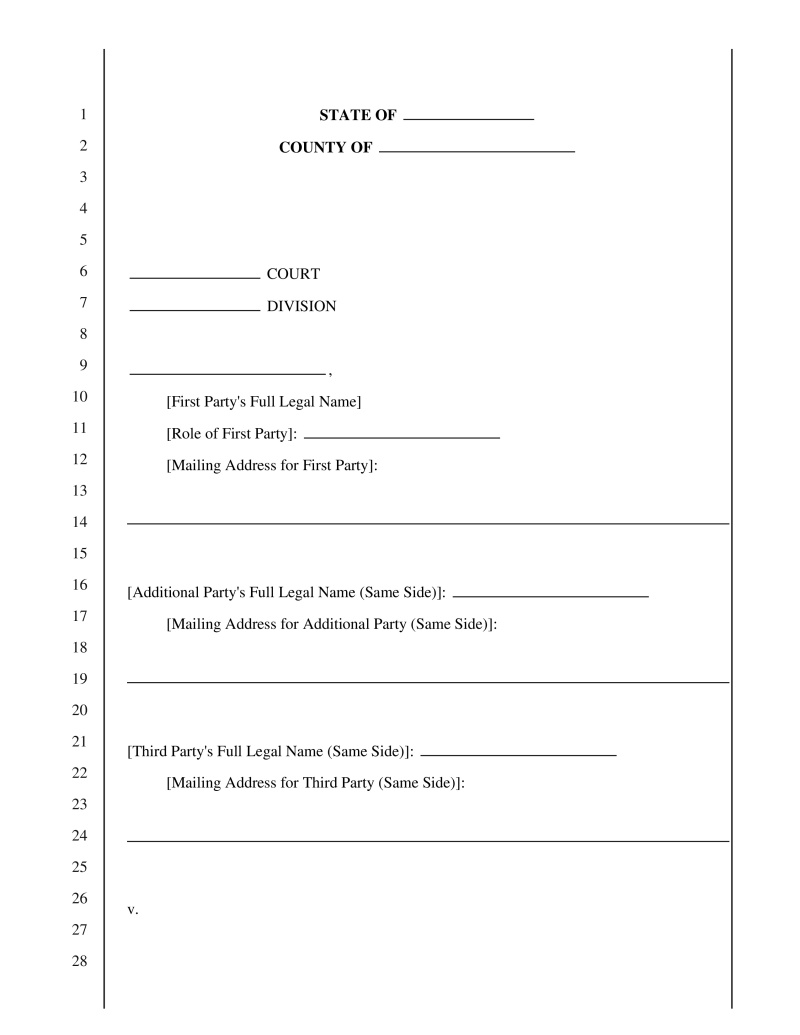
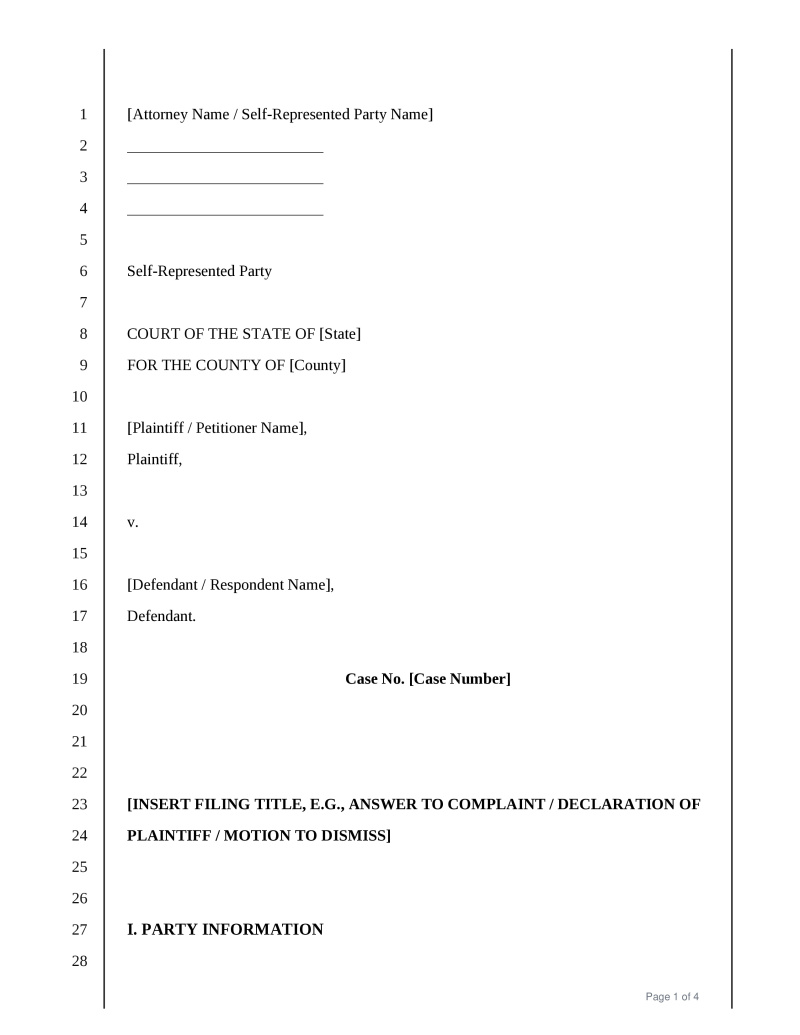
Pleading paper refers to a specialized type of paper traditionally used by legal professionals for drafting and filing documents with courts. Characterized by its specific dimensions and pre-printed numbered lines along the left margin, it serves to standardize the appearance and readability of legal submissions. Lawyers, paralegals, and other legal support staff utilize pleading paper to prepare motions, briefs, complaints, answers, and various other court filings, ensuring compliance with judicial formatting requirements.
Historical Context and Evolution
The origins of pleading paper can be traced back to the need for uniformity and clarity in legal documents submitted to judicial bodies. Historically, court clerks and judges dealt with a vast array of handwritten or typewritten submissions, often lacking consistent formatting. The introduction of standardized paper with numbered lines facilitated easy reference to specific points within a document, improving efficiency in legal proceedings.
Before the widespread adoption of computers and electronic filing systems, attorneys meticulously typed or printed documents on physical pleading paper. This practice ensured that all parties, including the court, could quickly locate and cite particular lines or paragraphs during hearings, depositions, or appellate reviews. The physical format of pleading paper became deeply ingrained in legal practice, symbolizing the meticulousness and formality expected in court filings.
With the advent of digital technology, the physical use of pleading paper has significantly diminished in many jurisdictions. Most courts now mandate or strongly encourage electronic filing (e-filing), where documents are submitted as PDF files. While the physical paper is less common, the underlying formatting conventions—such as line numbering, specific margins, and font requirements—have been largely retained and translated into digital templates and software features, ensuring continuity in legal document presentation.
Standard Formatting Requirements
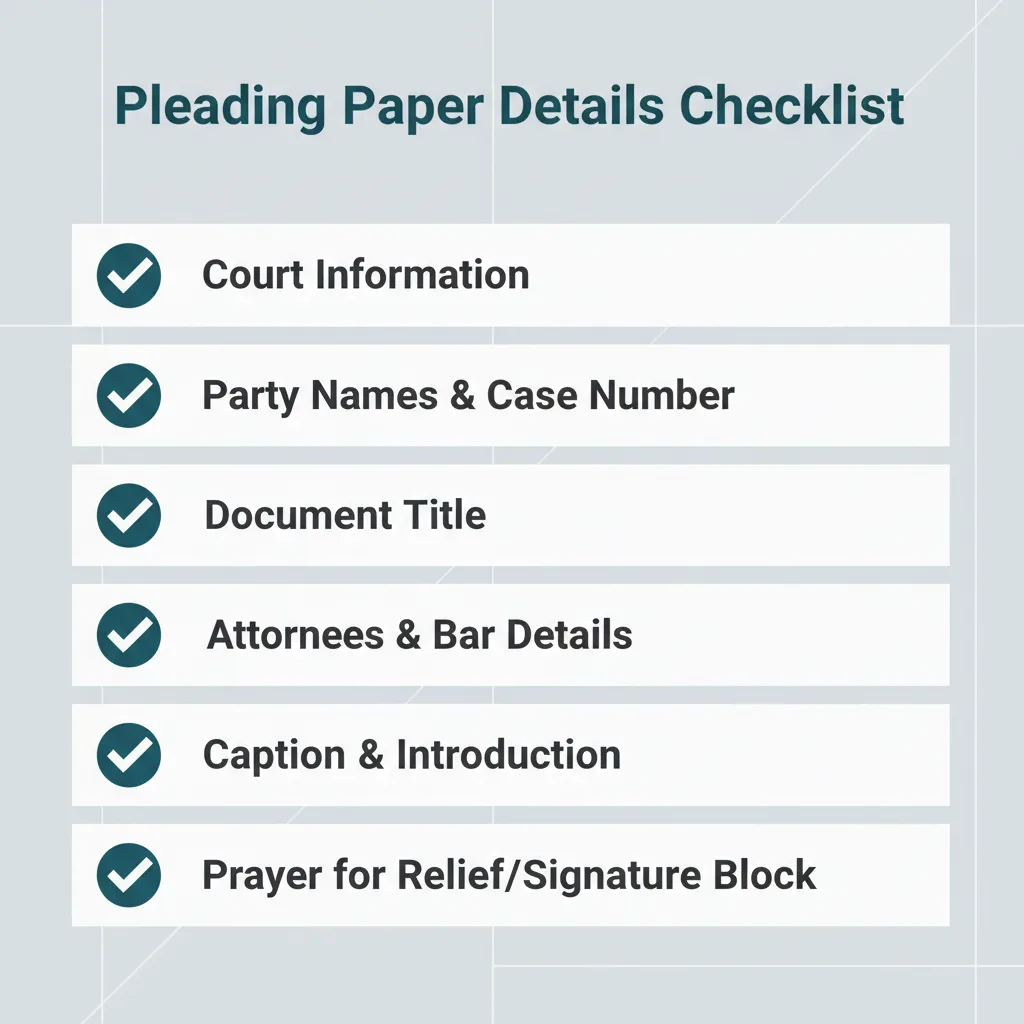
Pleading paper adheres to specific formatting standards designed to ensure legibility, consistency, and ease of reference within the legal system. These requirements are often dictated by local court rules, state statutes, or federal rules of civil procedure.
- Paper Size - Traditionally, pleading paper is legal-sized, measuring 8.5 by 14 inches (216 by 356 mm), although some jurisdictions now permit or require letter-sized paper (8.5 by 11 inches or 216 by 279 mm) for certain filings.
- Line Numbering - A defining characteristic is the sequential numbering printed along the left margin, typically from 1 to 28 or 1 to 25, depending on the paper size and court rules. This numbering allows for precise citation to specific lines of text.
- Margins - Strict margin requirements are enforced to ensure enough white space for court stamps, annotations, and binding. Common margins include a 1-inch top margin, 1-inch right margin, 1-inch bottom margin, and a 2-inch left margin (to accommodate the line numbers and potential binding).
- Font and Font Size - While not strictly a feature of the paper itself, court rules often mandate specific fonts (e.g., Times New Roman, Arial, Courier) and font sizes (typically 12-point) for the text placed on pleading paper, ensuring universal readability.
- Header and Footer - Documents often include a header with case information (e.g., court name, case number, party names) and a footer with page numbers, though these elements are part of the document content, not the pre-printed paper.
Purpose and Importance in Litigation
Pleading paper, and its digital equivalent in formatting, plays a crucial role in maintaining order and efficiency within the judicial process. Its standardized format directly supports several critical functions in litigation.
The primary purpose is to facilitate clear and unambiguous communication among all parties involved in a legal dispute, including judges, attorneys, clerks, and opposing counsel. The numbered lines allow for pinpoint references, enabling attorneys to cite specific statements, arguments, or factual assertions with precision. This is particularly valuable during oral arguments, depositions, or when drafting responses to complex legal documents.
Furthermore, the consistent formatting helps streamline the court's administrative processes. Clerks can more easily review, file, and manage documents when they conform to a uniform standard. Judges benefit from readily navigable documents, allowing them to quickly locate relevant sections and understand the arguments presented without having to decipher inconsistent layouts.
The formal presentation also underscores the seriousness and gravity of court proceedings. By adhering to established norms, legal professionals demonstrate respect for the judicial system and contribute to the professional decorum expected in the administration of justice. The uniformity ensures that the focus remains on the legal content rather than on variations in document appearance.
Differences from Standard Office Paper
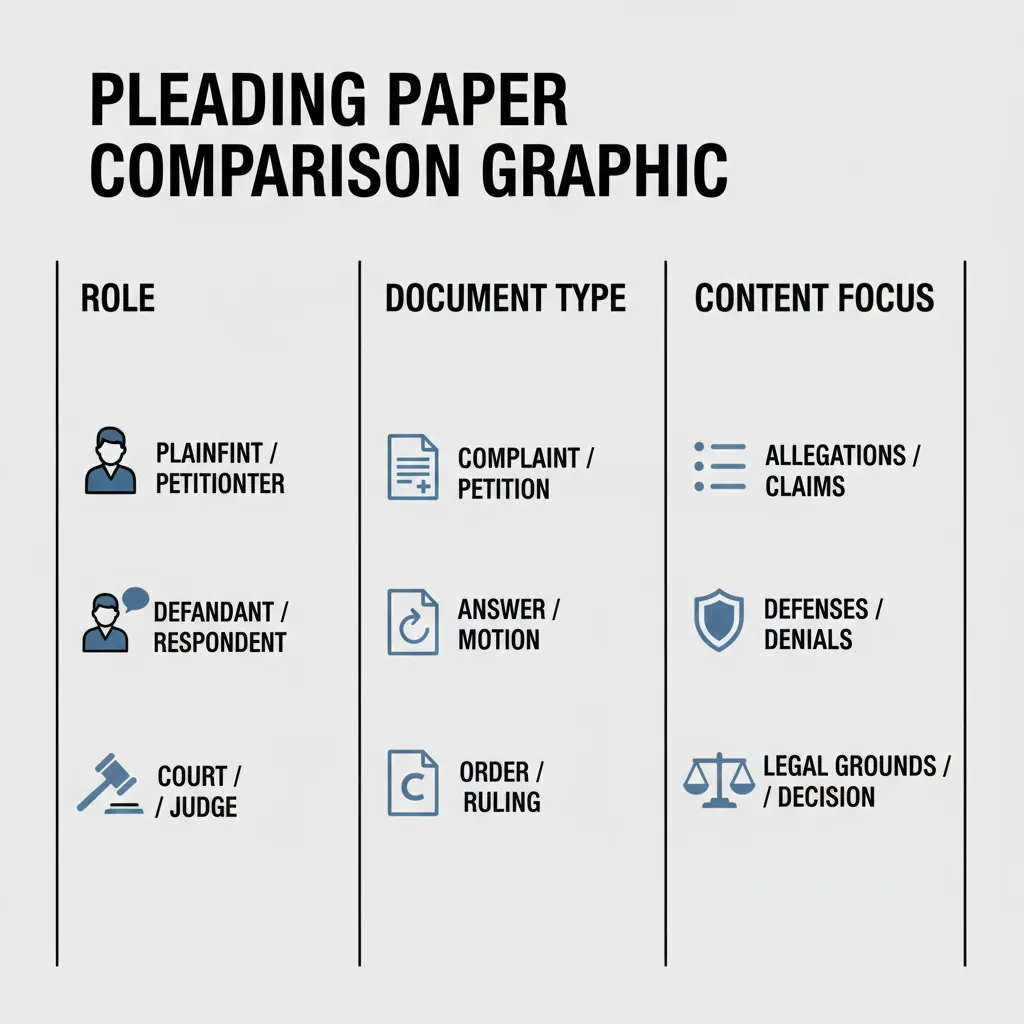
While both pleading paper and standard office paper are used for printing documents, they possess distinct characteristics tailored to their specific applications.
- Size and Dimensions - Standard office paper in the United States is typically letter-sized (8.5 x 11 inches). Traditional pleading paper, however, is legal-sized (8.5 x 14 inches), though letter-sized pleading paper is becoming more common in some jurisdictions for physical filings, and is the standard for e-filed documents.
- Line Numbering - The most apparent difference is the pre-printed sequential line numbering along the left margin of pleading paper. Standard office paper lacks these numbers. This feature is exclusive to legal documents for citation purposes.
- Purpose and Context - Standard office paper is a general-purpose medium suitable for a wide range of administrative, business, and personal documents. Pleading paper, by contrast, is specifically designed and used for official court filings and legal correspondence, where strict formatting rules apply.
- Legal Compliance - Using pleading paper (or adhering to its formatting conventions in digital documents) is often a mandatory requirement for court submissions. Failing to comply with these formatting rules can result in a document being rejected by the court clerk, causing delays or requiring resubmission.
Jurisdictional Variations
The specific requirements for pleading paper and its digital equivalents can vary significantly between different jurisdictions, including federal courts, state courts, and even local municipal courts. These variations underscore the importance for legal professionals to consult the specific rules of the court where a document will be filed.
For instance, federal courts generally follow the Federal Rules of Civil Procedure (FRCP) and local court rules, which outline formatting standards for e-filed documents. While the FRCP itself does not mandate physical line-numbered paper, local rules often incorporate such requirements for printed versions or digital templates. State court systems frequently have their own distinct sets of rules, which may specify paper size (letter vs. legal), margin widths, font types, and whether line numbering is required or merely preferred.
Frequently Asked Questions
A Pleading Paper can become legally binding when it is properly completed, signed when required, and approved or incorporated into a court order when court approval is necessary. The exact requirements depend on the document type and the law of the relevant jurisdiction.
The document should include the information needed to identify the parties, describe their responsibilities, and explain the terms they are agreeing to follow. It should also address any practical details needed to make the agreement clear and workable.
Some legal documents must be filed with or approved by a court before they can be enforced as a court order. Others may be used privately unless a dispute or formal legal process requires court involvement.
Many legal agreements and orders can be changed later if the parties agree or if a court finds a legally sufficient reason for modification. The process usually depends on whether the document has already been approved by a court.
Each party should carefully review the document before signing to make sure the terms are accurate, complete, and understood. Independent legal advice may be useful when the document affects important rights or long-term responsibilities.
Related Documents
Forms commonly used with Pleading Paper.
Already have a document? Put it on pleading paper
Upload a PDF or Word court document and we lay your words out on 28-line, 26-line or 25-line pleading paper — nothing rewritten, preview free.
Not the form you're looking for?
Try our legal document generator to create a custom document
Disclaimer: The templates available on this website are provided for general informational purposes only and do not constitute legal advice. They are not intended to be, and should not be interpreted as, compliant with any specific legal, regulatory, or privacy requirements. These templates are not a replacement for professional legal guidance and should not be relied upon for any particular matter or circumstance. Users are strongly encouraged to seek advice from a qualified attorney licensed in their jurisdiction before using, modifying, or relying on any template.
All templates are provided on an "as is," "with all faults," and "as available" basis. The provider disclaims any and all warranties of any kind, whether express, implied, statutory, or otherwise, including without limitation warranties of merchantability, fitness for a particular purpose, title, or non-infringement.
LegalTemplates.com makes no guarantees or representations regarding the accuracy, completeness, expected outcomes, or reliability of the materials contained in these templates or any materials referenced or linked from them.