Petition for Emancipation
A Petition for Emancipation is a formal legal document filed with a court by a minor seeking a judicial declaration of independence from parental or guardian control and legal responsibility.
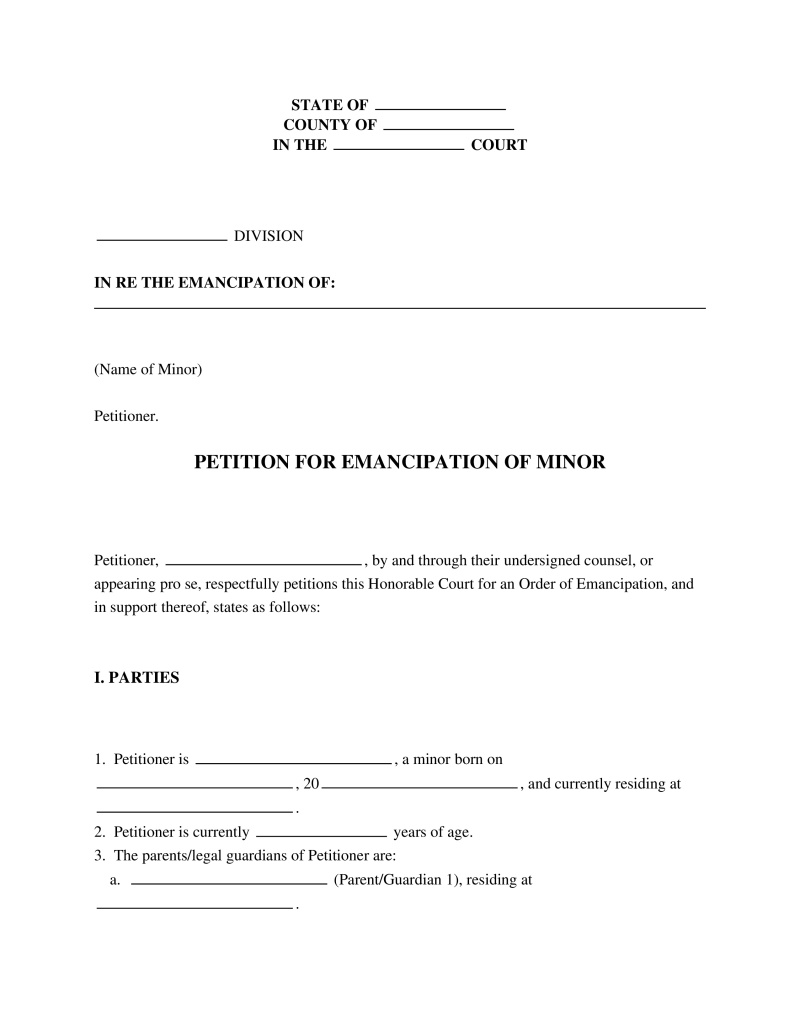
Minor Currently Resides With
Select the person(s) the minor lives with at present.
Provide details if 'Other' was selected.
Table of Contents
What is a Petition for Emancipation?
A Petition for Emancipation is a legal document filed by a minor seeking to gain independence from their parents or legal guardians before reaching the age of majority. This petition formally requests a court to declare the minor an adult for legal purposes, granting them the rights and responsibilities typically associated with adulthood. The primary purpose of emancipation is to allow a minor to manage their own financial affairs, make personal decisions, and enter into contracts without parental consent.
Legal Basis for Emancipation
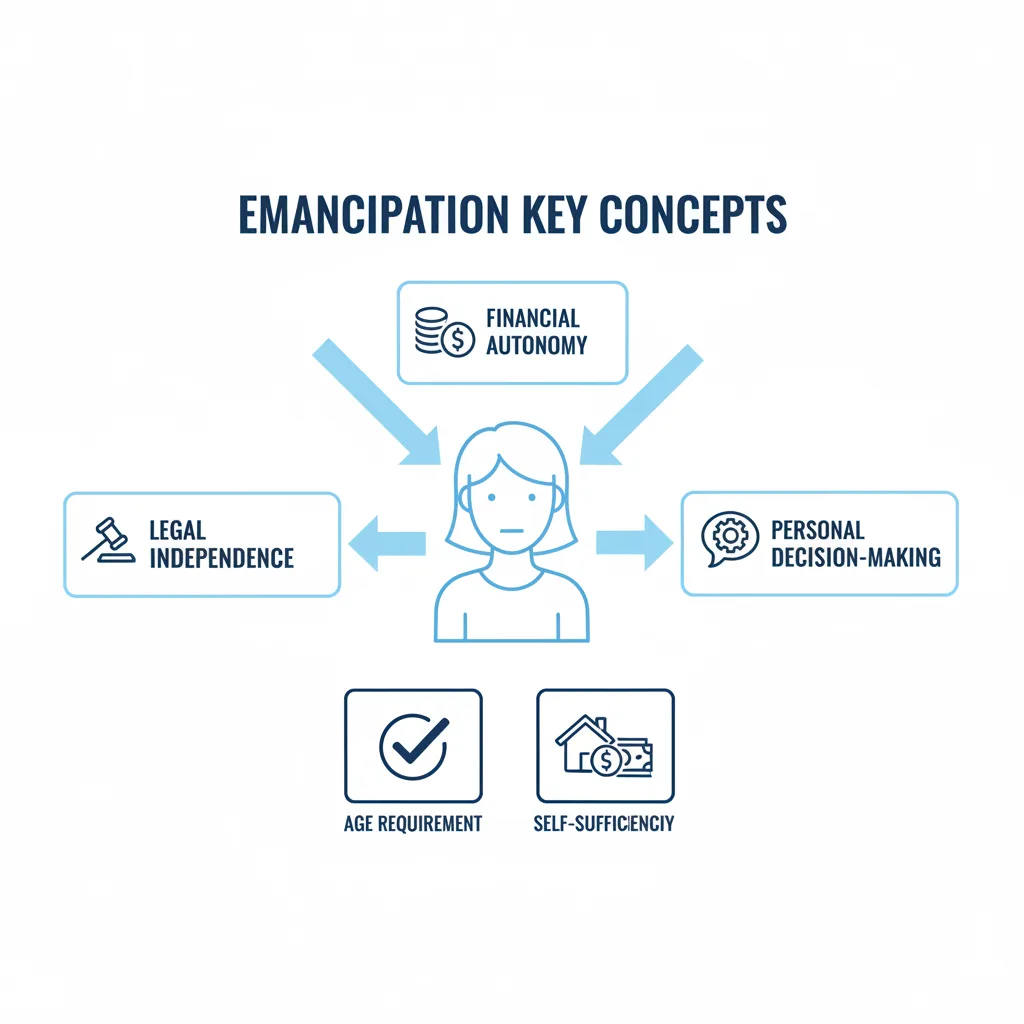
The concept of emancipation allows a minor to achieve legal independence from parental control and support, essentially granting them adult legal status. While the general principle is consistent across jurisdictions, the specific requirements and procedures for seeking emancipation are determined by state law. States establish criteria to ensure that a minor is prepared for the responsibilities of independent living before granting such a significant legal change.
For instance, in Washington State, the court grants a petition for emancipation if the petitioner demonstrates by clear and convincing evidence that they meet specific conditions, reflecting a readiness for self-sufficiency. Other states, such as Nebraska and California, provide their own frameworks, including specific forms and instructions to guide minors through the process.
Eligibility Criteria for Emancipation
To successfully obtain an emancipation decree, a minor must typically satisfy several statutory requirements, which vary by state but share common themes of age, residency, and self-sufficiency. These criteria are designed to ensure the minor is mature enough and capable of managing their own life without parental oversight.
- Age Requirement - The petitioner must generally be of a certain age, often sixteen years or older (RCW 13.64.050).
- State Residency - The petitioner must be a resident of the state where the petition is filed (RCW 13.64.050).
- Financial and Personal Management Ability - The petitioner must demonstrate the ability to manage their own financial affairs and personal life independently (RCW 13.64.050). This often involves showing stable housing, employment, and the capacity to make responsible decisions.
Required Information for Filing
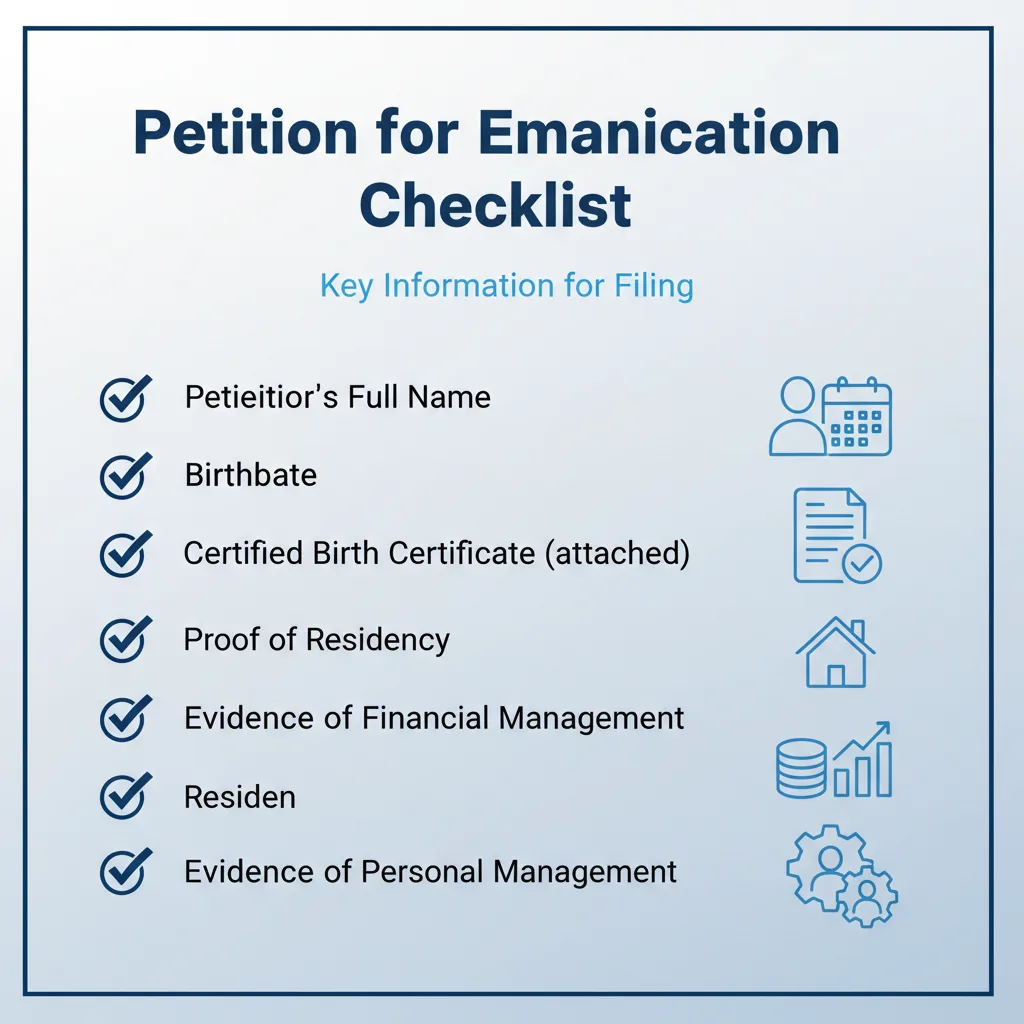
When filing a Petition for Emancipation, the minor, referred to as the petitioner, must provide comprehensive personal and factual information to the court. This information is crucial for the court to assess the petitioner's eligibility and readiness for legal independence.
In Washington State, a petition for emancipation must be signed and verified by the petitioner and include specific details:
- Petitioner's Full Name - The complete legal name of the minor seeking emancipation (RCW 13.64.020).
- Petitioner's Birthdate - The exact date of birth of the minor (RCW 13.64.020).
- Certified Birth Certificate - A certified copy of the petitioner's birth certificate must be attached to the petition (RCW 13.64.020).
- Statement of Residency - Information confirming that the petitioner resides within the state.
- Statement of Self-Sufficiency - Details supporting the petitioner's claim of being able to manage their financial and personal affairs. This may include information about employment, income, housing, and educational status.
- Filing Fees - The petition is subject to filing fees, which are set by statute (RCW 13.64.020, RCW 36.18.014).
The Emancipation Process
The process of seeking emancipation involves several formal steps, beginning with the preparation and submission of the petition to the appropriate court. Each stage is designed to provide the court with sufficient information to make an informed decision regarding the minor's legal status.
- Petition Preparation - The minor, often with legal guidance, prepares the Petition for Emancipation, ensuring it contains all required personal information and supporting documentation, such as a certified birth certificate.
- Filing the Petition - The completed petition is filed with the clerk of the court in the appropriate jurisdiction. This step typically involves paying a filing fee, as mandated by state law (RCW 13.64.020, RCW 36.18.014).
- Court Hearing and Review - After filing, the court schedules a hearing where the petitioner presents evidence to demonstrate their eligibility for emancipation. The court evaluates whether the petitioner is sixteen years of age or older, a resident of the state, and capable of managing their own financial and personal affairs by clear and convincing evidence (RCW 13.64.050).
- Issuance of Emancipation Decree - If the court finds that the petitioner has met all statutory requirements, it grants the petition. An emancipation decree is then issued, with a certified copy filed by the clerk of the court (RCW 13.64.050). This decree legally recognizes the minor as an emancipated individual.
State-Specific Forms and Guidance
Many states provide specific resources to assist minors in navigating the emancipation process. These resources often include standardized forms and detailed instructions, aiming to clarify the procedural requirements and make the legal process more accessible.
- Washington State Forms - Washington law mandates the creation of official forms to initiate a petition for emancipation, ensuring a standardized approach for all petitioners (RCW 13.64.080).
- Nebraska Judicial Branch Resources - The Nebraska Judicial Branch offers comprehensive emancipation forms and instructions, including a specific Petition for Judgment of Emancipation (DC 6:16.3), to guide individuals through their state's process.
- California Superior Court Information - Various Superior Courts in California, such as the Superior Court of California in San Diego County, provide detailed information on the emancipation process, including necessary forms and local procedures.
Frequently Asked Questions
Sources
- RCW 13.64.020: Petition for emancipation—Filing fees - Details the requirements for filing a petition for emancipation in Washington State, including necessary information and filing fees.
- RCW 13.64.050: Emancipation decree—Certified copy—Notation of emancipated status - Outlines the court's process for granting a petition for emancipation and the issuance of a certified copy of the emancipation decree.
- RCW 13.64.080: Forms to initiate petition of emancipation - Mandates the creation of forms to initiate a petition for emancipation in Washington State.
- Emancipation Forms & Instructions | Nebraska Judicial Branch - Provides official forms and instructions for filing a petition for emancipation in Nebraska.
- Emancipation | Superior Court of California - County of San Diego - Details the process and requirements for filing a petition for emancipation in San Diego County, California.
Not the form you're looking for?
Try our legal document generator to create a custom document
Disclaimer: The templates available on this website are provided for general informational purposes only and do not constitute legal advice. They are not intended to be, and should not be interpreted as, compliant with any specific legal, regulatory, or privacy requirements. These templates are not a replacement for professional legal guidance and should not be relied upon for any particular matter or circumstance. Users are strongly encouraged to seek advice from a qualified attorney licensed in their jurisdiction before using, modifying, or relying on any template.
All templates are provided on an "as is," "with all faults," and "as available" basis. The provider disclaims any and all warranties of any kind, whether express, implied, statutory, or otherwise, including without limitation warranties of merchantability, fitness for a particular purpose, title, or non-infringement.
LegalTemplates.com makes no guarantees or representations regarding the accuracy, completeness, expected outcomes, or reliability of the materials contained in these templates or any materials referenced or linked from them.