Articles of Organization
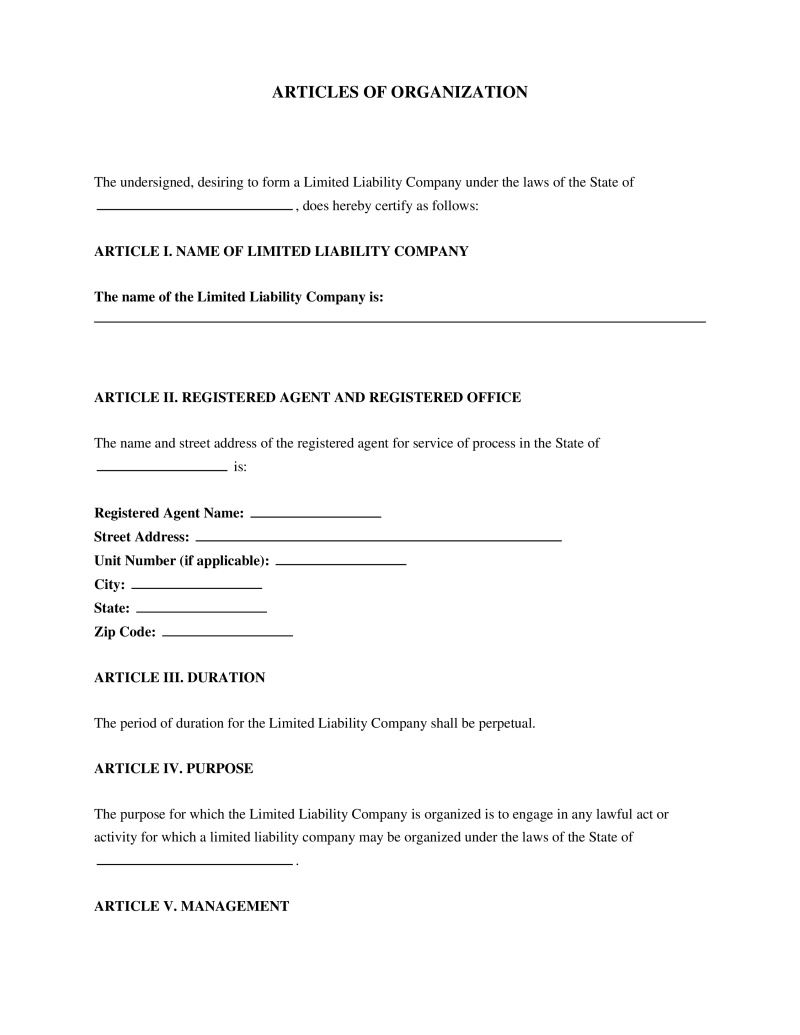
Articles of Organization are a foundational legal document filed with a state's designated authority to officially establish a Limited Liability Company (LLC) and serve as its public record of existence.
Llc Name
Enter the full legal name of the LLC as it will appear in official records. The name must include 'Limited Liability Company', 'LLC', or 'L.L.C.' and comply with state naming requirements.
A DBA ('doing business as') or trade name is an alternate name under which the LLC may operate.
Enter the DBA or trade name if the LLC will operate under a name different from its legal name.
Table of Contents
What are Articles of Organization?
Articles of Organization are a foundational legal document filed with a state's designated authority, typically the Secretary of State, to officially form a Limited Liability Company (LLC). This document serves as the public record of the LLC's existence and provides essential information about the new business entity. Its primary purpose is to establish the LLC as a distinct legal entity separate from its owners, granting it the protections and operational framework afforded by state law.
Purpose and Significance
The filing of Articles of Organization is a critical step in establishing an LLC, signifying its formal creation and legal recognition. Without this document, a business cannot operate as a legally formed LLC and would typically default to a sole proprietorship or partnership, lacking the liability protections inherent to an LLC structure. This official registration grants the business entity its legal identity, separate from its members.
Key aspects of its purpose and significance include:
- Formal Establishment - Legally creates the Limited Liability Company as a distinct business entity under state law.
- Limited Liability Protection - Activates the separation between the business and its owners, protecting personal assets from business debts and liabilities.
- Public Record - Provides public notice of the LLC's existence and basic identifying information, ensuring transparency for regulators, creditors, and the public.
- Prerequisite for Operations - Often required before an LLC can obtain necessary licenses, open bank accounts, or enter into contracts in its own name.
Information Typically Included
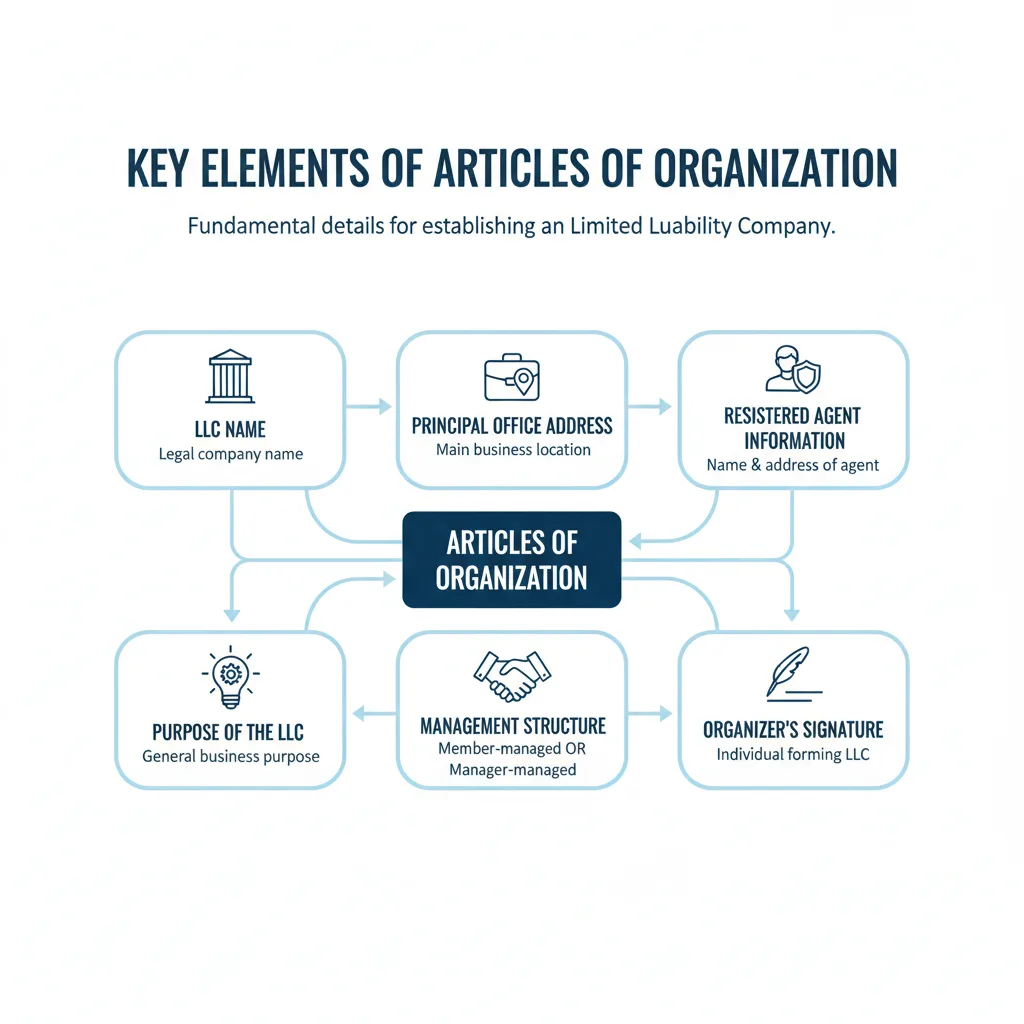
While specific requirements can vary from state to state, Articles of Organization generally require the disclosure of certain fundamental information about the prospective LLC. This information ensures that the state has a clear record of the new entity and its basic operational structure.
Common elements requested on the document include:
- LLC Name - The full, legal name of the Limited Liability Company, which must comply with state naming conventions (e.g., including "LLC" or "Limited Liability Company").
- Principal Office Address - The physical street address of the LLC's primary place of business.
- Registered Agent Information - The name and physical street address of the registered agent, an individual or entity designated to receive legal and official correspondence on behalf of the LLC.
- Purpose of the LLC - A brief statement outlining the business activities the LLC intends to conduct. Some states allow a broad statement, such as "any lawful business purpose."
- Management Structure - An indication of whether the LLC will be managed by its members (member-managed) or by appointed managers (manager-managed).
- Effective Date - The date on which the LLC officially comes into existence, which can be the filing date or a specified future date.
- Duration of the LLC - Some states may require specifying whether the LLC has a perpetual existence or a defined term.
- Organizer's Signature - The signature of the person or persons responsible for filing the Articles of Organization, who may or may not be an owner of the LLC.
Filing Process and Requirements
The process of filing Articles of Organization involves several key steps to ensure the LLC is properly registered and recognized by the state. Adhering to these requirements is essential for the legal formation of the business entity.
General requirements for filing typically include:
- Name Availability Check - Before filing, the proposed LLC name must be checked for availability with the state's filing office to ensure it is not already in use by another registered entity.
- Completion of Form - The official Articles of Organization form, provided by the state, must be accurately completed with all required information.
- Registered Agent Consent - Many states require the registered agent to sign a consent form or acknowledge their appointment within the Articles of Organization.
- Filing Fees - A non-refundable fee is typically required at the time of submission. The amount varies significantly by state.
- Submission to State Authority - The completed document and payment are submitted to the Secretary of State or equivalent state business filing agency, either online, by mail, or in person.
Upon successful filing and approval, the state will issue a stamped copy of the Articles of Organization or a certificate of formation, which serves as proof of the LLC's legal existence.
Distinction from Articles of Incorporation
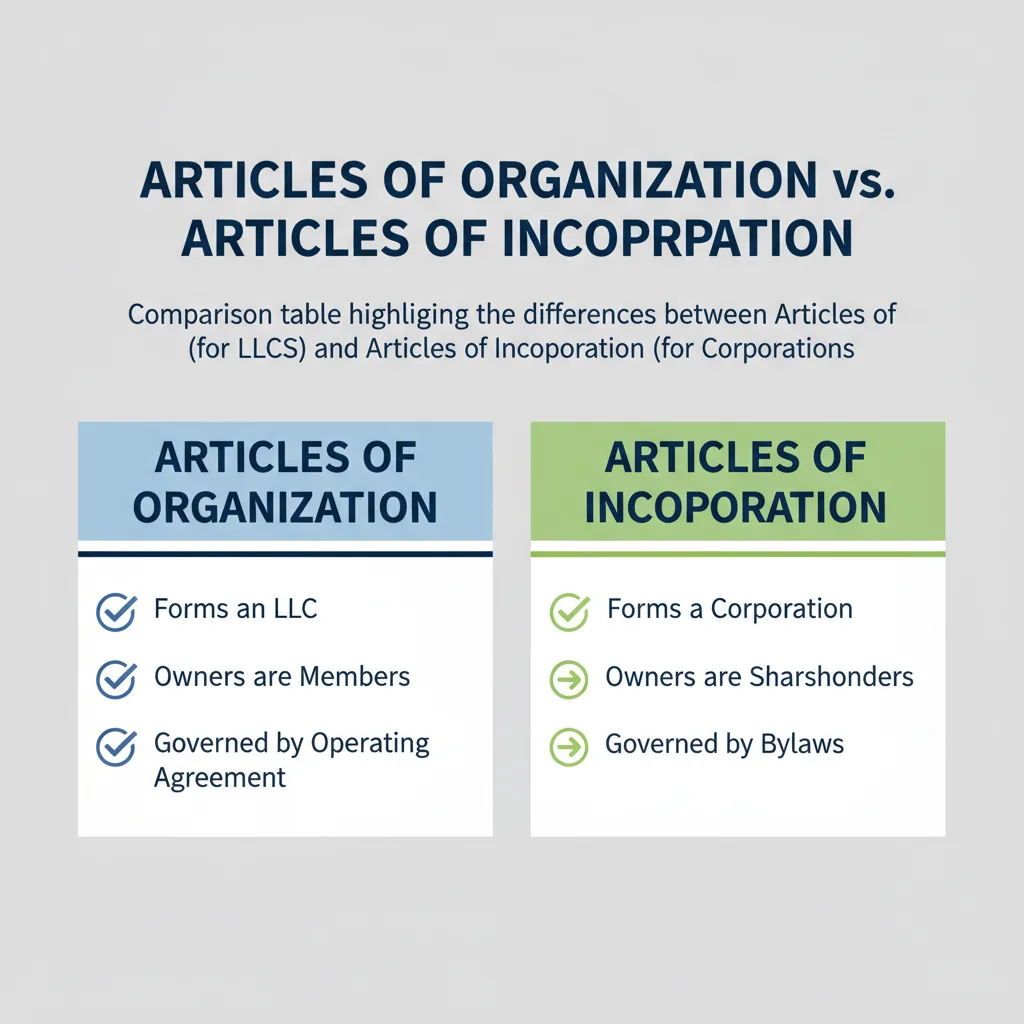
While both Articles of Organization and Articles of Incorporation are foundational documents for establishing a business entity, they apply to different types of legal structures. Understanding this distinction is crucial for entrepreneurs choosing the appropriate entity type for their ventures.
The primary differences include:
- Entity Type - Articles of Organization are used exclusively to form a Limited Liability Company (LLC). Articles of Incorporation are used to form a corporation.
- Terminology - LLCs have "members" and are often governed by an "Operating Agreement." Corporations have "shareholders," "directors," and "officers," and are governed by "bylaws."
- Flexibility - LLCs generally offer more flexibility in management structure and taxation compared to corporations, which often have more rigid compliance requirements.
- Filing Authority - Both are filed with the state's business registration agency, but the specific forms and statutory requirements differ based on the chosen entity type.
Amendments and Dissolution
The information contained within the Articles of Organization may need to be updated or changed over the lifetime of an LLC. Similarly, if an LLC ceases to operate, a formal process is required to terminate its legal existence.
Key considerations for amendments and dissolution include:
- Amendments - Any significant changes to the information originally filed in the Articles of Organization, such as a change in the LLC's name, registered agent, or principal address, typically require filing Articles of Amendment with the state.
- Operating Agreement Changes - Changes to the internal operations, member rights, or profit distribution, which are usually outlined in the LLC's Operating Agreement, do not generally require an amendment to the Articles of Organization unless specifically mandated by state law or if such details were included in the initial filing.
- Dissolution - To formally terminate an LLC's legal existence, the members must typically file Articles of Dissolution or a Certificate of Cancellation with the state. This process officially winds down the company and liquidates its assets, concluding its legal obligations.
Frequently Asked Questions
Not the form you're looking for?
Try our legal document generator to create a custom document
Disclaimer: The templates available on this website are provided for general informational purposes only and do not constitute legal advice. They are not intended to be, and should not be interpreted as, compliant with any specific legal, regulatory, or privacy requirements. These templates are not a replacement for professional legal guidance and should not be relied upon for any particular matter or circumstance. Users are strongly encouraged to seek advice from a qualified attorney licensed in their jurisdiction before using, modifying, or relying on any template.
All templates are provided on an "as is," "with all faults," and "as available" basis. The provider disclaims any and all warranties of any kind, whether express, implied, statutory, or otherwise, including without limitation warranties of merchantability, fitness for a particular purpose, title, or non-infringement.
LegalTemplates.com makes no guarantees or representations regarding the accuracy, completeness, expected outcomes, or reliability of the materials contained in these templates or any materials referenced or linked from them.