Articles of Incorporation
Articles of Incorporation are a foundational legal document filed with a government entity to officially establish a corporation, outlining its name, purpose, structure, and initial registered agent.
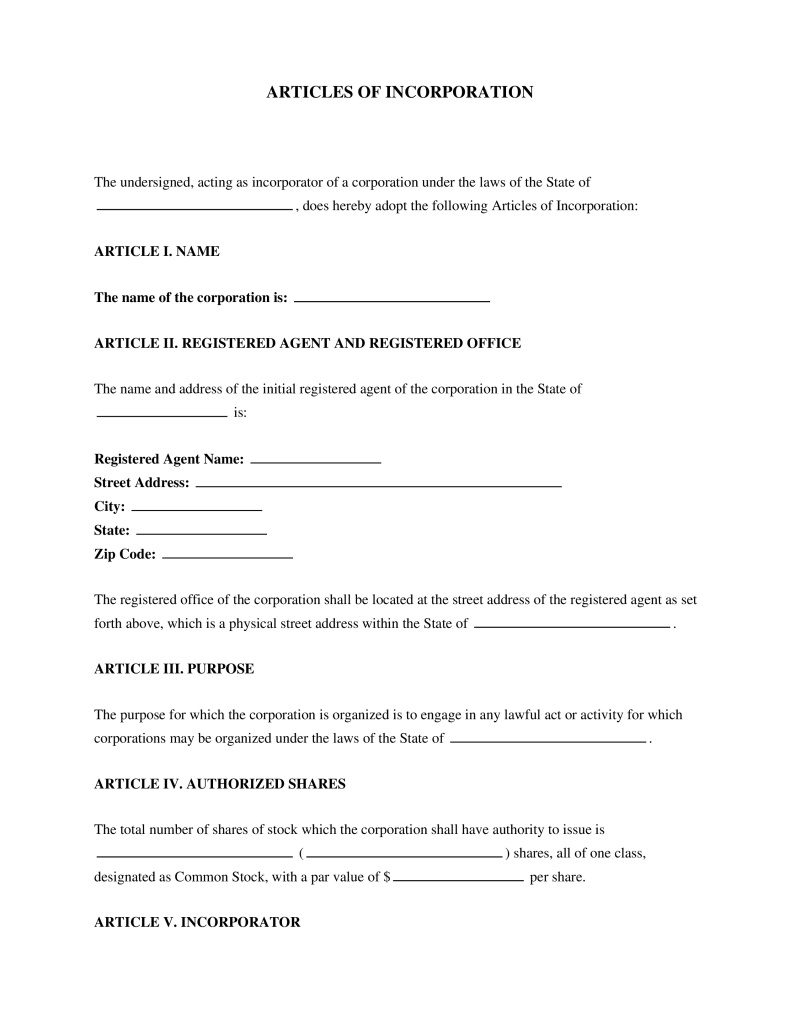
Corporate Name
Enter the full legal name, including required corporate suffix (e.g., Inc., Corp., Corporation, Incorporated).
Some states require or allow name reservation prior to filing.
Enter the reservation number if applicable.
Table of Contents
What are Articles of Incorporation?
Articles of Incorporation are a foundational legal document filed with a state government to officially form a corporation. This document establishes the corporation's legal existence as a distinct entity separate from its owners, granting it the authority to conduct business. It serves as the corporation's charter, outlining essential information required by state law, and is primarily used by individuals or groups seeking to create a new corporate entity.
Purpose and Significance
The primary purpose of filing Articles of Incorporation is to grant a business the legal status of a corporation. This act formally creates the corporate veil, which limits the personal liability of shareholders and directors for the corporation's debts and obligations. Without filed Articles of Incorporation, a business cannot operate as a corporation and typically defaults to a sole proprietorship or partnership, which lack the same liability protections.
Beyond establishing legal existence and limited liability, Articles of Incorporation are significant because they are a public record. This public filing provides transparency about certain fundamental aspects of the corporation to the state, potential investors, and the general public. They represent the initial framework upon which the corporation's governance and operational structure are built, laying the groundwork for subsequent internal documents like bylaws.
Key Elements of Articles of Incorporation
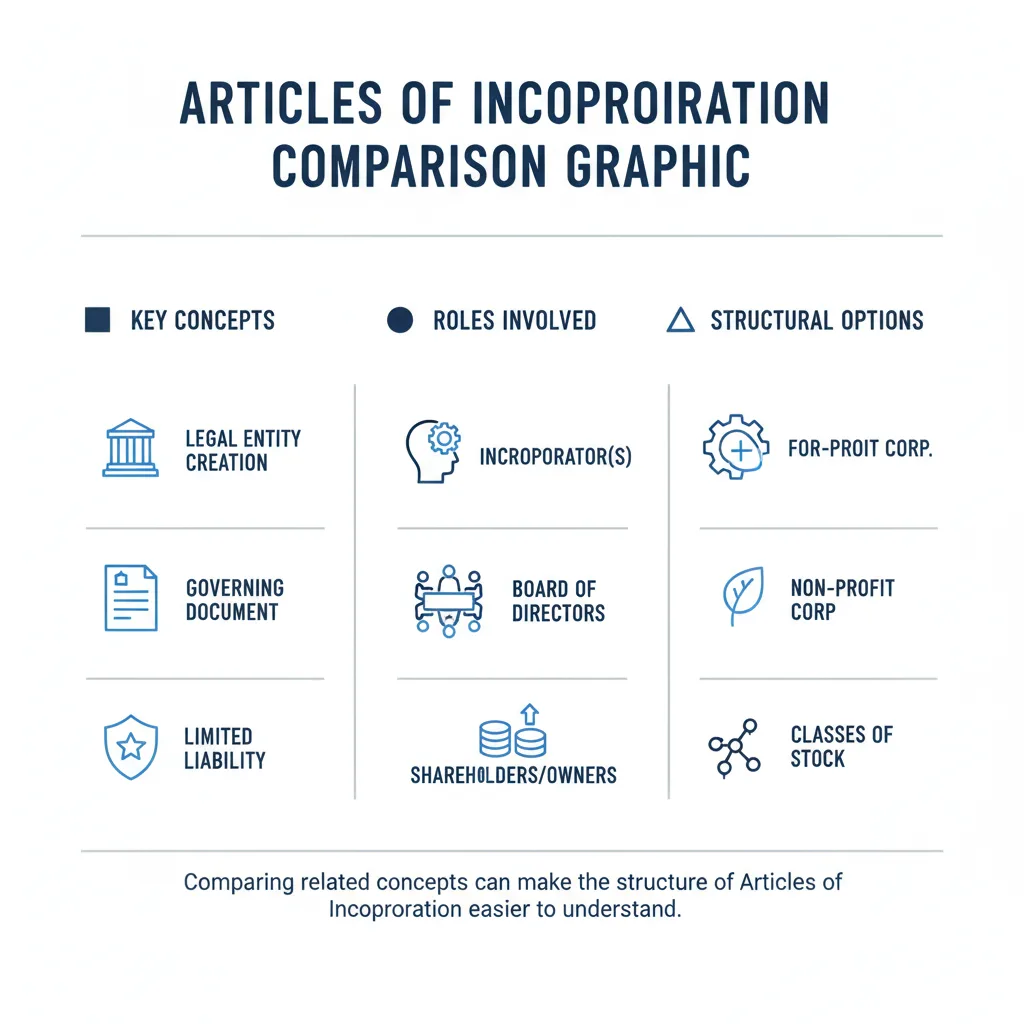
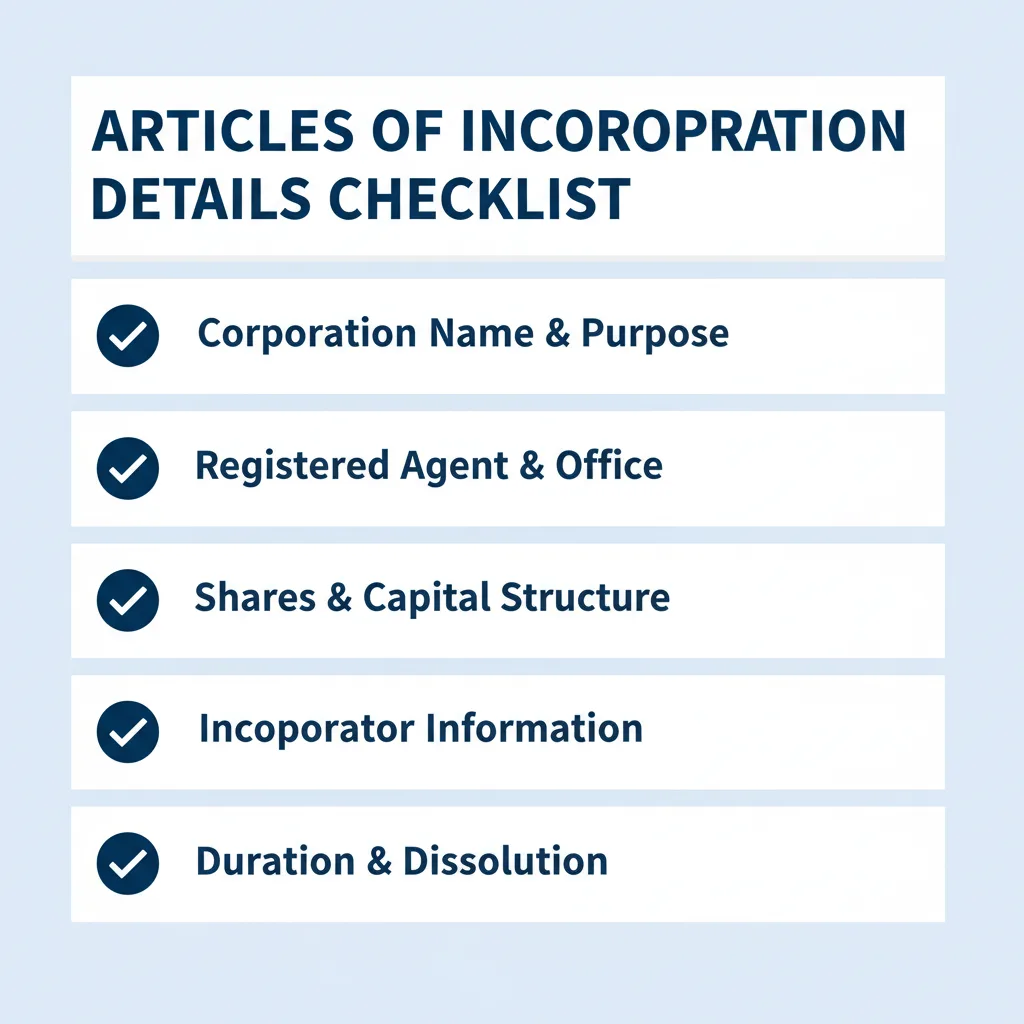
While specific requirements can vary by state, most Articles of Incorporation generally require the inclusion of several key pieces of information:
- Corporate Name - The official and unique name of the corporation, which must typically include a corporate designator such as "Inc.," "Corporation," or "Co." This name must be distinguishable from other registered entities in the state.
- Registered Agent and Office - The name and physical street address of the corporation's registered agent, who is an individual or entity designated to receive legal and official correspondence on behalf of the corporation. The registered office must be located within the state of incorporation.
- Purpose Clause - A statement outlining the corporation's business purpose. This can be specific, such as "to engage in the business of software development," or broad, stating "to engage in any lawful act or activity for which corporations may be organized."
- Authorized Shares - The total number of shares of stock the corporation is authorized to issue, often broken down by class (e.g., common, preferred) and par value, if any. This section defines the corporation's equity structure.
- Incorporator Information - The name and address of the incorporator(s), who are the individual(s) responsible for signing and filing the Articles of Incorporation. The incorporator's role is typically completed once the corporation is formed.
- Initial Directors - In some states, the names and addresses of the initial members of the board of directors may be required to be listed in the Articles. These individuals serve until the first shareholder meeting.
- Duration of Existence - While most corporations are formed with perpetual existence, some states may require a statement to that effect or allow for a specified term of duration.
Filing Process and Legal Effect
The process of incorporating typically begins with drafting the Articles of Incorporation in accordance with the specific requirements of the chosen state. Once drafted, the document is submitted to the appropriate state agency, usually the Secretary of State's office or a similar corporate filing division. Many states offer standardized forms or templates to simplify this process, though legal counsel is often sought to ensure compliance and proper structure.
Upon successful review and acceptance by the state, the Articles of Incorporation are officially filed, and the corporation legally comes into existence. This filing date marks the official commencement of the corporate entity. The legal effect is immediate: the business gains corporate status, limited liability protection for its owners becomes effective, and the corporation is granted the authority to conduct business under its chosen name. Subsequent steps often include obtaining an Employer Identification Number (EIN) from the IRS, adopting bylaws, and holding an initial organizational meeting.
Amendments and Restatements
As a corporation evolves, it may become necessary to change certain fundamental aspects initially outlined in its Articles of Incorporation. This process is known as an amendment. Common reasons for amending Articles include changing the corporate name, altering the number or class of authorized shares, or modifying the corporation's stated purpose. Amendments typically require approval by the board of directors and shareholders, followed by filing an "Articles of Amendment" document with the state.
A restatement of the Articles of Incorporation involves consolidating all previous amendments into a single, comprehensive document. While an amendment changes specific provisions, a restatement presents the entire Articles of Incorporation as they currently exist, incorporating all past changes. This can simplify the corporate record by providing a single, up-to-date document instead of numerous original and amended filings. A restatement must also be filed with the state and generally requires similar approval processes as an amendment.
Articles of Incorporation vs. Bylaws
Articles of Incorporation and bylaws are both crucial documents for a corporation, but they serve distinct purposes and operate at different levels of authority. The Articles of Incorporation are the foundational public document that legally creates the corporation and defines its basic structure. They are filed with the state and establish the corporation's existence and fundamental parameters.
In contrast, bylaws are internal documents that govern the day-to-day operations and management of the corporation. They are not typically filed with the state and are not public record. Bylaws detail specific rules for corporate governance, such as procedures for shareholder and board meetings, election of directors, duties of officers, and the issuance and transfer of shares. While the Articles establish the corporation's legal framework, the bylaws provide the operational blueprint for how that framework functions.
Frequently Asked Questions
Not the form you're looking for?
Try our legal document generator to create a custom document
Disclaimer: The templates available on this website are provided for general informational purposes only and do not constitute legal advice. They are not intended to be, and should not be interpreted as, compliant with any specific legal, regulatory, or privacy requirements. These templates are not a replacement for professional legal guidance and should not be relied upon for any particular matter or circumstance. Users are strongly encouraged to seek advice from a qualified attorney licensed in their jurisdiction before using, modifying, or relying on any template.
All templates are provided on an "as is," "with all faults," and "as available" basis. The provider disclaims any and all warranties of any kind, whether express, implied, statutory, or otherwise, including without limitation warranties of merchantability, fitness for a particular purpose, title, or non-infringement.
LegalTemplates.com makes no guarantees or representations regarding the accuracy, completeness, expected outcomes, or reliability of the materials contained in these templates or any materials referenced or linked from them.