Articles of Association
An Articles of Association is a foundational legal document that specifies the internal regulations governing a company's operations and defines its purpose.
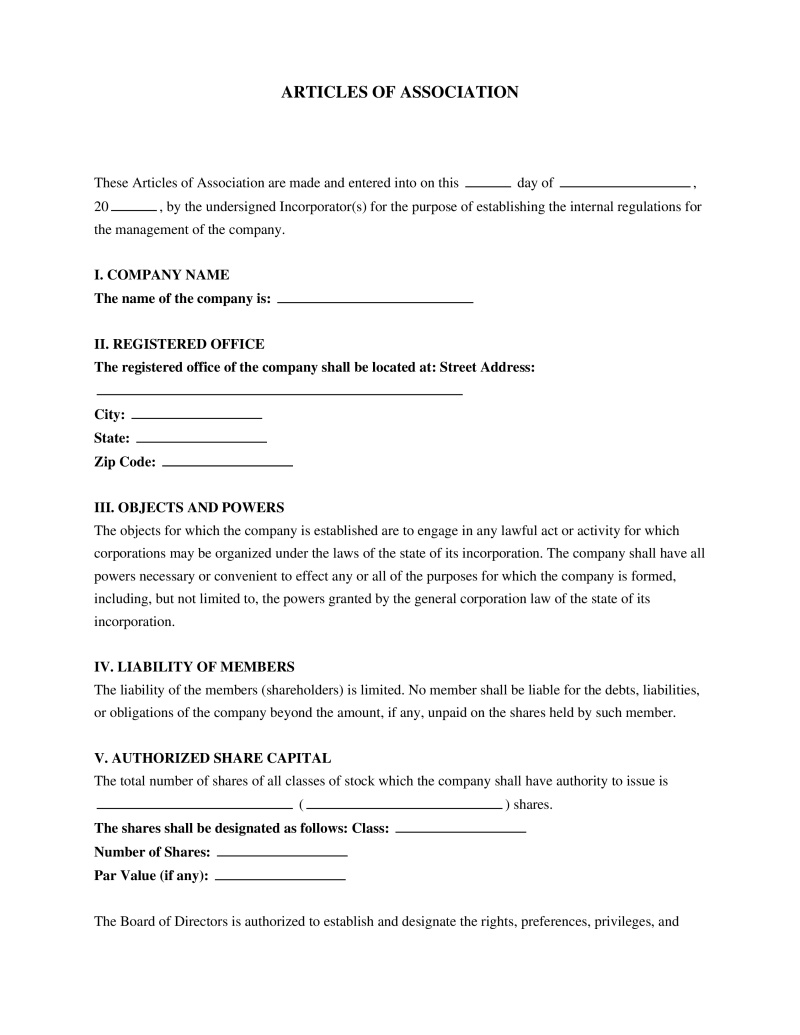
Company Name
Enter the complete legal name as it will appear in official records.
Provide the registration or incorporation number if already assigned.
Enter the official address for legal correspondence.
Table of Contents
What is a Articles of Association?
The Articles of Association, often abbreviated as AOA, is a foundational legal document that specifies the regulations for a company's operations and defines the company's purpose. It outlines how tasks are to be accomplished within the organization, including the process for appointing directors, the conduct of board meetings, and the rights and responsibilities of shareholders. This document serves as a rulebook for the internal management of a company, governing the relationship between the company and its members, and among the members themselves.
Purpose and Significance
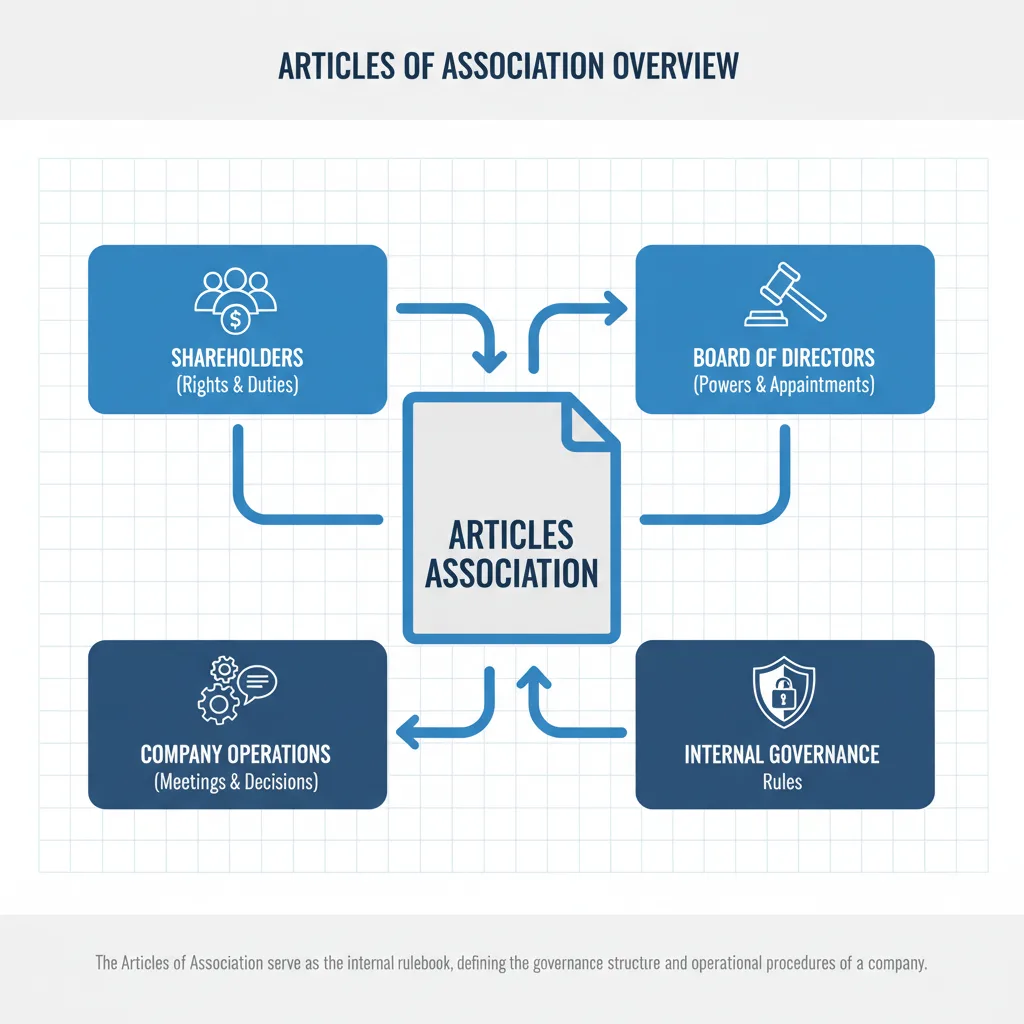
The Articles of Association are critical for establishing a clear governance framework for a company. They provide a structured approach to decision-making, ensuring that all internal processes align with legal requirements and the company's objectives. By detailing the internal workings, the AOA helps prevent disputes among shareholders and directors by setting out predefined procedures for common corporate actions.
This document also plays a significant role in defining the scope of authority for various company officers and the board of directors. It dictates how power is distributed and exercised within the organization, thereby safeguarding the interests of all stakeholders. A well-drafted AOA contributes to the company's stability and operational efficiency by providing clarity and predictability in its internal affairs.
Key Contents of the Articles of Association

The specific contents of the Articles of Association can vary depending on the jurisdiction and the company’s specific needs, but typically include provisions governing several key aspects of corporate governance:
- Share Capital and Shares - Details regarding the company's authorized share capital, different classes of shares (e.g., ordinary, preference), their respective rights, and procedures for allotment, transfer, and forfeiture of shares.
- Shareholder Rights and Obligations - Defines the rights of shareholders, such as voting rights, dividend entitlements, and access to company information, as well as any obligations they may have.
- Directors and Board of Directors - Provisions concerning the appointment, removal, qualifications, remuneration, and powers of directors. It also covers the composition of the board, frequency of board meetings, and procedures for decision-making.
- General Meetings - Rules for convening and conducting annual general meetings (AGMs) and extraordinary general meetings (EGMs), including notice periods, quorum requirements, voting procedures, and the types of resolutions that can be passed.
- Dividends and Reserves - Guidelines for the declaration and payment of dividends to shareholders, as well as the creation and utilization of company reserves.
- Auditors - Procedures for the appointment, remuneration, and duties of the company's auditors, ensuring financial transparency and compliance.
- Winding Up or Dissolution - Outlines the process for the voluntary or involuntary winding up of the company, including the distribution of assets and liabilities.
- Company Seal - Stipulations regarding the use and custody of the company's common seal, if applicable, for authenticating documents.
- Indemnity - Provisions for indemnifying directors and officers against liabilities incurred in the course of their duties, subject to legal limitations.
Relationship with Other Governing Documents
The Articles of Association operate in conjunction with other foundational documents that govern a company’s existence and operations. Primarily, it complements the Memorandum of Association, which is often considered the company's charter document.
The Memorandum of Association typically establishes the company's existence, states its name, registered office, objects (purpose), and the liability of its members. While the Memorandum defines the company's external scope and fundamental parameters, the Articles of Association detail the internal administration and management. For instance, the Memorandum might state that the company can engage in a certain business, while the Articles would specify how the board of directors will manage that business internally, including how decisions are made and how shareholders influence those decisions. Together, these documents form the constitution of the company, providing a comprehensive framework for its legal identity and internal governance.
Alteration and Amendment
The Articles of Association are not immutable and can be amended or altered to reflect changes in the company's structure, operations, or legal environment. This flexibility is essential for companies to adapt and evolve over time. However, the process for alteration is typically stringent to protect the interests of all members.
Generally, amendments to the Articles of Association require a special resolution passed by the company's shareholders. A special resolution usually necessitates a higher majority vote than an ordinary resolution, often 75% or two-thirds of the votes cast, depending on the jurisdiction's company law. Shareholders must receive proper notice of the proposed changes, and the alterations must be filed with the relevant corporate registry or authority to become legally effective. Any amendment must not contravene existing company law or the provisions of the Memorandum of Association.
Legal Effect and Enforceability
Upon registration, the Articles of Association become a public document and have the effect of a contract. This contractual nature is a cornerstone of corporate law, establishing legally binding relationships among the company and its members, and between the members themselves. This means that both the company and its members are bound by the provisions set out in the Articles as if they had each signed and sealed the document.
The enforceability of the Articles ensures that members can hold the company to its internal rules, and vice versa. Similarly, one member can enforce the provisions of the Articles against another member, particularly regarding rights and obligations related to shares or voting. This contractual framework provides a legal basis for resolving internal disputes and ensuring adherence to the agreed-upon governance structure.
Frequently Asked Questions
Not the form you're looking for?
Try our legal document generator to create a custom document
Disclaimer: The templates available on this website are provided for general informational purposes only and do not constitute legal advice. They are not intended to be, and should not be interpreted as, compliant with any specific legal, regulatory, or privacy requirements. These templates are not a replacement for professional legal guidance and should not be relied upon for any particular matter or circumstance. Users are strongly encouraged to seek advice from a qualified attorney licensed in their jurisdiction before using, modifying, or relying on any template.
All templates are provided on an "as is," "with all faults," and "as available" basis. The provider disclaims any and all warranties of any kind, whether express, implied, statutory, or otherwise, including without limitation warranties of merchantability, fitness for a particular purpose, title, or non-infringement.
LegalTemplates.com makes no guarantees or representations regarding the accuracy, completeness, expected outcomes, or reliability of the materials contained in these templates or any materials referenced or linked from them.