Articles of Amendment
An Articles of Amendment is a formal legal instrument filed with a governmental authority to effectuate modifications to a corporation's foundational articles of incorporation.
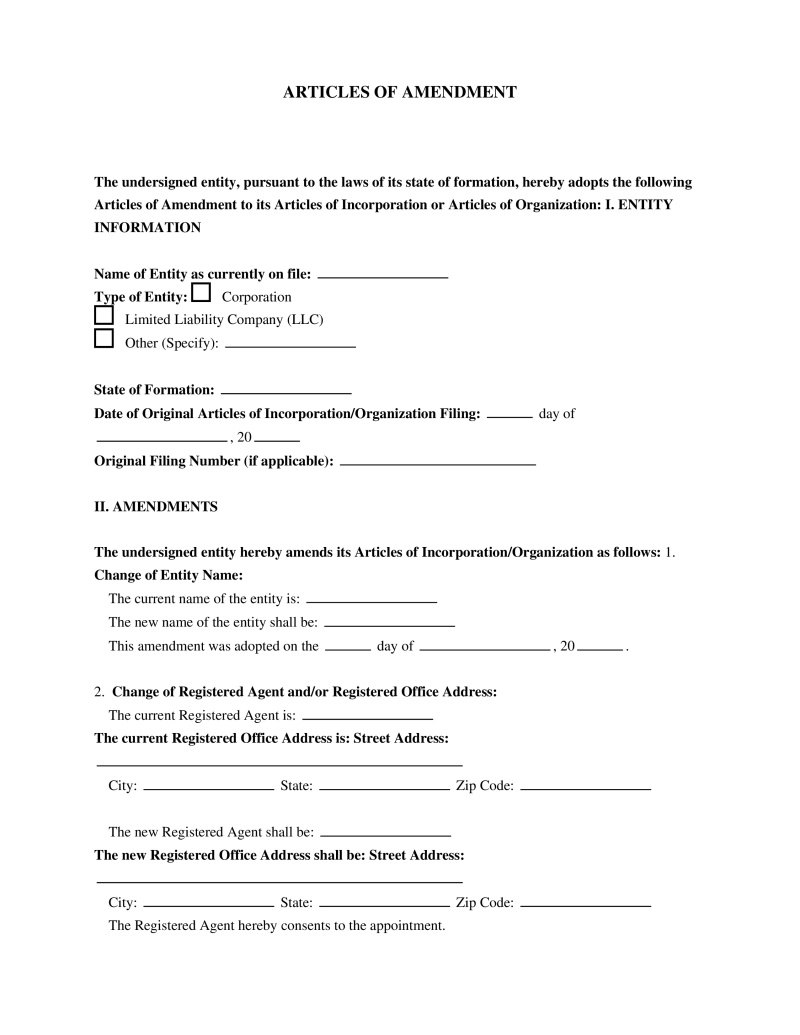
Amendment Type
Select all changes you wish to make. You will be prompted for details about each selected amendment.
Provide a clear description of any other changes not listed above.
Table of Contents
What is a Articles of Amendment?
Articles of Amendment constitute a formal legal document filed by a corporation or other business entity to officially modify its foundational organizing documents, most commonly its Articles of Incorporation or Articles of Organization. These amendments are necessary to record significant changes to the entity's structure, governance, or fundamental characteristics with the relevant state authority. Their primary purpose is to maintain an accurate and up-to-date public record of the entity's legal status, ensuring transparency and compliance.
Purpose and Function
The filing of Articles of Amendment serves to publicly document alterations to an entity's core legal framework. This process ensures that regulatory bodies, potential investors, creditors, and the general public have access to the most current information about the entity. By formalizing these changes, the articles provide legal validity to the modifications and protect the entity from challenges related to unrecorded or improperly executed changes. This adherence to formal amendment procedures is a cornerstone of corporate governance and legal compliance.
Common Amendments
Entities utilize Articles of Amendment to enact a variety of changes to their foundational documents. These changes often reflect strategic shifts, legal requirements, or operational adjustments:
- Name Change - Altering the official legal name of the corporation or limited liability company.
- Registered Agent or Office Change - Updating the designated individual or entity responsible for receiving legal and official correspondence, or changing the physical address of this office.
- Capital Stock Modifications - Adjusting the authorized number of shares, par value, classes of stock, or other share-related provisions for corporations.
- Purpose Clause Alterations - Broadening, narrowing, or otherwise modifying the stated business activities or objectives of the entity.
- Duration Extension - If the entity was initially formed for a specified, limited period, extending its existence indefinitely or for a new term.
- Board Structure Changes - Modifying the number of directors, the method of their election, or other governance provisions related to the board of directors.
- Non-Profit Mission Changes - For tax-exempt organizations, amending their charitable purpose, dissolution clause, or other provisions critical to their exempt status.
Filing Requirements and IRS Considerations
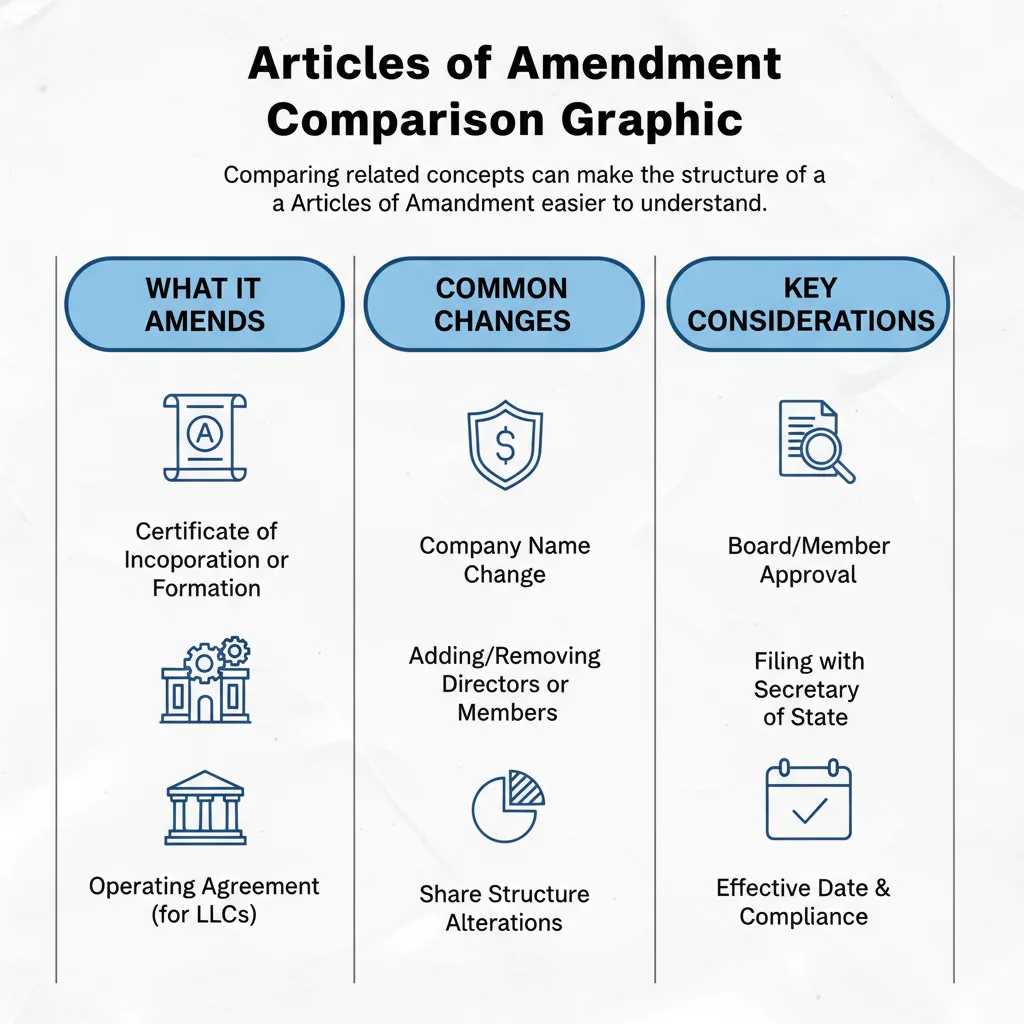
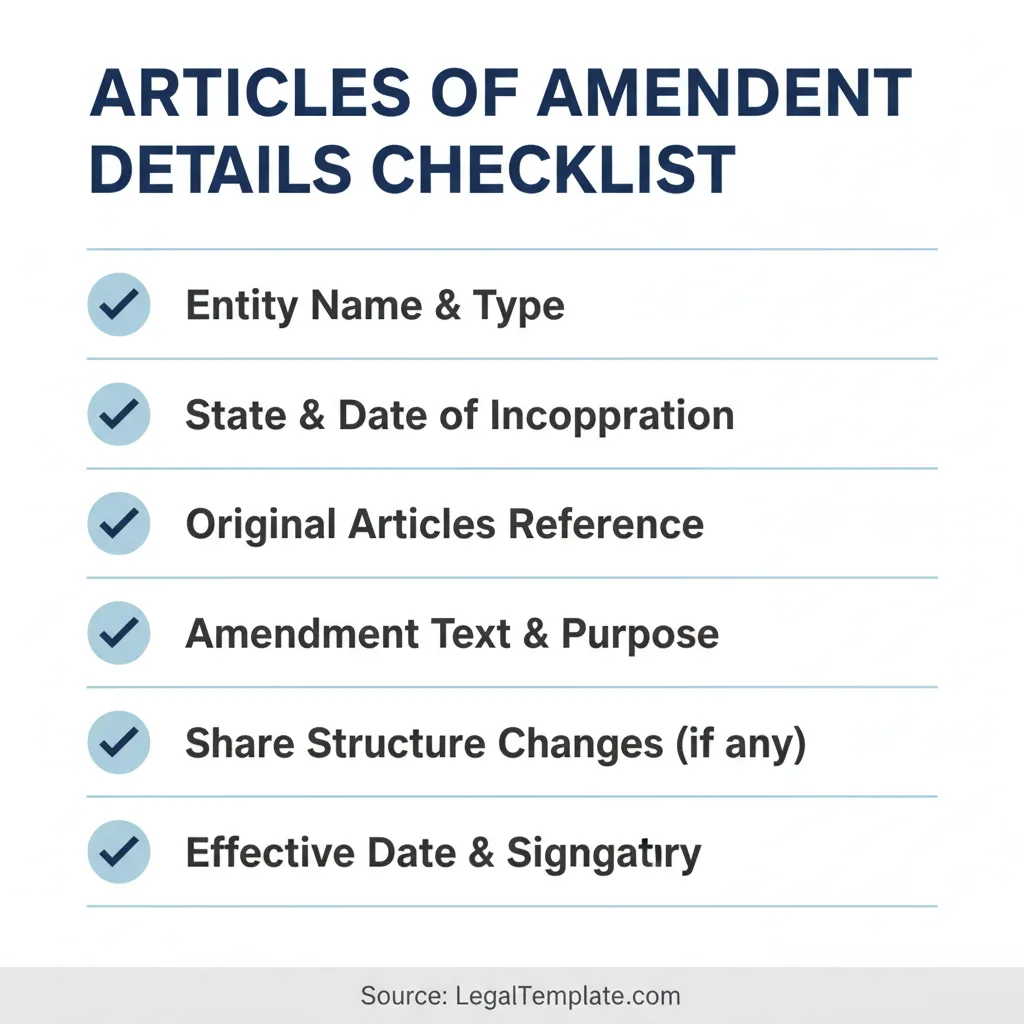
The process for filing Articles of Amendment typically involves submitting the document to the state authority where the entity was originally incorporated or organized, usually the Secretary of State's office or an equivalent agency. This state filing is crucial for the amendment to become legally effective. The specific requirements, including forms, filing fees, and processing times, vary by state.
For exempt organizations, additional considerations apply regarding the Internal Revenue Service (IRS):
- Application for Exemption - Each application for exemption must be accompanied by an exact copy of the organization's organizing document, such as articles of incorporation or amendments (IRS.gov, "Exempt organizations - Organizing documents"). This means any amendments made prior to or during the exemption application process must be included.
- Form 990 Attachments - Certain documents, such as amendments to organizing documents, are permitted as attachments to Form 990, the annual information return for tax-exempt organizations (IRS.gov, "Form 990 attachments: Permitted and impermissible attachments"). This allows organizations to provide updated foundational documents to the IRS as part of their annual reporting.
Therefore, exempt organizations often need to submit their Articles of Amendment to both the appropriate state authority and the IRS, depending on the timing of the amendment relative to their exemption application or annual filing.
Impact on Exempt Organizations
For organizations seeking or maintaining tax-exempt status under sections like 501(c)(3) of the Internal Revenue Code, Articles of Amendment hold particular significance. The IRS scrutinizes an organization's organizing documents, including any amendments, to ensure they meet the specific requirements for exemption. Changes to an organization's purpose, dissolution clause, or limitations on activities must align with IRS regulations to avoid jeopardizing its tax-exempt status.
If an exempt organization makes changes to its articles that affect its tax-exempt purpose or operational limitations, it generally needs to inform the IRS. This may involve submitting the amended articles with its annual Form 990 or, in some cases, notifying the IRS separately if the changes are substantial and fundamental to its exempt status. Proper and timely filing of these amendments ensures ongoing compliance with federal tax law and preserves the organization's ability to operate as a recognized tax-exempt entity.
Distinction from Related Documents
It is important to differentiate Articles of Amendment from other organizational documents:
- Articles of Incorporation/Organization - These are the initial, foundational documents filed to legally establish a corporation or limited liability company. Articles of Amendment specifically modify these original documents, rather than creating a new entity.
- Bylaws/Operating Agreements - Bylaws (for corporations) and Operating Agreements (for LLCs) are internal documents that govern the day-to-day operations, management, and internal rules of the entity. While bylaws and operating agreements can also be amended, such amendments typically do not require filing with the state authority unless they pertain to matters that are also covered in the publicly filed Articles of Incorporation or Organization. Articles of Amendment, in contrast, address changes to the publicly recorded foundational elements of the entity.
Frequently Asked Questions
Sources
- Exempt organizations - Organizing documents - Guidance on organizing documents for exempt organizations, including articles of incorporation and amendments.
- Form 990 attachments: Permitted and impermissible attachments - Information on permitted attachments to Form 990, including amendments to organizing documents.
Not the form you're looking for?
Try our legal document generator to create a custom document
Disclaimer: The templates available on this website are provided for general informational purposes only and do not constitute legal advice. They are not intended to be, and should not be interpreted as, compliant with any specific legal, regulatory, or privacy requirements. These templates are not a replacement for professional legal guidance and should not be relied upon for any particular matter or circumstance. Users are strongly encouraged to seek advice from a qualified attorney licensed in their jurisdiction before using, modifying, or relying on any template.
All templates are provided on an "as is," "with all faults," and "as available" basis. The provider disclaims any and all warranties of any kind, whether express, implied, statutory, or otherwise, including without limitation warranties of merchantability, fitness for a particular purpose, title, or non-infringement.
LegalTemplates.com makes no guarantees or representations regarding the accuracy, completeness, expected outcomes, or reliability of the materials contained in these templates or any materials referenced or linked from them.