Appeal Plea Deal
An Appeal Plea Deal is a formal legal instrument by which a defendant seeks judicial review or modification of a previously accepted plea agreement, typically citing issues of legal error or procedural defect.
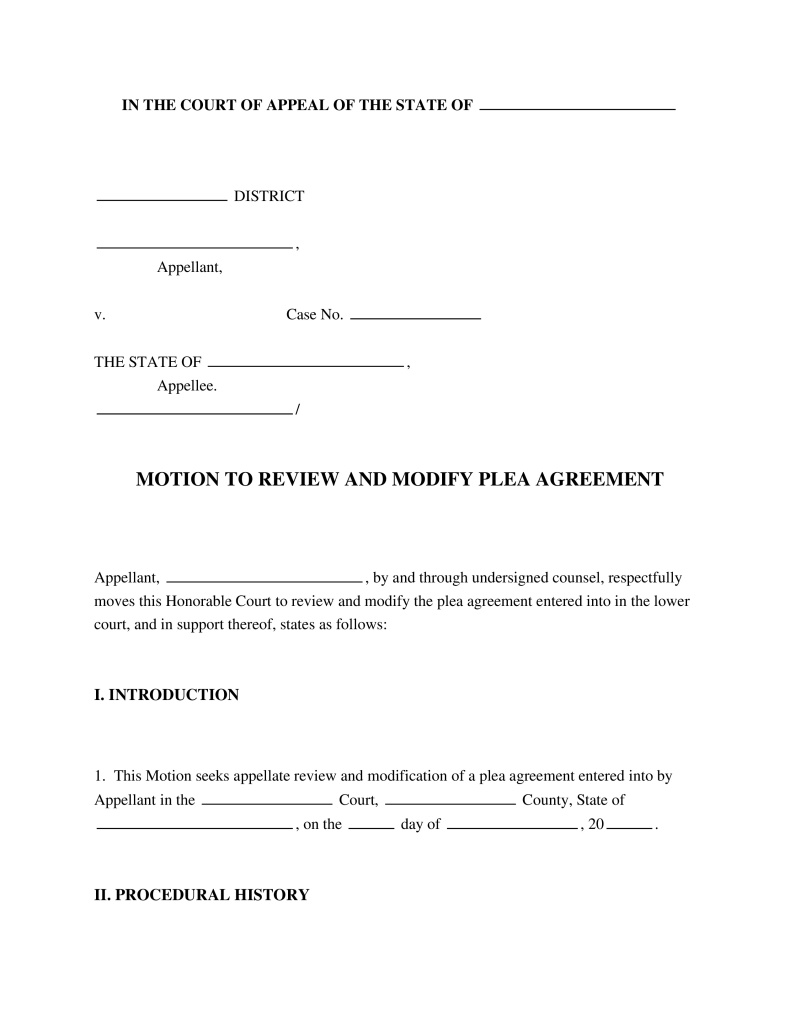
Plea Deal Type
Select the type of plea agreement entered in the lower court.
If 'Other', enter the specific plea type.
Table of Contents
What is a Appeal Plea Deal?
An Appeal Plea Deal refers to a specific type of plea agreement in a criminal case where a defendant agrees to plead guilty or no contest in exchange for certain concessions from the prosecution, while explicitly reserving the right to appeal specific legal issues. This arrangement allows for the resolution of a case without a full trial, potentially reducing the severity of charges or sentencing, while still enabling the defendant to challenge particular adverse rulings made by the court. It serves as a mechanism to streamline the judicial process while preserving fundamental appellate rights concerning identified legal questions.
Understanding Plea Bargains and Appeal Rights
Plea bargains are common in criminal justice, involving an agreement between the defendant and the prosecutor. In exchange for a guilty plea, the defendant typically receives a more lenient sentence or a reduction in charges. While a guilty plea usually waives many rights associated with a trial, the right to appeal a conviction or sentence is a fundamental aspect of due process that may or may not be preserved, depending on the specifics of the plea agreement and the jurisdiction.
The extent to which appeal rights are retained or waived is a critical component of any plea negotiation. Defendants generally have the right to appeal convictions or sentences even after pleading guilty. However, this right can be limited or entirely waived as part of the plea agreement itself, a detail that must be thoroughly understood by the defendant before agreeing to the terms.
Conditional Guilty Pleas
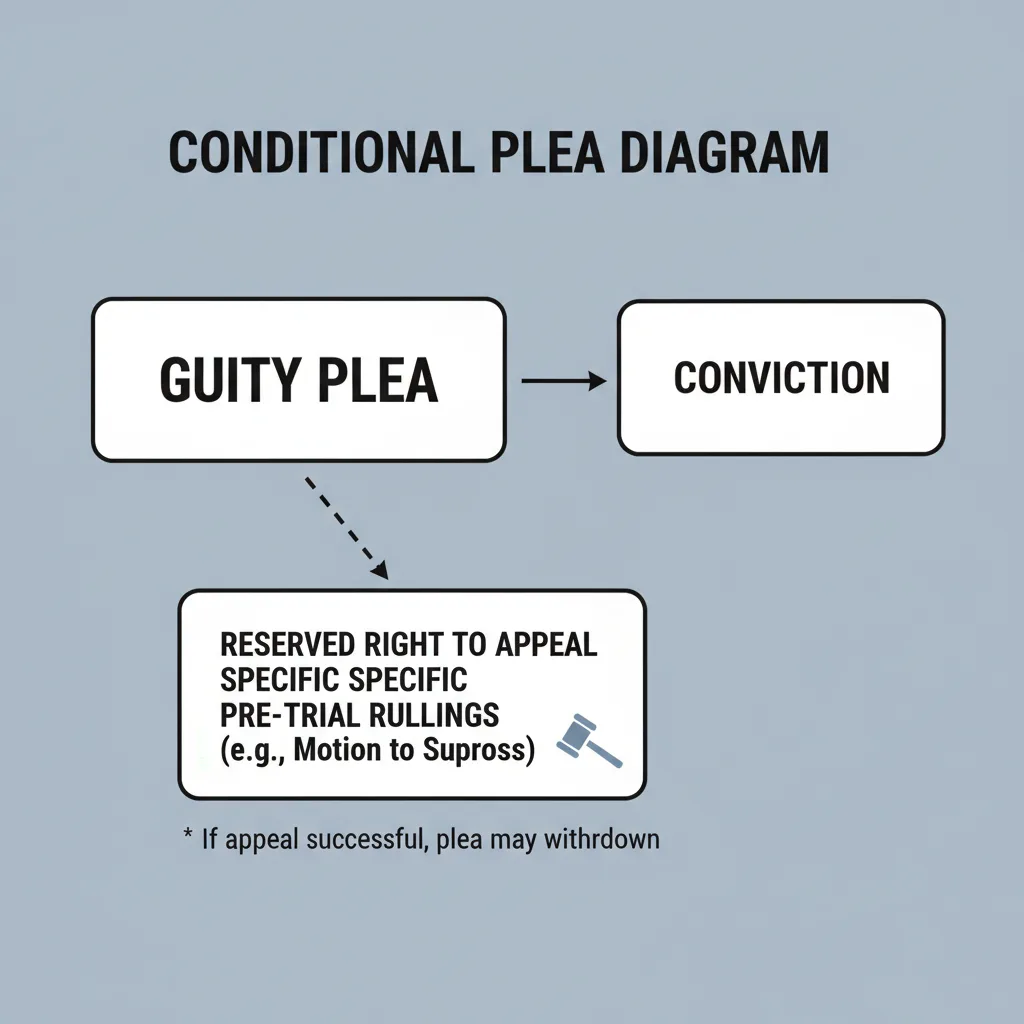
A conditional guilty plea represents a specific type of plea agreement that explicitly allows a defendant to enter a guilty plea while reserving the right to appeal certain pre-trial rulings. This mechanism is particularly useful when a defendant wishes to challenge a specific legal decision, such as the admissibility of evidence or the denial of a motion to suppress, without undergoing a full trial.
Some jurisdictions formally recognize and regulate conditional guilty pleas, outlining the conditions under which they can be made:
- Massachusetts Criminal Procedure Rule 12 - Allows defendants to plead guilty while reserving the right to appeal specific rulings, such as those concerning motions to suppress evidence (Mass.gov - Criminal Procedure Rule 12: Pleas and plea agreements).
- Purpose - The primary purpose is to avoid the necessity of a full trial in cases where the defendant's only remaining issue is a specific, dispositive legal question that can be reviewed on appeal.
- Impact of Appeal - If the defendant's appeal is successful, the conviction may be vacated, and the defendant may be allowed to withdraw their guilty plea and proceed to trial.
Waiver of Appeal Rights in Plea Agreements
A significant aspect of many plea agreements involves the waiver of certain appeal rights. While defendants generally possess the right to appeal, this right can be explicitly surrendered as a condition of the plea bargain. The scope of such waivers can vary, sometimes encompassing all non-jurisdictional issues, or only specific types of appeals.
Courts play a crucial role in ensuring that any waiver of appeal rights is knowing, voluntary, and intelligent. This often involves a detailed colloquy between the judge and the defendant:
- New York State Courts Practice - Defendants in New York have the right to appeal convictions or sentences, even after pleading guilty. However, some appeal rights may be waived as part of a plea agreement (NYcourts.gov - Litigants).
- Judicial Advisement - Judges in New York use a standardized script during guilty plea proceedings to inform defendants about their rights, including the right to appeal and the conditions under which appeal rights may be waived (NYcourts.gov - GUILTY PLEA COLLOQUY 1).
- Scope of Waiver - Waivers typically cover the right to appeal the conviction itself, the sentence imposed, or both, but generally do not waive the right to appeal jurisdictional defects or claims of ineffective assistance of counsel related to the plea process itself.
Jurisdictional Requirements for Appealing Plea-Based Convictions
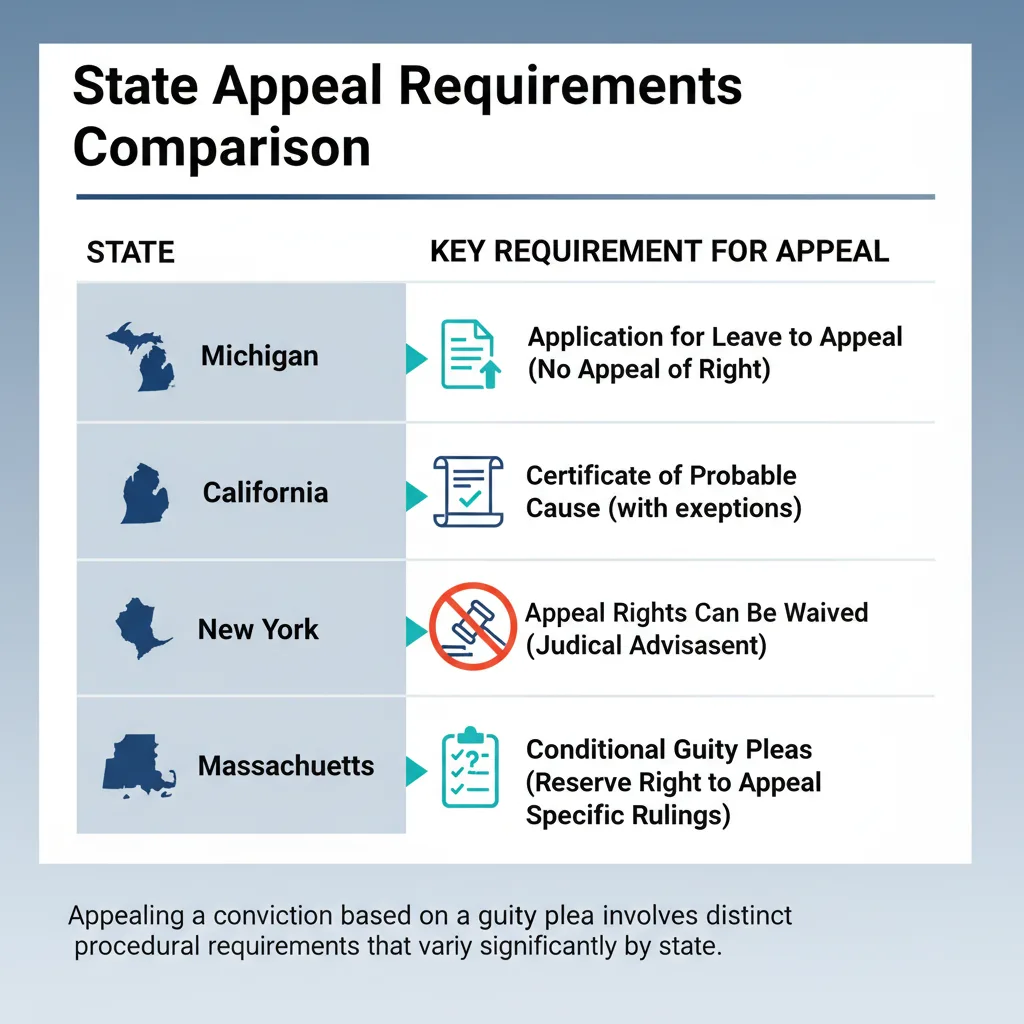
The process and requirements for appealing a conviction based on a guilty plea vary significantly among different jurisdictions. Each state sets forth its own rules governing when and how such appeals can be pursued, often imposing stricter conditions than for appeals following a trial.
Key jurisdictional differences include:
- Michigan's Application for Leave to Appeal - In Michigan, appealing a conviction based on a guilty plea requires filing an application for leave to appeal. There is no appeal of right in such cases, meaning the appellate court has discretion whether to hear the appeal (Michigan.gov - Appealing a Plea-Based Conviction).
- California's Certificate of Probable Cause - In California, appealing a plea-based conviction typically requires the defendant to obtain a certificate of probable cause from the trial court. This certificate indicates that there are reasonable grounds for the appeal, though certain exceptions exist, such as challenging the sentence or post-plea proceedings (CAcourts.gov - Rule 8.304).
- Importance of Local Rules - Defendants and their counsel must be thoroughly familiar with the specific appellate rules of the jurisdiction in which the plea was entered to ensure any potential appeal is properly preserved and filed.
Frequently Asked Questions
Sources
- Criminal Procedure Rule 12: Pleas and plea agreements - Provides rules on conditional guilty pleas in Massachusetts, allowing defendants to plead guilty while reserving the right to appeal specific rulings.
- Litigants - N.Y. State Courts - Explains the right to appeal after a guilty plea in New York, including conditions under which appeal rights may be waived.
- Appealing a Plea-Based Conviction - Details procedures for appealing a conviction based on a guilty plea in Michigan, including the requirement to file an application for leave to appeal.
- Rule 8.304. Filing the appeal; certificate of probable cause - Outlines the requirements for filing an appeal in California, including the necessity of a certificate of probable cause when appealing a plea-based conviction.
- GUILTY PLEA COLLOQUY 1 - Provides a script for judges to use during guilty plea proceedings, including advisements about the right to appeal and potential waivers.
Not the form you're looking for?
Try our legal document generator to create a custom document
Disclaimer: The templates available on this website are provided for general informational purposes only and do not constitute legal advice. They are not intended to be, and should not be interpreted as, compliant with any specific legal, regulatory, or privacy requirements. These templates are not a replacement for professional legal guidance and should not be relied upon for any particular matter or circumstance. Users are strongly encouraged to seek advice from a qualified attorney licensed in their jurisdiction before using, modifying, or relying on any template.
All templates are provided on an "as is," "with all faults," and "as available" basis. The provider disclaims any and all warranties of any kind, whether express, implied, statutory, or otherwise, including without limitation warranties of merchantability, fitness for a particular purpose, title, or non-infringement.
LegalTemplates.com makes no guarantees or representations regarding the accuracy, completeness, expected outcomes, or reliability of the materials contained in these templates or any materials referenced or linked from them.