Alimony Agreement
An Alimony Agreement is a legally binding contract between divorcing or separating spouses, stipulating the terms for financial support from one party to the other, also known as spousal support or maintenance.
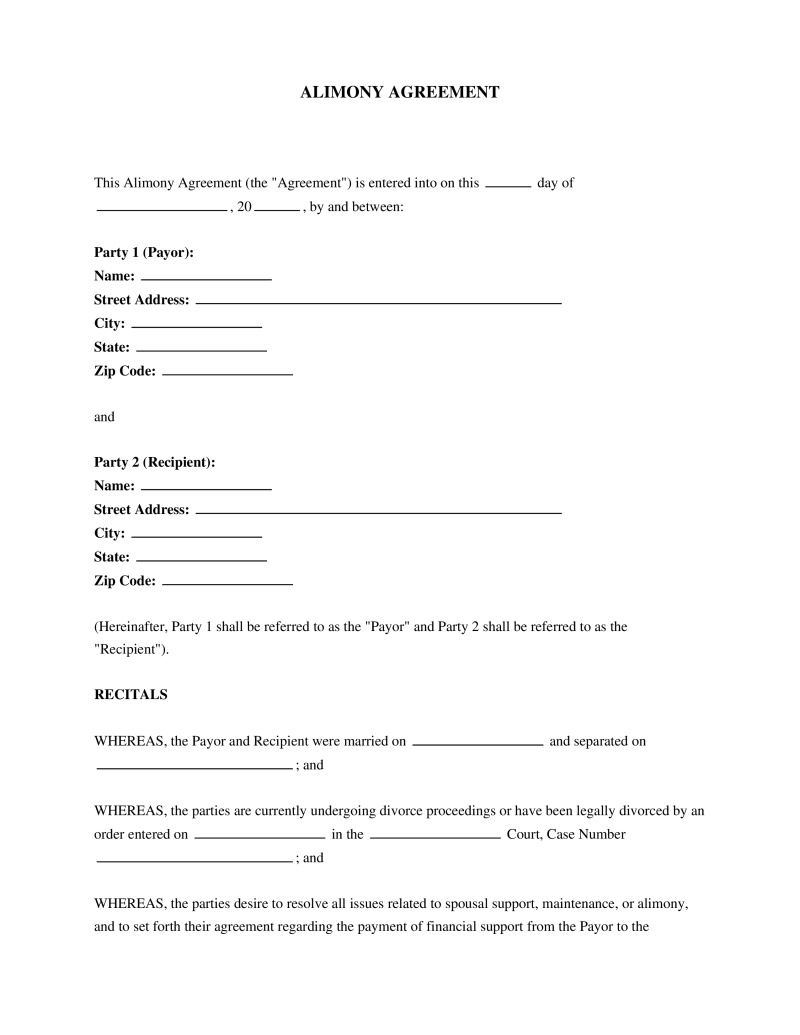
Alimony Type
Select the primary form of alimony to be provided under this agreement.
Provide details if 'Other' was selected.
Table of Contents
What is an Alimony Agreement?
An alimony agreement, also known as a spousal support agreement or maintenance agreement, is a legally binding contract between divorcing or separating spouses that outlines the terms for financial support from one spouse to the other. This agreement typically specifies the amount, duration, and frequency of payments, aiming to provide financial assistance to a spouse who may have a lower income or earning capacity following the dissolution of the marriage. Such agreements are often incorporated into a final divorce decree, making them enforceable by court order.
Key Elements of an Alimony Agreement
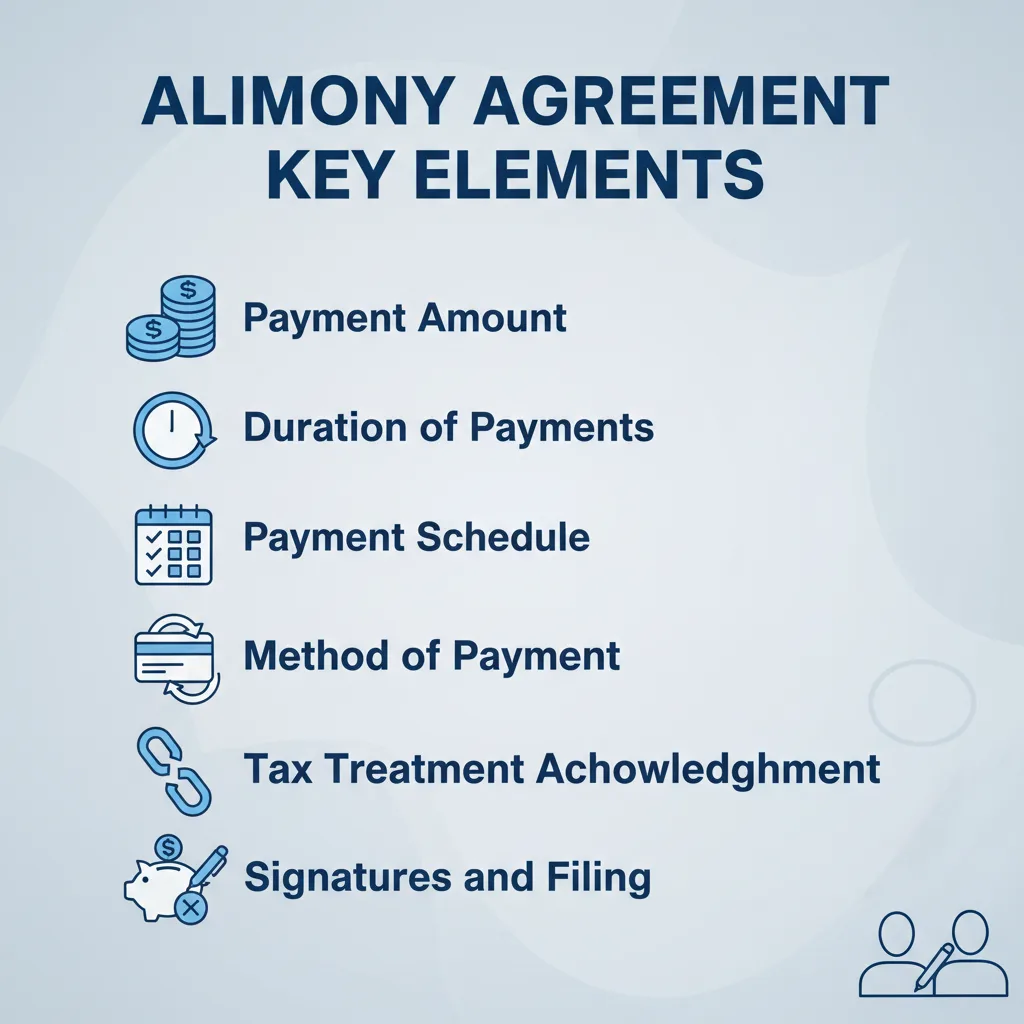
An alimony agreement typically details several critical components to ensure clarity and enforceability. These elements address the financial obligations and terms of support between the parties.
- Payment Amount - The specific monetary sum to be paid periodically, such as weekly or monthly.
- Duration of Payments - The period over which alimony payments will be made, which can be for a fixed term or indefinite until specific conditions are met.
- Payment Schedule - The agreed-upon frequency and dates for payments, such as on the first of each month.
- Method of Payment - How payments will be transferred, which can include direct deposit, check, or wage garnishment, with specific forms sometimes required for the latter (selfhelp.courts.ca.gov).
- Termination Conditions - Events that would cause alimony payments to end, such as the death of either spouse, the remarriage of the recipient, or a significant change in financial circumstances.
- Tax Treatment Acknowledgment - A clear statement regarding how the alimony payments will be treated for federal tax purposes, especially critical for agreements executed after 2018 (irs.gov).
- Signatures and Filing - Both spouses must sign the agreement, and it must be filed with the court to become legally binding (selfhelp.courts.ca.gov).
Tax Implications of Alimony Payments
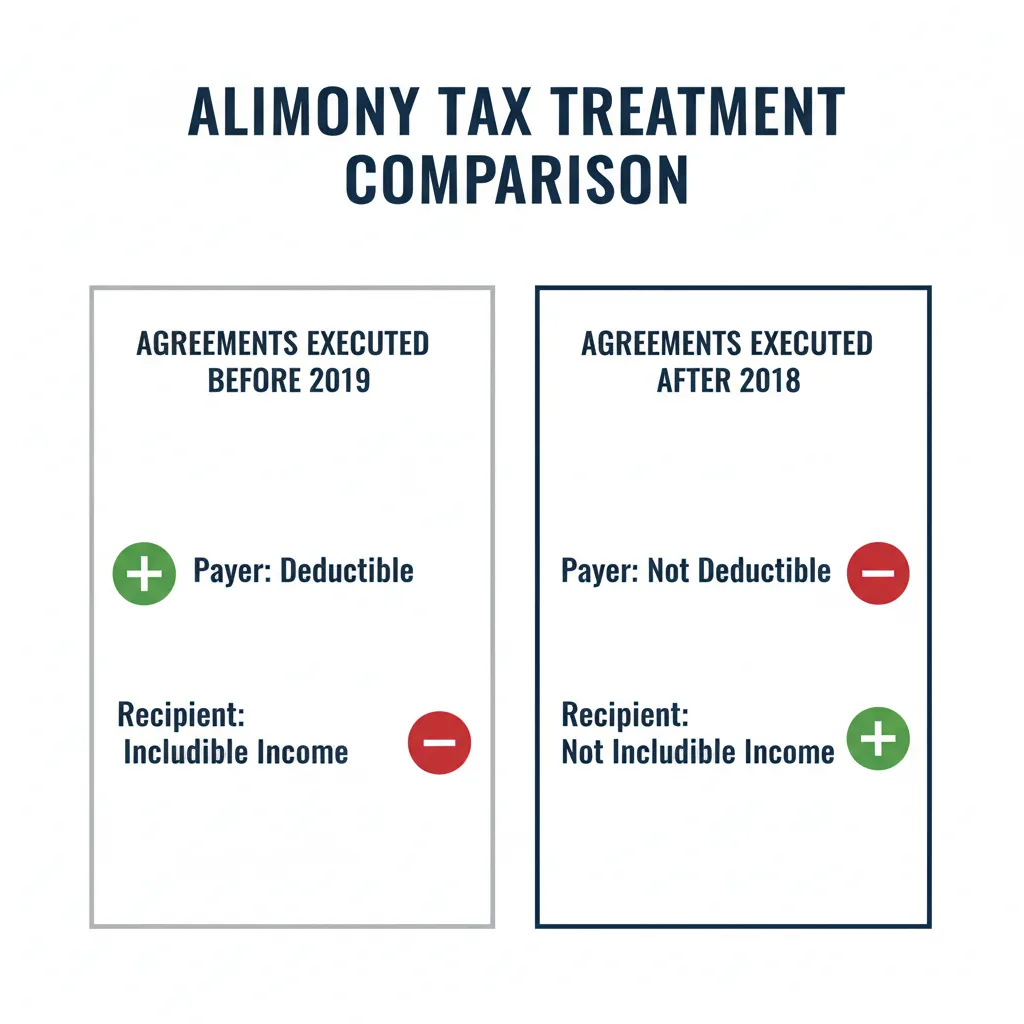
The Internal Revenue Service (IRS) provides specific guidelines for the federal tax treatment of alimony payments, which vary significantly based on the date the divorce or separation agreement was executed or modified.
- Agreements Executed Before 2019 - Alimony payments made under a divorce or separation agreement executed before January 1, 2019, are generally deductible by the payer and must be included in the gross income of the recipient (IRS Topic No. 452). These payments must be in cash and not designated as child support or a property settlement (IRS Publication 504).
- Agreements Executed After 2018 - For divorce or separation agreements executed after December 31, 2018, alimony payments are not deductible by the payer and are not includible in the gross income of the recipient (IRS Topic No. 452). This also applies to agreements modified after 2018 if the modification expressly states that the post-2018 tax treatment applies.
- Definition of Alimony for Tax Purposes - For federal tax purposes, alimony does not include child support, noncash property settlements, payments that are a spouse’s part of community income, payments to maintain the payer’s property, or use of the payer’s property (IRS Publication 504).
- Child Support Priority - If an agreement calls for both alimony and child support, and the payer pays less than the total required amount, payments are applied first to child support and then to alimony (IRS Publication 504).
Types of Alimony
Alimony can be structured in different ways depending on the specific circumstances of the divorcing parties and the laws of the jurisdiction. The timing and purpose of the support often distinguish its type:
- Temporary Alimony - Financial support provided by one spouse to the other during the period between the filing of a divorce petition and the issuance of a final divorce decree. This type of alimony helps the recipient spouse meet their financial needs while the divorce proceedings are ongoing (selfhelp.courts.ca.gov). In some jurisdictions, the order for alimony must be entered before the final divorce decree (mdcourts.gov).
- Post-Divorce Alimony - Support ordered by the court or agreed upon by the parties to continue after the final divorce decree has been entered. This type of alimony aims to ensure a degree of financial stability for a spouse who may face economic hardship or require time to become self-sufficient following the divorce.
Factors Influencing Alimony Decisions
When courts determine whether to award alimony and the terms of such an award, they consider various factors to ensure a fair and equitable outcome. These considerations aim to assess the financial needs and capabilities of both spouses.
In jurisdictions like Maryland, courts evaluate several aspects:
- Length of the Marriage - The duration of the marital union is a significant factor, with longer marriages often leading to a greater likelihood of alimony.
- Financial Situations - This includes the current and future financial resources of each spouse, their respective incomes, earning capacities, and any assets or debts.
- Reasons for the Divorce - While not always the primary factor, the grounds for divorce can sometimes influence alimony decisions (mdcourts.gov).
- Age and Health of Spouses - The physical and mental health, as well as the age of each party, can impact their ability to work and earn income.
- Ability to be Self-Supporting - The time and resources required for the recipient spouse to become financially independent.
- Standard of Living During Marriage - The lifestyle established during the marriage can be a benchmark for determining appropriate support.
Agreement and Filing Process
Creating and formalizing an alimony agreement involves several steps to ensure it is legally recognized and enforceable. For temporary spousal support, the process often includes:
- Drafting the Agreement - The spouses or their legal representatives draft a written document outlining all terms of the alimony, including amounts, duration, and payment methods.
- Signing the Agreement - Both spouses must sign the agreement to indicate their consent to its terms (selfhelp.courts.ca.gov).
- Making Copies - It is advisable to make at least two copies of the signed agreement for each party's records and for filing with the court (selfhelp.courts.ca.gov).
- Filing with the Court - The signed agreement must be filed with the court where the divorce or separation case is pending. Applicable filing fees may apply (selfhelp.courts.ca.gov).
- Wage Garnishment Forms - If alimony payments are to be made via wage garnishment, specific court forms, such as FL-435 or FL-195, may need to be filed with the agreement (selfhelp.courts.ca.gov).
Frequently Asked Questions
Sources
- Topic No. 452, Alimony and Separate Maintenance - Provides IRS guidelines on alimony and separate maintenance payments for federal tax purposes.
- Publication 504 (2025), Divorced or Separated Individuals - Offers detailed information on alimony payment rules for divorce or separation agreements executed prior to 2019.
- Prepare a temporary spousal support agreement - Guides on preparing a temporary spousal support agreement in California, including writing the agreement and filing it with the court.
- Divorce | Maryland Courts - Provides information on divorce proceedings in Maryland, including alimony considerations and the process for obtaining a divorce decree.
Not the form you're looking for?
Try our legal document generator to create a custom document
Disclaimer: The templates available on this website are provided for general informational purposes only and do not constitute legal advice. They are not intended to be, and should not be interpreted as, compliant with any specific legal, regulatory, or privacy requirements. These templates are not a replacement for professional legal guidance and should not be relied upon for any particular matter or circumstance. Users are strongly encouraged to seek advice from a qualified attorney licensed in their jurisdiction before using, modifying, or relying on any template.
All templates are provided on an "as is," "with all faults," and "as available" basis. The provider disclaims any and all warranties of any kind, whether express, implied, statutory, or otherwise, including without limitation warranties of merchantability, fitness for a particular purpose, title, or non-infringement.
LegalTemplates.com makes no guarantees or representations regarding the accuracy, completeness, expected outcomes, or reliability of the materials contained in these templates or any materials referenced or linked from them.