Advance Directive Will and Power of Attorney
An Advance Directive Will and Power of Attorney is a comprehensive legal instrument that specifies an individual's healthcare preferences and appoints agents to manage medical and financial decisions in the event of incapacitation.
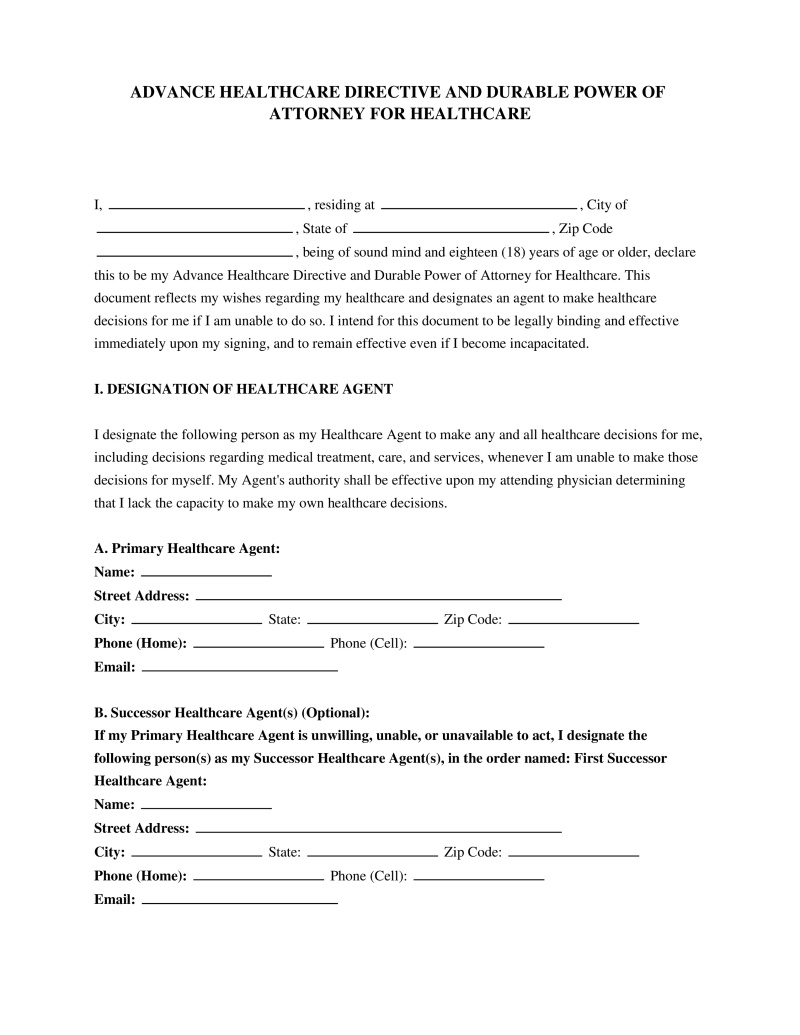
Life Sustaining Treatment Preference
Life-sustaining treatment includes ventilators, feeding tubes, and similar interventions.
Table of Contents
What is an Advance Directive Will and Power of Attorney?
An advance directive is a legal document that allows an individual to communicate their preferences for future medical care or to appoint someone to make decisions on their behalf, should they become unable to do so themselves. These documents are crucial for ensuring that a person's wishes regarding their health and finances are respected, even in situations of incapacitation. They serve to maintain individual autonomy and provide clear guidance to family members and healthcare providers during challenging times.
Types of Advance Directives
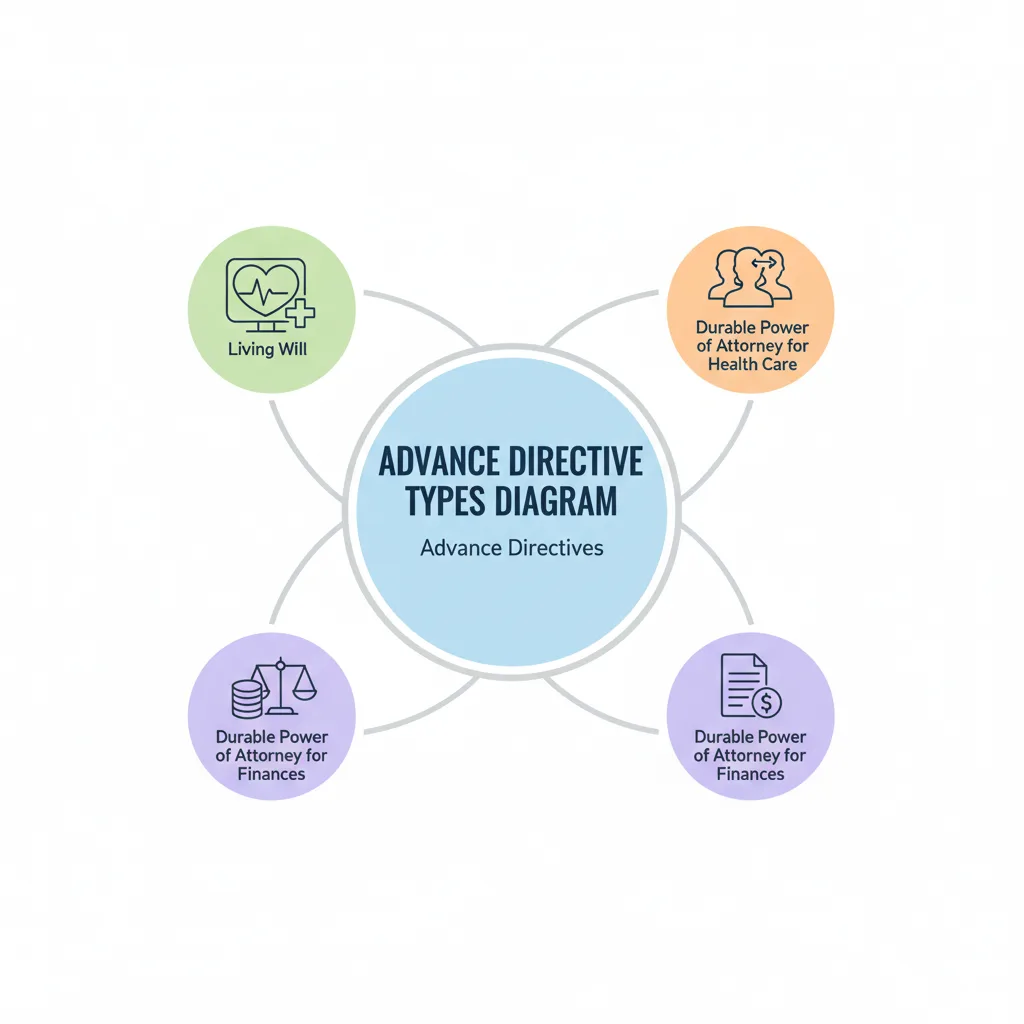
Advance directives encompass several distinct legal instruments, each designed to address specific aspects of an individual's future care and affairs. These documents enable patients to express their desires and maintain control over their treatment plan if they become incapacitated, particularly near the end of life.
- Living Will - A legal document that specifies an individual's preferences regarding medical treatment, particularly concerning life-sustaining procedures. It allows individuals to make choices in advance about interventions such as cardiopulmonary resuscitation (CPR), mechanical ventilation, artificial nutrition, and hydration, should they be in a terminal condition or a persistent vegetative state.
- Durable Power of Attorney for Health Care - Also known as a Health Care Proxy or Health Care Surrogate, this document appoints a trusted individual, referred to as an agent or surrogate, to make medical decisions on behalf of the principal if they become incapacitated. This agent has the authority to interpret and apply the principal's wishes regarding medical treatment, including end-of-life care, based on discussions and any written instructions provided.
- Durable Power of Attorney for Finances - This document grants an appointed agent the authority to manage an individual's financial affairs if they become unable to do so. This can include handling banking transactions, paying bills, managing investments, and making other financial decisions. Unlike a power of attorney that might terminate upon incapacitation, a durable power of attorney remains effective even if the principal becomes incapacitated.
Purpose and Importance
The primary purpose of advance directives is to safeguard an individual's right to self-determination regarding their medical treatment and personal affairs. By clearly stating preferences in advance, these documents ensure that personal values and wishes guide healthcare decisions, even when a person cannot communicate directly.
Advance directives provide invaluable clarity for family members and medical professionals. They alleviate the burden of making difficult decisions under emotional stress and reduce potential conflicts among loved ones. Furthermore, they can help avoid the need for court-appointed guardianships for medical decisions, streamlining the process of care management during a crisis.
Key Parties Involved
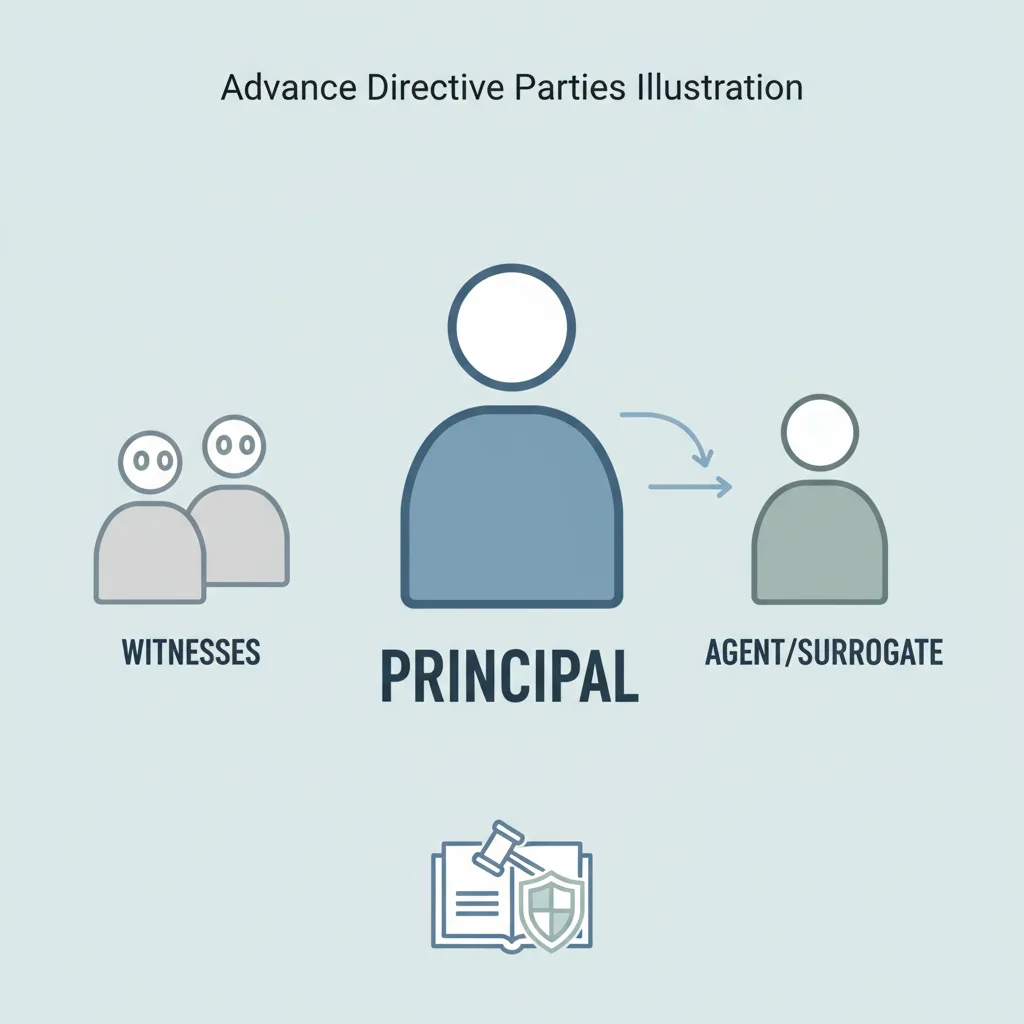
Several key individuals play distinct roles in the creation and implementation of advance directives, each with specific responsibilities and authorities:
- The Principal (or Declarant) - This is the individual who creates the advance directive. The principal must be of sound mind and legal age at the time of signing to ensure their decisions are legally binding and reflect their true intentions.
- The Agent (or Surrogate, Attorney-in-Fact) - This is the individual designated by the principal to make decisions on their behalf. In a Durable Power of Attorney for Health Care, this person is often called a health care agent or surrogate. In a Durable Power of Attorney for Finances, they are typically referred to as an attorney-in-fact. The agent is legally bound to act in the principal's best interest and according to their stated wishes.
- Witnesses - Many jurisdictions require advance directives to be signed in the presence of witnesses. The role of witnesses is to attest that the principal signed the document voluntarily and appeared to be of sound mind. Typically, witnesses cannot be individuals who stand to benefit from the principal's estate or who are directly involved in their healthcare.
Creating and Executing Advance Directives
The process of creating and executing advance directives involves specific legal requirements to ensure their validity and enforceability. These requirements often vary by state, but general principles apply.
Key considerations for creating and executing these documents include:
- Written Form - Advance directives must be in writing to be legally recognized.
- Signature of Principal - The document must be signed by the principal, indicating their assent to the terms.
- Witness Requirements - Most states require the principal's signature to be witnessed by two adults. Specific rules often apply regarding who can serve as a witness, often excluding healthcare providers involved in the principal's care or individuals who are beneficiaries of their estate.
- Notarization - While not universally required for all types of advance directives, some states may require notarization for a Durable Power of Attorney for Finances to ensure its legal standing. For instance, Wisconsin recognizes advance directive forms as valid if completed and signed correctly.
- Discussion and Distribution - It is advisable for individuals to discuss their advance directives with their chosen agent, family members, and healthcare providers. Copies should be provided to the agent, primary care physician, and possibly kept with other important legal documents.
Official forms and guidance on advance directives, including living wills and powers of attorney for health care and finances, are often provided by state departments of health or attorneys general. For example, the Wisconsin Department of Health Services offers official forms, and the New York State Attorney General provides guidance on making wishes known through documents like a health care proxy.
Revocation and Amendment
An individual's wishes regarding their medical care and financial management may change over time due to evolving health status, personal beliefs, or relationships. Advance directives are not permanent and can be revoked or amended as long as the principal retains mental capacity.
Methods for revoking or amending an advance directive typically include:
- Written Revocation - The most formal and recommended method is to create a new written document explicitly stating the intent to revoke previous directives.
- Physical Destruction - Tearing, burning, or otherwise destroying all copies of the existing directive can serve as a revocation, though a written statement is more definitive.
- Verbal Revocation - While some states may recognize a clear verbal revocation made directly to a healthcare provider, it is less reliable and harder to prove than a written revocation.
- Creating a New Document - Executing a new advance directive automatically revokes any previous directives that are inconsistent with the new one.
It is important to review advance directives periodically, especially after significant life events such as marriage, divorce, the birth of a child, or a major health diagnosis. Any changes should be communicated to all relevant parties, including the agent, family, and healthcare providers, and new copies of the updated document should be distributed.
Frequently Asked Questions
Sources
- Advance Directives - Provides official forms and guidance on advance directives in Wisconsin, including living wills and powers of attorney for health care and finances.
- Advance Directives: MedlinePlus - Offers comprehensive information on advance directives, including definitions, types, and their importance in health care planning.
- Advance Directives - StatPearls - NCBI Bookshelf - Provides detailed information on advance directives, including their function, types, and ethical considerations.
- Advance Directives - StatPearls - NCBI Bookshelf - Discusses various types of advance directives, including living wills and durable powers of attorney for health care, and their roles in patient care.
- Advance Directives | New York State Attorney General - Provides guidance on advance directives, including definitions, types, and how to make your wishes known and honored in New York State.
Not the form you're looking for?
Try our legal document generator to create a custom document
Disclaimer: The templates available on this website are provided for general informational purposes only and do not constitute legal advice. They are not intended to be, and should not be interpreted as, compliant with any specific legal, regulatory, or privacy requirements. These templates are not a replacement for professional legal guidance and should not be relied upon for any particular matter or circumstance. Users are strongly encouraged to seek advice from a qualified attorney licensed in their jurisdiction before using, modifying, or relying on any template.
All templates are provided on an "as is," "with all faults," and "as available" basis. The provider disclaims any and all warranties of any kind, whether express, implied, statutory, or otherwise, including without limitation warranties of merchantability, fitness for a particular purpose, title, or non-infringement.
LegalTemplates.com makes no guarantees or representations regarding the accuracy, completeness, expected outcomes, or reliability of the materials contained in these templates or any materials referenced or linked from them.